
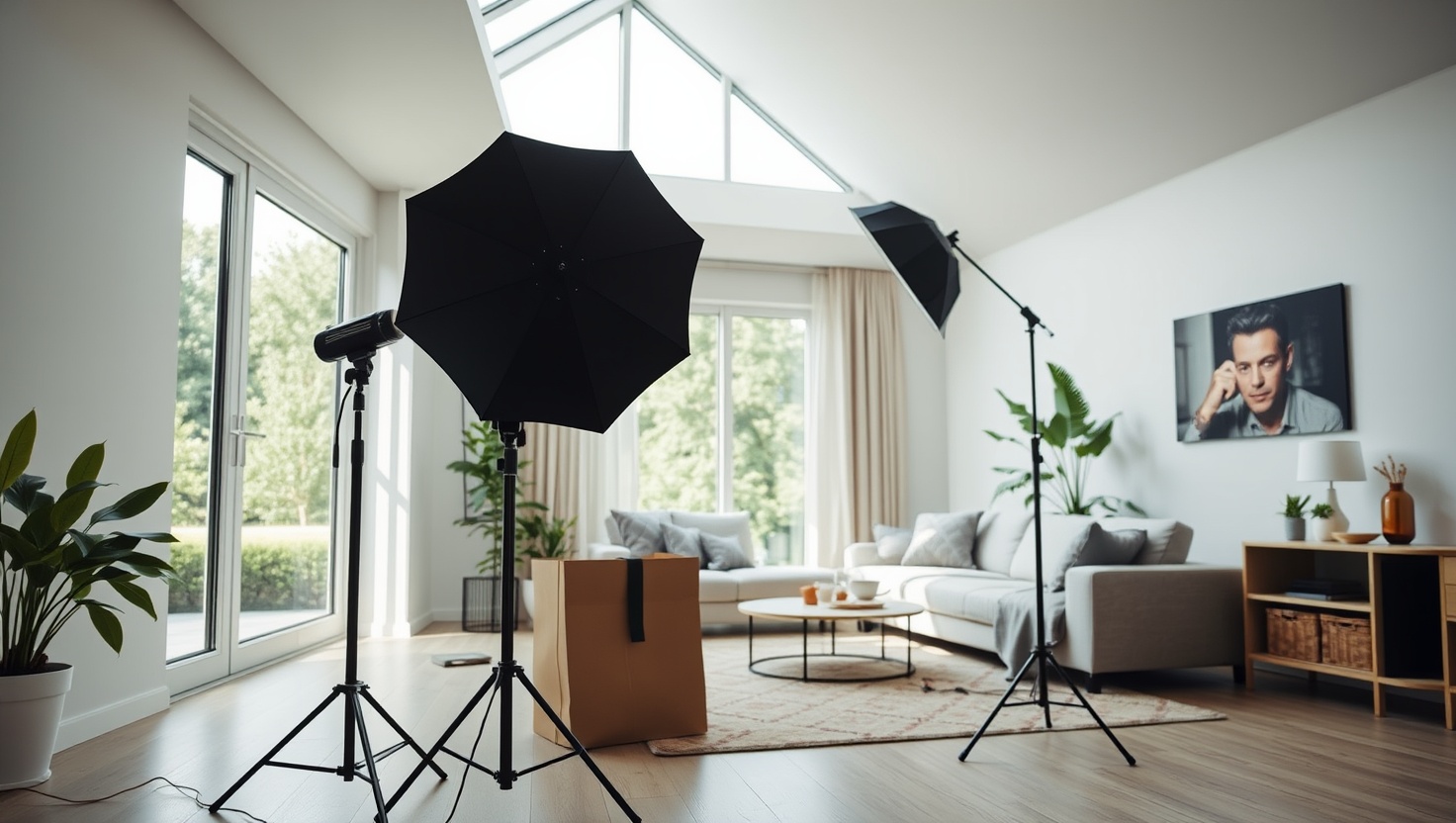
Great content lives or dies on light. In 2026, the right LED kit turns a flat, muddy shot into something that looks like you hired a crew.
Aputure LED Light — Top Pick
With powerful COB output, exceptional CRI and TLCI color accuracy, a versatile Bowens mount, and app plus DMX control, the Aputure LED Light is the best all-around lighting choice for video, photo, and streaming in 2026.
In a hurry? That's our pick. Want the reasoning and the full comparison? Keep reading.
You can own the best camera on the market and still look amateur if your light is wrong. Flat overhead bulbs, mixed color temperatures, harsh shadows across your face, that is the difference between content people scroll past and content that stops the thumb. The good news: modern LED lighting has never been more powerful, more color-accurate, or more affordable, and you no longer need a studio full of hot tungsten heads to get a clean, professional look.
The trap is that spec sheets play games. Two lights can claim the same brightness but render skin tones completely differently, and 'RGB' on the box tells you nothing about how accurate the whites are. So you need to know what actually matters: real output in watts and lux, color accuracy scores like CRI and TLCI, whether you want a punchy COB point source or a soft panel, and how you plan to control and power the thing. Below are the four lighting setups worth your money right now, plus a plain-English breakdown so you buy the right one the first time.
Key Takeaways
- A light's real quality lives in its color accuracy, CRI and TLCI, not just its raw brightness in watts or lux.
- For the best all-around output, color, and modifier support, the Aputure LED Light is our top pick.
- Want near-flagship performance for far less? The Godox LED Light is the smart-money runner-up.
- Just starting out and need everything in one box? The Neewer Lighting Kit gets you shooting immediately.
- Streaming from a desk and want plug-and-play control? The Elgato Key Light is built for exactly that.
How to Read a Lighting Spec Sheet (Without Getting Fooled)
Start with output, but understand what it means. Brightness gets quoted two ways: raw wattage, which tells you how much power the light draws, and lux, which measures the actual light landing on your subject at a set distance. Lux is the honest number, so compare lights at the same distance. But here is the twist most beginners miss: a big soft panel spreads its output across a wide area, while a COB (chip-on-board) point source concentrates it into a single punchy beam you then shape with a modifier. That is why a COB light with a softbox can look far more cinematic than a raw panel with the same wattage.
Next comes color accuracy, and this is where cheap lights fall apart. Two numbers matter: CRI (Color Rendering Index) and TLCI (Television Lighting Consistency Index). Both are scored out of 100, and both tell you how faithfully the light reproduces real color, especially skin tones. Aim for 95-plus on both. A light with weak color accuracy makes faces look green or sallow no matter how much you brighten it, and no amount of editing fully fixes it. Then decide on color range: daylight-balanced (around 5600K) is clean and simple, bi-color lets you dial anywhere from warm tungsten to cool daylight, and full RGB adds saturated creative colors for backgrounds and effects.
Finally, think about how you shape and control the light. A COB light with a standard Bowens mount accepts a huge world of modifiers, softboxes for flattering wraparound light, domes, grids, and reflectors, so you are not locked into one look. Control matters too: on-unit dials are fine, but app control (and DMX on higher-end units) lets you adjust brightness and color from your phone or a lighting board without touching the fixture, which is a real time-saver on a busy set.
Power, Portability, and Setup: The Stuff Reviews Skip
How you power a light decides where you can use it. AC-only lights plug into the wall and run forever, perfect for a fixed studio or desk. Battery-capable lights (usually running on V-mount or NP-F batteries) free you to shoot on location, outdoors, or anywhere without an outlet, at the cost of runtime and a little extra weight. If you film interviews, events, or run-and-gun content, battery support is not a luxury, it is what lets you work. If you stream or shoot from one room, AC is simpler and one less thing to charge.
Then there is the three-point lighting reality. One great light is a fantastic key, but professional-looking video usually wants three: a key to shape the face, a fill to soften shadows, and a back or rim light to separate you from the background. That shapes what you buy. A single high-output COB gives you the best possible key and room to grow, while an all-in-one kit hands you multiple panels and stands so you can build the full setup on day one. Match the buy to your goal. Finally, weigh setup: point sources plus softboxes take a minute to assemble but reward you with control, while ready-to-go panels and desk mounts trade some flexibility for instant, no-fuss lighting.
Quick Comparison
| Product | Best For | Type | Strength | Control |
|---|---|---|---|---|
| Aputure LED Light | Overall pick | COB point source | Output + color accuracy | App + DMX |
| Godox LED Light | Best value | COB point source | Performance per dollar | App + on-unit |
| Neewer Lighting Kit | Starter kit | Panel kit + stands | Everything in one box | On-unit + app |
| Elgato Key Light | Streaming | Edge-lit panel | Desk-mount + software | Wi-Fi app |
1. Aputure — Best Overall
Aputure LED Light
The Aputure LED Light is the one we hand to almost any creator serious about how their content looks. It nails the trifecta that matters most: strong, controllable output, exceptional color accuracy with high CRI and TLCI scores, and a standard Bowens mount that opens the door to nearly any modifier you can name. Drop a softbox on it and you get that flattering, cinematic wraparound light that instantly reads as professional, whether you are shooting talking-head video, product photography, or a polished stream.
What seals it is control and flexibility. App control lets you dial brightness and color temperature from your phone, and DMX support means it slots right into a bigger lighting rig when you scale up. Battery capability frees you to take it on location, while AC power keeps it running all day in the studio. This is a light you grow into, not out of, which is exactly why it tops the list.
Pros
- Excellent color accuracy with high CRI and TLCI for true skin tones
- Powerful, controllable COB output that a softbox turns cinematic
- Standard Bowens mount fits a huge range of modifiers
- App and DMX control for fast, hands-off adjustments
- Battery-capable for location work, AC-ready for the studio
Cons
- Premium performance comes at a premium price
- A point source needs modifiers to soften, so budget for a softbox
- More setup than a plug-and-play desk panel
2. Godox — Best Value
Godox LED Light
The Godox LED Light is the smart-money pick. It delivers most of what the flagship does, strong COB output, solid color accuracy, and the same versatile Bowens mount, for noticeably less. That makes it the easy recommendation when you want genuinely professional lighting without the top-tier price. Godox has built a reputation for punching above its cost, and this light continues that: it lights faces cleanly, takes the same softboxes and modifiers, and gives you a real cinematic look on a tighter budget.
You give up a little of the ultra-refined control and the deepest ecosystem, but you keep the part that matters most: accurate, powerful, shapeable light. With app and on-unit control plus battery capability, it works just as happily in a home studio as on a shoot. If your budget is finite and you would rather spend on light quality than on brand polish, the Godox stretches every dollar further.
Pros
- Outstanding performance-to-price for a COB light
- Strong output and good color accuracy for clean skin tones
- Bowens mount accepts the same softboxes and modifiers as pricier rivals
- App and on-unit control for quick adjustments
- Battery-capable, so it travels for on-location work
Cons
- Color accuracy and control are excellent but a notch below the flagship
- Point source still needs a modifier to soften the light
- Ecosystem and accessories are slightly less extensive
3. Neewer Kit — Best Starter Kit
Neewer Lighting Kit
The Neewer Lighting Kit is the fastest way to go from nothing to a real three-point setup. Instead of one light, you get a bundle, typically multiple panels, stands, and diffusers, so you can build a proper key, fill, and back light on day one without hunting down extra gear. For beginners, that all-in-one approach removes every barrier: unbox it, set up your stands, and you are shooting evenly lit, shadow-controlled video in minutes.
The panels are bi-color, so you can dial from warm to cool to match your room, and color accuracy is genuinely good for the price. You give up the concentrated punch and modifier ecosystem of a high-end COB, and the build is more functional than flagship, but that is the right trade when you are learning. If you want the most gear and the fastest path to a complete lighting setup for the money, this kit is the one to start with.
Pros
- Complete kit with multiple lights, stands, and diffusers in one box
- Everything you need to build a full three-point setup immediately
- Bi-color panels adjust from warm tungsten to cool daylight
- Beginner-friendly setup with no extra purchases needed
- Strong value for creators just getting started
Cons
- Panels lack the concentrated punch of a COB point source
- Fewer modifier options than a Bowens-mount light
- Build quality is functional rather than premium
4. Key Light — Best for Streaming
Elgato Key Light
If you stream or shoot from a desk, the Elgato Key Light is purpose-built for you. Its edge-lit panel throws soft, even light with no harsh hotspots, and it mounts on a clamp arm that clears your desk entirely, so you get flattering illumination without sacrificing space or fighting a floor stand. The whole thing is designed to disappear into a clean setup and just work, session after session.
The standout is the control. Everything runs over Wi-Fi through Elgato's app and integrates neatly with the streaming ecosystem, so you adjust brightness and color temperature from your phone or PC, or trigger it right from your stream deck, without ever touching the fixture mid-broadcast. It is AC powered and made to live in one place, so it is not the pick for location shoots. But for a polished, repeatable, plug-and-play look at your desk, nothing here is more convenient.
Pros
- Soft, even edge-lit output with no harsh hotspots
- Desk-clamp mount saves space and clears your workspace
- Wi-Fi app control and tight streaming-ecosystem integration
- Bi-color adjustment for warm-to-cool matching
- Plug-and-play convenience built for repeatable streaming setups
Cons
- AC-only design, so it is not made for location work
- Edge-lit panel offers less raw punch than a COB light
- No Bowens mount, so modifier options are limited
Which Should You Choose?
Pick the Aputure LED Light if you want one light to grow into
If you are serious about how your content looks and you want a light that handles video, photo, and streaming while leaving room to scale, the Aputure LED Light is the clearest choice. Its color accuracy is exceptional, its COB output pairs beautifully with a softbox, and app plus DMX control makes it easy to run and easy to expand. It is the best balance of power, accuracy, and flexibility on this list.
Pick the Godox LED Light or Neewer Kit if value drives the decision
Want near-flagship COB performance for less? The Godox LED Light gives you accurate, powerful, modifier-ready light at a friendlier price. Just starting out and need a full setup in one box? The Neewer Lighting Kit hands you multiple lights and stands to build three-point lighting on day one. Both trade a little polish for a lot of value, and that is a smart trade when your budget is finite.
Pick the Elgato Key Light if you stream from a desk
Some creators do not need a location rig, they need clean, effortless light at their desk every single time. The Elgato Key Light answers that with soft edge-lit output, a space-saving clamp mount, and Wi-Fi control that fits right into your streaming ecosystem. It stays put and just works, which is exactly what a repeatable, professional stream setup should do.
Ready to Make Your Content Look Pro?
The Aputure LED Light gives you accurate, cinematic light that makes every shot look like you hired a crew, with the control and flexibility to grow as you do. Check current pricing and see why it tops our 2026 list.
Explore Brainstamped's Free ToolsFrequently Asked Questions
For most creators, the Aputure LED Light is the best choice in 2026. It combines strong COB output, exceptional color accuracy with high CRI and TLCI, and a Bowens mount that fits nearly any modifier, making it excellent for video, photo, and streaming. If you want similar quality for less, the Godox LED Light is the top-value alternative.
CRI (Color Rendering Index) and TLCI (Television Lighting Consistency Index) both score, out of 100, how faithfully a light reproduces real color, especially skin tones. Aim for 95-plus on both. A light with weak scores makes faces look green or washed out no matter how bright it is, and editing cannot fully fix it, so color accuracy matters as much as raw output.
A COB (chip-on-board) light is a concentrated point source you shape with modifiers like softboxes, giving you punchy, cinematic control. A panel spreads soft, even light across a wide area with less setup. COB lights are more versatile and dramatic for video and photo, while panels are fast and forgiving, which makes them great for streaming and beginners.
Daylight-balanced lights (around 5600K) are clean and simple. Bi-color lets you dial anywhere from warm tungsten to cool daylight to match your room, which is the most useful range for most creators. Full RGB adds saturated creative colors for backgrounds and effects. Most people are best served by an accurate bi-color light, and RGB is a bonus if you want colorful accents.
Often, yes. A single strong key light is a great start, but a professional look usually uses three-point lighting: a key to shape the face, a fill to soften shadows, and a back or rim light to separate you from the background. A high-output COB like the Aputure is an ideal key, while an all-in-one kit like the Neewer gives you multiple lights to build the full setup at once.