
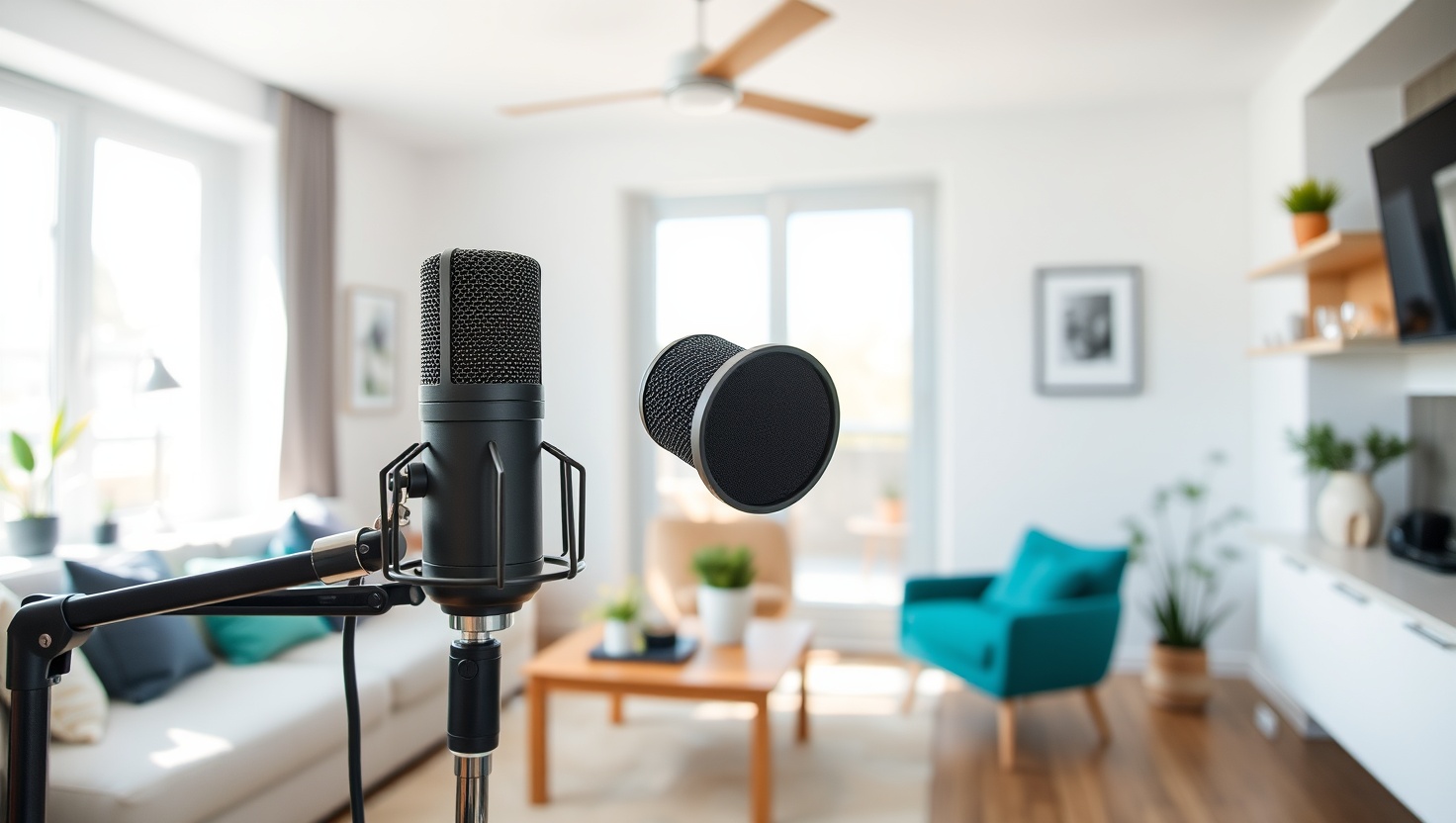
Your voice is your whole channel. In 2026, the right microphone is the single upgrade that makes strangers stay and listen.
Shure SM7B Microphone — Top Pick
A broadcast dynamic that rejects room noise and delivers warm, professional sound in almost any space, the Shure SM7B is the best all-around microphone for podcasting, streaming, and recording in 2026, as long as you feed it clean gain.
In a hurry? That's our pick. Want the reasoning and the full comparison? Keep reading.
People forgive a shaky webcam long before they forgive bad audio. Thin, echoey, hiss-filled sound makes a listener reach for the skip button in seconds, no matter how good your ideas are. That is why the microphone is the one piece of gear worth getting right first. Whether you record a podcast, stream to a live audience, or lay down vocal takes, the mic is what turns your voice into something people actually want to hear.
The tricky part is that the spec sheet can mislead you. A studio-grade condenser will capture every crisp detail of your voice, but it will also capture your keyboard, your air conditioner, and the dog three rooms away. A broadcast dynamic mic ignores your messy room but demands a lot of clean gain to sing. Below you get the four microphones worth your money right now, plus a plain-English breakdown of dynamic versus condenser, XLR versus USB, phantom power, polar patterns, and the accessories that actually change your sound.
Key Takeaways
- Dynamic mics reject room noise and are forgiving of untreated spaces, while condensers capture more detail but hear everything, so match the mic to your room, not just your budget.
- For most creators the Shure SM7B is our top pick: a broadcast dynamic that sounds pro and ignores a noisy room, though it needs plenty of clean gain.
- Want studio-grade detail on a sensible budget? The Rode NT1 is the best-value condenser here and one of the quietest mics you can buy.
- Chasing the most premium, accurate studio sound? The Neumann TLM earns its place as the reference-grade choice.
- Just starting out and watching every dollar? The Audio-Technica AT2020 delivers real condenser quality for beginners.
Dynamic vs Condenser, XLR vs USB: What Actually Changes Your Sound
Start with the mic type, because it decides how much of your room ends up in your recording. A dynamic microphone, like the Shure SM7B, is less sensitive by design. It focuses tightly on the source right in front of it and shrugs off background noise, which makes it the smart pick for an untreated bedroom, a shared office, or any space with echo and hum you cannot fix. A condenser microphone, like the Rode NT1, Neumann TLM, or Audio-Technica AT2020, is far more sensitive and captures gorgeous detail and air in your voice. That detail is a gift in a quiet, treated room and a curse in a noisy one, because the condenser hears the keyboard, the fan, and the street outside just as clearly as it hears you.
Next comes the connection. Every mic on this list is XLR, the professional standard, and that choice matters. USB mics plug straight into your computer and are dead simple, but XLR mics route through an audio interface, a small box that converts the signal and gives you cleaner sound, room to grow, and the ability to add more mics later. Condenser mics also need phantom power, a 48V feed that your interface supplies over the same XLR cable to make the mic work. Dynamic mics do not need phantom power, but the SM7B in particular needs a lot of clean gain, so pair it with an interface that has strong, quiet preamps or add an inline gain booster like a Cloudlifter to give it the volume it craves without adding hiss.
Polar Patterns, Room Treatment, and the Accessories That Matter
The polar pattern describes the shape of what a mic hears. Every pick here uses a cardioid pattern, which captures sound from the front and rejects most of what comes from the sides and rear. For solo podcasting, streaming, and vocal recording, cardioid is exactly what you want, because it aims at your voice and turns its back on the room behind you. Point the front of the mic at your mouth, keep a consistent distance, and you get a focused, present sound instead of a hollow, roomy one. This is also why mic placement often matters more than price: a great mic aimed wrong sounds worse than a cheap mic aimed right.
The accessories are not optional extras, they are part of the sound. A pop filter sits between your mouth and the mic to soften the bursts of air from hard P and B sounds, so your recordings stay smooth instead of thumping. A boom arm clamps to your desk and lets you position the mic close and steady without a bulky stand eating your workspace, and it also keeps desk bumps and keyboard vibration from traveling into the mic. If you use a sensitive condenser, a little room treatment goes a long way too: soft furnishings, a rug, or acoustic panels tame the echo that otherwise makes home recordings sound like they were made in a bathroom. Buy the mic, then budget for the pop filter, the boom arm, and, for the SM7B, that clean gain, and you will hear the difference on every take.
Quick Comparison
| Product | Best For | Type | Connection | Room Tolerance |
|---|---|---|---|---|
| Shure SM7B | Overall pick | Dynamic (cardioid) | XLR | Excellent |
| Rode NT1 | Best value | Condenser (cardioid) | XLR | Fair |
| Neumann TLM | Premium studio | Condenser (cardioid) | XLR | Fair |
| Audio-Technica AT2020 | Best budget | Condenser (cardioid) | XLR | Fair |
1. SM7B — Best Overall
Shure SM7B Microphone
The Shure SM7B is the microphone we hand to almost anyone serious about their voice. It is the broadcast dynamic you have heard on countless podcasts and radio shows, and there is a reason it became the standard. Its cardioid pattern and dynamic design reject the noise of an untreated room, so your keyboard, your fans, and the world outside mostly disappear while your voice stays warm, close, and rich. If you record in a normal home rather than a soundproof booth, that noise rejection is worth more than any spec.
The one thing to plan for is gain. The SM7B is a quiet mic that demands a lot of clean volume to shine, so you need an audio interface with strong, low-noise preamps, or an inline booster like a Cloudlifter to bring it up without hiss. Get that right and the payoff is a smooth, professional, broadcast-grade sound that flatters nearly every voice. It is the most reliable path to sounding like a pro without rebuilding your room, which is exactly why it tops this list.
Pros
- Broadcast-grade dynamic sound that flatters almost any voice
- Excellent rejection of room noise and echo in untreated spaces
- Cardioid pattern keeps the focus tight on your voice
- Rugged, road-tested build trusted by pros for years
- Built-in pop protection and windscreen options tame plosives
Cons
- Needs a lot of clean gain, often a Cloudlifter or strong interface
- Requires an audio interface, so it is not plug-and-play
- Higher entry cost once you add the gear it needs
2. Rode NT1 — Best Value Condenser
Rode NT1 Microphone
If you want studio-grade detail without a studio-grade price, the Rode NT1 is the standout. It is one of the quietest condensers you can buy, with famously low self-noise, which means the mic itself adds almost nothing to your recording and lets the true character of your voice come through clean and clear. In a quiet, lightly treated room it captures the crisp, airy detail that makes vocals and voiceovers sound polished and expensive.
Being a condenser, it needs 48V phantom power from your audio interface and a cardioid pattern keeps it aimed at you. It is more sensitive to room noise than the SM7B, so give it a calm space and a pop filter and it rewards you with a sound that punches well above its cost. For creators who want that big, detailed condenser character on a sensible budget, the NT1 is the easy recommendation.
Pros
- Exceptionally low self-noise for clean, quiet recordings
- Detailed, airy condenser sound that flatters vocals
- Outstanding price-to-quality for a studio-grade mic
- Cardioid pattern focuses on your voice
- Solid build and often bundled with a shock mount and filter
Cons
- More sensitive to room noise than a dynamic mic
- Needs 48V phantom power from an interface to run
- Best results require a quiet, treated space
3. Neumann TLM — Best Premium Studio
Neumann TLM Microphone
When you want the most refined, accurate studio sound, the Neumann TLM makes the case. Neumann is a name engineers trust in professional studios, and this condenser delivers the kind of clarity, detail, and natural warmth that reference-grade recording is built on. Voices sound present and true, with a smooth top end and a solid low end that needs little processing to sit beautifully in a mix.
This is a premium tool, so it asks for a premium setup: 48V phantom power, a clean interface, and a quiet, treated room where its sensitivity becomes an advantage instead of a liability. In that environment it captures every nuance of your voice with a fidelity the cheaper mics cannot match. If audio is your craft and you want the closest thing to a studio in your own space, the Neumann TLM is the one to reach for.
Pros
- Reference-grade detail and accuracy trusted in pro studios
- Natural, present sound that needs little processing
- Smooth top end and solid low end flatter most voices
- Cardioid pattern for focused, professional capture
- Premium build quality that lasts for decades
Cons
- The most expensive option on this list by a wide margin
- Its sensitivity demands a quiet, acoustically treated room
- Needs phantom power and a clean interface to perform
4. AT2020 — Best Budget
Audio-Technica AT2020
The Audio-Technica AT2020 is the smart-money starting point. It is the mic that has launched countless podcasts and streams because it delivers genuine condenser detail and a clean, clear sound for a fraction of the price of the flagships. For a first serious microphone, it is hard to beat: crisp vocals, a cardioid pattern that keeps the focus on you, and a build that holds up to daily use.
Like every condenser here, it needs 48V phantom power from an interface and a reasonably quiet room to sound its best, and it will pick up more of your surroundings than a dynamic mic. Give it a pop filter and a calm space and it punches well above its price. If you are just getting started and want real quality without overspending, the AT2020 is the dependable, no-regrets choice.
Pros
- Real condenser detail at an entry-level price
- Clean, clear sound that suits podcasts and streaming
- Cardioid pattern keeps the focus on your voice
- Durable, road-proven build for daily use
- A trusted first mic for countless creators
Cons
- Picks up more room noise than a dynamic mic
- Needs 48V phantom power and an interface to run
- Lacks the ultra-low noise and polish of pricier condensers
Which Should You Choose?
Pick the Shure SM7B if you record in a real, untreated room
If your recording space is a normal home with some echo, a humming fan, or a noisy street outside, the Shure SM7B is the clearest choice. Its dynamic design and cardioid pattern reject the mess around you and keep your voice warm and close, so you sound professional without rebuilding your room. Just pair it with a strong, clean interface or a Cloudlifter for the gain it needs, and it will carry your podcast or stream for years.
Pick the Rode NT1 or AT2020 if you want condenser detail on a budget
Recording in a quiet, lightly treated space and craving that crisp, airy condenser sound? The Rode NT1 gives you studio-grade detail with some of the lowest self-noise on the market, making it the best value here. Just starting out and watching every dollar? The Audio-Technica AT2020 delivers real condenser quality for a beginner-friendly price. Both need phantom power and a calm room, and both reward you far beyond their cost.
Pick the Neumann TLM if audio is your craft
Some creators want the most accurate, refined sound possible, not just a good one. The Neumann TLM answers that with reference-grade detail trusted in professional studios worldwide. It demands a quiet, treated room and a clean interface with phantom power, but in that setup it captures every nuance of your voice with a fidelity the others cannot match. If you take recording seriously and want a studio in your own space, this is the mic.
Ready to Sound Like a Pro?
The Shure SM7B gives you warm, broadcast-grade sound and rejects the noise of a real room, so your voice carries every episode and every stream. Check current pricing and see why it tops our 2026 list.
Explore Brainstamped's Free ToolsFrequently Asked Questions
For most creators, the Shure SM7B is the best microphone in 2026. This broadcast dynamic mic rejects the noise of an untreated room and delivers warm, professional sound for podcasting, streaming, and recording. It needs plenty of clean gain from an interface or a Cloudlifter, but the payoff is a pro-grade voice without rebuilding your space. If you want a condenser instead, the Rode NT1 is the top value alternative.
It depends on your room. A dynamic mic like the Shure SM7B is less sensitive, so it ignores background noise and works well in a normal, untreated home. A condenser like the Rode NT1 or AT2020 captures more detail and air but hears everything, so it shines in a quiet, treated space. Match the mic to your environment, not just your budget, and you will be happier with the result.
Yes, for these mics. Every pick here is XLR, so it routes through an audio interface that converts the signal and supplies clean preamp gain. Condenser mics, including the Rode NT1, Neumann TLM, and AT2020, also need 48V phantom power, which the interface sends over the same XLR cable. The Shure SM7B does not use phantom power, but it does need a lot of clean gain, so a strong interface or a Cloudlifter helps it sing.
Cardioid means the microphone captures sound mainly from the front and rejects most of what comes from the sides and rear. Every mic on this list is cardioid, which is ideal for solo podcasting, streaming, and vocals because it aims at your voice and turns its back on the room behind you. Point the front of the mic at your mouth, keep a steady distance, and you get a focused, present sound.
A pop filter and a boom arm make the biggest difference. The pop filter softens the bursts of air from hard P and B sounds so your audio stays smooth, and the boom arm lets you position the mic close and steady while keeping desk and keyboard vibration out. If you use a sensitive condenser, some light room treatment like a rug or acoustic panels tames echo. For the Shure SM7B, budget for extra clean gain too.