
A great subwoofer does not just add bass. It adds weight, tension, and the feeling that the room is alive. In 2026, four subs get you there.
SVS PB-4000 — Top Pick
With a big ported cabinet, a powerful driver, deep low-end extension, and full app-based room correction, the SVS PB-4000 delivers the cleanest, most physical home-theater bass on this list and it is our best subwoofer for 2026.
In a hurry? That's our pick. Want the reasoning and the full comparison? Keep reading.
Your speakers can be brilliant and your room can still feel flat, because the deepest, most physical part of sound lives below what most speakers can produce. That is the subwoofer's job: the rumble of a rocket launch, the tension under a horror score, the kick drum you feel in your chest. Get the sub right and your whole system snaps into place. Get it wrong and everything sounds thin, or worse, boomy and muddy.
The tricky part is that a subwoofer's spec sheet can mislead you. A big number for driver size or watts tells you almost nothing about how low the sub actually reaches, how cleanly it plays at that depth, or how well it blends with the rest of your system in your specific room. So you need to understand a few real fundamentals: sealed versus ported design, driver size, amplifier RMS power, low-end frequency extension, and room correction. Below are the four subwoofers worth your money right now, plus a plain-English guide so you buy the one that fits your room, your ears, and how you actually listen.
Key Takeaways
- A subwoofer's real depth is measured in low-end frequency extension (Hz), not just driver size or watts on the box.
- For pure home-theater impact and value, the SVS PB-4000 is our top pick: a ported design that reaches deep and hits hard.
- Tight on space but still want serious output? The SVS SB-3000 packs a sealed punch into a compact box.
- Chasing the most output per dollar? The Klipsch SPL-150 delivers room-filling bass at a friendlier price.
- Care most about clean, fast, musical bass? The REL T/9x is built to blend with two-channel systems beautifully.
How to Read a Subwoofer Spec Sheet (Without Getting Fooled)
Start with the design, because sealed versus ported shapes everything you will hear. A sealed subwoofer traps the driver in an airtight box, which gives you tight, fast, accurate bass that starts and stops on a dime. That precision is why sealed subs are loved for music. A ported subwoofer adds a tuned opening that lets the sub move more air, so it plays louder and reaches deeper for less power, which is why ported designs rule for home theater impact. Neither is 'better' in the abstract. It is a trade: ported gives you depth and volume, sealed gives you speed and control.
Next look at driver size and amplifier power, but read them correctly. A larger driver, say 13 to 15 inches, can move more air and generally reach lower with authority. Amplifier power is the muscle behind it, and the number that matters is RMS watts, which is continuous real-world power, not the inflated peak or 'dynamic' figure marketers love. A big driver paired with a strong RMS amp is what lets a sub stay clean and composed when a scene demands everything at once, instead of distorting or bottoming out.
Then the number that actually tells you how deep you go: low-end frequency extension, measured in Hz. The lower that figure, the more of the truly physical, felt bass your sub reproduces. Content dips well below 30Hz in modern movies and some music, so a sub that reaches into the low 20s or under gives you rumble you feel rather than just hear. Do not confuse this with driver size. A well-engineered sealed sub can dig deeper than a bigger ported box if the port is tuned high, so always check the actual Hz extension.
Room Correction, Placement, and Dual Subs: The Stuff Reviews Skip
The single biggest thing between you and great bass is not the sub itself, it is your room. Bass waves are long, and they bounce, cancel, and pile up depending on where you sit and where the sub sits. That is why one spot in a room booms while another sounds thin. Modern subs like the SVS models include app-based room correction with adjustable parametric EQ, phase, and level, so you can tame the peaks your room creates and dial the sub to actually match your seat. Spend twenty minutes in that app and a good sub becomes a great one.
Placement is free performance, so use it. The classic trick is to put the sub temporarily at your listening seat, play some bass-heavy content, then crawl the floor until you find the spot where the bass sounds fullest and cleanest. That is where the sub goes. And if you can swing it, running two subs is the real secret weapon of great home theater. Dual subs smooth out those room peaks and nulls, so the bass is even everywhere, not just in one lucky chair. Two smaller subs often beat one giant sub for consistency. Whatever you pick here, get the placement and correction right, and you will hear far more than a spec sheet promises.
Quick Comparison
| Product | Best For | Design | Strength | Room Fit |
|---|---|---|---|---|
| SVS PB-4000 | Overall pick | Ported, 13.5" driver | Deep, powerful theater bass | Medium to large |
| SVS SB-3000 | Compact rooms | Sealed, 13" driver | Tight punch, small box | Small to medium |
| Klipsch SPL-150 | Best value | Ported, 15" driver | Output per dollar | Medium to large |
| REL T/9x | Music lovers | Sealed, 10" driver | Fast, tight, musical | Small to medium |
1. PB-4000 — Best Overall
SVS PB-4000
The SVS PB-4000 is the subwoofer we hand to anyone serious about home theater. This is a big ported box built to move serious air, and it shows: it reaches low into the felt-bass region with real authority and stays clean while it does it. A large high-excursion driver paired with a muscular RMS amplifier means it does not flinch when a scene throws everything at it at once. Explosions land, engines rumble, and the room comes alive the way theater bass is supposed to.
What lifts it above raw output is control. SVS gives you a full smartphone app with parametric EQ, adjustable phase, port tuning, and level, so you can shape the PB-4000 to your exact room instead of fighting it. That means you get the deep, powerful ported bass without the boom that plagues cheaper big subs. If you want one sub that fills a medium or large room and makes movies feel physical, this is the one to buy.
Pros
- Reaches deep into felt-bass territory with real authority
- Powerful ported design moves serious air for big theater impact
- Strong RMS amplifier keeps bass clean under heavy demand
- Excellent app-based room correction and parametric EQ
- Ideal for medium to large home-theater rooms
Cons
- Large ported cabinet takes up real floor space
- Overkill for small rooms or apartment living
- Premium performance comes at a premium price
2. SB-3000 — Best Compact
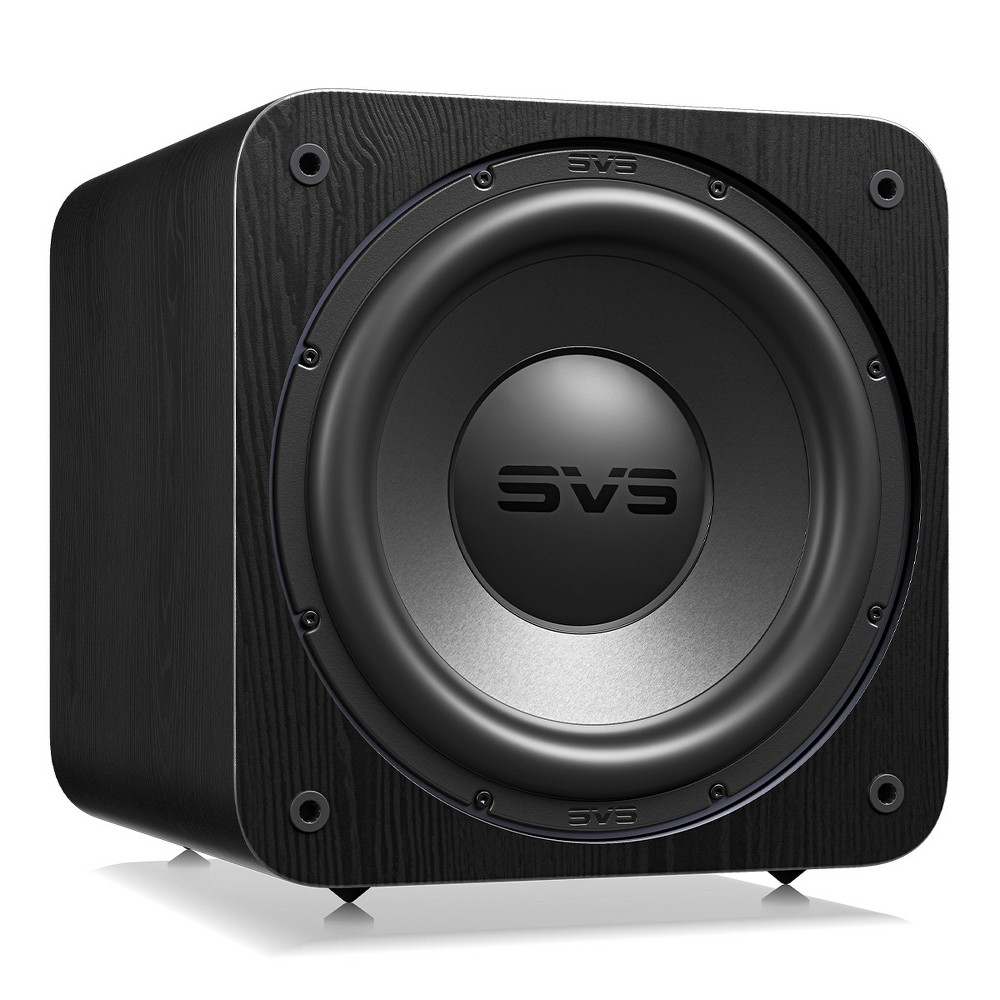
SVS SB-3000
If space is tight but you refuse to give up serious bass, the SVS SB-3000 is the answer. It packs a 13-inch driver and a strong amplifier into a remarkably compact sealed cabinet, so you get tight, fast, punchy bass without a giant box dominating the room. The sealed design gives it that clean, controlled character that works beautifully for both movies and music, and it still digs surprisingly low for its size.
You get the same excellent SVS app here, with parametric EQ, phase, and level controls to blend it perfectly into your space. That makes the SB-3000 a fantastic fit for small to medium rooms, apartments, or anyone who wants big-sub impact without big-sub footprint. It is proof that a smart sealed design can hit hard and stay accurate at the same time.
Pros
- Compact sealed cabinet fits tight spaces easily
- Tight, fast, controlled bass that suits music and movies
- Digs impressively low for such a small box
- Full SVS app with parametric EQ and phase control
- Great for small to medium rooms and apartments
Cons
- Sealed design gives up some ultimate depth versus ported subs
- Not the pick for very large theater rooms
- Still commands a serious-sub price for its size
3. SPL-150 — Best Value
Klipsch SPL-150
The Klipsch SPL-150 is the smart-money pick for people who just want the room to shake. Its big 15-inch driver and ported cabinet are built to move a lot of air and play loud, and they deliver that room-filling, chest-thumping bass for noticeably less than the premium competition. If your priority is raw output and movie impact per dollar, the SPL-150 punches well above its price.
You give up the fine-grained app tuning of the SVS subs, and its character leans toward big and bold rather than surgically precise. But for action movies, gaming, and anyone who loves bass you can feel, that trade is easy to make. Place it well and it fills a medium to large room with authority. If you want maximum output without maximum spend, the SPL-150 stretches every dollar.
Pros
- Outstanding output and impact for the price
- Large 15-inch driver moves serious air
- Ported design delivers loud, room-filling bass
- Great match for action movies and gaming
- Bold, physical bass that fills medium to large rooms
Cons
- Lacks the advanced app-based room correction of rivals
- Character leans bold rather than surgically precise
- Big ported cabinet needs real space to breathe
4. REL T/9x — Best for Music
REL T/9x
If you care about music first, the REL T/9x is built for you. REL has a long reputation for making subwoofers that are fast, tight, and tuneful, and the T/9x lives up to it. Its sealed 10-inch design and clever high-level connection let it lock onto the timing of your main speakers so precisely that the bass sounds like it belongs to them, rather than a separate box thumping in the corner. That seamless blend is exactly what two-channel listeners chase.
This is not the sub for people who only want the biggest, loudest theater rumble. It is the sub for people who want a stand-up bass to sound like a real instrument, a kick drum to snap with speed, and a whole album to gain weight and depth without ever sounding boomy. Pair it with quality speakers in a small to medium room and the T/9x elevates your music in a way raw output alone never will. It handles movies gracefully too.
Pros
- Fast, tight, musical bass that blends with main speakers
- High-level connection locks onto your speakers' timing
- Sealed design delivers clean, controlled low end
- Ideal for two-channel and hi-fi music listening
- Adds real depth and weight without boominess
Cons
- Smaller driver means less brute theater output
- Not built to shake a large room like ported subs
- Premium hi-fi tuning comes at a premium price
Which Should You Choose?
Pick the SVS PB-4000 if home theater impact comes first
If your main goal is movies, gaming, and bass you feel in your chest, the SVS PB-4000 is the clearest choice. Its ported design and big driver reach deep and hit hard enough to make a medium or large room feel like a cinema, and the app-based room correction keeps all that power clean instead of boomy. It is the best all-around blend of depth, output, and control on this list.
Pick the SB-3000 or SPL-150 based on your room and budget
Short on space? The compact sealed SVS SB-3000 delivers tight, deep bass without a giant box, perfect for small to medium rooms and apartments. Watching your budget but still want the room to shake? The Klipsch SPL-150 gives you the most output per dollar with its big 15-inch ported driver. Both let you get serious bass without buying the largest, priciest sub here.
Pick the REL T/9x if music matters most
Some listeners care less about explosions and more about a kick drum that snaps and a bassline that breathes. The REL T/9x answers that with its fast, sealed design and speaker-blending high-level connection, giving you musical bass that sounds like part of your main speakers. It handles movies well too, but its true gift is making your favorite albums sound whole.
Ready to Feel Every Scene?
The SVS PB-4000 brings deep, room-shaking bass under total control, so movies hit harder and music gains real weight. Check current pricing and see why it tops our 2026 subwoofer list.
Explore Brainstamped's Free ToolsFrequently Asked Questions
For most home-theater setups, the SVS PB-4000 is the best subwoofer in 2026. Its ported design and large driver reach deep and play loud, while the app-based room correction keeps that power clean in your room. If space is tight, the SVS SB-3000 is the top compact alternative, and music-first listeners should look at the REL T/9x.
It depends on how you listen. Sealed subwoofers give tight, fast, accurate bass that blends beautifully with music, which is why the REL T/9x and SVS SB-3000 use sealed designs. Ported subwoofers, like the SVS PB-4000 and Klipsch SPL-150, move more air to play louder and reach deeper, making them the better fit for home-theater impact.
For full home theater, aim for a subwoofer that reaches into the low 20s Hz or below, since modern movies dip well under 30Hz. That low-end frequency extension is what gives you bass you feel rather than just hear. Do not judge depth by driver size alone. Check the actual Hz rating, because a well-tuned sub can dig deeper than a bigger one.
You do not need two, but dual subs are the single best upgrade for even bass. A room creates peaks and nulls where bass booms in one seat and disappears in another. Two subs smooth those out so the bass is consistent everywhere. Two smaller subs often beat one large sub for evenness, so it is worth planning for down the line.
Placement is free performance. The proven method is the subwoofer crawl: put the sub at your listening seat, play bass-heavy content, then move around the floor until you find the spot where the bass sounds fullest and cleanest, and place the sub there. Combine that with app-based room correction, like SVS offers, and you unlock far more than the spec sheet promises.