
You want a screen big enough to disappear into, with blacks so deep the room melts away. In 2026, a large OLED finally delivers that at 65, 77, and 83 inches.
LG G4 OLED — Top Pick
With the highest peak brightness of any OLED here thanks to its micro-lens array WOLED panel, plus perfect blacks, four HDMI 2.1 ports, and full Dolby Vision, the LG G4 is the best large OLED for turning your room into a real cinema in 2026.
In a hurry? That's our pick. Want the reasoning and the full comparison? Keep reading.
For years, going big meant going bright but dull. The huge LED TVs got loud and vivid, but their blacks turned gray the second the lights went down, and the picture washed out the moment you sat off to the side. OLED changed the math. Every pixel makes its own light and switches off completely for true black, so a night sky is actually black instead of a dark smudge. Blow that up to 77 or 83 inches and a good film stops feeling like watching TV and starts feeling like being there.
The catch is that not all large OLEDs are the same panel. Some use LG's WOLED with a micro-lens array to push brightness way up, others use Samsung's QD-OLED with quantum dots for eye-searing color, and the differences show up on your wall every night. On top of that, gamers, movie buffs, and value hunters all want different things. Below you get the four large OLEDs worth your money in 2026, plus a plain-English breakdown of panel tech, peak brightness, gaming features, and viewing distance so you buy the right one the first time.
Key Takeaways
- Every OLED pixel makes its own light and turns fully off, so you get perfect blacks and effectively infinite contrast no matter how big the screen gets.
- For the best all-around big-screen OLED, the LG G4 is our top pick: its micro-lens array WOLED panel hits the highest brightness for HDR that pops even in a bright room.
- Serious gamer? The Samsung S90D pairs a bright QD-OLED panel with four HDMI 2.1 ports at up to 144Hz, VRR, G-Sync, and FreeSync.
- Chasing the most natural, cinematic image? The Sony Bravia 8 leans on Sony's superb processing and Dolby Vision handling.
- Want that OLED magic for less? The LG C4 delivers the same perfect blacks and full gaming feature set at a friendlier price.
How Large OLED Panels Actually Differ (WOLED vs QD-OLED)
Start with the panel, because it decides how your picture looks every night. All OLEDs share the magic that matters most: each pixel makes its own light and switches completely off when a scene calls for black. That gives you perfect blacks and effectively infinite contrast, with no blooming halos around bright objects and no washed-out gray in dark scenes. That is why even the cheapest OLED here embarrasses a pricey LED in a dark room. But there are two flavors, and the difference is real. WOLED, used by LG and Sony, adds a white sub-pixel for efficiency, and LG's newest premium panels bolt on a micro-lens array (MLA) that focuses more of that light forward for a big jump in brightness. QD-OLED, used by Samsung, layers quantum dots over a blue OLED base for exceptionally pure, saturated color and strong brightness, plus better viewing angles.
Brightness is where large OLEDs used to lose to LED, and in 2026 that gap is mostly closed at the top end. Peak brightness is measured in nits, and it decides how much HDR content pops: how blinding a sunlit window looks, how a lightsaber glows against the dark. An MLA WOLED like the G4 pushes the highest peak nits of this group, which is why it shines even in a room with the curtains open. QD-OLED like the S90D is bright too, with color volume that stays vivid at high output. The takeaway: if your room gets a lot of light, prioritize peak brightness; if you watch mostly at night, every OLED here already looks spectacular. Also weigh HDR formats. All support HDR10, but LG and Sony add Dolby Vision, which does scene-by-scene tone mapping, while Samsung skips it in favor of HDR10+. Dolby Vision has far more content behind it, so it is a genuine plus.
Gaming, Smart Platforms, Burn-In, and Screen Size
If you game, the connections matter as much as the panel. The gold standard is four HDMI 2.1 ports, which the G4, S90D, and C4 all offer, feeding 4K at up to 120Hz or even 144Hz for PC play. The Sony Bravia 8 has two HDMI 2.1 ports, still plenty for a console and a PC but worth noting if you stack many devices. Beyond the port count, look for VRR (variable refresh rate) with both Nvidia G-Sync and AMD FreeSync support to kill screen tearing, plus low input lag and an auto low-latency mode. OLED's instant pixel response also gives the sharpest motion in fast games, with no smearing behind moving objects. The smart platform shapes daily use too: LG runs webOS, Samsung runs Tizen, and Sony runs Google TV. All three are fast and app-rich in 2026, so pick the layout you find friendliest rather than stressing over it.
Two questions come up with every big OLED: burn-in and size. Burn-in is real in theory but overblown for normal viewing. It only appears from static logos or channel bugs left on screen for thousands of hours at high brightness, and every set here fights it with pixel shifting, logo dimming, and automatic panel-refresh cycles. If you watch varied content the way most people do, you will not see it. Size is the fun part. At 77 or 83 inches, viewing distance is your friend, not your enemy: for 4K you can comfortably sit around 8 to 10 feet from a 77-inch screen and about 9 to 11 feet from an 83-inch one, close enough to fill your vision but far enough that everything stays razor sharp. Measure your room first, then buy the biggest OLED that fits your seating distance. You almost never regret going bigger.
Quick Comparison
| Product | Best For | Panel | Strength | Gaming |
|---|---|---|---|---|
| LG G4 OLED | Overall pick | MLA WOLED | Highest brightness | 4x HDMI 2.1, 144Hz |
| Samsung S90D OLED | Gaming | QD-OLED | Vivid color + speed | 4x HDMI 2.1, 144Hz |
| Sony Bravia 8 OLED | Picture processing | WOLED | Cinematic accuracy | 2x HDMI 2.1, 120Hz |
| LG C4 OLED | Best value | WOLED | OLED magic for less | 4x HDMI 2.1, 144Hz |
1. LG G4 — Best Overall
LG G4 OLED
The LG G4 is the large OLED we hand to almost anyone who asks. Its micro-lens array WOLED panel pushes the highest peak brightness in this group, which is the one thing OLEDs traditionally gave up to LED. That means HDR highlights genuinely pop, sunlight looks like sunlight, and the picture holds up even with the curtains open, all while keeping the perfect blacks and infinite contrast that make OLED special. On an 83-inch wall in a dark room, it is close to a private cinema.
It also covers every other base. Four HDMI 2.1 ports drive 4K gaming up to 144Hz with VRR, G-Sync, and FreeSync, so it is a flagship gaming display as well as a movie machine. LG's webOS platform is quick and loaded with apps, and full Dolby Vision support means you get the best HDR from the widest library of content. The G4 is designed for wall mounting and looks stunning flush against the wall. If you want one large OLED that does everything at the highest level, this is it.
Pros
- Highest peak brightness here thanks to the MLA WOLED panel, so HDR truly pops
- Perfect blacks and infinite contrast for a jaw-dropping dark-room picture
- Four HDMI 2.1 ports with up to 144Hz, VRR, G-Sync, and FreeSync for gaming
- Full Dolby Vision plus HDR10 support for the best HDR content library
- Available up to 83 inches with a sleek, wall-flush design
Cons
- The flagship panel commands a flagship price
- Wall-mount-first design means the stand is often sold separately
- Very bright rooms still favor a specialized bright-room set at extremes
2. Samsung S90D — Best for Gaming
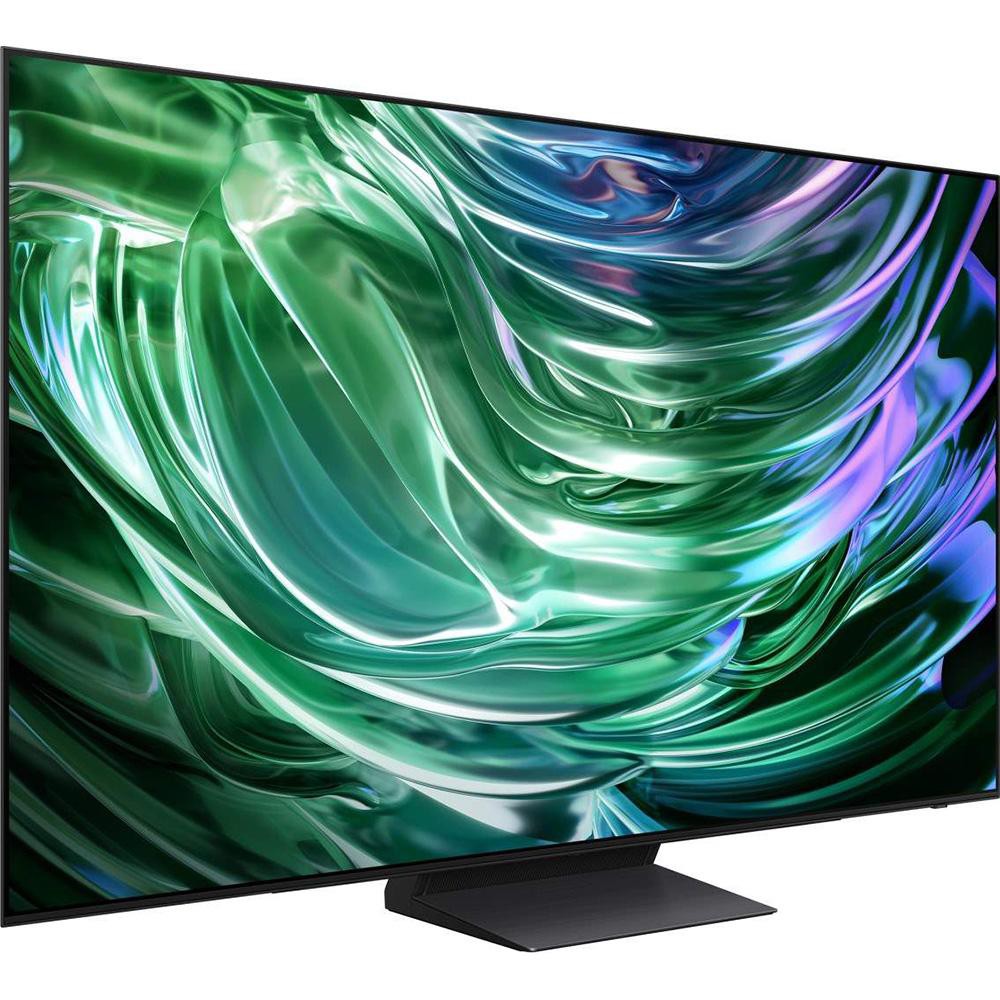
Samsung S90D OLED
If gaming is your main event, the Samsung S90D makes a strong case. Its QD-OLED panel layers quantum dots over the OLED base for exceptionally pure, saturated color that stays vivid even at high brightness, and it holds that color better than most from off-angle seats, great for a room full of players. Pair that with OLED's instant pixel response and you get razor-clean motion with zero smearing in fast shooters and racers.
The gaming toolkit is complete: four HDMI 2.1 ports at up to 144Hz, VRR with G-Sync and FreeSync, low input lag, and Samsung's Gaming Hub for cloud play. Tizen is fast and app-rich. The one trade-off is HDR format, since Samsung uses HDR10+ instead of Dolby Vision, so a slice of streaming content will fall back to standard HDR10. If your library leans toward console and PC gaming with punchy color, the S90D is built for you.
Pros
- QD-OLED panel delivers exceptionally pure, saturated color that stays vivid when bright
- Four HDMI 2.1 ports with up to 144Hz, VRR, G-Sync, and FreeSync
- Instant OLED pixel response for the cleanest motion in fast games
- Better off-angle color retention than typical panels for group viewing
- Fast Tizen platform with a dedicated Gaming Hub for cloud gaming
Cons
- No Dolby Vision support, so some HDR content falls back to HDR10
- Not quite as bright at the very top as the MLA WOLED G4
- Tizen's ad-heavy interface will not be for everyone
3. Sony Bravia 8 — Best Picture Processing
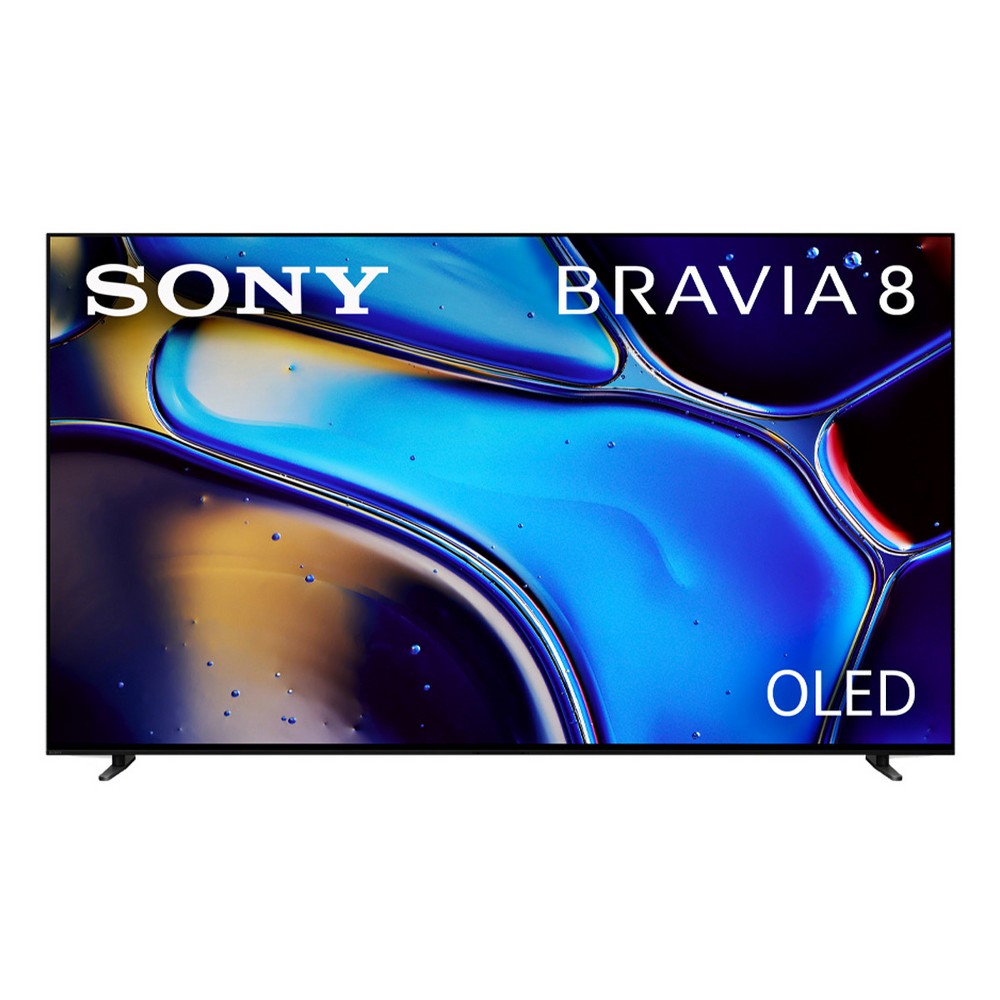
Sony Bravia 8 OLED
When you care most about how natural and cinematic the picture looks, the Sony Bravia 8 earns its spot. Sony's processing is the quiet hero here: it handles upscaling, tone mapping, and motion with a restraint that makes everything look real rather than juiced. Skin tones stay believable, film grain is preserved instead of scrubbed away, and gradients in a sunset roll smoothly with no banding. On its WOLED panel with perfect blacks, a well-mastered film simply looks right.
It also runs Google TV, which is clean and easy to navigate with strong voice search and Chromecast built in, plus full Dolby Vision support for the best HDR. For gaming it offers two HDMI 2.1 ports at up to 120Hz with VRR, which is plenty for a console and a PC even if it trails the four-port sets. Sony's audio, with sound projected through the panel itself, is among the best built-in TV sound you will hear. If cinematic accuracy is your priority, the Bravia 8 is the connoisseur's choice.
Pros
- Sony's industry-leading processing produces the most natural, cinematic image
- Perfect OLED blacks with beautifully smooth gradients and no banding
- Full Dolby Vision plus HDR10 for the best HDR from a huge content library
- Excellent built-in sound projected through the screen itself
- Clean Google TV platform with strong voice search and Chromecast
Cons
- Only two HDMI 2.1 ports, fewer than the gaming-focused rivals
- Tops out at 120Hz rather than 144Hz for PC gaming
- Not offered in an 83-inch size like the others here
4. LG C4 — Best Value
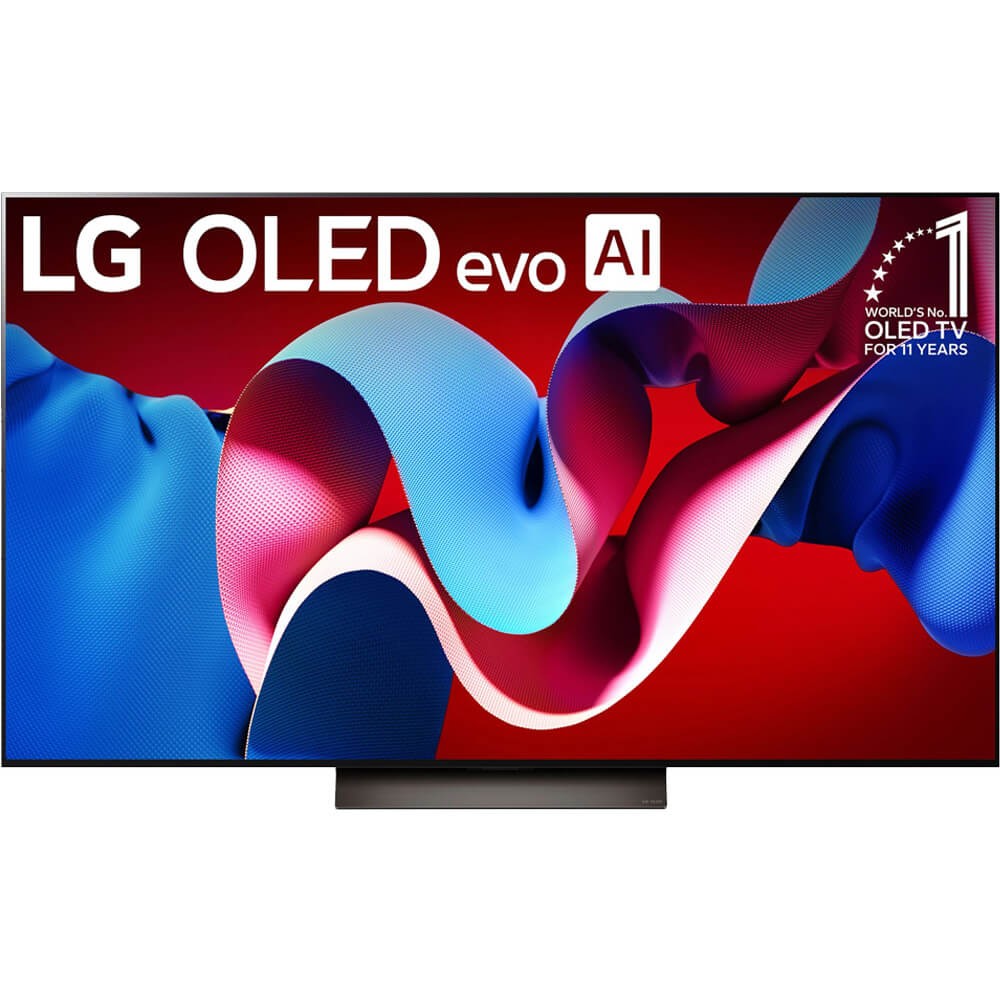
LG C4 OLED
The LG C4 is the smart-money pick, and it is not a big compromise. It gives you the same perfect blacks, infinite contrast, and gorgeous OLED picture as the flagships for noticeably less, because it uses a standard WOLED panel without the micro-lens array. In a dark room, most people would be hard-pressed to tell it apart from the G4, and it is available all the way up to 83 inches so you can still go huge on a budget.
It also refuses to skimp where it counts for gamers. You get four full HDMI 2.1 ports at up to 144Hz with VRR, G-Sync, and FreeSync, the same complete toolkit as the pricier LG, plus low input lag and the fast webOS platform with Dolby Vision. The only real trade is peak brightness: the C4 does not get as blindingly bright in HDR highlights as the MLA-equipped G4, which matters most in bright rooms. If you watch mostly at night and want OLED magic without the flagship spend, the C4 stretches every dollar further than anything else here.
Pros
- Same perfect blacks and infinite contrast as the flagships for less money
- Four HDMI 2.1 ports with up to 144Hz, VRR, G-Sync, and FreeSync
- Full Dolby Vision plus HDR10 support like the pricier LG models
- Available up to 83 inches so you can still go big on a budget
- Fast webOS platform with a huge app selection
Cons
- Lower peak brightness than the MLA WOLED G4, most noticeable in bright rooms
- Standard WOLED panel lacks the extra HDR punch of the flagship
- Design is a bit less premium than the wall-flush G-series
Which Should You Choose?
Pick the LG G4 if you want the best big-screen picture, period
If you want one large OLED that does everything at the highest level, the LG G4 is the clearest choice. Its MLA WOLED panel is the brightest here, so HDR pops even in a lit room, while keeping the perfect blacks OLED is famous for. Add four HDMI 2.1 ports at up to 144Hz and full Dolby Vision, and it is a flagship for movies and gaming alike. It is the best balance of brightness, contrast, and features on this list.
Pick the Samsung S90D or Sony Bravia 8 for gaming or cinema
Building a gaming battlestation? The Samsung S90D pairs a vivid QD-OLED panel with four HDMI 2.1 ports at up to 144Hz, VRR, G-Sync, and FreeSync for the cleanest, fastest play. Care most about a natural, filmic image with the best built-in sound? The Sony Bravia 8 leans on Sony's superb processing and full Dolby Vision. Match the set to how you actually spend your screen time.
Pick the LG C4 if you want OLED magic for less
You do not have to spend flagship money to get a stunning large OLED. The LG C4 delivers the same perfect blacks, infinite contrast, and complete four-port gaming feature set for noticeably less, giving up only some peak HDR brightness. If you watch mostly at night and want the biggest, best-value OLED you can hang on your wall, the C4 is the one to buy, and you can still go all the way to 83 inches.
Ready to Turn Your Room Into a Cinema?
The LG G4 gives you the brightest HDR and the deepest blacks on a screen big enough to disappear into, wrapped in a wall-flush design that looks as good off as on. Check current pricing and see why it tops our 2026 large OLED list.
Explore Brainstamped's Free ToolsFrequently Asked Questions
For most people, the LG G4 is the best large OLED TV in 2026. Its micro-lens array WOLED panel hits the highest peak brightness of this group so HDR pops even in a bright room, while keeping the perfect blacks and infinite contrast OLED is known for. It also offers four HDMI 2.1 ports and full Dolby Vision. If you mainly game, the Samsung S90D is the top alternative.
Both make each pixel its own light source for perfect blacks. WOLED, used by LG and Sony, adds a white sub-pixel for efficiency, and LG's premium panels add a micro-lens array to boost brightness. QD-OLED, used by Samsung, layers quantum dots over a blue OLED base for exceptionally pure, saturated color and strong off-angle viewing. WOLED tends to win peak brightness at the top; QD-OLED wins color purity.
For normal viewing, no. Burn-in only tends to appear from static logos or channel bugs left on screen for thousands of hours at high brightness. Every set here fights it with pixel shifting, logo dimming, and automatic panel-refresh cycles. If you watch varied content the way most people do, you are very unlikely to ever see it.
Because these are 4K screens, you can sit closer than you might think. For a 77-inch OLED, around 8 to 10 feet fills your vision while staying razor sharp, and for an 83-inch set, about 9 to 11 feet works well. Measure your seating distance first, then buy the biggest OLED that fits it. People rarely regret going bigger.
The Samsung S90D is our gaming pick, with four HDMI 2.1 ports at up to 144Hz, VRR, G-Sync, and FreeSync, plus a bright QD-OLED panel and instant pixel response for smear-free motion. The LG G4 and LG C4 match those gaming features too, so if you want gaming plus the best overall picture, the G4 is a superb dual-purpose choice.