
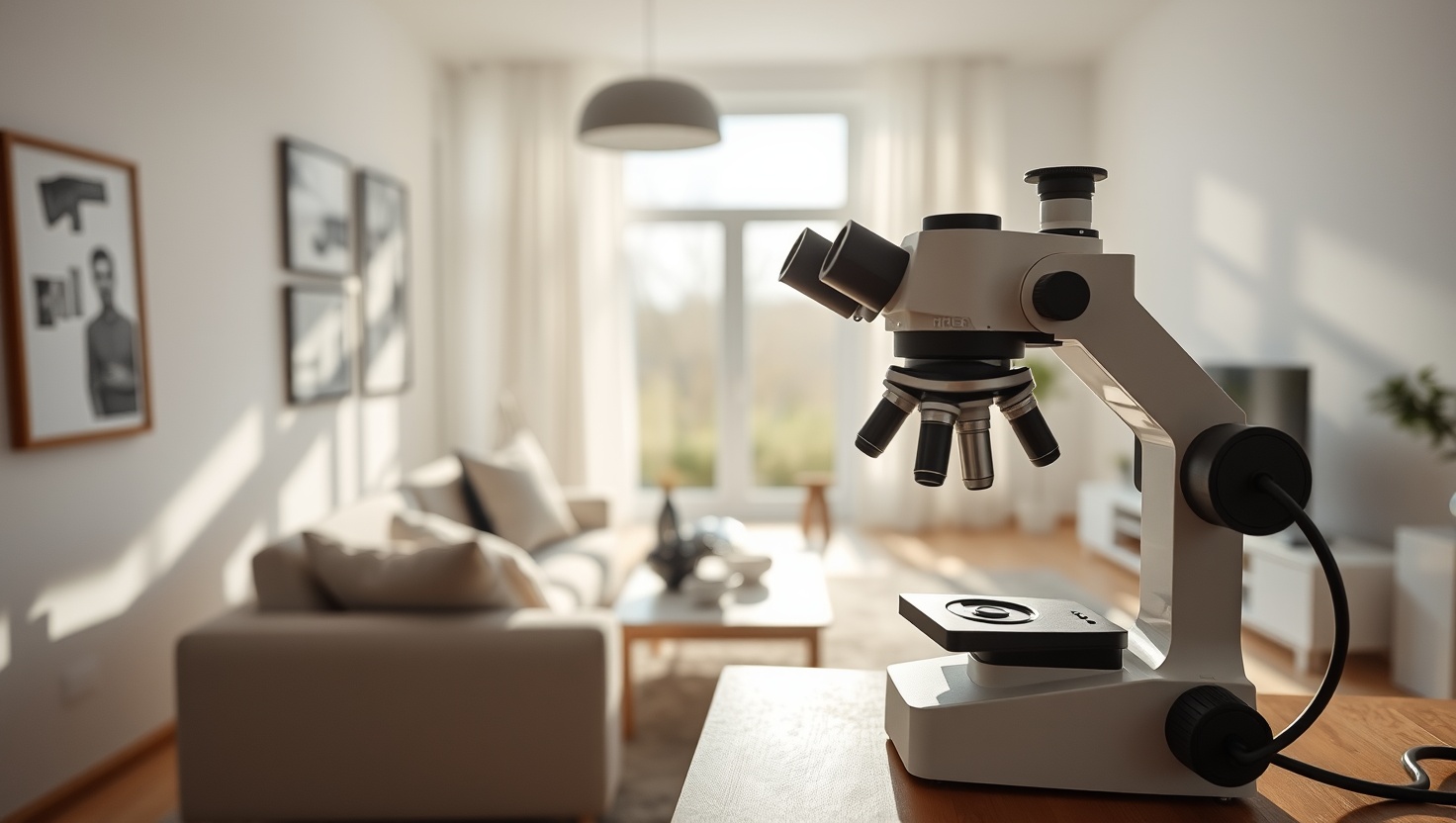
You want to actually see cells, crystals, and circuit boards, not squint at a blurry blob. In 2026, a great microscope finally makes that easy.
AmScope Microscope — Top Pick
With sharp coated glass optics, a wide useful magnification range, a comfortable binocular head, and a sturdy build, the AmScope Microscope is the best all-around microscope for students and hobbyists in 2026.
In a hurry? That's our pick. Want the reasoning and the full comparison? Keep reading.
A microscope opens a world that sits right under your nose but stays invisible to the naked eye: the pond-water critters swimming in a drop, the crystal lattice in a grain of salt, the solder joint you keep botching on a tiny board. The problem is that the market is flooded with toy scopes that look impressive in a photo and deliver mush the moment you look through them. Pick the wrong one and curiosity dies at the eyepiece.
The good news is that a genuinely good microscope no longer costs a fortune, and once you understand two ideas, choosing gets simple. First, decide whether you need a compound scope (high magnification for flat, thin things like cells on a slide) or a stereo scope (low magnification, 3D view for solid objects like coins, insects, and soldering). Second, learn to read optics, illumination, and stage quality so a spec sheet stops fooling you. Below you get the four scopes worth your money in 2026, plus a plain-English buyer's guide so you get it right the first time.
Key Takeaways
- Compound microscopes give high magnification for thin specimens on slides (cells, bacteria); stereo microscopes give a low-power 3D view of solid objects (coins, insects, soldering).
- For most people who want one do-it-all scope, the AmScope Microscope is our top pick: sharp glass optics, useful magnification range, and a solid build.
- New to it and on a student budget? The Swift Microscope gives you real learning-grade optics without the sting.
- Want to capture and share what you see? The Celestron Microscope's built-in digital camera puts the image on your screen.
- Building a serious home lab on a budget? The OMAX Microscope packs trinocular, camera-ready features for the price.
Compound vs Stereo: Pick the Right Kind of Microscope First
Before you compare a single spec, decide which type of microscope you actually need, because buying the wrong kind is the biggest mistake people make. A compound microscope uses a stack of lenses to reach high magnification, typically 40x up to 1000x or beyond. It shines on thin, flat, translucent things you place on a glass slide: plant and animal cells, bacteria, blood, pond microbes, and prepared specimen slides. Light shines up through the specimen from below, so the sample has to be thin enough for that light to pass through. If your dream is to see a cheek cell or watch a paramecium swim, you want a compound scope.
A stereo microscope, also called a dissecting microscope, does the opposite job. It runs at much lower magnification, usually 10x to 40x, and gives you an upright, 3D view of solid objects with plenty of working room underneath the lenses. That makes it the tool for coins and stamps, insects and rocks, jewelry, watch repair, and soldering circuit boards, where you need to see depth and manipulate the object with your hands. It will never show you a cell, and a compound scope will never let you comfortably solder under it. So match the tool to the mission: high-mag flat specimens equal compound, hands-on 3D objects equal stereo.
Most first-time buyers who want to explore biology and 'science stuff' should start with a good compound microscope, which is why our top picks lean that way. If your interest is hobby electronics, collecting, or crafts, steer toward a stereo model instead. And if you are torn, think about what you will look at most often in the first month, then buy for that.
Optics, Light, and Stage: The Details That Separate Good From Junk
Optics come first, and the single biggest quality divider is glass versus plastic lenses. Cheap toy scopes use plastic optics that smear detail and wash out color; a worthwhile microscope uses coated glass lenses that stay sharp and bright. Look for achromatic objective lenses, which correct color fringing so edges look crisp instead of rainbow-tinged. Ignore any listing that screams a giant magnification number as its headline. Above roughly 1000x on a light microscope you hit 'empty magnification,' where the image just gets bigger and blurrier, not more detailed. Useful magnification, backed by good glass, beats a big number every time.
Illumination and the condenser control how much detail you actually resolve. Modern scopes use cool, even LED illumination, which is bright, energy-efficient, and easy on your eyes over long sessions. On a compound scope, an Abbe condenser with an iris diaphragm sits under the stage and focuses light onto the specimen; dialing it in dramatically sharpens contrast and detail, and its absence is why bargain scopes look flat. A proper mechanical stage matters too: it holds the slide firmly and lets you nudge the specimen in tiny, precise increments with knobs, instead of shoving glass around with your fingers and losing what you found.
Finally, think about how you view and share. A monocular scope (one eyepiece) is the classic student setup and the most affordable. A binocular scope (two eyepieces) is far more comfortable for long viewing because both eyes relax. A trinocular scope adds a third port for a dedicated camera, letting you look and photograph at the same time. If capturing images matters to you, either choose a scope with a built-in digital camera or one with a camera-ready port, so you can put the hidden world on a screen and share it.
Quick Comparison
| Product | Best For | Type | Strength | Camera Ready |
|---|---|---|---|---|
| AmScope Microscope | Overall pick | Compound, binocular | Sharp glass optics + range | Yes (add-on) |
| Swift Microscope | Students | Compound, monocular/binocular | Learning-grade value | Yes (some models) |
| Celestron Microscope | Digital capture | Compound, digital | Built-in USB camera | Built in |
| OMAX Microscope | Home lab value | Compound, trinocular | Trinocular + features | Built in (trinocular port) |
1. AmScope — Best Overall
AmScope Microscope
The AmScope Microscope is the one we hand to almost anyone who asks for a real, do-it-all scope. It hits the sweet spot in 2026: genuine coated glass optics with achromatic objectives, a useful magnification range that covers everything from whole insects at low power to bacteria at high power, and a sturdy metal frame that survives a busy desk. LED illumination and an adjustable condenser mean you get bright, sharp, high-contrast images instead of the flat mush cheaper scopes serve up.
What makes it the top pick is balance. The binocular head is comfortable for the long sessions where curiosity really takes hold, the mechanical stage lets you track a moving microbe without fighting the slide, and the whole thing is camera-ready if you decide to capture and share later. It is the rare scope that satisfies a curious beginner and still holds up as your skills grow, which is exactly why it earns our number one spot.
Pros
- Sharp coated glass achromatic optics that stay crisp across the range
- Wide, genuinely useful magnification for both low and high-power viewing
- Comfortable binocular head for long viewing sessions
- Bright, even LED illumination with an adjustable condenser
- Sturdy metal build and a smooth mechanical stage
Cons
- Camera capture requires an add-on rather than being built in
- More scope than a casual, once-a-year user needs
- Learning to dial in the condenser takes a little practice
2. Swift — Best for Students
Swift Microscope
The Swift Microscope is the smart starting point for students and first-time explorers. It delivers real learning-grade glass optics, not the plastic junk that kills interest, at a price that does not sting if you are just finding out whether microscopy is your thing. The magnification range covers the standard biology-class steps, so cheek cells, onion skin, and pond water all come through clearly, and the controls are simple enough for a curious teenager to master in an afternoon.
Swift keeps things practical: durable build, cool LED lighting, and a mechanical stage on many models so beginners learn to move a slide properly from day one. It is available in comfortable monocular and binocular configurations, and some versions are camera-ready for sharing your first discoveries. If you want a trustworthy learning scope that respects your budget, this is the one to start with.
Pros
- Real glass achromatic optics at a beginner-friendly price
- Simple, forgiving controls ideal for students and first-timers
- Cool LED illumination that is comfortable for long study
- Durable build that holds up to classroom and home use
- Available with a mechanical stage and camera-ready options
Cons
- Entry models trade some refinement for the low price
- Top-end resolution trails pricier lab-grade scopes
- Monocular versions are less comfortable for long sessions
3. Celestron — Best Digital
Celestron Microscope
The Celestron Microscope is built for the moment you want to stop describing what you see and start showing it. Its built-in USB digital camera pushes the live view straight to your computer screen, so you can capture photos and video, annotate specimens, and share discoveries without ever squinting into an eyepiece to line up a phone. That screen-first approach is a gift for teaching, group viewing, and anyone who wants a record of their work.
Beyond the camera, Celestron brings the optical fundamentals you want: glass lenses, LED illumination, and a useful magnification range for everyday biology and hobby specimens. The digital workflow makes it especially strong for parents and teachers who want kids gathered around a monitor rather than fighting over a single eyepiece. If capturing and sharing the hidden world is your priority, Celestron's built-in camera makes it effortless.
Pros
- Built-in USB digital camera streams the view to your screen
- Easy photo and video capture for sharing and record-keeping
- Great for group viewing, teaching, and curious kids
- Glass optics and LED illumination for clear images
- No fiddling with phone adapters to capture a shot
Cons
- Digital sensor resolution can lag high-end eyepiece viewing
- Depends on a connected computer or screen to use fully
- Software and driver setup adds a step for beginners
4. OMAX — Best Value Lab
OMAX Microscope
The OMAX Microscope is the value champion for anyone building a serious home lab without a lab-sized budget. Its standout feature is a trinocular head: two eyepieces for comfortable viewing plus a dedicated third port for a camera, so you can look and photograph at the same time instead of choosing one or the other. That is a genuinely professional layout at a price that undercuts the usual lab brands.
OMAX backs the head with the fundamentals a real workflow needs: achromatic glass optics, a full magnification range, an Abbe condenser with iris for sharp contrast, and a solid mechanical stage. It asks a bit more of you to set up and dial in than a plug-and-play beginner scope, but the payoff is capable, camera-ready performance that feels like far more scope than you paid for. If you want lab features on a budget, OMAX delivers.
Pros
- Trinocular head lets you view and capture at the same time
- Achromatic glass optics with a full useful magnification range
- Abbe condenser and iris diaphragm for sharp, high-contrast detail
- Excellent features-per-dollar for a home lab
- Solid mechanical stage and sturdy overall build
Cons
- More setup and learning curve than a simple beginner scope
- Camera for the trinocular port may be a separate purchase
- Overkill for someone who only wants an occasional peek
Which Should You Choose?
Pick the AmScope if you want one microscope to do it all
If you want a single scope that serves a curious beginner and still holds up as your skills grow, the AmScope Microscope is the clearest choice. Its sharp glass optics, wide useful magnification range, comfortable binocular head, and sturdy build make it a joy to use for everything from insects to bacteria. It is the best all-around balance of quality, range, and value on this list.
Pick the Swift or OMAX based on your budget and ambition
Just starting out or shopping for a student? The Swift Microscope gives you trustworthy learning-grade optics without the high price, so curiosity gets a fair shot. Building a real home lab and want camera-ready, trinocular features for less? The OMAX Microscope packs pro-style hardware at a value price. Both are smart trades depending on whether you are beginning or scaling up.
Pick the Celestron if you want to capture and share what you see
Some people care most about showing their discoveries, not just seeing them. The Celestron Microscope answers that with a built-in USB digital camera that streams the live view to your screen for easy photos and video. It is perfect for teachers, parents, and anyone who wants kids gathered around a monitor. If sharing the hidden world matters most, Celestron makes it effortless.
Ready to See the Hidden World?
The AmScope Microscope gives you sharp glass optics and a magnification range that reveals everything from insect wings to living cells. Check current pricing and see why it tops our 2026 list.
Explore Brainstamped's Free ToolsFrequently Asked Questions
For most people, the AmScope Microscope is the best microscope in 2026. It pairs sharp coated glass optics with a wide, useful magnification range, a comfortable binocular head, and a sturdy build, so it works for curious beginners and grows with your skills. If capturing images matters most, the Celestron Microscope with its built-in camera is the top alternative.
A compound microscope reaches high magnification (roughly 40x to 1000x) for thin, flat specimens on a slide, like cells and bacteria, with light shining up through the sample. A stereo, or dissecting, microscope runs at low magnification (about 10x to 40x) and gives a 3D view of solid objects like coins, insects, and circuit boards for soldering. Choose compound for biology, stereo for hands-on hobby work.
For most biology and student use, a range up to 400x covers cells and microbes well, and 1000x handles bacteria with oil immersion. Ignore listings advertising huge numbers like 2000x on a light microscope; past roughly 1000x you hit empty magnification, where the image gets bigger but blurrier. Useful magnification backed by good glass optics beats a big headline number every time.
Always choose glass. Plastic lenses, common in toy scopes, smear detail and wash out color, which kills interest fast. Coated achromatic glass lenses stay sharp and correct color fringing so edges look crisp. Every pick on this list uses real glass optics, which is a big reason they deliver clear, satisfying images instead of a fuzzy blob.
Yes. The easiest route is a scope with a built-in digital camera like the Celestron Microscope, which streams straight to your screen. A trinocular scope like the OMAX Microscope adds a dedicated camera port so you can view and capture at once. Many binocular scopes, including the AmScope, are also camera-ready with an adapter.