Best Composting Tumblers for Small Spaces in 2026
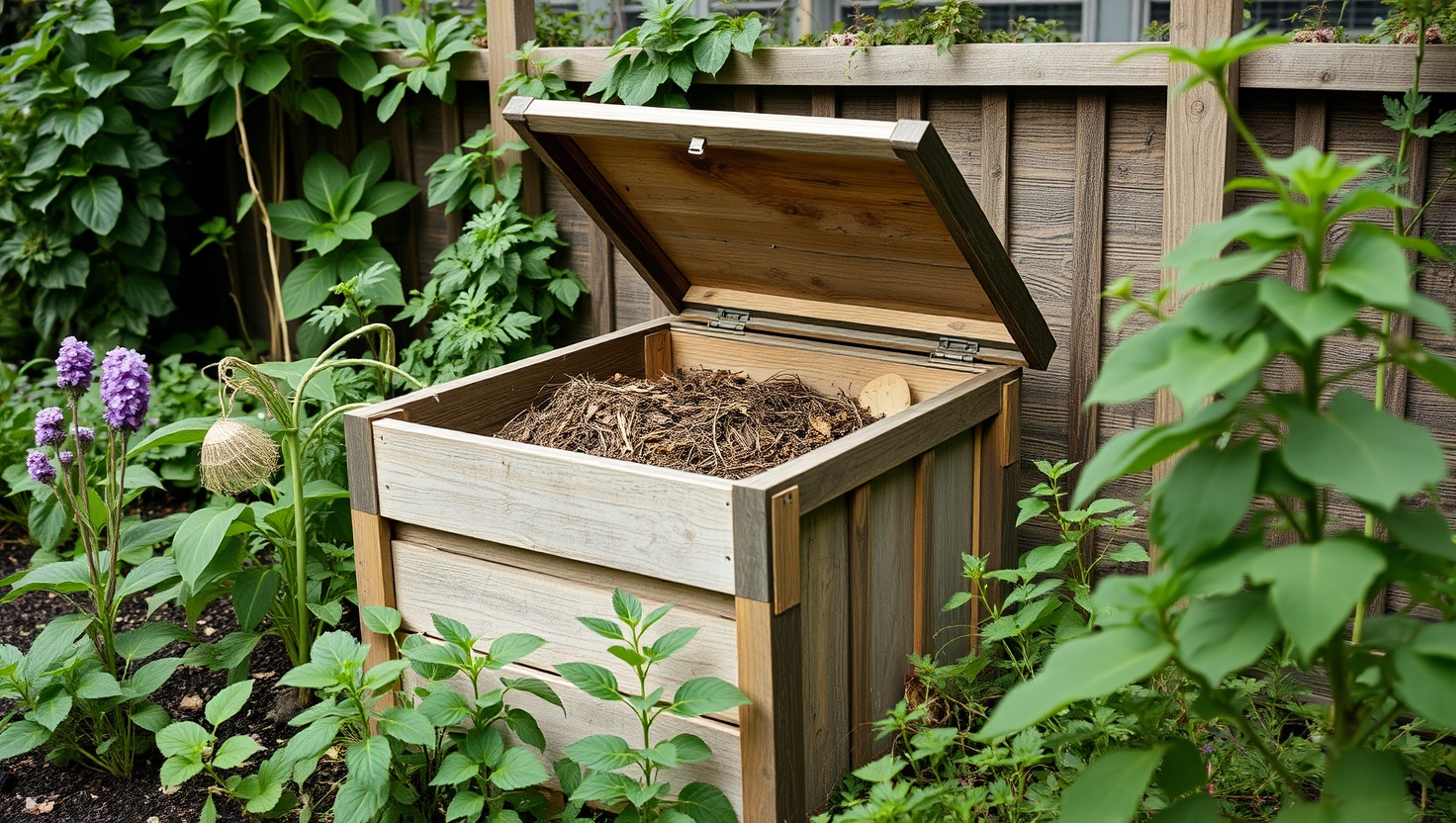
Most people throw away pounds of kitchen scraps every week — scraps that could become the richest soil amendment your garden has ever seen. You don't need a backyard the size of a football field. These compact tumblers fit on a balcony, patio, or tiny yard and turn waste into black gold in weeks, not months. No smell, no pests, no pitchfork required.
Key Takeaways
- Composting tumblers produce finished compost in 2–8 weeks vs. 3–12 months for open bins
- Sealed design keeps pests out and odors contained — apartment and balcony friendly
- Best overall: FCMP IM4000 Dual Chamber (~$100) — two batches running simultaneously
- Best value: VIVOSUN Dual Chamber (~$70) — 43-gallon capacity with nearly 10k positive reviews
- Best for tiny spaces: Miracle-Gro Small Composter (~$50) — balcony-sized at 18.5 gallons
- Most unique: Envirocycle Mini (~$150) — produces both compost AND liquid compost tea
Why Composting Tumblers Beat Traditional Bins
The classic compost pile works. Eventually. Given six to twelve months, the right mix of greens and browns, regular turning with a pitchfork, and enough patience to watch grass grow — you'll get decent compost. For most people, that's not realistic. The pile gets neglected, it attracts rats, and it turns into a guilt-inducing heap you stop looking at.
A composting tumbler solves every one of those problems. The sealed drum retains heat, which dramatically speeds up decomposition — bacteria work faster when the internal temperature climbs. Turning takes five seconds of spinning rather than fifteen minutes of pitchfork labor. The sealed design keeps rats, raccoons, and flies completely out. And because the unit is compact and contained, it fits in spaces where a traditional pile never could.
The speed difference is real. A well-managed tumbler in warm weather can produce finished compost in as little as two weeks. Even a loosely managed one delivers in four to eight weeks. Compare that to the typical open pile, and you understand why tumblers have taken over.
The small footprint is the other game-changer. The smallest tumblers on this list take up less floor space than a large trash can. They stand upright on a frame, which means you don't need ground access at all — a patio slab or balcony deck is enough.
How to Choose the Right Composting Tumbler
Single chamber vs. dual chamber
A single chamber tumbler works as one batch at a time. You fill it, spin it regularly, harvest the finished compost, then start again. Simple, cheaper, and perfectly fine if your scrap volume is low.
A dual chamber tumbler has two separate compartments on the same frame. While one side finishes composting, you add fresh scraps to the other side. This gives you a continuous supply — you're never waiting for a batch to finish before adding new material. For households that generate kitchen scraps consistently, dual chamber tumblers are worth the extra cost.
Capacity for your space
Don't over-buy on capacity. A single person or couple produces about 2–3 gallons of compostable scraps per week. A family of four generates more. The 18–20 gallon range is genuinely sufficient for most small-space composters. Bigger drums also take longer to reach the internal temperatures that speed up decomposition, unless you're adding material frequently.
Material and build quality
BPA-free recycled plastic is the standard for the drum itself — look for UV-protected material so it doesn't crack after a few summers in the sun. The frame matters too: galvanized or powder-coated steel holds up better than basic metal or plastic stands. Check that the turning mechanism (the handle or gear system) feels solid before you buy.
Ventilation and odor control
Composting is an aerobic process — the bacteria doing the work need oxygen. Look for tumblers with ventilation slots or fins built into the drum. Without proper airflow, you get anaerobic decomposition, which is slower and significantly smellier. Good ventilation keeps the process aerobic and the smell minimal.
Ease of turning
Some tumblers turn with a simple handle, others use a gear-driven drum system. Either works. What matters is that turning is easy enough that you'll actually do it every two to three days. If it's a struggle, you'll skip it, and your compost timeline doubles.
Quick Comparison
| Tumbler | Price | Capacity | Chambers | Best For |
|---|---|---|---|---|
| FCMP IM4000 | ~$100 | 37 gallon | Dual | Best overall |
| VIVOSUN Dual Chamber | ~$70 | 43 gallon | Dual | Best value |
| Miracle-Gro Small | ~$50 | 18.5 gallon | Single | Balconies & patios |
| Mantis CT02001 | ~$130 | 20 gallon | Single | Premium deck use |
| Envirocycle Mini | ~$150 | 17 gallon | Single + tea tray | Compost + liquid tea |
The 5 Best Composting Tumblers for Small Spaces in 2026
The FCMP IM4000 has been the best-selling composting tumbler on the market for years, and it earns that spot every time. The dual chamber design is the core advantage: load fresh scraps into one side while the other side quietly finishes decomposing. Flip the chambers, spin regularly, and you never have to wait for a complete batch to finish before adding new material. That's a big deal for households that cook at home and generate scraps consistently.
The 37-gallon total capacity splits roughly evenly between chambers — enough for a couple or small family without being so large that you struggle to maintain the right internal temperature. The BPA-free recycled plastic drum sits on a galvanized steel frame that holds up through rain, heat, and full seasons outdoors. Deep fins on the interior walls break up clumps and mix material as you spin, which replaces the pitchfork entirely. In warm weather with a good green-to-brown ratio, two weeks to finished compost is genuinely achievable.
Pros
- Dual chamber for continuous composting
- 2-week turnaround possible in warm weather
- BPA-free UV-protected recycled plastic
- Galvanized steel frame — built to last
- Interior fins mix material automatically
Cons
- Door latches can stiffen in cold weather
- Takes 30-45 min to assemble
- Larger footprint than single-chamber units
At $70, the VIVOSUN Dual Chamber undercuts the FCMP by $30 while actually offering more total volume — 43 gallons across two chambers. Nearly 10,000 positive reviews don't lie. This tumbler delivers the dual-chamber workflow (add to one side while the other finishes) at a price point that makes it a straightforward decision for most people.
The steel frame is sturdy and easy to assemble — most reviewers report getting it together in under 30 minutes. The deep internal fins do the mixing work as you spin, and the ventilation slots keep airflow moving through the drum. The door seal is solid: no escaped scraps, no pest entry points. For households that generate a moderate amount of kitchen waste, this is a near-perfect buy.
The slight trade-off compared to the FCMP is build polish — the latches and turning mechanism feel slightly less refined. But for $30 less and more capacity? That's easy to accept.
Pros
- 43-gallon capacity at the $70 price point
- Dual chamber for continuous output
- Nearly 10,000 positive customer reviews
- Sturdy steel frame with easy assembly
- Good ventilation and pest-proof seals
Cons
- Latch mechanism less polished than FCMP
- Larger footprint may not suit all patios
- Some users report lid fitting loosely
The Miracle-Gro Small Composter exists specifically for people who thought composting wasn't an option for them. At 18.5 gallons, it's the most compact tumbler on this list, and it was designed from the start for balconies and small patios. It sits low on its frame, takes up minimal floor space, and the lightweight drum is easy to spin even for kids or older adults.
The BPA-free, UV-protected recycled plastic holds up well in sun and rain. The single-chamber design keeps things simple — fill it up, spin it every couple of days, harvest when it's done, repeat. For a solo composting household producing one to two cups of scraps a day, the 18.5-gallon drum fills up and finishes in a sensible rhythm.
The $50 price point also makes it a low-risk way to find out if composting works for your lifestyle before committing to a larger, more expensive system. Most people who start here don't regret starting.
Pros
- Smallest footprint on this list — true balcony size
- BPA-free UV-protected recycled plastic
- Lightweight and easy to spin
- Affordable entry point at $50
- Designed specifically for small outdoor spaces
Cons
- Single chamber only — one batch at a time
- 18.5 gallons fills quickly for larger households
- Less thermal mass means slower in cold weather
The Mantis CT02001 Back Porch Composter earns its price with a gear-driven drum system that makes spinning noticeably smoother than handle-only designs. Instead of grabbing a handle and pushing, you turn a gear crank that rolls the drum evenly. It's a small difference that makes daily turning feel effortless — and that matters, because regular turning is the single biggest factor in how fast your compost finishes.
The 20-gallon single chamber sits on a compact frame specifically proportioned for deck and patio use. The build quality is solid throughout — this is the tumbler that feels like it was made with care rather than manufactured to a price point. The drum is fully sealed with no loose-fitting lids, and the ventilation system keeps airflow consistent without creating access points for pests.
If you're buying a composting tumbler once and you want it to last a decade, this is the one. The gear system shows no signs of wear after years of regular use, which is where cheaper tumblers tend to fail.
Pros
- Gear-driven drum — smoothest turning mechanism
- Compact footprint designed for decks and patios
- Premium build quality with long-term durability
- Fully sealed, no pest entry points
- Consistent internal ventilation
Cons
- $130 — the second-most expensive on this list
- Single chamber only
- 20-gallon capacity is relatively modest
The Envirocycle Mini is the only tumbler on this list that produces two outputs: solid finished compost from the drum, and compost tea from the base tray below. Compost tea is the liquid that drains from decomposing material — diluted with water, it becomes a powerful liquid fertilizer that feeds plants directly through their roots and leaves. Most composters pour this liquid away. The Envirocycle collects it by design.
The 17-gallon BPA-free drum sits inside a collection base. As your compost breaks down, liquid drains through ventilation holes and pools in the base tray. You dilute that liquid (roughly 10 parts water to 1 part tea) and apply it around your plants. It's the same principle as commercial liquid fertilizers, except you made it for free from kitchen scraps.
The compact footprint fits on any patio, and the tumbling mechanism is smooth. The $150 price is the highest on this list, but it's genuinely the most complete composting system — two products from one unit, both useful, both made from what would otherwise be landfill waste.
Pros
- Produces both compost AND liquid compost tea
- BPA-free design throughout
- Compact 17-gallon size for tight spaces
- Collection tray captures nutrient-rich liquid
- Genuinely unique dual-output design
Cons
- Most expensive at $150
- Single chamber only
- 17 gallons fills quickly with daily scraps
Getting the Most Out of Your Composting Tumbler
The green-to-brown ratio: the one thing that actually matters
Every piece of composting advice boils down to one number: roughly 1 part green material to 2–3 parts brown. Greens are nitrogen-rich — fruit and vegetable scraps, coffee grounds, fresh grass clippings. Browns are carbon-rich — dry leaves, torn cardboard, shredded newspaper, paper egg cartons.
Too many greens and your compost turns wet and smelly. Too many browns and decomposition slows to a crawl. Keep a bag of dry leaves or torn cardboard near the tumbler and add a handful every time you add kitchen scraps. That simple habit keeps the ratio close to right without any measuring.
Turn it every 2–3 days
The aerobic bacteria doing the decomposition work need oxygen. Turning introduces fresh oxygen and redistributes material so all of it gets exposed to the active zones. Two to three spins per week is the sweet spot for fast composting. Once a week still works, just slower. With a tumbler, this takes five seconds — there's genuinely no excuse to skip it.
Chop before you add
Smaller pieces decompose faster. Run your kitchen scraps through a rough chop before adding them — you don't need uniform tiny pieces, just break up anything large. Whole citrus rinds and banana peels can take weeks. Roughly chopped, they're done in days. Two minutes with a knife makes a real difference.
What not to add
Meat, fish, dairy, and oily or greasy foods don't belong in a composting tumbler — even sealed ones. They attract pests if the seal ever gets compromised, and they create anaerobic pockets that slow everything down and smell terrible. Stick to plant-based kitchen scraps and you'll never have an odor problem.
How to know when it's done
Finished compost looks like dark, crumbly soil. It smells like earth after rain — not like rotting food. If you can still identify individual pieces of material, it's not done. Give it another week and check again. When you harvest, use finished compost from one chamber while the other side keeps working.
Start Turning Scraps Into Garden Gold
The FCMP IM4000 is our top pick — dual chamber, proven design, and genuinely fast composting. Pick one up and stop throwing away your best soil amendment.
Get the FCMP IM4000 →