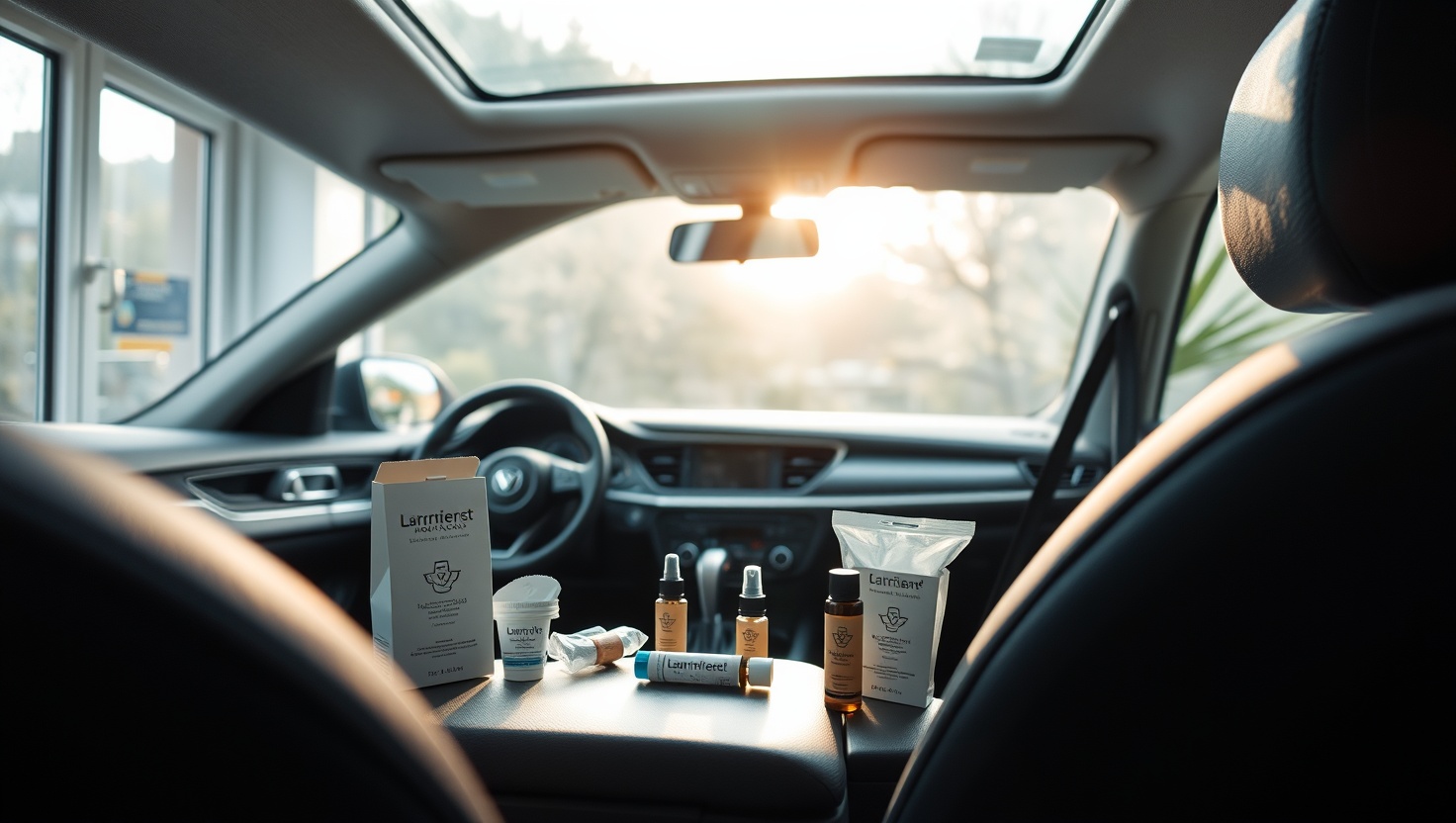
Your regular first aid kit has band-aids, antibiotic ointment, and maybe some ibuprofen. It handles scrapes, blisters, and headaches. It does absolutely nothing for the injuries most likely to actually end a life: severe bleeding from a deep cut, a power tool accident, a car crash, or a fall through a glass window. Uncontrolled hemorrhage is the number one cause of preventable death from trauma. A person can bleed to death from a severed artery in under five minutes. Average EMS response time in the US is 7-10 minutes. That math does not work in your favor unless you have the right tools within arm's reach.
CAT Gen 7 Tourniquet — Our Top Recommendation
If you buy one single piece of emergency equipment beyond a basic first aid kit, make it a CAT Gen 7 tourniquet. The Combat Application Tourniquet is the most widely deployed tourniquet in the world…
In a hurry? That’s our pick. Want the reasoning and the full comparison? Keep reading.
A bleeding control kit fills the gap between a band-aid and a paramedic. It contains a tourniquet for limb injuries, hemostatic gauze that accelerates clotting, chest seals for penetrating chest wounds, compression bandages, and trauma shears. These are the same tools used by EMTs, paramedics, and emergency room nurses — scaled down to a compact pouch that fits in a glove compartment, a kitchen drawer, or a backpack side pocket. The price ranges from $25 for a single-tourniquet basic kit to $90 for a professional-grade IFAK with redundant components.
The Stop the Bleed campaign — backed by the American College of Surgeons and the Department of Homeland Security — has trained over 2 million civilians in basic hemorrhage control since 2015. The message is simple: you are the first responder. By the time professionals arrive, the window for intervention may have closed. Having the right supplies and basic knowledge turns you from a bystander into someone who can keep a person alive until help gets there.
Key Takeaways
- Uncontrolled bleeding is the #1 cause of preventable trauma death — a tourniquet can stop it in under 30 seconds
- The CAT Gen 7 tourniquet (~$30) is the gold standard used by EMS professionals — every household should own at least one
- Hemostatic gauze (QuikClot, Celox) accelerates clotting 3-5x faster than plain gauze — critical for wounds where a tourniquet cannot reach
- Complete IFAK trauma kits ($55-$90) include tourniquet + hemostatic gauze + chest seal + compression bandage — everything for severe bleeding
- No certification is required to use these tools — free Stop the Bleed classes teach the basics in 2 hours
- Store one kit at home and one in each vehicle — severe bleeding emergencies happen in kitchens, garages, and on roads
Why Your First Aid Kit Is Not Enough
A standard first aid kit is designed for minor injuries — the kinds of things that heal on their own but benefit from cleaning and covering. Adhesive bandages, antiseptic wipes, gauze pads, tape, and pain relievers. This covers 95% of household injuries. But the remaining 5% — the deep lacerations, the severed arteries, the crushing injuries — represent nearly all the situations where someone actually dies before reaching a hospital.
The distinction is simple: a first aid kit manages wounds that have stopped bleeding on their own. A bleeding control kit stops wounds that will not stop bleeding on their own. These are fundamentally different emergencies requiring fundamentally different tools. Trying to stop arterial bleeding with a 4x4 gauze pad and medical tape is like trying to patch a burst pipe with a paper towel. The physics do not work.
Consider where severe bleeding events happen most often. The kitchen — where sharp knives and mandoline slicers send thousands of people to emergency rooms every year. The garage — where power saws, angle grinders, and sharp metal edges cause deep lacerations. The road — where car accidents produce lacerations, amputations, and penetrating injuries from debris. The yard — where chainsaws, axes, and hedge trimmers cause devastating cuts. None of these locations are far from where you keep your first aid kit. But your first aid kit does not contain a single tool designed to stop the kind of bleeding these injuries cause.
What Goes Into a Bleeding Control Kit
Every quality bleeding control kit contains the same core components, because the protocols for hemorrhage control are standardized across emergency medicine:
- Tourniquet: A wide strap with a windlass (twisting rod) that compresses an entire limb to cut off arterial blood flow. Used for severe arm and leg bleeding. The CAT (Combat Application Tourniquet) and SOF-T Wide are the two industry-standard options. Application takes 15-30 seconds.
- Hemostatic gauze: Gauze impregnated with a clotting accelerator (kaolin or chitosan). Packed tightly into wounds where a tourniquet cannot reach — neck, torso, groin, armpits. QuikClot and Celox are the two leading brands. Both are FDA-cleared and used by paramedics.
- Chest seal: An adhesive patch that covers a penetrating chest wound (stab, puncture, or impalement) to prevent air from entering the chest cavity and collapsing a lung. Vented chest seals have one-way valves that let trapped air escape while preventing new air from entering.
- Pressure bandage: An elastic wrap with a built-in pad (Israeli bandage style) that maintains firm compression over a wound after gauze packing. Holds everything in place so you can move to another task or another patient.
- Trauma shears: Heavy-duty scissors that cut through clothing, seat belts, and boots to expose wounds. You cannot treat what you cannot see.
- Nitrile gloves: Blood-borne pathogen protection. Put them on first, before touching anything.
The 5 Best Bleeding Control Kits for 2026
CAT Gen 7 Tourniquet — Best Single Item to Own
If you buy one single piece of emergency equipment beyond a basic first aid kit, make it a CAT Gen 7 tourniquet. The Combat Application Tourniquet is the most widely deployed tourniquet in the world — used by every branch of the US military, issued to law enforcement officers, carried by EMTs, and recommended by the American College of Surgeons for civilian bystander use. It is the gold standard for a reason: it works, it works fast, and it works with one hand so you can apply it to your own limb if needed.
The Gen 7 is the latest revision and adds a single routing buckle that makes it almost impossible to mis-thread under stress — a documented issue with earlier generations that occasionally led to failed applications. The Velcro strap wraps around the limb, threads through the buckle, and pulls tight. The aluminum windlass rod twists to increase compression until arterial flow stops. The entire application takes 15-30 seconds after minimal training.
A genuine CAT Gen 7 costs around $30. Be extremely cautious of sub-$15 tourniquets on Amazon — counterfeits are rampant, and a fake tourniquet made from inferior materials can fail under the tension required to compress a femoral artery. Buy from authorized distributors (North American Rescue) or verified Amazon sellers with the NSN (National Stock Number) printed on the packaging.
- Global gold standard — used by military, EMS, and law enforcement
- One-handed self-application design
- Gen 7 single routing buckle prevents mis-threading
- Aluminum windlass will not break under maximum torque
- No expiration — inspect annually for wear
- $30 for a single tourniquet — need a full kit for non-limb injuries
- Counterfeit risk — buy from verified sellers only
- Limb injuries only — cannot use on neck, torso, or groin
RhinoRescue IFAK Trauma Kit — Best Complete Kit
The RhinoRescue IFAK (Individual First Aid Kit) is the most complete bleeding control kit at this price point. It includes everything you need for the three major hemorrhage scenarios: a tourniquet for limb bleeding, hemostatic gauze for junctional wounds (groin, neck, armpit), and a vented chest seal for penetrating chest injuries. The MOLLE-compatible pouch organizes everything in labeled compartments so you can find what you need in seconds, even under extreme stress.
The included tourniquet is a CAT-style windlass design with one-handed capability. The hemostatic gauze uses kaolin-based technology for accelerated clotting. The chest seal is a vented design with a one-way valve. An Israeli-style pressure bandage provides compression after wound packing. Trauma shears, nitrile gloves, and a permanent marker (for writing tourniquet application time) round out the kit.
The MOLLE pouch is tear-away — pull the tab and the entire contents separate from the outer shell, giving you instant access without fumbling with zippers. The pouch attaches to belts, backpack straps, vehicle headrests, and MOLLE panels. For $55, this kit gives you professional-grade hemorrhage control capability in a package smaller than a paperback book.
- Complete hemorrhage control — tourniquet, hemostatic gauze, chest seal, pressure bandage
- Tear-away MOLLE pouch for instant access
- Labeled compartments — find components in seconds
- $55 for professional-grade contents
- Compact enough for glove compartment or backpack
- Tourniquet is generic CAT-style, not genuine NAR CAT
- Hemostatic gauze quantity is limited — one roll only
- No instruction card for untrained users
Blue Force Gear Micro Trauma Kit — Best Premium Compact
Blue Force Gear makes tactical pouches and load-bearing equipment used by US Special Operations Forces. Their Micro Trauma Kit NOW! brings that same design philosophy to a civilian bleeding control kit — every component is genuine North American Rescue (NAR), every stitch is made in the USA, and the pouch is engineered to be the smallest possible container that fits a full hemorrhage control loadout.
The kit includes a genuine NAR CAT Gen 7 tourniquet, NAR compressed gauze, a HyFin vented chest seal (the same model used by paramedics), nitrile gloves, and a permanent marker. The pouch itself is the star — BFG's Ultracomp laminate material is thinner and lighter than traditional Cordura nylon while maintaining tear resistance. The pull-tab opening deploys the entire contents in one motion. Closed, the kit is roughly the size of a deck of cards.
At $90, this is the premium option. You are paying for genuine NAR components (not generic equivalents), BFG's made-in-USA construction quality, and a pouch designed to the dimensional tolerances of professional tactical gear. For daily carry, vehicle storage, or attachment to a plate carrier or range bag, the BFG Micro Trauma Kit is the most compact and highest-quality option available.
- All genuine NAR components — no generic substitutes
- Ultra-compact — size of a deck of cards
- Made in USA — BFG quality construction
- One-pull deployment — entire contents accessible instantly
- HyFin vented chest seal — professional paramedic grade
- $90 — nearly double the RhinoRescue IFAK
- No hemostatic gauze included — compressed gauze only
- So compact that components are tightly packed — practice accessing them
QuikClot Advanced Clotting Gauze — Best Hemostatic Gauze
QuikClot is the hemostatic gauze that paramedicss, emergency physicians, and trauma surgeons have trusted for over a decade. The Advanced Clotting Gauze uses kaolin — a natural mineral clay — embedded into the gauze fibers. When kaolin contacts blood, it activates Factor XII in the coagulation cascade, accelerating clot formation by 3-5x compared to plain gauze. This is the tool you need for wounds where a tourniquet cannot be applied: the neck, the torso, the groin, the armpit — areas where major blood vessels run too close to the body core for external compression to work.
Each roll provides 3 inches by 4 yards of hemostatic gauze — enough to pack a deep wound cavity with firm, even pressure. The z-fold packaging allows you to feed the gauze directly into the wound without unrolling, which is faster and more controlled than trying to unwind a standard gauze roll under stress. Pack the gauze tightly into the wound, apply firm direct pressure for 3-5 minutes, and the kaolin does the rest.
The 2-pack at $25 gives you a primary and a backup — critical because wound packing sometimes requires more gauze than expected, and having a second roll eliminates the panic of running out mid-application. Shelf life is 5 years from manufacture when stored in sealed packaging at room temperature. After opening, use immediately — the kaolin activates on contact with moisture.
- Industry standard for hemostatic wound packing
- Kaolin-based — safe, non-exothermic, no shellfish allergens
- Z-fold design for controlled wound feeding
- 2-pack provides primary + backup
- 5-year shelf life in sealed packaging
- Gauze only — you still need a tourniquet for limb injuries
- Requires training to pack wounds effectively under pressure
- Single use — once opened, must be used immediately
TITAN Survival IFAK — Best Value Complete Kit
The TITAN Survival IFAK stands out for one reason: it includes two tourniquets instead of one. Every other kit at this price point includes a single tourniquet, which means that if both legs are injured, or if your first application fails and you need to reposition, you are out of options. Two tourniquets provide redundancy — the same philosophy that drives every serious emergency preparedness approach. One is none. Two is one.
Beyond the dual tourniquets, the TITAN kit includes hemostatic gauze (kaolin-based), a vented chest seal, an Israeli-style pressure bandage, trauma shears, emergency blanket, nitrile gloves, and a permanent marker. The tear-away MOLLE pouch is well-organized with internal elastic loops that hold each component in its designated position. Pull the rip-cord and everything is laid out in front of you.
The tourniquets are TITAN's own design — windlass-style with one-handed capability, aluminum rod, and a time-marking band. They are functional and well-made, though not NAR-certified like the CAT Gen 7. For home storage and vehicle use where you want maximum coverage at a reasonable price, the TITAN IFAK delivers the most comprehensive loadout under $80.
- Two tourniquets — redundancy for multi-limb injuries
- Complete IFAK loadout including emergency blanket
- Well-organized tear-away MOLLE pouch
- $75 for dual-tourniquet kit — strong value
- Tourniquets are not genuine NAR CAT — functional but not certified
- Larger pouch size than BFG or RhinoRescue
- Hemostatic gauze quantity is one roll
Quick Comparison
| Kit | Price | Tourniquet | Hemostatic | Best For |
|---|---|---|---|---|
| CAT Gen 7 | ~$30 | Yes (genuine NAR) | No | Essential single item |
| RhinoRescue IFAK | ~$55 | Yes (generic) | Yes | Best complete kit |
| BFG Micro Trauma | ~$90 | Yes (genuine NAR) | No | Premium compact carry |
| QuikClot Gauze | ~$25 | No | Yes (2-pack) | Add-on to existing kit |
| TITAN Survival IFAK | ~$75 | Yes (2x generic) | Yes | Best value complete |
A first aid kit handles the 95% of injuries that are minor. Pair it with a bleeding control kit for the 5% that are not.
Where to Keep Your Bleeding Control Kits
Bleeding emergencies are time-critical. Having the kit "somewhere in the house" is not good enough — you need it accessible in under 30 seconds from every location where severe injuries are most likely to occur.
- Kitchen: Mount a compact kit inside a cabinet door near the knife block. Kitchen lacerations are the most common severe bleeding event in residential settings.
- Garage/workshop: Hang a kit on the wall near your workbench. Power tools, sharp metal, and glass cause the deepest cuts in the home.
- Vehicle glove compartment: A compact IFAK fits in any glove box. Car accidents are the most common source of severe traumatic bleeding.
- Range bag or hiking pack: Clip a MOLLE-compatible kit to the outside. Outdoor activities involving tools, firearms, or remote locations demand immediate access.
- Central hallway or stairwell: A master kit in a central location serves as a backup for the whole house.
Your vehicle emergency kit should include more than jumper cables. Add a bleeding control kit to handle the injuries that happen on the road.
Be Ready When It Counts
Practical emergency preparedness guides — gear that works, skills that matter. No fear-mongering, just readiness.
Your pets need emergency supplies too — a dedicated pet emergency kit covers their specific needs alongside yours.
The Five-Minute Window
A severed artery can kill in under five minutes. A $30 tourniquet and 15 seconds of training can stop it. This is the most consequential $30 you will ever spend on your household.
See the CAT Gen 7 Tourniquet →Frequently Asked Questions
Formal certification is not required. The core techniques — direct pressure, wound packing, and tourniquet application — can be learned in a free 2-hour Stop the Bleed class. Tourniquets are designed for one-handed use by untrained civilians. Training makes you faster and more confident, but the tools work even without it.
Modern research shows up to 2 hours without permanent tissue damage. Average urban EMS response is 7-10 minutes — well within that window. Once applied, never remove a tourniquet. Write the time of application on the tourniquet or the patient so paramedics know the duration.
Hemostatic gauze is impregnated with a clotting agent — kaolin (QuikClot) or chitosan (Celox) — that accelerates the body's natural coagulation 3-5x faster than plain gauze. Pack it into the wound, apply firm pressure for 3-5 minutes, and the agent forms a stable clot. Shelf life is 3-5 years sealed.
Keep one at home in a central location every family member knows, and one in each vehicle's glove compartment. Kitchen, garage, and workshop are the highest-risk locations at home. Avoid sustained heat above 120°F which can degrade hemostatic agents — no dashboards in summer.
Tourniquets do not expire — inspect annually for fraying or UV damage. Hemostatic gauze and chest seals carry 3-5 year expiration dates. Nitrile gloves degrade over 3-5 years. Replace perishable components every 3 years as a precaution — total cost is typically $15-$30 for replacements.