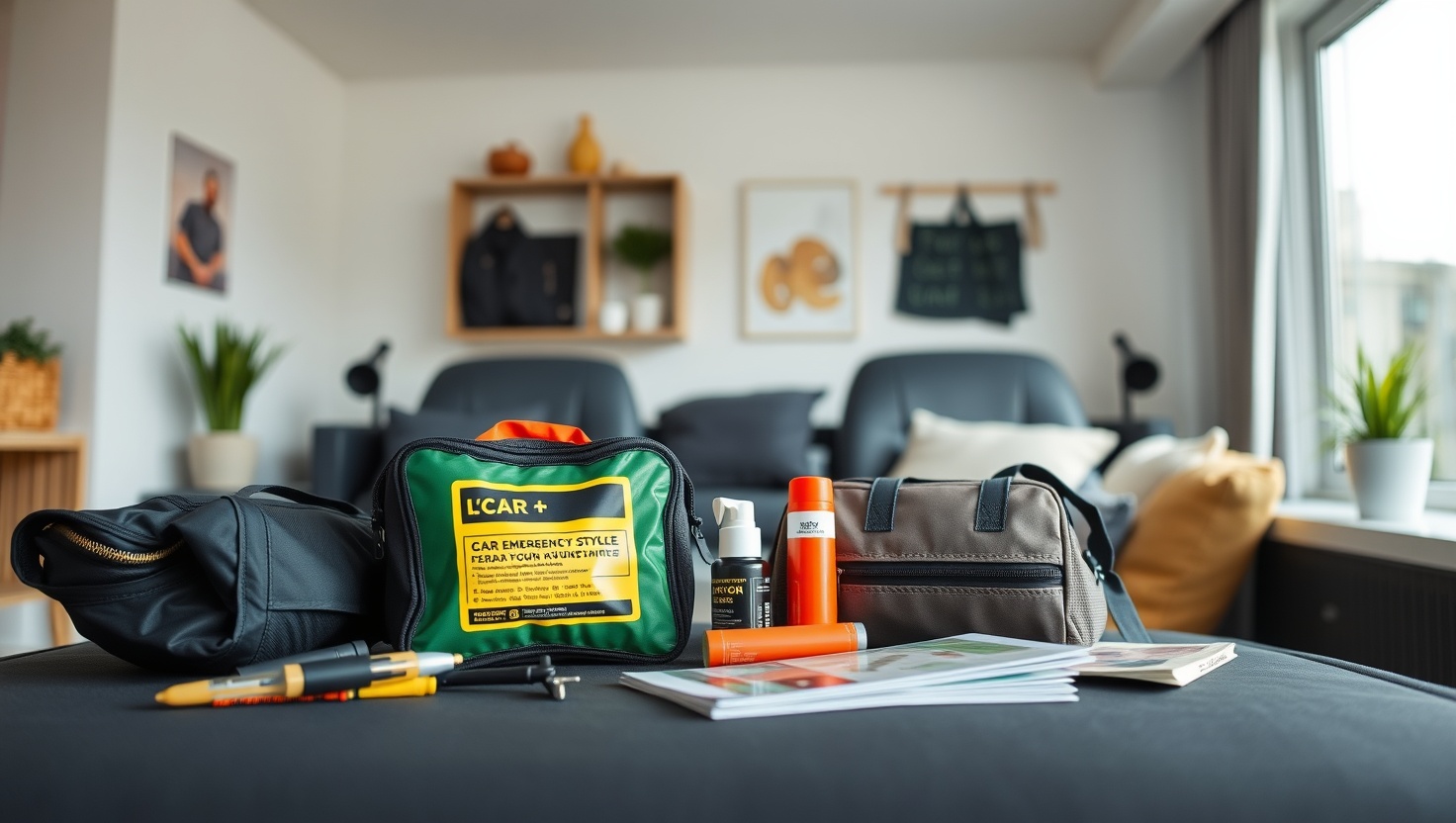
Here is a number that should get your attention: 69 million roadside breakdowns happen every year in the United States. That is roughly one breakdown for every five drivers on the road. And when it happens to you — stranded on the shoulder of a dark highway, late at night, in the rain — the average wait for help is 45 minutes. The average tow bill runs $150 to $300. And yet most cars on the road have absolutely nothing useful in the trunk.
No jumper cables. No flashlight. No first aid kit. No reflective triangle. Just a spare tire that hasn't been checked in three years and maybe a random ice scraper from 2019.
Here is the empowering flip side of that number: 20 minutes and roughly $150 builds a car emergency kit that handles 90% of common roadside situations without waiting for a tow truck, without calling anyone, and without standing helplessly on the shoulder while traffic rushes past at 70 mph. Most breakdowns — dead battery, flat tire, minor injury, phone out of battery — are completely solvable if you have the right gear in your trunk.
This guide walks you through every item worth carrying, explains exactly why each one earns its place, covers seasonal upgrades for winter and summer, and helps you decide between building your own kit and buying a pre-made one. Whether you drive a 2005 sedan or a brand-new SUV, this is the kit that gives you genuine confidence on the road.
This article contains affiliate links. We earn a small commission on purchases at no extra cost to you. We only recommend products we genuinely believe improve your roadside safety and preparedness.
Key Takeaways
- A portable jump starter replaces jumper cables and works without a second vehicle — it also charges your phone and costs $60-$120
- LED road flares or reflective triangles are legally required in many states and are the single most important safety item when stopped on a highway
- A tire repair kit with a portable air compressor handles slow leaks and minor punctures — the two most common flat tire scenarios — without changing the tire at all
- Seasonal additions (winter traction aids, summer cooling items) take your kit from basic to comprehensive for another $30-$50
- Pre-made kits offer convenience; DIY kits let you choose better quality for each category — both approaches work
- The total cost of a complete, high-quality car emergency kit ($100-$200) is less than a single tow truck call
Why Most Cars Are Completely Unprepared
Think about the last time you actually opened your trunk and checked what was in there. Not to grab groceries — to actually look at your emergency gear. For most people, that answer is either "when I bought the car" or "never." That is completely normal. Most of us operate on the comfortable assumption that breakdowns happen to other people, or that roadside assistance apps and cell phones make physical preparedness obsolete.
But here is what that assumption misses. Cell service is often weakest in exactly the places where breakdowns happen: rural highways, mountain roads, areas with poor infrastructure. Your phone battery has a habit of dying at the worst possible time. Roadside assistance apps cannot fix a dead battery at 11pm when the nearest service provider is 40 minutes away. They cannot put a reflective triangle behind your car to stop a distracted driver from hitting you while you wait.
The Most Common Roadside Breakdowns
According to AAA and roadside assistance data, the five most common breakdown causes are: dead or weak battery (accounting for roughly 40% of all calls), flat tire or tire blowout (about 15%), keys locked in the vehicle (10-15%), out of fuel (8%), and mechanical failures including overheating. Notice that four out of five of those top causes are completely or partially solvable with a well-stocked trunk kit. You don't need to be a mechanic. You need the right gear and two minutes of calm thinking.
The 45-Minute Reality
Forty-five minutes is the national average wait time for roadside assistance. In rural areas, in bad weather, or during peak hours, that stretches to 90 minutes or more. Forty-five minutes on the shoulder of a busy highway is genuinely dangerous — NHTSA data consistently shows that roadside accidents are more common than most people realize. Every minute you spend exposed on a highway shoulder is a minute of real risk. A kit that gets your car moving again in 10-15 minutes isn't just convenient. It's a safety decision.
The Essential Items: What Goes in Every Kit
These ten items cover the most common roadside emergencies and the most important safety situations. If your trunk has all of these, you are better prepared than the vast majority of drivers on the road today.
1 Portable Jump Starter
A dead battery is the number one cause of roadside breakdowns — and a portable jump starter (also called a jump pack or battery booster) is the one item that makes jumper cables completely obsolete. Traditional jumper cables require a second vehicle with a working battery, which you may not have access to in a parking structure, on a rural road, or late at night when the parking lot is empty. A portable jump starter is self-contained: charge it at home, throw it in your trunk, and it can restart most gas-powered vehicles 20 or more times on a single charge.
Modern units are compact — roughly the size of a thick paperback book — and most include USB ports that double as phone chargers. That means when your phone dies right when you need to call for help, your jump starter saves the day twice. Quality units hold a charge for 6-12 months in storage, so you charge it once and forget it until you need it.
Look for a jump starter rated for at least 1000 peak amps for passenger vehicles. For trucks or SUVs with larger engines, go for 2000+ peak amps. Brands like NOCO, Tacklife, and Gooloo consistently earn strong reviews for reliability.
Check Portable Jump Starters on AmazonWe earn a commission on purchases — at no extra cost to you.
2 Compact First Aid Kit — Vehicle-Rated
Roadside incidents frequently involve minor injuries: cuts from handling a flat tire, scrapes from getting out of a car in a rush, burns from touching something hot under the hood. In the event of an accident — your own or one you encounter while driving — having a first aid kit could make a meaningful difference in the minutes before emergency services arrive.
Buy a kit specifically rated for vehicle or travel use. These are designed to fit in small spaces and include the most common roadside injury supplies: adhesive bandages in multiple sizes, antiseptic wipes, gauze pads, medical tape, nitrile gloves, scissors, and a mylar emergency blanket. The American Red Cross vehicle kit is a reliable choice that covers the basics without taking up trunk space.
Check the kit once a year and replace any expired or used items. A first aid kit that's missing its bandages or has expired antiseptic wipes is barely better than no kit at all. Set a calendar reminder — January 1st works well — to do a quick inspection.
3 LED Road Flares or Reflective Triangles
This is the item most people skip because it seems like overkill. It is not. When your car is stopped on the shoulder of a highway — or even a busy surface road at night — your hazard lights alone are not enough to warn approaching drivers with enough time to change lanes or slow down. Reflective triangles or LED road flares dramatically increase your visibility and give drivers the time they need to react safely.
Traditional road flares are bright but burn out, create fire hazards, and cannot be placed near gas leaks. LED road flares are reusable, weatherproof, visible from a quarter mile away, and safer in every scenario. They typically run on AA batteries or are rechargeable, and a good set lasts for years. Place them 50 feet, 100 feet, and 200 feet behind your vehicle on the highway — three triangles or flares gives oncoming traffic three warnings, each one more urgent than the last.
Reflective triangles are required by law in some states. Even where they aren't, consider them required by common sense. A pack of three foldable reflective triangles or LED flares takes up almost no space and weighs almost nothing.
Check LED Road Flares on AmazonWe earn a commission on purchases — at no extra cost to you.
4 Tire Repair Kit + Portable Air Compressor
Not every flat tire requires a full tire change. In fact, the majority of flat tires — slow leaks from nails or screws, minor sidewall punctures — can be temporarily repaired with a tire plug kit and re-inflated with a portable compressor in 10-15 minutes. This doesn't replace a proper repair at a tire shop, but it gets you mobile and off the shoulder, which is the only goal that matters in the moment.
A tire plug kit includes everything you need to seal a puncture from a nail or screw: reamer tool, plug insertion tool, strips of rubber plug material, and rubber cement. The repair is strong enough to drive 50-100 miles to a shop at normal speed. Pair it with a portable 12V air compressor that plugs into your car's power outlet, and you can re-inflate a tire that's been sitting low for weeks — or fully reinflate after plugging a puncture.
Keep in mind: plug kits don't work on large gashes, blowouts, or damage near the sidewall seam. If the damage is severe, you'll need your spare or a tow. But for the most common flat scenarios — the slow leak from road debris — this kit is a trunk essential.
Check Tire Repair Kits and CompressorsWe earn a commission on purchases — at no extra cost to you.
5 Multitool + Basic Tool Set
You do not need to carry a full mechanic's toolbox in your car. But a quality multitool — pliers, wire cutter, knife, screwdrivers, bottle opener — plus a few key items covers a surprising range of minor roadside repairs. Leaking hose clamp? A flathead screwdriver and a few minutes of tightening. Loose battery terminal causing intermittent electrical issues? Pliers or a small wrench. Wiper blade that came loose? Easily fixed with a flathead.
Supplement the multitool with a compact roadside tool kit: adjustable wrench, a few hex keys, electrical tape, zip ties (these are vastly underrated for temporary roadside fixes), duct tape, and a pair of nitrile gloves so you're not handling an engine or battery with bare hands. The total weight of this kit is under two pounds and the total cost is $20-$40.
A quality multitool like the Leatherman Wave or Victorinox SwissTool is worth paying for — cheap multitools break exactly when you need them most. Consider this one item where buying once and buying well is the smarter move.
6 Flashlight — Hand-Crank or Long-Life LED
A flashlight seems obvious. Yet most people either don't have one in their car, or they have one with dead batteries that hasn't been checked in two years. A LED flashlight with long battery life or a hand-crank model that never runs out is a genuine emergency essential. Changing a tire in the dark without a flashlight is difficult, slow, and dangerous. Signaling for help, reading a map, checking under the hood — all dramatically easier with a good light.
For a car kit, a hand-crank LED flashlight is ideal because there's no battery to drain. A few minutes of cranking provides an hour or more of light. Alternatively, a heavy-duty LED flashlight that uses AA batteries — and comes with fresh batteries sealed inside a bag — is reliable and powerful. For your car, choose a model that can stand upright on its own (so it illuminates your work area hands-free) and has a flashing or SOS mode for emergency signaling.
Store it somewhere accessible — not buried under everything else in your trunk. The glovebox or center console is better than the trunk for your primary flashlight. A second, larger beam flashlight in the trunk is a bonus.
7 Emergency Blanket + Rain Poncho
A mylar emergency blanket is the most space-efficient item on this list: it weighs an ounce, folds to the size of a playing card deck, and reflects 90% of your body heat back to you. If you're ever stranded in winter — waiting hours for help in a car that's running low on gas or has mechanical failure in freezing temperatures — an emergency blanket is what keeps hypothermia at arm's length. Don't dismiss this one because it seems dramatic. A 45-minute wait at 20°F is genuinely uncomfortable. A 3-hour wait is a medical concern.
A packable rain poncho addresses the other weather scenario: working on your car in the rain. Changing a tire, checking under the hood, setting up road flares, waiting for help while it pours — all of these are miserable without rain protection. A poncho weighs almost nothing, costs $5-$10, and covers your work clothes when you're kneeling by a flat tire on a wet highway shoulder.
Keep two of each — an emergency blanket and a poncho — if you regularly drive with passengers. The extra weight and cost is negligible.
8 Water + Non-Perishable Snacks
A 45-minute wait feels very different when you're hydrated and you've had a snack bar versus when you've been driving for four hours and haven't eaten since lunch. Practical? Absolutely. But this also addresses a real safety concern: dehydration and low blood sugar impair decision-making and physical performance — exactly the abilities you need most in a roadside emergency.
Keep at least one 500ml bottle of water in your kit at all times. In summer, rotate it every few months — heat accelerates plastic leaching and degrades the water. A few individual-serving snack bars (granola bars, protein bars, or energy chews) with a long shelf life round this out perfectly. Choose bars with at least a one-year shelf life and check the expiry when you do your seasonal kit inspection.
If you drive with children, this category moves up the priority list significantly. Kids get hungry and thirsty fast, and a parent managing a roadside situation while also managing hungry kids is a much harder problem than a parent managing a roadside situation with snacks on hand.
9 Phone Charger + Paper Maps
Your phone is your most important tool in a breakdown scenario — it's your communication device, GPS, roadside assistance app, and flashlight. A dead phone is a serious problem. Your portable jump starter (step 1) includes USB charging in most modern models, which is your primary backup. But a dedicated car phone charger that stays plugged into your power outlet is your first line of defense — it means your phone stays charged while you drive and is ready when you need it.
Keep a USB-C and Lightning cable in your kit (or a multi-tip cable) so you can charge your phone regardless of model. Store them in a small zip bag so they don't tangle.
The paper map argument sounds antiquated, but consider this: Google Maps and Waze are completely useless without cell service. A road atlas or even a regional paper map costs $10-$15 and gives you navigation capability when your phone is dead, your data is gone, and the area you're in doesn't have reliable coverage. Keep one in the glovebox. You will feel foolish carrying it right up until the one day you actually need it — at which point you will feel like a genius.
10 Complete Pre-Made Kit Option
Building your own kit lets you choose better quality for each individual item. But if you want to get started immediately — today, not after two weeks of researching each item individually — a quality pre-made car emergency kit gives you 80-90% of what you need in a single purchase, usually in a convenient bag or case that keeps everything organized.
Pre-made kits from brands like Lifeline, Thrive, and AAA typically include a first aid kit, jumper cables or jump starter, reflective triangles, basic tools, tow rope, flashlight, and emergency blankets. Quality varies significantly by price point. Kits in the $50-$100 range from reputable brands provide solid baseline protection. Kits under $20 often cut corners on the items that matter most — jumper cables that are too thin to carry real current, first aid kits with the bare minimum supplies.
The smartest approach: buy a good pre-made kit as your foundation, then supplement it with a portable jump starter and LED road flares, which most pre-made kits either omit or include in lower quality versions.
Check Complete Car Emergency Kits on AmazonWe earn a commission on purchases — at no extra cost to you.
Seasonal Additions: Winter Kit vs. Summer Kit
A year-round baseline kit handles the common scenarios. But the specific dangers of winter driving versus summer driving are different enough that seasonal additions make a real difference. Think of these as upgrades you swap in and out twice a year — or simply add in if you drive through varied climates.
Winter Kit Additions
- Ice scraper with long handle
- Snow brush for clearing windows
- Cat litter or sand (traction under tires)
- Folding shovel for digging out
- Extra mylar blankets (2-3 total)
- Warm gloves and a wool hat
- Hand warmers — chemical or reusable
- Traction boards (for deep snow)
- Windshield de-icer spray
- Extra warm clothing layer
Summer Kit Additions
- Sunscreen (SPF 50+)
- Extra water — minimum 1 liter per person
- Electrolyte packets or sports drink
- Cooling towel
- Insect repellent
- Hat with brim for sun protection
- Collapsible windshield sun shade
- Pet water bowl and water if traveling with animals
- Extra phone charger (heat drains batteries faster)
Winter additions are the more critical of the two. Being stranded in summer in most of the US is uncomfortable. Being stranded in a snowstorm overnight on a rural road without extra blankets, warm clothing, or traction aids is a genuine survival situation. If you live anywhere that sees freezing temperatures or snow, do not skip the winter kit. It weighs less than 10 pounds and could save your life.
Pre-Made Kit vs. DIY: What's Actually Better?
This is the question most people get stuck on. The honest answer: it depends on how much time you want to invest and what level of quality matters to you. Here's the clear breakdown.
| Factor | Pre-Made Kit | DIY Kit |
|---|---|---|
| Time to assemble | 10 minutes (order + receive) | 1-3 hours of research and purchasing |
| Cost | $50-$120 for quality kits | $80-$200 total depending on items |
| Item quality | Good to very good at $80+ price points | Excellent — you choose each item |
| Organization | Usually comes in a case or bag | You provide the bag/case |
| Jump starter | Often includes basic cables or jump pack | You choose the exact model and amp rating |
| Customization | Fixed contents — add-ons required | Fully tailored to your vehicle and needs |
| Best for | Drivers who want done-now simplicity | Drivers who want best-in-class per item |
| Our verdict | Excellent starting point | Best final result if you invest the time |
The smartest approach for most drivers: buy a quality pre-made kit as your immediate baseline — get it ordered and in your trunk today — and then add a standalone portable jump starter and a set of LED road flares. These two additions represent the highest-value upgrades over what most pre-made kits include, and they're available separately for $60-$120 combined. The rest of the pre-made kit covers the remaining gaps effectively.
Top Item-by-Item Breakdown
If you go the DIY route, here is what to prioritize in terms of quality versus where budget options are perfectly fine.
Spend more on: Portable jump starter (this is your most-used item and quality matters for reliability), LED road flares (cheap ones fail in rain), and the multitool (cheap multitools break when you apply real force).
Budget options are fine for: Emergency blankets (the mylar material is essentially the same across price points), rain ponchos (disposable ones work perfectly), first aid kit supplies (name-brand adhesive bandages are genuinely better, but a mid-tier kit works), and snacks and water (any name-brand works).
What to Do in the First 60 Seconds of a Breakdown
Having the gear is step one. Knowing what to do with it under stress is step two. Here is the sequence that keeps you safe and gets you moving again fastest.
Immediate Safety Steps
- Turn on hazard lights immediately — before you're even fully stopped. This is reflex-level behavior.
- Steer to the right shoulder as safely as possible. Even a flat tire can be driven on slowly to reach a safer stopping point — a flat tire is repairable, a collision is not.
- Turn your wheels toward the ditch (not toward traffic) once stopped. If hit from behind, you roll away from traffic instead of into it.
- Place your road flares or reflective triangles — 50 feet, 100 feet, and 200 feet behind your vehicle. Do this before anything else.
- Stay in your vehicle if you're on a high-speed highway. A car between you and traffic is protection. Standing on a highway shoulder is more dangerous than most people realize.
- Call for help or assess the situation once you're safely protected by your warning devices.
Diagnosing the Problem
Most breakdowns announce themselves clearly. Dead battery: car cranks slowly or clicks but doesn't start. Flat tire: steering pulls hard to one side, loud thumping from a wheel, visible leaning in the rear view mirror. Overheating: temperature gauge spiking, steam from the hood. Out of fuel: engine sputters and loses power, fuel warning light. Each of these has a different solution, and your kit addresses most of them directly.
If you're not sure what's wrong and the car is in a safe location, call your roadside assistance service or a mechanic. Guessing at a repair under stress often creates new problems. The kit handles the clear-cut scenarios. Murky mechanical failures are for professionals.
Build your car emergency kit today
The $150 kit you build this week is worth more than the $250 tow you'll spend next month without it. Start with a portable jump starter and a quality pre-made kit — you're set for years.
Complete Car Emergency Kits Portable Jump StartersConnect Your Car Preparedness to Bigger Emergency Planning
A car emergency kit is one piece of a larger preparedness picture. The same thinking that equips your trunk also applies to your home, your neighborhood, and your family's overall resilience. If you've built out a solid car kit, you're already thinking the right way — now apply that same logic to your home emergency supplies.
For home-level emergency planning — including what to do when extreme weather threatens your property — our flood preparedness guide covers the ten steps that protect your home before water rises, including which gear actually works and what the insurance industry doesn't tell you upfront.
If you have pets, their emergency needs are a separate category that most families overlook entirely. Our guide on pet emergency preparedness kits covers exactly what your animals need in a breakdown or evacuation scenario — from documentation to food to medical supplies — so that when things go sideways, your pets aren't an afterthought.
The through-line across all of these guides is the same: real preparedness isn't about fear. It's about spending a small amount of time and money now so that when something goes wrong — and eventually, something always goes wrong — you're the one who handles it calmly instead of the one waiting helplessly for someone else to solve it. That's a form of freedom worth having.
Frequently Asked Questions
Get practical emergency readiness guides in your inbox
One email per week. No spam, no fear-mongering — just honest advice on protecting what matters most.