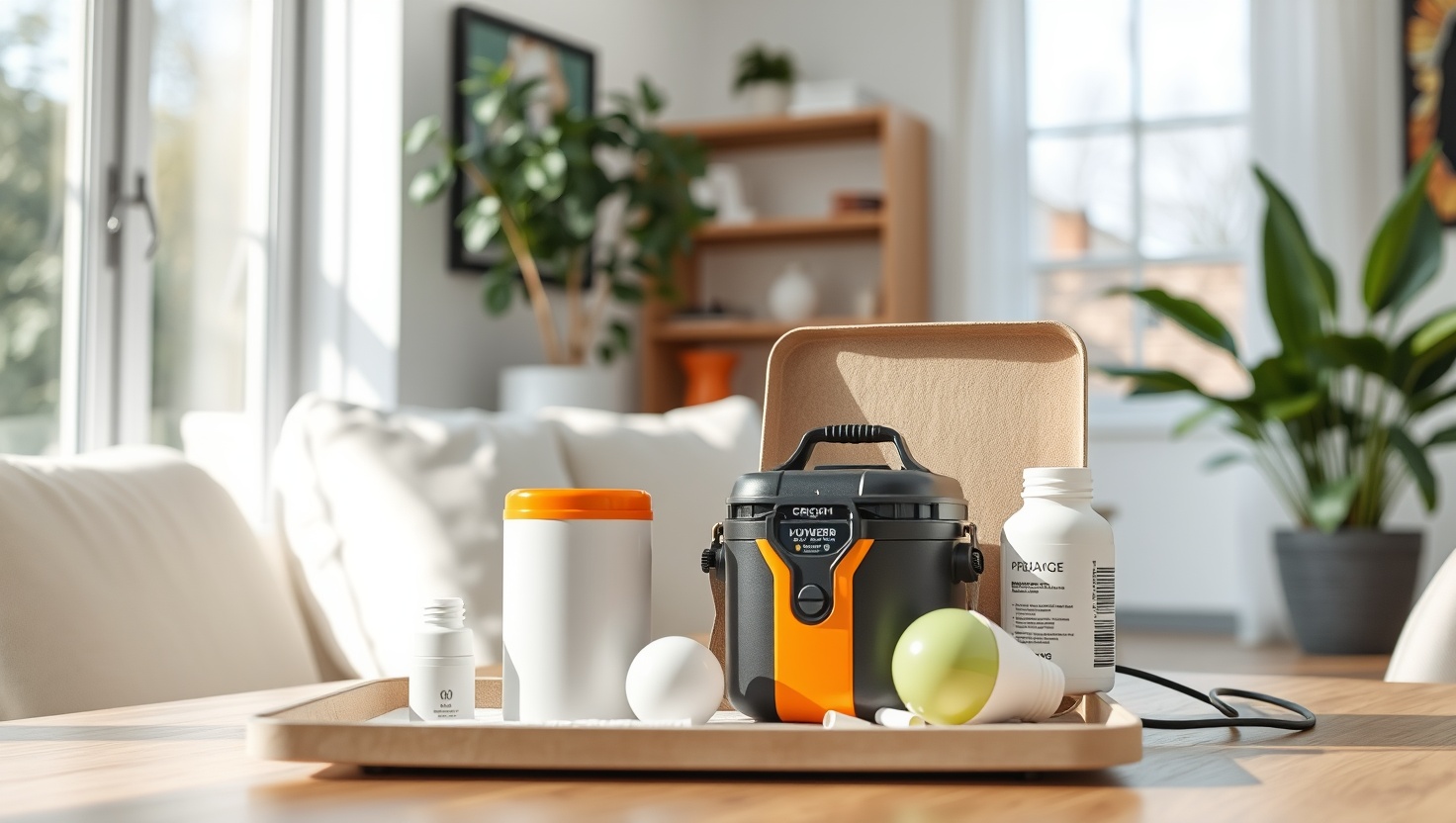
The average American now loses 11 hours of power per year. That is double what it was in 2022. Five states face elevated blackout risk this summer. And multi-day outages — the kind where your freezer defrosts, your phone dies, and your neighborhood goes dark for 48 hours or more — are becoming disturbingly common. The grid is aging. Extreme weather is intensifying. Demand is surging. And the infrastructure upgrades needed to fix all of this are years behind schedule.
EcoFlow RIVER 2 — Our Top Recommendation
The EcoFlow RIVER 2 is the entry point into portable power stations, and it is a remarkably capable one. At 256Wh capacity, it charges your phone 15+ times, runs LED lights for days, and keeps a…
In a hurry? That’s our pick. Want the reasoning and the full comparison? Keep reading.
Here is the good news: your power outage preparedness kit is the difference between a minor inconvenience and a genuine crisis. A basic setup costs under $200. A complete kit that keeps your family comfortable through a multi-day blackout runs under $1,000. And portable power stations have gotten so good that most families no longer need a noisy, dangerous gas generator sitting in the garage.
This guide walks you through everything you need — from the absolute basics to full energy independence — so you are ready before the lights go out. Not after.
Key Takeaways
- Average US power outage duration has doubled since 2022 — from 5.5 hours to 11 hours per year
- 5 states face elevated blackout risk in 2026: Texas, Louisiana, Alabama, Tennessee, and Mississippi
- A basic kit costs under $200, a complete setup under $1,000
- Portable power stations have replaced gas generators for most homes — safer, quieter, zero emissions
- Food safety rule: fridge stays cold 4 hours, freezer 24-48 hours — but only if you keep the doors shut
- The best time to prepare is before you need it — not when the weather alert hits your phone
Why Power Outages Are Getting Worse
Three forces are colliding at once, and the result is a grid that simply cannot keep up.
The infrastructure is old. Much of the US electrical grid was built in the 1960s and 70s. Transformers, transmission lines, and substations were designed for a 40-year lifespan. Many are now pushing 60. Replacement programs exist, but they are chronically underfunded and years behind schedule. When a transformer blows during a heat wave, the replacement might not arrive for weeks.
Extreme weather is intensifying. Summer 2024 shattered heat records across the South and Southwest. The 2025 hurricane season was the third most active on record. And 2026 brings an El Nino pattern that forecasters say will push summer temperatures even higher across Texas, the Gulf Coast, and the Southeast. Heat waves do not just increase demand — they physically damage grid equipment. Power lines sag. Transformers overheat. Substations trip. The grid fails precisely when you need it most.
Demand is surging. Electric vehicle adoption, data center expansion, and a nationwide shift toward electric heating and cooling are adding load faster than utilities can build capacity. ERCOT (the Texas grid operator) projects peak demand in summer 2026 could exceed available generation by a narrow margin — the same kind of margin that led to the catastrophic February 2021 blackout. And Texas is not alone. Grid operators across the Southeast are flagging similar concerns.
You cannot control the grid. But you can control how prepared your household is when it fails. That is what this kit is for.
The Essential Power Outage Kit: Core Gear
These are the products that form the backbone of your preparedness setup. We have organized them from portable power stations (your biggest investment and most important piece) down to the small essentials that cost less than a dinner out.
EcoFlow RIVER 2 — Best Portable Power Station for Basics
EcoFlow RIVER 2
The EcoFlow RIVER 2 is the entry point into portable power stations, and it is a remarkably capable one. At 256Wh capacity, it charges your phone 15+ times, runs LED lights for days, and keeps a laptop powered for 4-5 hours. It charges from 0 to 100% in just one hour via wall outlet — the fastest in its class — and supports solar panel input for extended outages. At 7.7 lbs, you can carry it in one hand. For a single person or couple who needs to keep phones charged, lights on, and a laptop running during a 24-48 hour outage, this is everything you need and nothing you do not.
Best for: Individuals and couples. Short outages (24-48 hours). Phone charging, lights, laptop, small devices. Anyone who wants a compact, affordable starting point.
Check Price on Amazon →EcoFlow DELTA 2 — Powers Your Fridge and Medical Devices
EcoFlow DELTA 2
The EcoFlow DELTA 2 is the power station that changes the outage experience from "survival mode" to "barely an inconvenience." With 1,024Wh of capacity and 1,800W output (3,100W surge), it runs a full-size refrigerator for 8-12 hours, powers a CPAP machine for multiple nights, and still has juice left for phones and lights. The X-Boost technology lets it handle appliances that would normally exceed its wattage rating. It charges from solar panels in as little as 3 hours with a 400W setup. If someone in your household relies on a CPAP, oxygen concentrator, or insulin that needs refrigeration, this is not a luxury purchase — it is a necessity.
Best for: Families. Anyone with medical devices. Multi-day outage preparedness. Homeowners who want to keep the fridge running and food from spoiling. Worth every dollar if you live in a high-risk area.
Check Price on Amazon →Jackery Explorer 1000 v2 — Great for Families
Jackery Explorer 1000 v2
The Jackery Explorer 1000 v2 hits the sweet spot between the compact RIVER 2 and the heavy-duty DELTA 2. At 1,070Wh and 2,000W output, it delivers similar capability to the DELTA 2 in a slightly more portable package. Jackery has been making portable power stations longer than almost anyone, and the build quality shows. The interface is dead simple — your teenager or grandmother can operate it without reading a manual. It pairs beautifully with Jackery's own solar panels for a complete off-grid charging solution. If you want one station that handles everything from a weekend camping trip to a week-long summer heat wave blackout, this is a strong choice.
Best for: Families who want one versatile unit. People who also camp or road trip. Anyone who values simplicity and proven reliability over bleeding-edge features.
Check Price on Amazon →Small Essentials That Make a Big Difference
Battery-Powered LED Lantern
Skip the candles — they are a fire hazard, especially during the chaos of a sudden outage. A good battery-powered LED lantern runs 100+ hours on a set of batteries, provides 360-degree light for an entire room, and costs less than a pizza. Buy at least two: one for the main living area and one for the bathroom. Keep spare batteries next to them. This is the single most impactful item you can buy for under $20.
Check Price on Amazon →NOAA Weather Radio
When the power is out and your phone battery is precious, a hand-crank NOAA weather radio keeps you connected to emergency broadcasts without using a single watt from your power station. The best models combine AM/FM/NOAA reception with a built-in flashlight, USB phone charging port, and solar panel. You can crank it by hand for power when everything else is dead. This is your lifeline for weather updates during hurricanes, wildfires, and extended blackouts.
Check Price on Amazon →Battery-Powered Fan
If your power goes out during a summer heat wave — which is statistically the most likely scenario — a battery-powered fan goes from "nice to have" to "keeps you from overheating." Modern rechargeable clip and desk fans run 8-24 hours on a single charge and can be recharged from your power station or power bank. For families with young children, elderly members, or anyone sensitive to heat, this is non-negotiable summer gear.
Check Price on Amazon →Beyond the Basics: Additional Gear
Once you have your power station and core essentials covered, these items round out a kit that handles extended outages with real comfort and safety.
- 20,000mAh Power Bank ($20-40) — Charges your phone 4-5 times. Keep one in your bag and one at home, both fully charged. Your phone is your flashlight, your map, your emergency contact, and your entertainment during an outage.
- First Aid Kit ($25-50) — Injuries are more likely during blackouts. People trip in the dark, cut themselves opening cans, and burn themselves with improvised lighting. A well-stocked first aid kit is basic preparedness.
- Emergency Food Bars ($15-30) — High-calorie, long shelf life (5+ years), no preparation needed. These are your backup when the fridge food goes bad and you cannot cook. Keep a 72-hour supply per person.
- Insulated Cooler Bag ($20-40) — When your fridge hits the 4-hour mark, move the most critical perishables (medication, baby formula, insulin) to an insulated cooler bag with ice packs. This buys you an extra 12-24 hours of cold storage.
Full Comparison: Power Stations Side by Side
Here is how the three main power stations compare on the specs that actually matter for outage preparedness.
| Product | Price | Capacity | Run Time | Best For |
|---|---|---|---|---|
| EcoFlow RIVER 2 | $200-300 | 256Wh | Phones: 3-5 days. Laptop: 4-5 hrs | Individuals / couples |
| Jackery 1000 v2 | $700-900 | 1,070Wh | Fridge: 8-10 hrs. CPAP: 3-4 nights | Families / versatility |
| EcoFlow DELTA 2 | $800-1,100 | 1,024Wh | Fridge: 8-12 hrs. CPAP: 4+ nights | Medical devices / max power |
| LED Lantern | $15-25 | N/A | 100+ hours on batteries | Lighting / every kit |
| NOAA Radio | $25-40 | N/A | Unlimited (hand-crank) | Weather updates / comms |
| Battery Fan | $20-35 | N/A | 8-24 hours per charge | Summer outages / heat |
3 Levels of Preparedness
Not everyone needs (or can afford) a full setup on day one. Here is how to build your kit in stages, starting with the essentials and scaling up when your budget allows.
1 Level 1: Basic — Under $200
LED lantern, NOAA weather radio, 20,000mAh power bank, extra batteries (AA and AAA), 1 gallon of water per person per day (3-day supply), and emergency food bars. This kit handles a 24-48 hour outage. You will have light, emergency broadcasts, a charged phone, and food and water. It fits in a single backpack. If you do nothing else, do this. It takes one Amazon order and 15 minutes to organize.
2 Level 2: Comfortable — $500 to $800
Everything in Level 1, plus a portable power station (EcoFlow RIVER 2 or similar), battery-powered fan, and a comprehensive first aid kit. This setup handles a 2-3 day outage with real comfort. You can charge multiple devices, run a fan during summer heat, light your whole home, and handle minor medical situations. This is the level where an outage shifts from stressful to manageable.
3 Level 3: Full Independence — $1,000 to $2,000
Everything in Level 2, but upgrade to a large power station (EcoFlow DELTA 2 or Jackery 1000 v2), add a 200W portable solar panel for indefinite recharging, and include an insulated cooler bag with reusable ice packs. This kit handles multi-day outages without breaking a sweat. Your fridge stays cold. Your medical devices stay running. Your solar panel recharges your power station during the day. You are fully independent from the grid for as long as you need to be.
How Prepared Is Your Home?
Take our free Emergency Preparedness Scan. It analyzes your household situation — location, family size, medical needs, current gear — and gives you a personalized checklist of exactly what you need. Takes 3 minutes.
Take the Free Emergency Scan →See Our Top Pick: EcoFlow DELTA 2 See Runner-Up: Jackery 1000 v2
What to Read Next
- Best Solar Batteries for Home 2026 — for whole-home battery backup that goes beyond portable stations
- Extreme Heat Survival Guide 2026 — because most outages happen during heat waves, and the heat is the real danger
- Wildfire Evacuation Go-Bag Checklist 2026 — if you need to leave, not shelter in place
Frequently Asked Questions
A closed refrigerator keeps food safe for about 4 hours during a power outage. A full freezer maintains its temperature for 48 hours if the door stays shut — a half-full freezer lasts about 24 hours. Once the power comes back, check the temperature: if your fridge is above 40°F (4°C) for more than 2 hours, most perishable foods should be thrown away. Meat, dairy, eggs, and cooked leftovers are the highest risk items. Condiments, hard cheeses, and butter are generally safe longer. When in doubt, throw it out — food poisoning is never worth saving a few dollars.
It depends on what you need to power. For phones, lights, and a laptop, a 256Wh station like the EcoFlow RIVER 2 ($200-300) handles a full day easily. For running a mini fridge, CPAP machine, or multiple devices simultaneously, you need at least 1,000Wh — the EcoFlow DELTA 2 or Jackery Explorer 1000 v2 are the sweet spot. For powering a full-size refrigerator through a multi-day outage, look at 2,000Wh+ units. A good rule of thumb: add up the watt-hours of everything you need to run for 24 hours, then buy a station with at least 20% more capacity than that total.
For most homes, yes. Portable power stations are silent, produce zero emissions (safe to use indoors), require no fuel storage, need virtually no maintenance, and can be recharged with solar panels. Gas generators are louder, produce carbon monoxide (must be used outdoors only — CO poisoning kills dozens of Americans every year during outages), require gasoline storage, and need regular maintenance. The main advantage of gas generators is raw power output and unlimited runtime with fuel. If you need to power your entire home including central AC, a gas generator still wins. But for keeping essentials running — fridge, lights, phones, medical devices — a portable power station is safer, quieter, and more practical.
Start with a fully charged 20,000mAh power bank — that gives most smartphones 4-5 full charges. Put your phone in low power mode immediately when the outage starts, turn off Wi-Fi and Bluetooth if you do not need them, reduce screen brightness, and close background apps. A single power bank can keep your phone running for 3-5 days with conservative use. For longer outages, a portable power station with solar panel input lets you recharge indefinitely. You can also charge your phone from your car — just do not drain the car battery. Keep at least one power bank fully charged at all times as part of your basic kit.
Texas, Louisiana, Alabama, Tennessee, and Mississippi face the highest blackout risk in 2026 according to grid reliability assessments. Texas remains especially vulnerable due to its isolated grid (ERCOT), extreme summer heat driving record AC demand, and infrastructure that still has not fully recovered from past failures. But power outages are increasing everywhere — the national average jumped from 5.5 hours of interruptions per year in 2022 to 11 hours in 2024. California, Florida, and the Pacific Northwest also face elevated risk from wildfires, hurricanes, and heat waves respectively. No matter where you live, a basic preparedness kit is worth having.