Best Ham Radios for Beginners and Emergency Preparedness in 2026
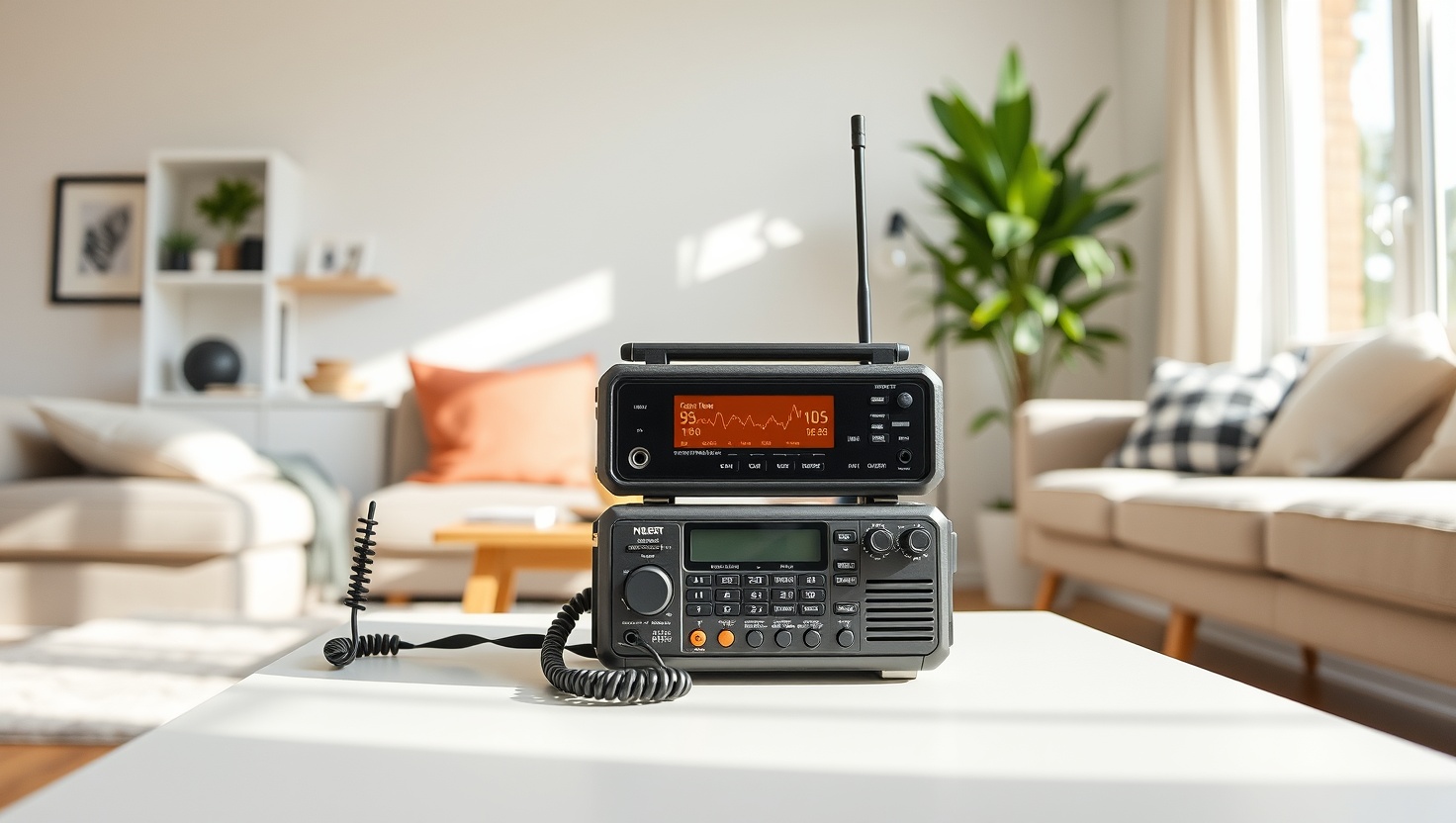
When cell towers go down — and they will — your smartphone becomes an expensive flashlight. No calls. No texts. No internet. Nothing. Ham radio doesn’t need towers, doesn’t need WiFi, doesn’t need a subscription. It works on raw physics: you transmit, someone receives. During hurricanes, earthquakes, and grid failures, ham operators are consistently the first and last communication link standing. You don’t need to become a radio nerd. You need a radio that works when nothing else does. Here are the best ones for beginners.
Baofeng UV-5R — Best Budget Pick
The Baofeng UV-5R has sold tens of millions of units for one straightforward reason: it works, and it costs $25. Dual-band VHF/UHF coverage, 4W output, and a battery life that gets you through a full…
In a hurry? That’s our pick. Want the reasoning and the full comparison? Keep reading.
Key Takeaways
- Ham radio operates independently of cell towers, internet, and power grid — making it irreplaceable in a real emergency
- Best budget pick: Baofeng UV-5R at $25 — capable dual-band radio, fiddly programming but hard to beat at the price
- Best upgrade: BaoFeng BF-F8HP at $65 — 8W output, better antenna, the same ecosystem with more power
- Best quality build: Yaesu FT-60R at $170 — Japanese-engineered, metal chassis, used by search-and-rescue teams
- Best for easy setup: Tidradio TD-H8 at $35 — Bluetooth app programming, no cable or manual needed
- No-exam license option: BaoFeng GMRS-9R at $45 — IP67 waterproof, GMRS frequencies for the whole family
Why Ham Radio Belongs in Your Emergency Plan
In the first 72 hours after a major disaster, cell phone networks fail in a very predictable way. Everyone reaches for their phone at the same moment, the towers are overwhelmed, and then the power goes out and the backup generators run out of fuel. In that window — when people most need to communicate — the modern communications infrastructure most people depend on becomes completely useless.
Ham radio sidesteps every single one of those failure points. There are no towers to overload. No centralized infrastructure to lose power. No server farms to go dark. Two radios, two batteries, and the atmosphere between them. That is the entire system.
Ham operators are first responders in communication
This is not theoretical. After Hurricane Katrina, ham radio operators provided communication support for hospitals, shelters, and emergency management agencies for weeks while the professional communications infrastructure was being rebuilt. After the 2011 Japan earthquake and tsunami, ham operators were relaying messages when every other system was gone. After every major grid-down event in recent memory, the pattern repeats: ham radio keeps working when nothing else does.
The Amateur Radio Emergency Service (ARES) and the Radio Amateur Civil Emergency Service (RACES) are formal networks of licensed ham operators who train specifically for disaster response. When you get your license, you can plug into these networks — not just for your own family’s communication needs, but as a resource for your entire community.
No internet required — ever
Your ham radio does not care whether your ISP is up. It does not care whether the internet exists at all. The physics of radio wave propagation will work as long as the laws of electromagnetism hold — which is to say, indefinitely. You are not dependent on anyone’s infrastructure except your own battery and your own antenna.
Reach farther than you think
A handheld ham radio with 5 watts of power can reach another radio directly for 5 to 15 miles in flat terrain. Connect through a repeater — a relay station typically located on a hilltop or tall building — and your range extends to 50 to 150 miles. Most metropolitan areas have dozens of active repeaters. Many are specifically maintained for emergency use and monitored 24/7 by experienced operators who can relay your messages further if needed.
What to Look For in a Beginner Ham Radio
Frequency bands: VHF/UHF vs HF
Most beginner ham radios operate on VHF (Very High Frequency, 136–174 MHz) and UHF (Ultra High Frequency, 400–520 MHz). These are the bands used for local and regional communication — direct radio-to-radio contact and repeater networks. All five radios on this list are VHF/UHF. HF (High Frequency) radios operate on lower frequencies that can bounce off the ionosphere and reach across continents, but they are larger, more expensive, and more complex — not a beginner starting point.
For emergency preparedness, VHF/UHF is what you need. Your local emergency management system uses it. Your regional repeater network uses it. The people in your neighborhood will use it. Start here.
Power output
Ham radio power is measured in watts. More watts means more range — but with diminishing returns. The jump from 1W to 5W makes a big difference. The jump from 5W to 8W makes a noticeable but smaller difference. Beyond 8W with a handheld, you are in accessory battery territory. Most emergency communication scenarios are well-served by 4W to 8W output. The Tidradio TD-H8 on this list hits 10W, which is genuinely useful in challenging terrain.
Battery life and charging options
In a grid-down emergency, your radio is only as useful as its battery. Look for radios with a 1500–2000 mAh lithium battery as a baseline, and confirm it can be charged via USB-C or micro-USB. USB-C compatibility means you can charge it from solar panels, portable power banks, and car chargers — any USB power source. Radios that still use proprietary charging cables are a liability when supply chains are disrupted.
Ease of programming
This is where most beginners get frustrated. Traditional ham radios require manual programming of frequencies through button sequences that are genuinely arcane — you are scrolling through menus on a tiny screen entering numbers for frequencies, CTCSS tones, offsets, and other settings. Most people use free software called CHIRP with a programming cable to load frequencies from a computer. The Tidradio TD-H8 leapfrogs all of this with Bluetooth app programming from your phone — a genuine quality-of-life improvement for beginners.
Weather resistance
Emergency situations are not dry, comfortable indoor scenarios. If you are evacuating, searching for a missing person, or coordinating after a flood, your radio needs to survive rain, mud, and rough handling. Look for an IP rating — IP54 means splash-resistant, IP67 means submersible to 1 meter for 30 minutes. The BaoFeng GMRS-9R on this list carries an IP67 rating, which is full waterproof protection. The Yaesu FT-60R has a JIS7 water rating that is similarly capable.
Receiver sensitivity
Transmitting is only half the job. Receiving weak signals in noisy RF environments matters too. Budget radios like the UV-5R often have adequate but not excellent receiver sensitivity. The Yaesu FT-60R is known for its exceptional receiver — it hears things other radios miss, which matters when you are trying to pick up a weak signal from someone in trouble.
Quick Comparison
| Radio | Price | Power | Key Feature | Best For |
|---|---|---|---|---|
| Baofeng UV-5R | ~$25 | 4W | Dual-band VHF/UHF | Best budget pick |
| BaoFeng BF-F8HP | ~$65 | 8W | Better antenna + audio | Best upgrade |
| Yaesu FT-60R | ~$170 | 5W | Metal chassis, JIS7 water | Best quality build |
| Tidradio TD-H8 | ~$35 | 10W | Bluetooth app programming | Easiest to program |
| BaoFeng GMRS-9R | ~$45 | 5W | IP67 waterproof, GMRS | No-exam license option |
Our Top 5 Picks for 2026
The Baofeng UV-5R has sold tens of millions of units for one straightforward reason: it works, and it costs $25. Dual-band VHF/UHF coverage, 4W output, and a battery life that gets you through a full day of intermittent use. For a beginner who wants to get licensed, learn the equipment, and start monitoring local repeaters, nothing gets you further for less money.
The programming is the UV-5R’s most common complaint, and it is a fair one. Manual programming via the keypad is genuinely confusing the first time. The solution is free software called CHIRP and a $10 programming cable — you load frequency lists from a computer and the radio does exactly what you need. YouTube has hundreds of tutorials. Most people have their radio programmed and on the air within an afternoon.
At $25, buying two or three makes sense. One for your emergency kit at home. One for your car. One for your go-bag. For the price of a single dinner out, you can equip your entire household with functional emergency radios. That math is hard to argue with.
Pros
- $25 — lowest cost on this list
- Massive community support and tutorials
- Dual-band VHF/UHF coverage
- Wide accessory ecosystem
- Can monitor multiple frequencies simultaneously
Cons
- Programming is fiddly without CHIRP software
- Budget-grade receiver quality
- Plastic build feels cheap
- Not waterproof
The BF-F8HP is what the UV-5R should have been. Fully backward-compatible with UV-5R accessories — same batteries, same programming cables, same CHIRP software — but it pushes 8W instead of 4W. That is double the transmit power, which translates to meaningfully better range in challenging terrain or when you are trying to hit a repeater from the edge of its coverage area.
The antenna is a genuine upgrade over the UV-5R’s stock antenna, and the audio — both speaker output and microphone quality — is noticeably better. In a practical emergency scenario, clear audio matters. When someone is relaying critical information under stress, you do not want to ask them to repeat themselves because your radio sounds like a tin can.
The programming situation is identical to the UV-5R — use CHIRP. But at $65, you are getting a more robust platform that will serve you well as your skills grow. If you are only going to buy one radio, the BF-F8HP is the better choice. If you already own a UV-5R and want an upgrade, this is where to go.
Pros
- 8W output — twice the UV-5R
- Better stock antenna
- Clearer audio both ways
- Compatible with all UV-5R accessories
- Good value at the price point
Cons
- Still requires CHIRP for easy programming
- Still plastic construction
- Not waterproof
- Higher current draw on 8W drains battery faster
The Yaesu FT-60R is in a different category from the Baofeng radios. Where the Baofengs are good-for-the-price consumer radios, the FT-60R is a professional-grade Japanese-engineered communications tool. The chassis is real metal. The controls are solid and tactile. The receiver is substantially more sensitive — it hears signals that budget radios simply miss.
This radio has been in continuous production since 2004 because it is genuinely reliable. Search-and-rescue teams use it. Emergency management volunteers swear by it. Ham radio clubs buy it for their emergency communication caches. That track record exists for a reason: the FT-60R does not fail when conditions are harsh, and when you are in an actual emergency, that reliability is worth every dollar of the price premium over the Baofengs.
Programming is more user-friendly than the UV-5R straight out of the box, though CHIRP also supports the FT-60R if you prefer software-based loading. The included rubber duck antenna performs well, and the radio supports wide-band receive covering NOAA weather channels and many other frequencies. Battery life with the included NiMH battery is solid, and the radio accepts AA alkaline batteries as a backup — critical when you cannot charge anything.
Pros
- Metal chassis — built to last decades
- Exceptional receiver sensitivity
- Used by SAR teams and emergency managers
- AA battery backup capability
- NOAA weather band reception
- 22+ year proven production track record
Cons
- $170 — highest price on this list
- 5W output (less than BF-F8HP or TD-H8)
- Older interface design
- Heavier than the Baofengs
The Tidradio TD-H8 solves the single biggest frustration with entry-level ham radios: programming. Instead of CHIRP software, a cable, and a tutorial session with YouTube, you connect via Bluetooth to the Tidradio app on your smartphone and load frequencies in minutes. For someone who has never touched a ham radio before, this difference is enormous — it removes the intimidation factor that stops most beginners from ever using their radio.
The hardware holds its own too. 10W output is the highest on this list — genuinely useful in areas with challenging terrain or when you are trying to hit distant repeaters. The build quality is a step above the UV-5R. USB-C charging at this price point is rare and welcome — you can power it from any modern power bank, solar panel, or car charger without hunting for a proprietary cable.
The TD-H8 does not have the proven track record of the Yaesu FT-60R, but at $35 it represents exceptional value for what you get. If you are recommending a radio to someone with zero technical background who just wants an emergency communication tool that is ready to go, this is the pick. The app-based interface removes every excuse not to get set up.
Pros
- Bluetooth app programming — no cable needed
- 10W output — highest on this list
- USB-C charging
- Beginner-friendly setup experience
- Excellent price-to-performance ratio
Cons
- Shorter track record than Yaesu or Baofeng
- App dependency (keep offline backup settings)
- Not waterproof
- Smaller community than Baofeng ecosystem
The BaoFeng GMRS-9R operates on GMRS (General Mobile Radio Service) frequencies rather than amateur ham bands. The key difference: GMRS requires only a license fee (currently $35 for a 10-year family license), not a written exam. One license covers your entire household. You do not need to study, you do not need to pass a test, and you are legal to transmit immediately after the FCC processes your application.
For a family emergency communication plan, this is often the right entry point. Every adult family member can carry a GMRS-9R legally on a single license. The radio itself is built for real use — IP67 waterproof rating means it can survive being submerged in a meter of water for 30 minutes, rain is a non-issue, and it handles the rough treatment of an actual emergency scenario. 5W output gives you solid range for local family coordination.
GMRS also has its own repeater network, though smaller than the ham radio repeater infrastructure. For local coordination within a family or neighborhood group, GMRS is entirely capable. The GMRS-9R also receives NOAA weather broadcasts — you get the emergency weather alert functionality on top of the two-way radio capability.
Pros
- No exam — just pay the family license fee
- IP67 waterproof — genuinely weatherproof
- One license covers the whole household
- NOAA weather band reception
- Solid build quality for the price
Cons
- GMRS repeater network smaller than ham network
- Cannot access amateur ham frequencies
- $35 FCC license fee required
- Less operational flexibility than full ham license
Getting Licensed: Easier Than You Think
The FCC Technician class license is the entry point for ham radio, and it is genuinely accessible. There are 35 multiple choice questions on the exam. The question pool is publicly available — every possible question you could be asked is published in advance. You are studying for a test where you know every possible question before you sit down.
What the exam covers
The Technician exam covers basic radio theory (Ohm’s law, frequency, wavelength — nothing beyond basic high school physics), FCC regulations (what you can and cannot do), and radio safety (antenna installation, RF exposure basics). There is no Morse code requirement. No prior electronics background needed. Most people pass on their first attempt with two to four weeks of casual studying.
How to study
The two main free resources are HamStudy.org (browser-based flashcards and practice exams) and the ARRL Technician manual (available as a book or e-book). HamStudy.org tracks your performance across the entire question pool and tells you when your pass probability hits 80%+ — at that point, most people are ready to take the test. Typical study time is 2 to 6 weeks at an hour a day.
Finding an exam session
The ARRL website lists exam sessions by location and date. The FCC application fee is currently $35. Exams are administered by volunteer examiner teams — often at ham radio club meetings, libraries, or community centers. Many sessions now offer online testing, so you may be able to test from home. Pass the exam, wait a few days for FCC processing, and your call sign appears in the database. You are legal to transmit.
What you can do with a Technician license
Technician class gives you full operating privileges on all amateur bands above 50 MHz — which includes VHF and UHF, the bands used by every radio on this list. You can access local and regional repeater networks, participate in emergency communication groups like ARES, and connect with other hams across your region. For emergency preparedness purposes, Technician class is everything you need.
Start With the UV-5R. Upgrade When You’re Ready.
The Baofeng UV-5R at $25 is the most accessible entry into ham radio on the planet. Get the radio, use HamStudy.org to prep for your Technician exam, and get licensed within a month. When you want more power and easier programming, the TD-H8 is your next step. When you want professional-grade reliability, the Yaesu FT-60R is waiting.
Get the Baofeng UV-5R →