Best Portable Power Stations for Camping and Emergencies in 2026
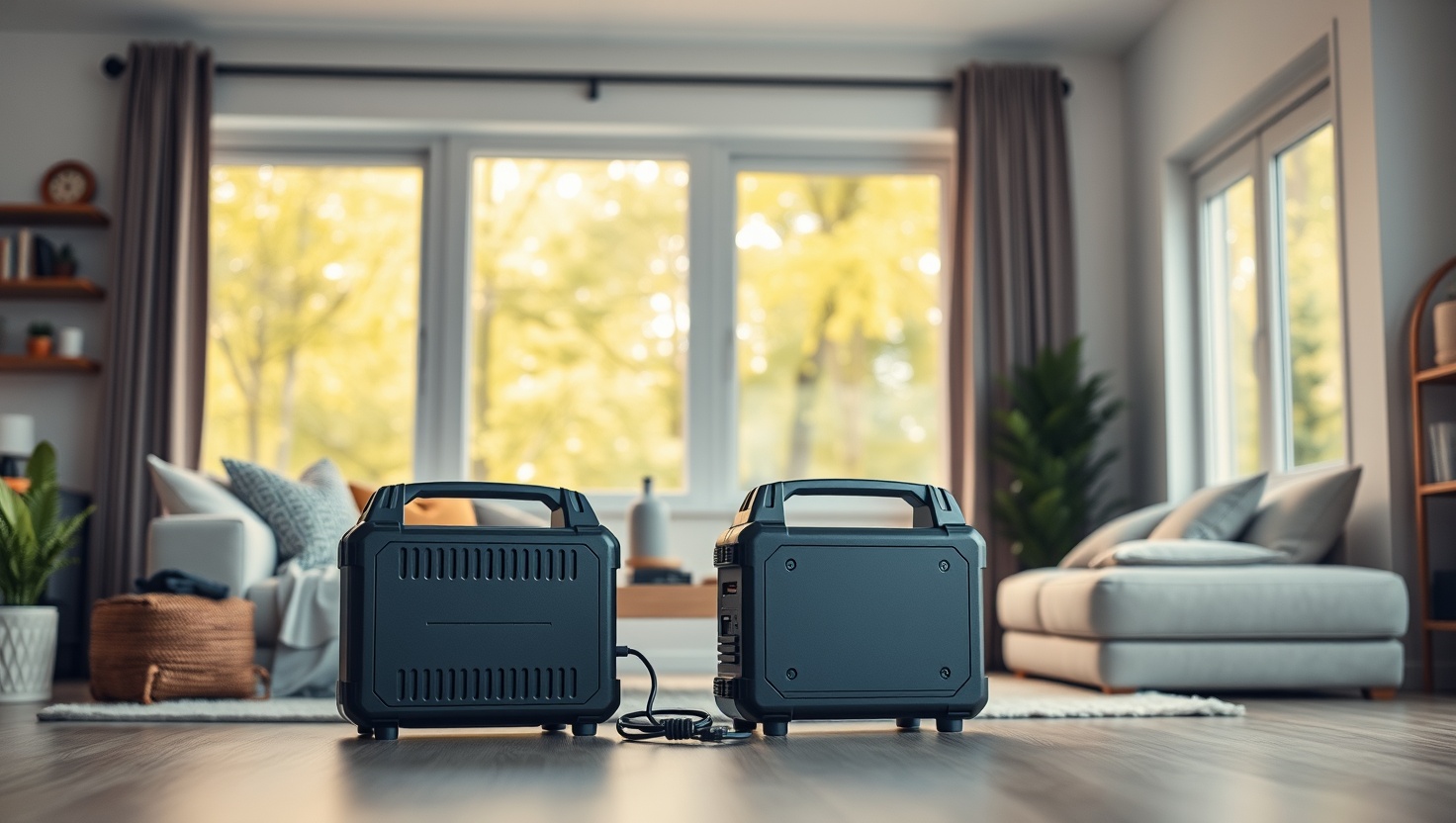
The power goes out. Your phone is at 12%. The fridge is warming up. Or you're three days into a camping trip and your headlamp, speaker, and CPAP machine all need juice. A portable power station handles all of it — clean, quiet, no fumes, charges from a wall outlet or solar panel, and keeps your world running when the grid doesn't. Here are five that actually deliver.
Anker Solix C1000 — Best Overall
The Anker Solix C1000 is the best balance of price, capacity, and performance in the portable power station market right now. At $400 you get 1056Wh of storage, 1800W of continuous output, and — the…
In a hurry? That’s our pick. Want the reasoning and the full comparison? Keep reading.
Key Takeaways
- Portable power stations beat generators for most households — quieter, cleaner, indoor-safe, and solar-rechargeable
- Best overall: Anker Solix C1000 (~$400) — 1056Wh, 1800W output, full recharge in 49 minutes
- Best premium: EcoFlow Delta 3 Plus (~$500) — app control, 500W solar input, 3600W surge power
- Best for lightweight camping: Jackery Explorer 240D (~$200) — 7.7 lbs, runs phones and lights for days
- Best ultralight with AC outlet: EcoFlow River 3 (~$250) — 7.8 lbs, X-Boost handles higher wattage devices
- Best battery longevity: Bluetti AC70 (~$350) — LiFePO4 chemistry, 3000+ charge cycles, built to outlast everything else
Why You Need a Portable Power Station
The electrical grid is more fragile than most people realize. Extreme weather events — ice storms, hurricanes, heat waves, wildfires — knock out power for days at a time across entire regions. Even in normal times, a downed line or transformer failure can leave a neighborhood dark for 12-48 hours. That used to mean candles and a cooler full of melting ice. Now it means plugging in a battery the size of a carry-on bag.
For camping and off-grid living, power stations have replaced the noisy, fume-producing gas generator as the tool of choice. They run silently, work indoors and outdoors, and can be recharged from a solar panel — meaning no fuel to store, no carbon monoxide risk, and no neighbors glaring at you across the campsite at 6am.
The big leap in the last two years has been charging speed. The old criticism of power stations — "they take forever to recharge" — no longer applies to quality units. The Anker Solix C1000 does a full 1056Wh recharge in 49 minutes. The EcoFlow Delta 3 Plus accepts up to 500W of solar input. These aren't backup gadgets anymore. They're the primary power infrastructure for an increasing number of households and travelers.
How to Choose the Right Portable Power Station
Capacity (Wh) — the most important number
Watt-hours (Wh) tell you how much total energy the station stores. A 1000Wh station can run a 100W device for about 10 hours, or charge a smartphone (roughly 15-20Wh) about 50-60 times. For camping with just lights and phones, 250-300Wh is plenty. For home backup with a fridge and medical devices, you want 1000Wh or more.
Output wattage — what can it actually run?
The rated output wattage determines which appliances you can power. A 300W output can run phones, tablets, laptops, and LED lights. You need 1000W or more to run a mini fridge, electric kettle, or CPAP machine. Pay attention to surge wattage too — most appliances draw 2-3x their rated wattage for a fraction of a second when they start up. A station with a 3600W surge rating (like the EcoFlow Delta 3 Plus) handles this with ease.
Weight vs. power — find your balance
More capacity means more weight. The Jackery 240D weighs 7.7 lbs and fits in a daypack. The Anker Solix C1000 weighs 27.3 lbs — manageable for a car camping setup or home emergency use, but not something you're hiking with. Think about your primary use case: backpacking or base camping, emergency home backup or weekend vanlife.
Charge speed — how fast does it refill?
If you're relying on a station during an extended outage, how quickly it recharges from the wall (before the next outage) or from solar matters. Look for stations that support high-wattage AC charging (600W+) and high solar input (200W+). The difference between a station that takes 8 hours to recharge and one that takes 49 minutes is enormous when you're watching a storm approach.
Ports and connectivity
Count your real-world needs. If you're running a camping setup, you probably need 2-3 USB-A ports, 1-2 USB-C ports, and at least one AC outlet. For emergency home use, more AC outlets mean more flexibility. App connectivity (EcoFlow and Jackery both offer this) lets you monitor battery levels and consumption remotely — useful but not essential.
Quick Comparison
| Model | Price | Capacity | Output | Weight | Best For |
|---|---|---|---|---|---|
| Anker Solix C1000 | ~$400 | 1056Wh | 1800W | 27.3 lbs | Best overall |
| EcoFlow Delta 3 Plus | ~$500 | 1024Wh | 1800W (3600W surge) | 25.4 lbs | Premium pick |
| Jackery Explorer 240D | ~$200 | 256Wh | DC only | 7.7 lbs | Budget camping |
| EcoFlow River 3 | ~$250 | 245Wh | 300W (600W surge) | 7.8 lbs | Ultralight with AC |
| Bluetti AC70 | ~$350 | 768Wh | 1000W (2000W surge) | 21.4 lbs | Best longevity |
The 5 Best Portable Power Stations in 2026
The Anker Solix C1000 is the best balance of price, capacity, and performance in the portable power station market right now. At $400 you get 1056Wh of storage, 1800W of continuous output, and — the headline feature — a full recharge in just 49 minutes using the included 1600W AC adapter. That's not a typo. In the time you watch an episode of something, this station goes from empty to full.
Thirteen output ports cover every scenario: two AC outlets, three USB-A ports, two USB-C ports (100W each), a 12V car outlet, and more. The LFP battery is rated for 3,000 cycles, giving it longevity that rivals the Bluetti at a lower price. The display is clear and easy to read, showing input/output wattage in real time so you always know exactly what you're consuming and how long your charge will last.
The one thing to know: at 27.3 lbs it's not a lightweight companion. It has a sturdy handle and rolls on two wheels, but this is a basecamp and home backup unit, not a backpacking pack. For car camping, family preparedness, or apartment emergency backup, it's the pick.
Pros
- Full recharge in 49 minutes
- Excellent $400 price for 1056Wh
- 13 output ports for everything
- LFP battery — 3,000 cycles
- Clear real-time display
Cons
- 27.3 lbs — not for hiking
- Solar input limited to 400W
- No app control (no remote monitoring)
The EcoFlow Delta 3 Plus earns its premium price through a combination of features that no other station at this price point matches. X-Stream fast charging refills the 1024Wh battery at up to 1300W from the wall. Solar input goes up to 500W — the highest in this roundup — meaning a pair of 250W panels can fully recharge it in around 2 hours of good sunlight. That matters if you're planning extended off-grid use.
The 3600W surge rating is what sets it apart for emergency home use. That peak handles the startup spike from a refrigerator, window AC unit, or power tools — appliances that would trip a lower-rated station. Day-to-day you get 1800W continuous, which runs everything from a coffee maker to a hair dryer. The EcoFlow app gives you real-time monitoring, scheduling, and remote control from your phone.
It also supports expandable battery capacity through EcoFlow's battery add-ons, so if you decide later that 1024Wh isn't enough, you can grow the system without buying a new station. That makes it the most future-proof option here.
Pros
- 500W solar input — fastest off-grid recharge
- 3600W surge for heavy appliances
- Smart app control and monitoring
- Expandable with add-on batteries
- UPS home backup function
Cons
- $500 — highest price in this guide
- App required to unlock advanced features
- Add-on batteries sold separately
The Jackery Explorer 240D is the entry point for people who want real power station capability without spending $300+. At 7.7 lbs it's genuinely portable — carry it in one hand, toss it in a daypack, slide it under a tent cot. The 256Wh capacity keeps phones, tablets, headlamps, camera batteries, and a small portable speaker running for a 3-day weekend without any stress.
The important caveat: DC output only means no standard AC outlets. You can charge anything via USB-A, USB-C, or the 12V DC port — but you can't plug in an AC appliance like a laptop charger with a wall plug. Many modern laptops and devices charge directly via USB-C anyway, so this is less of an issue than it sounds. But if you need to run a coffee percolator or any AC-only device, step up to the EcoFlow River 3 instead.
Jackery has a strong track record for build quality and reliability. The Explorer 240D pairs with Jackery's SolarSaga panels for off-grid recharging. At $200, it's the lowest-risk way to discover whether a power station changes how you camp — and for most people, it will.
Pros
- 7.7 lbs — genuinely portable
- $200 entry price
- Jackery's proven build quality
- Solar panel compatible
- USB-C 60W fast charging port
Cons
- DC output only — no AC outlets
- 256Wh limited for multi-day groups
- Slower recharge than premium models
The EcoFlow River 3 and the Jackery 240D are similar in size and price, but the River 3 includes something the Jackery doesn't: a proper AC outlet. At 7.8 lbs, it's essentially the same weight, but you can plug in a standard laptop charger, a small fan, or a phone charger with a wall-plug block — anything up to 300W continuous.
EcoFlow's X-Boost feature is a clever solution to the wattage limitation. It uses the battery's power to stabilize and boost output, letting you run many devices rated up to 600W even though the continuous output is 300W. That covers a standard blender, a low-wattage hair dryer, or a CPAP machine that spikes at startup. It's a smart workaround that meaningfully expands what a compact station can handle.
EcoFlow's app support is fully available on the River 3, so you get the same monitoring and control experience as their larger models. If you're building toward a full EcoFlow ecosystem with solar panels, the River 3 is a natural starting point at a price that doesn't hurt.
Pros
- AC outlet in a 7.8 lb package
- X-Boost extends effective wattage
- EcoFlow app monitoring included
- Solid 600W surge handling
- Compatible with EcoFlow solar panels
Cons
- 245Wh is still limited for longer trips
- 300W continuous may not suit high-draw appliances
- App required for some features
Most power stations use NMC (lithium nickel manganese cobalt) batteries. The Bluetti AC70 uses LiFePO4 — lithium iron phosphate — and that chemistry difference is why this station exists in a separate category. LiFePO4 batteries last 3,000+ full charge cycles compared to the 500-800 cycles of NMC. In practical terms: charge this every day and it takes 8+ years before the battery noticeably degrades. Store it for emergencies and it will outlast the decade.
The 768Wh capacity slots neatly between the compact 250Wh units and the 1000Wh flagships. The 1000W continuous output with a 2000W surge handles most camping and emergency appliances — mini fridge, CPAP, electric blanket, small heater, multiple device charging simultaneously. The UPS (uninterruptible power supply) function lets you keep it plugged in at home and it seamlessly provides power during an outage in under 30ms, protecting sensitive electronics.
At $350 for 768Wh of LiFePO4 storage, the AC70 offers the best cost-per-cycle economics of any station here. If you're building a preparedness kit meant to last years, this is your pick.
Pros
- LiFePO4 — 3,000+ cycle lifespan
- UPS home backup function
- 2000W surge handles most appliances
- Best long-term value per cycle
- Solid 768Wh mid-range capacity
Cons
- Slower AC recharge than Anker Solix
- 21.4 lbs — not lightweight
- Solar input capped at 200W
Getting the Most Out of Your Power Station
Know your wattage before you need it
Before a storm or a camping trip, write down the wattage of every device you plan to run. Your phone charger is around 20W. A mini fridge is 60-80W average. A CPAP is 30-60W. A laptop is 45-65W. Add them up and compare against your station's capacity — you'll know exactly how many hours of runtime you have without doing guesswork in the dark.
Solar charging changes the math completely
A power station without a solar panel is a big battery that you have to recharge from the wall. A power station with solar panels is a renewable energy system. Even a modest 100W panel will add 400-500Wh on a sunny day — enough to extend a 1000Wh station for days. If you're building for long-term emergency use or extended off-grid living, solar input compatibility isn't a nice-to-have. It's the feature.
Store it properly — don't leave it at zero
Long-term storage at 0% or 100% charge degrades lithium batteries faster than regular use does. Most manufacturers recommend storing at 40-60% charge for anything sitting unused for more than a few weeks. Recharge it to 50% every 3-6 months if it's sitting in a closet. The LiFePO4 units (Bluetti AC70 and Anker Solix C1000) are more forgiving, but the habit applies to all of them.
Use it for everyday camping before the emergency hits
The worst time to discover your power station has a quirk — a port that doesn't hold a connection, a software bug in the app, a charging cable that runs hot — is during an actual power outage. Use your station on camping trips, day trips, and backyard movie nights. You'll learn the device, run down the battery and recharge it, and trust it more when it actually matters.
Don't Wait for the Next Outage
The best time to buy a portable power station was before the last storm. The second best time is right now. Start with the Anker Solix C1000 — the best overall value at $400 with a 49-minute full recharge.
See the Anker Solix C1000 →