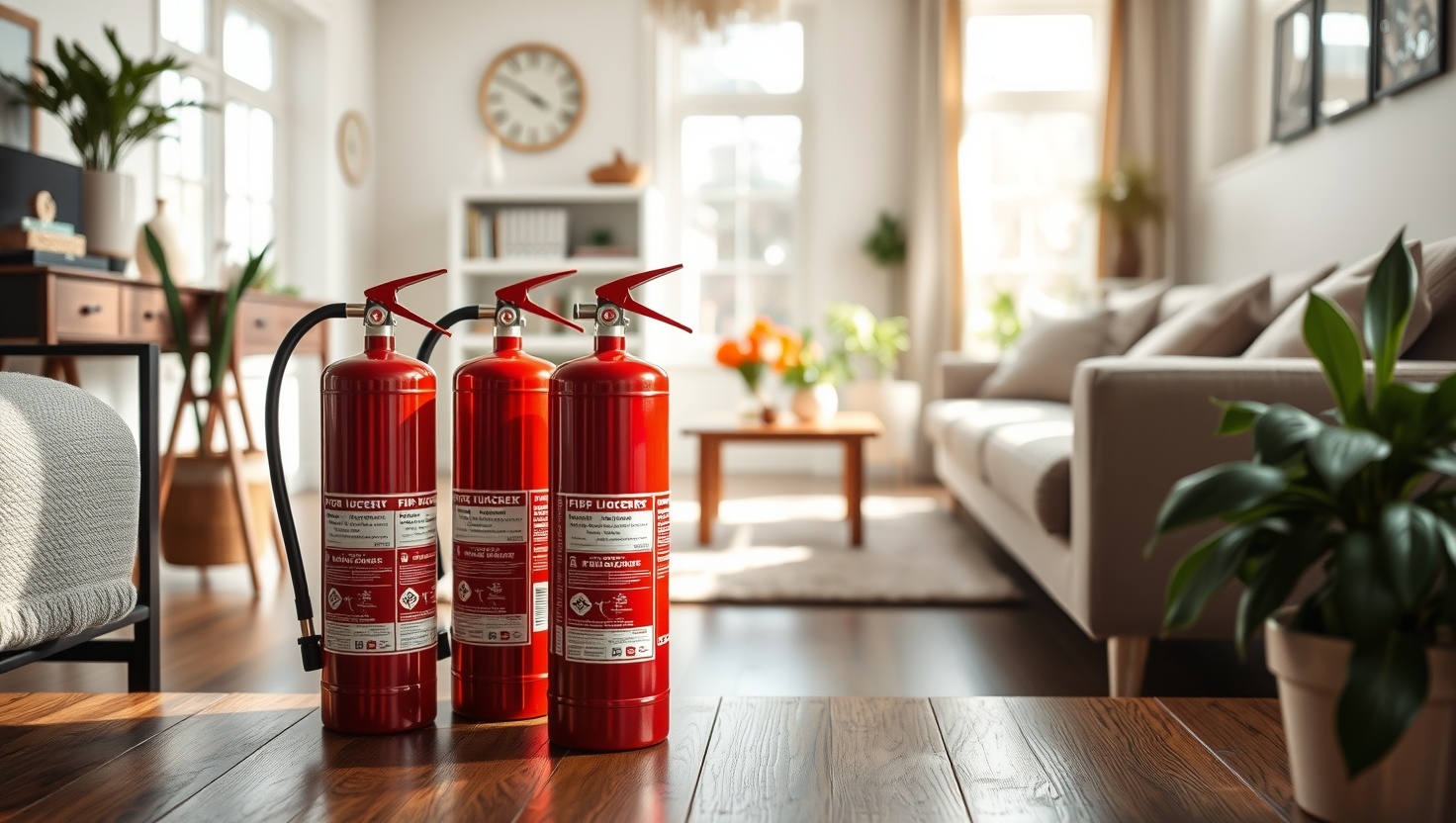
You have about 2 minutes to act on a small house fire before it becomes unsurvivable. Two minutes. That is the window between "I can handle this" and "we need to get out now." And the single biggest factor in whether you can actually do something useful in those 120 seconds is whether you have the right fire extinguisher, in the right place, and you know how to use it.
Amerex B500 (5 lb ABC Dry Chemical) — Our Top Recommendation
The Amerex B500 is the gold standard. This is the extinguisher firefighters recommend for home use, and the one you will find in fire stations, schools, and commercial buildings across the country…
In a hurry? That’s our pick. Want the reasoning and the full comparison? Keep reading.
Most homes either have no fire extinguisher at all, or they have a single dusty unit shoved under the kitchen sink that expired in 2019. That is not preparedness. That is a false sense of security. A home fire starts every 93 seconds in the United States. Cooking fires alone cause $1.2 billion in property damage every year. And the number one reason small fires become big fires is that people do not have the right equipment within reach.
This guide covers the five best fire extinguishers for home use in 2026 — from a $20 aerosol spray that handles kitchen grease fires to a commercial-grade ABC unit for your garage. We break down fire classes so you understand what each extinguisher actually does, then give you a room-by-room placement guide so every corner of your home is covered.
Key Takeaways
- Every home needs at least one fire extinguisher per floor, plus dedicated units for the kitchen and garage
- ABC-rated extinguishers handle the three most common fire types — wood/paper, flammable liquids, and electrical
- Aerosol fire sprays are faster and easier to use than traditional extinguishers — ideal for kitchens and bedrooms
- The Amerex B500 (5 lb ABC) is the gold standard for general home protection at around $65
- Mount extinguishers near exits, 3.5 to 5 feet off the ground — never behind doors or inside cabinets
- Only fight a fire if it is small, contained, and you have a clear escape route behind you
Understanding Fire Classes: A, B, C, and K
Before you buy a single extinguisher, you need to understand what types of fires can happen in your home. Fire extinguishers are rated by the classes of fire they can handle, and using the wrong type can actually make things worse.
Class A — Ordinary Combustibles
Wood, paper, cloth, rubber, plastics, and trash. This is the most common type of house fire. Think: a candle catching curtains, a space heater igniting a rug, or a wastebasket fire. Any ABC-rated extinguisher handles Class A fires.
Class B — Flammable Liquids
Gasoline, oil, paint, solvents, propane, and other flammable liquids. Common in garages and workshops. Never use water on a Class B fire — it spreads the burning liquid. You need a dry chemical or CO2 extinguisher rated for Class B.
Class C — Electrical Equipment
Anything plugged in, wired, or energized. Overloaded outlets, faulty wiring, short-circuiting appliances. The extinguishing agent must be non-conductive so you do not electrocute yourself. Once you unplug the equipment or cut power, the fire reclassifies as Class A or B depending on what is actually burning.
Class K — Cooking Oils and Fats
Vegetable oils, animal fats, and grease at high temperatures. This is the kitchen fire class. Grease fires are uniquely dangerous because throwing water on burning oil creates a fireball — the water flash-evaporates and sends burning grease flying everywhere. Class K extinguishers use a wet chemical agent that cools the oil and forms a foam blanket over it.
The 5 Best Fire Extinguishers for Home (2026)
We evaluated dozens of fire extinguishers based on UL rating, build quality, ease of use under stress, discharge time, range, price, and real-world reviews from firefighters and home safety experts. These five cover every room in your home.
1. Amerex B500 — Best Overall
Amerex B500 (5 lb ABC Dry Chemical)
The Amerex B500 is the gold standard. This is the extinguisher firefighters recommend for home use, and the one you will find in fire stations, schools, and commercial buildings across the country. It carries a 2A:10B:C UL rating, meaning it handles ordinary combustibles, flammable liquids, and electrical fires with serious capacity. The all-metal valve construction is a standout — where cheaper extinguishers use plastic valves that can crack or stick under pressure, the B500's metal valve operates reliably even after years of sitting on a wall bracket. The 14-second discharge time and 12-18 foot range give you real firefighting capability, not just a quick puff of chemical.
- Type: ABC Dry Chemical
- Weight: 5 lbs
- UL Rating: 2A:10B:C
- Discharge Time: 14 seconds
- Range: 12-18 feet
- Warranty: 6 years
Best for: Main hallway, living room, or any central location. This is your primary home defense extinguisher — mount it where it is visible and accessible from multiple rooms.
Check Price on Amazon →2. First Alert PRO5 — Best Value
First Alert PRO5 (5 lb ABC Dry Chemical)
The First Alert PRO5 delivers solid home fire protection at a price that makes it easy to buy multiple units. The easy-pull pin and squeeze handle are designed for high-stress situations — when your hands are shaking and adrenaline is pumping, simplicity saves lives. It is rechargeable, so after any use (even a partial discharge) you can have it professionally refilled instead of buying a replacement. The included wall mount bracket means you can have it hung and ready within five minutes of delivery. Is it as robust as the Amerex B500? The plastic valve head is the main trade-off. But for $20 less per unit, many families can afford to place one on every floor instead of stretching a single premium unit across the whole house.
- Type: ABC Dry Chemical
- Weight: 5 lbs
- Rating: 3-A:40-B:C
- Feature: Easy-pull pin, squeeze handle
- Rechargeable: Yes
- Includes: Wall mount bracket
Best for: Budget-conscious families who want full coverage. Buy two or three PRO5 units for the price of two Amerex B500s and cover every floor of your home.
Check Price on Amazon →3. First Alert Tundra Aerosol Spray — Best for Kitchen
First Alert Tundra Fire Extinguishing Spray
The Tundra changes everything about kitchen fire response. Traditional extinguishers require three steps under extreme stress: pull the pin, aim the nozzle, squeeze the handle. The Tundra? Point and spray. That is it. No pin. No aiming a nozzle. No squeezing a stiff handle with shaking hands. It deploys four times faster than a traditional extinguisher, which matters enormously when a grease fire on the stove is growing by the second. The biodegradable foam agent handles grease, paper, fabric, wood, and electrical fires. And unlike dry chemical powder, it does not destroy your entire kitchen with cleanup — you wipe it up with a towel. At $20, there is no reason not to have one next to every stove in your home.
- Type: Aerosol foam spray
- Handles: Grease, wood, paper, fabric, electrical fires
- Deploy Speed: 4x faster than traditional extinguishers
- Cleanup: Biodegradable, wipes clean
- Size: Compact aerosol can
Best for: Kitchen — mount or store within arm's reach of the stove. Also great as a secondary unit for anyone who finds traditional extinguishers intimidating.
Check Price on Amazon →4. First Alert EZ Fire Spray (2-Pack) — Best Compact
First Alert EZ Fire Spray (2-Pack)
The EZ Fire Spray takes the aerosol concept and packages it for whole-home distribution. At roughly $15 per can, you can afford to put one in every bedroom, one in the laundry room, and one in the home office without blowing your budget. Each can delivers a 32-second discharge time — significantly longer than the Tundra — giving you sustained firefighting capability in a package that fits in a nightstand drawer. The no-mess formula means you will not destroy a bedroom full of electronics and clothing with corrosive dry chemical powder. For bedrooms and closets where a 5 lb extinguisher feels like overkill, these compact sprays provide real protection without taking up space.
- Type: Aerosol fire spray
- Discharge Time: 32 seconds per can
- Pack: 2-pack
- Cleanup: No mess, no residue
- Size: Compact — fits in a drawer or nightstand
Best for: Bedrooms, closets, laundry room, home office. Any room where you want quick-access protection without mounting a full-size extinguisher.
Check Price on Amazon →5. Amerex B402 — Best for Garage
Amerex B402 (5 lb ABC Dry Chemical)
Your garage is the most fire-prone room in your home. Gasoline, paint thinner, power tools, lithium batteries, and a hot engine all share the same space. The Amerex B402 is built for exactly this environment. Commercial-grade steel cylinder construction handles the temperature swings, dust, and rough conditions of a working garage. It meets OSHA standards for workplace fire protection — this is the same model you will find in auto shops and warehouses. The 14-second discharge time and broad ABC rating mean it handles gasoline fires, electrical fires from power tools, and ordinary combustibles like cardboard and wood scraps equally well. Rechargeable, so after any discharge you get it serviced and it goes right back on the wall.
- Type: ABC Dry Chemical
- Weight: 5 lbs
- Discharge Time: 14 seconds
- Construction: Commercial-grade steel cylinder
- Compliance: Meets OSHA standards
- Rechargeable: Yes
Best for: Garage, workshop, utility room. Any space with flammable liquids, power tools, or stored chemicals. Mount it near the door between your garage and house.
Check Price on Amazon →Full Comparison: All 5 Extinguishers Side by Side
Here is how every pick compares on the specs that matter most when you are deciding what goes where in your home.
| Product | Price | Type | Best For | Key Advantage |
|---|---|---|---|---|
| Amerex B500 | ~$65 | 5 lb ABC | Overall / hallway | Metal valve, 6-yr warranty |
| First Alert PRO5 | ~$45 | 5 lb ABC | Value / every floor | Best price per unit |
| First Alert Tundra | ~$20 | Aerosol spray | Kitchen | 4x faster, handles grease |
| EZ Fire Spray (2-pk) | ~$30 | Aerosol spray | Bedrooms / closets | 32-sec discharge, no mess |
| Amerex B402 | ~$55 | 5 lb ABC | Garage / workshop | Commercial-grade steel |
Room-by-Room Placement Guide
Having the right extinguishers is only half the equation. Where you put them determines whether you can actually reach one in time. Here is how to cover every high-risk area of your home.
1 Kitchen
Recommended: First Alert Tundra (~$20). Mount or store within arm's reach of the stove — but not directly above or behind it where flames could block access. The ideal spot is next to the stove on the counter, in the closest drawer, or mounted on the wall between the stove and the kitchen exit. The Tundra's instant spray activation is critical here because kitchen fires escalate in seconds. Grease fire on the stovetop? Spray. Pan fire? Spray. No fumbling with pins and levers while your dinner turns into an inferno.
2 Garage / Workshop
Recommended: Amerex B402 (~$55). Mount it on the wall near the door that leads into your house — this way you grab it on the way in, and your escape route is right behind you. The garage contains the highest concentration of flammable materials in most homes: gasoline, paint, solvents, propane, lithium batteries in power tools, and a hot car engine. The B402's commercial-grade steel construction handles the temperature extremes of an uninsulated garage (freezing winters, 120-degree summers) without degrading.
3 Bedrooms
Recommended: First Alert EZ Fire Spray (~$15 each). Keep one in the master bedroom nightstand and one in the hallway near the kids' rooms. A bedroom fire at 3 AM is the worst-case scenario — you are groggy, disoriented, and the room is filling with smoke. A compact spray can that you grab and use instantly is far more practical than a 5 lb extinguisher mounted in the hallway that you have to navigate to in the dark. The no-mess formula also matters here: dry chemical powder ruins electronics, clothing, and bedding.
4 Laundry Room
Recommended: First Alert EZ Fire Spray (~$15). Your dryer is the most common ignition source in the laundry room — lint buildup in the vent is extremely flammable. Mount a compact spray on the wall near the laundry room door. While you are at it, clean your dryer vent at least once a year. Seriously. Dryer fires cause an estimated 2,900 home fires per year in the US, and almost all of them are preventable with basic vent maintenance.
5 Main Hallway / Central Location
Recommended: Amerex B500 (~$65) or First Alert PRO5 (~$45). This is your primary general-purpose extinguisher — the one that covers living room, dining room, and any fire that starts in a common area. Mount it on the wall at eye level (3.5 to 5 feet off the ground) where it is visible and accessible from multiple rooms. Every family member should know exactly where this unit hangs. Practice walking to it with your eyes closed. That is what smoke does — it takes your vision away.
How to Use a Fire Extinguisher: The PASS Method
Having an extinguisher is useless if you freeze when you need it. The PASS method is the universal technique taught by every fire department. Practice this mentally until it is automatic.
- P — Pull the pin. This unlocks the operating lever. Twist and pull firmly.
- A — Aim the nozzle at the base of the fire. Not at the flames — at the base, where the fuel is.
- S — Squeeze the handle to release the extinguishing agent. Use controlled pressure.
- S — Sweep side to side across the base of the fire until it is out. Keep sweeping even after flames disappear — the fire can reignite.
Stand 6 to 8 feet from the fire. Keep your back to the exit. If the extinguisher empties and the fire is still going, leave immediately. Do not go back for a second unit. Get out and call 911.
Monthly Maintenance Checklist
A fire extinguisher that does not work when you need it is worse than having none at all — it wastes your 2-minute window. Monthly checks take 30 seconds per unit.
- Check the pressure gauge. The needle should be in the green zone. If it is in the red, the unit needs service or replacement.
- Inspect for physical damage. Dents, corrosion, cracked hoses, broken seals — any of these mean replacement.
- Verify the pin and tamper seal. The pin should be in place with the tamper seal intact. A missing seal means someone pulled the pin (even partially), and the unit may have lost pressure.
- Flip it upside down and shake. For dry chemical units, this prevents the powder from settling and compacting at the bottom. If the powder is caked, it will not discharge properly.
- Check the expiration date. Disposable units last 12 years. Rechargeable units need professional service every 6 years.
Set a monthly phone reminder. First of the month, 30 seconds per extinguisher. It could save your home.
Complete Your Home Emergency Setup
Fire extinguishers are one piece of the puzzle. Make sure you also have a stocked first aid kit and an evacuation plan ready to go.
Get Our Top Pick: Amerex B500 →Read: Best Emergency First Aid Kit for Home Read: Wildfire Evacuation Go-Bag Checklist
What to Read Next
- Best Emergency First Aid Kit for Home 2026 — because fires cause burns and injuries, and your first aid kit needs to be ready too
- Wildfire Evacuation Go-Bag Checklist 2026 — when the fire is too big to fight, your go-bag gets you out safely
Frequently Asked Questions
For a home kitchen, an aerosol fire spray like the First Alert Tundra is the best option. Kitchen fires often involve cooking oils and grease (Class K), and the Tundra handles grease fires effectively without the mess of dry chemical powder all over your counters and appliances. It deploys 4 times faster than a traditional extinguisher because there is no pin to pull or lever to squeeze — you just point and spray. Keep it within arm's reach of the stove, but not directly above or behind it where flames could block access.
Disposable fire extinguishers should be replaced every 12 years, but you should inspect them monthly. Check the pressure gauge — the needle should be in the green zone. Look for visible damage, corrosion, or a broken seal. If the gauge reads low or the unit shows any damage, replace it immediately. Rechargeable extinguishers like the Amerex B500 and B402 can be professionally serviced and refilled instead of replaced. They need a professional inspection every 6 years and a hydrostatic test every 12 years.
Fire classes tell you what type of fuel is burning. Class A covers ordinary combustibles like wood, paper, cloth, and trash. Class B covers flammable liquids like gasoline, oil, paint, and solvents. Class C covers electrical equipment — anything plugged in or wired. Class K covers cooking oils and fats. An ABC-rated extinguisher handles the first three classes and is the most versatile choice for general home use. The numbers before the letters (like 2A:10B:C) tell you the relative firefighting power — higher numbers mean more capacity.
The NFPA recommends at least one fire extinguisher per floor, with additional units in the kitchen and garage. Place them near exits so you always have an escape route behind you when facing a fire. Kitchen: mount an aerosol spray within arm's reach of the stove. Garage: mount a 5 lb ABC unit near the door leading into the house. Bedrooms: keep a compact aerosol spray in the nightstand or closet. Mount extinguishers 3.5 to 5 feet off the ground. Never hide them behind doors or inside cabinets where they are hard to reach in a panic.
Only fight a fire if ALL of these conditions are true: the fire is small and contained (no bigger than a wastebasket), you have a clear escape route behind you, everyone else is already evacuating, you have the right type of extinguisher, and you feel confident using it. If the fire is spreading, producing thick black smoke, or involves chemicals you cannot identify, get out immediately and call 911. You have roughly 2 minutes before a small fire becomes unsurvivable. Never re-enter a burning building for any reason. The fire extinguisher is your first line of defense for small, contained fires only — not a substitute for evacuation.