
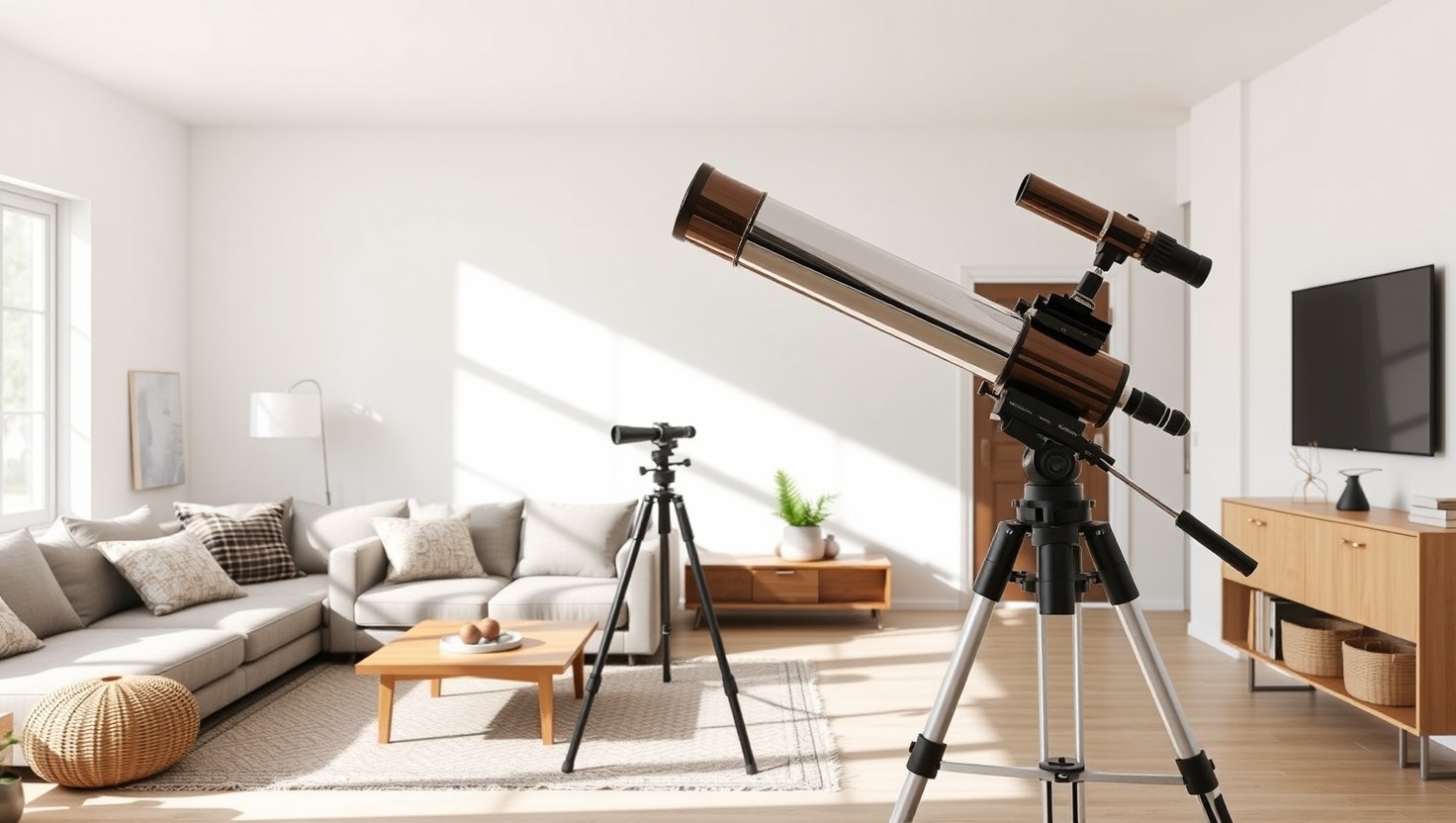
The saddest telescopes are the ones sold on "500x magnification!" that show a blurry blob and end up in a cupboard. The secret to a great first telescope is ignoring the marketing and focusing on aperture, the right type, and a stable mount. Here is how to choose one you'll actually keep using.
Key Takeaways
- Aperture is king — the width of the main lens/mirror decides how much you see. Magnification is a distraction.
- Dobsonians give the most aperture per dollar and are the classic beginner win.
- Refractors are low-maintenance and great for the Moon and planets; reflectors gather more light for the price.
- The mount matters as much as the scope — a wobbly mount ruins the view.
- Skip "computerised" hype until you know you'll use it; simple scopes get used more.
Aperture beats magnification
Aperture — the diameter of the main lens or mirror — is the single most important spec. More aperture gathers more light, so you see fainter, sharper objects. Magnification can be changed with eyepieces, but you can't add light. Ignore boxes shouting about "500x"; ask how many millimetres of aperture you're getting.
The three main types
- Refractor: a lens at the front. Low-maintenance, crisp on the Moon and planets, but pricey for big apertures.
- Reflector (Newtonian): mirrors. More aperture for your money — great all-rounder — needs occasional alignment.
- Dobsonian: a reflector on a simple, stable base. The most aperture per dollar and dead-easy to use — the classic beginner recommendation.
Manual or computerised?
Computerised "GoTo" scopes find objects for you, which is fun but adds cost, complexity and battery faff. Many beginners see more with a simple manual scope they set up in two minutes. Start simple; upgrade once you know you're hooked.
Realistic expectations
You'll see the Moon's craters, Saturn's rings, Jupiter's moons and bright star clusters beautifully. Galaxies and nebulae appear as faint grey smudges, not the colourful photos online — that's normal, and still magical in person.
Ready to pick one?
See our tested picks for the best beginner telescopes, matched to budget and what you want to see.
See the best beginner telescopes →Frequently Asked Questions
Aperture — the diameter of the main lens or mirror. It decides how much light the telescope gathers and therefore how much detail you see. Magnification is far less important and can be changed with eyepieces.
A Dobsonian — a reflector on a simple, stable base. It gives the most aperture for the money and is very easy to use, which is why it is the classic beginner recommendation.
Not to start. GoTo scopes find objects for you but add cost, complexity and battery hassle. Many beginners see more with a simple manual scope they can set up quickly. Upgrade later if you get hooked.
The Moon's craters, Saturn's rings, Jupiter and its moons, and bright star clusters look great. Galaxies and nebulae appear as faint grey smudges rather than the colourful photos online — that is normal.
Related: Best beginner telescopes 2026 · Best Dobsonian telescopes · All astronomy guides