
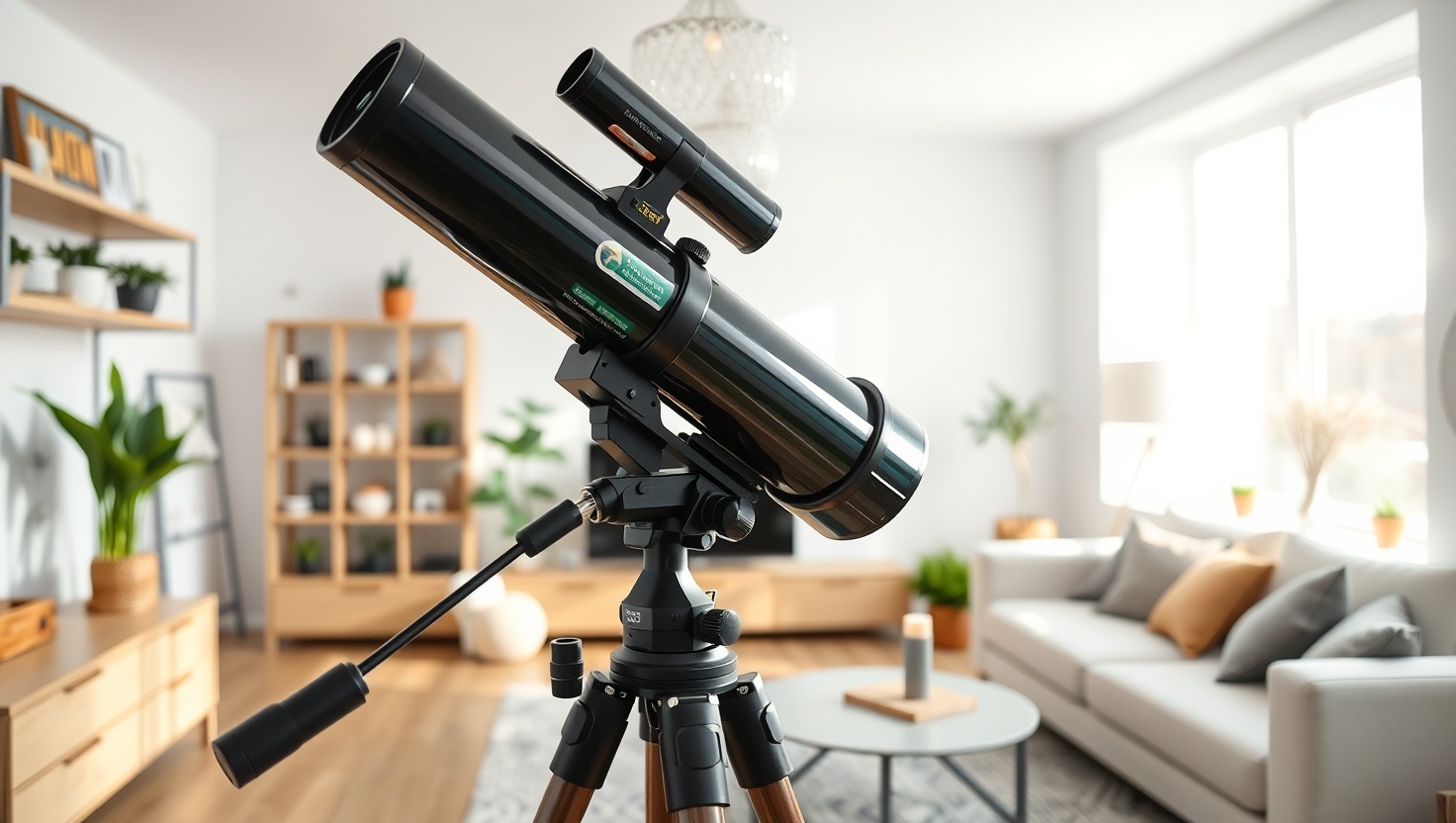
Most beginner telescopes end up in a closet within a month. Not because space is boring, but because the wrong scope makes finding the Moon feel like a chore. The right one shows you Saturn's rings the first night.
Celestron NexStar 8SE — Top Pick
A full 8 inches of aperture in a compact, one-hand-carry tube, with computerized GoTo that finds objects for you and a platform that grows into astrophotography. It is the buy-once telescope that keeps thrilling you for years.
In a hurry? That's our pick. Want the reasoning and the full comparison? Keep reading.
You want to point a telescope at the sky and actually see something. Not a blurry smudge, but the Moon's craters in crisp detail, Saturn wearing its rings, Jupiter's cloud bands, and faint galaxies drifting in the dark. The problem is that most beginner scopes are sold on magnification numbers that mean almost nothing, and they hide the one spec that decides whether you see anything at all: aperture.
This guide fixes that. You will learn why aperture is king, how refractors, reflectors, and SCTs differ, and when a computerized GoTo mount or a phone app is worth it versus a manual scope. Then we rank four telescopes that genuinely earn a beginner's money, starting with the one that will still thrill you five years from now.
Key Takeaways
- Aperture is the number one spec. More aperture means more light, sharper detail, and fainter galaxies within reach, so ignore the giant magnification claims on the box.
- Refractors are low-maintenance and great on the Moon and planets. Reflectors give you more aperture per dollar. SCTs pack big aperture into a compact, grow-with-you tube.
- GoTo and app-assisted finding remove the biggest beginner frustration: actually locating objects in a huge, dark sky.
- A stable mount matters as much as the optics. A shaky tripod turns a good scope into a wobbly disappointment.
- The Celestron NexStar 8SE is the buy-once scope that grows with you and is ready for astrophotography down the road.
Why Aperture Beats Magnification Every Time
Walk down any telescope aisle and you will see boxes screaming 300x or 675x magnification. Ignore them. Magnification is the marketing trap that sends thousands of beginners home disappointed. The spec that actually decides what you see is aperture, the diameter of the main lens or mirror. Aperture controls how much light your telescope gathers, and light is everything in astronomy. A bigger aperture pulls in more of it, which means brighter, sharper views and the ability to see faint galaxies and nebulae that a small scope simply cannot reach.
Here is the reality behind those magnification numbers. You can technically crank any telescope to high power, but without enough aperture feeding it light, you just get a big, dim, mushy blur. A 70mm scope maxes out around 140x of usable magnification before the image falls apart. An 8-inch scope gathers so much more light that it delivers crisp, high-power views of Saturn's rings and Jupiter's cloud bands that leave beginners speechless. When you compare telescopes, look at the aperture first and let magnification claims fall away.
Think of aperture as your light bucket. A wider bucket catches more starlight, and more starlight means you see deeper into the sky. This single spec is why we rank telescopes the way we do. It is also why spending a little more on aperture, when your budget allows, pays off every single clear night for years to come.
Refractor vs Reflector vs SCT: Which Design Fits You
Three telescope designs dominate the beginner market, and each has a personality. A refractor uses a lens at the front and is the classic long-tube telescope most people picture. Refractors are sealed, low-maintenance, and give sharp, high-contrast views of the Moon and planets. The catch is cost: large-aperture refractors get expensive fast, which is why beginner refractors like the Gskyer stay small at around 70mm. They are wonderful for casual Moon-gazing and as a first scope for kids.
A reflector uses a mirror instead of a lens, and that mirror is far cheaper to make big. This is why reflectors give you the most aperture per dollar, and why scopes like the StarSense Explorer 130AZ and the Sky-Watcher Virtuoso 150P pack serious light-gathering power at friendly prices. Reflectors occasionally need their mirrors aligned, a quick task called collimation, but the payoff is real reach into galaxies and nebulae for the money.
An SCT, or Schmidt-Cassegrain telescope, folds a long light path into a short, portable tube using a mirror and a corrector plate. The Celestron NexStar 8SE is the star example. It delivers a full 8 inches of aperture in a tube you can carry with one hand, and that combination of big light-gathering and compact size is exactly why the SCT is the design most beginners grow into rather than out of. It costs more, but it is the one you keep.
GoTo, Apps, and the Mount That Makes or Breaks the Night
The single biggest reason beginners quit is not the optics. It is the frustration of never finding anything. The sky is enormous and dark, and star-hopping to a faint galaxy by hand takes practice most newcomers never build. This is where computerized GoTo mounts and phone-app finding change everything. A GoTo mount, like the one on the NexStar 8SE and the Sky-Watcher Virtuoso GTi, has a small motorized brain. You align it once, then tell it to find Saturn, and it swings the scope right to the target. Suddenly a huge sky becomes a menu you can browse.
App-assisted finding is the clever middle path, and Celestron's StarSense Explorer nails it. You clip your phone onto the scope, the app reads the star field through your camera, and arrows on screen guide you to point the telescope exactly where the object is. There are no motors to buy or batteries to drain, just your phone doing the hard navigation. For a true beginner who wants results on night one without a big GoTo price, this technology is a genuine game changer.
None of this matters if your mount wobbles. A telescope on a shaky tripod turns every gust of wind and every focus adjustment into a bouncing, blurry mess. The optics can be perfect, but if the mount cannot hold still, the view is ruined. Every scope on this list rides on a stable mount matched to its size, because a solid, steady base is the quiet difference between a magical night and a frustrating one. Check current prices below and pick the finding method that fits how patient you want to be.
Quick Comparison
| Product | Aperture | Finding | Type | Best For |
|---|---|---|---|---|
| Celestron NexStar 8SE | 8 inch | Computerized GoTo | SCT | Overall best buy-once |
| Celestron StarSense Explorer DX 130AZ | 130 mm | Phone app finds it | Reflector | True beginners |
| Sky-Watcher Virtuoso GTi 150P | 150 mm | GoTo via app | Reflector | Best value GoTo |
| Gskyer Telescope | 70 mm | Manual | Refractor | Budget and gifts |
1. NexStar 8SE — Best Overall
Celestron NexStar 8SE
The NexStar 8SE is the telescope we would buy with our own money, and it is not close. Eight full inches of aperture gather enough light to show you Saturn's rings crisply, Jupiter's cloud bands and moons, lunar craters in stunning relief, and faint galaxies and nebulae that smaller scopes never reveal. The Schmidt-Cassegrain design folds all that power into a compact tube you can carry one-handed to the backyard, so big aperture no longer means a giant, awkward instrument.
The computerized GoTo mount is what makes it beginner-friendly and future-proof at once. Align it, pick from a database of objects, and the scope drives itself to each target. As your skills grow, this same platform becomes astrophotography-ready, letting you capture the images you once only looked at. It costs more up front, but it is the buy-once scope you keep for a decade. Check the current price and you will see why it earns the top spot.
Pros
- Massive 8-inch aperture reveals rings, bands, and galaxies
- Compact SCT tube is easy to carry and store
- Computerized GoTo finds objects for you
- Grows with you into astrophotography
- Trusted Celestron optics and support
Cons
- Highest price on this list
- Single-arm mount benefits from a wedge for imaging
- GoTo needs a quick alignment each session
2. StarSense DX 130AZ — Best for True Beginners
Celestron StarSense Explorer DX 130AZ
The StarSense Explorer DX 130AZ solves the beginner's biggest headache without a pricey motorized mount. You clip your phone onto the scope, open the StarSense app, and it reads the actual stars overhead through your camera. On-screen arrows then guide you to point the telescope right at the Moon, Saturn, or a distant star cluster. It feels like magic the first time, and it means you find real targets on your very first night instead of giving up in frustration.
Under the app sits a genuinely capable 130mm reflector on a smooth, stable mount. That aperture gathers plenty of light for detailed Moon views, the planets, and brighter deep-sky objects, all at a price far below a full GoTo system. If you want the easiest possible start with real optical muscle behind it, this is the pick. Check current price and compare it against the value GoTo option below.
Pros
- Phone app finds objects with no motors needed
- Capable 130mm reflector aperture
- Far cheaper than a full GoTo scope
- Stable, beginner-friendly alt-az mount
- Fast setup and easy nightly use
Cons
- Relies on your phone and the app
- Reflector needs occasional collimation
- Manual tracking, no motorized drive
3. Virtuoso GTi 150P — Best Value GoTo
Sky-Watcher Virtuoso GTi 150P
The Sky-Watcher Virtuoso GTi 150P is the value champion, packing a full 150mm of aperture and real motorized GoTo into a compact, affordable tabletop package. You control it from your phone: pick a target in the app, and the mount motors drive the scope straight to it. That is a rare combination at this price, giving beginners hands-free finding and a light bucket wide enough to show galaxies, nebulae, and sharp planetary detail.
The tabletop Dobsonian format keeps it grab-and-go simple. Set it on any sturdy surface, connect the app, and you are observing in minutes. You get more aperture per dollar here than almost anywhere else with GoTo attached, which is exactly why it earns the value crown. If you want motorized finding without the NexStar's price, check current price and see how far this one stretches your budget.
Pros
- Generous 150mm aperture for the price
- True motorized GoTo controlled from your phone
- Compact grab-and-go tabletop design
- Best aperture-per-dollar with GoTo
- Quick setup and easy travel
Cons
- Needs a sturdy table or surface to sit on
- Reflector requires occasional collimation
- App control depends on your phone
4. Gskyer — Best Budget Gift
Gskyer Telescope
The Gskyer is the easy budget pick, a lightweight 70mm refractor built for kids, casual stargazers, and gift-givers who do not want to overspend. It is genuinely fun on the Moon, where craters and the terminator line show up beautifully, and it can catch brighter planets on a clear night. Setup is simple, the tube is sealed and low-maintenance, and it travels easily to a park or campsite.
Be realistic about what a small refractor does. With 70mm of aperture, faint galaxies stay out of reach, and this is a scope for casual wonder rather than deep exploration. But as a first telescope for a curious kid or a low-risk way to test whether the hobby sticks, it is hard to beat the value. Check the current price if you want an affordable, no-fuss introduction to the night sky.
Pros
- Very affordable entry point
- Lightweight and easy to carry
- Sealed refractor needs little maintenance
- Great Moon and bright-planet views
- Ideal first scope for kids
Cons
- Small 70mm aperture limits deep-sky views
- Manual finding takes patience
- Included accessories are basic
Which Should You Choose?
If you want the buy-once scope that grows with you
Go with the Celestron NexStar 8SE. Its 8-inch aperture and computerized GoTo show you rings, cloud bands, and galaxies from night one, and the same platform becomes astrophotography-ready as your skills grow. It costs more, but it is the one you keep.
If you are a true beginner who just wants to find things fast
The Celestron StarSense Explorer DX 130AZ is your pick. Your phone reads the sky and guides you to every target, so you see real objects on your first night, all with a capable 130mm reflector and no expensive GoTo motors.
If you want GoTo power for the least money
The Sky-Watcher Virtuoso GTi 150P wins on value. You get a big 150mm aperture and true motorized, app-controlled finding in a compact tabletop scope that costs far less than a full-size GoTo system.
Ready to See Saturn's Rings for Yourself?
Stop buying scopes that end up in the closet. The Celestron NexStar 8SE shows you rings, cloud bands, and galaxies from your first clear night, and grows with you for years. Check the current price and take your first real look at the universe.
Explore Brainstamped's Free ToolsFrequently Asked Questions
Aperture, without question. It is the diameter of the main lens or mirror, and it controls how much light your telescope gathers. More aperture means brighter, sharper views and the ability to see faint galaxies. Ignore the big magnification numbers on the box and compare aperture first.
Yes. Even a good 130mm scope reveals Saturn's rings and Jupiter's cloud bands clearly, and an 8-inch scope like the NexStar 8SE pulls in faint galaxies and nebulae too. The key is enough aperture and a steady mount, not a huge magnification claim.
For most beginners, absolutely. The hardest part of the hobby is finding objects in a huge dark sky. A GoTo mount drives the scope to targets automatically, and app-assisted scopes like the StarSense Explorer use your phone to guide you. Both remove the frustration that makes so many beginners quit.
It depends on your budget and goals. Refractors are low-maintenance and great on the Moon and planets but cost more per inch of aperture. Reflectors give the most aperture per dollar. SCTs like the NexStar 8SE fold big aperture into a compact, grow-with-you tube, which is why many beginners choose one they will keep.
Because a shaky mount ruins even great optics. If the tripod or base wobbles, every touch and gust turns the view into a bouncing blur. A stable mount matched to the scope's size holds the image steady, which is the quiet difference between a magical night and a frustrating one.