
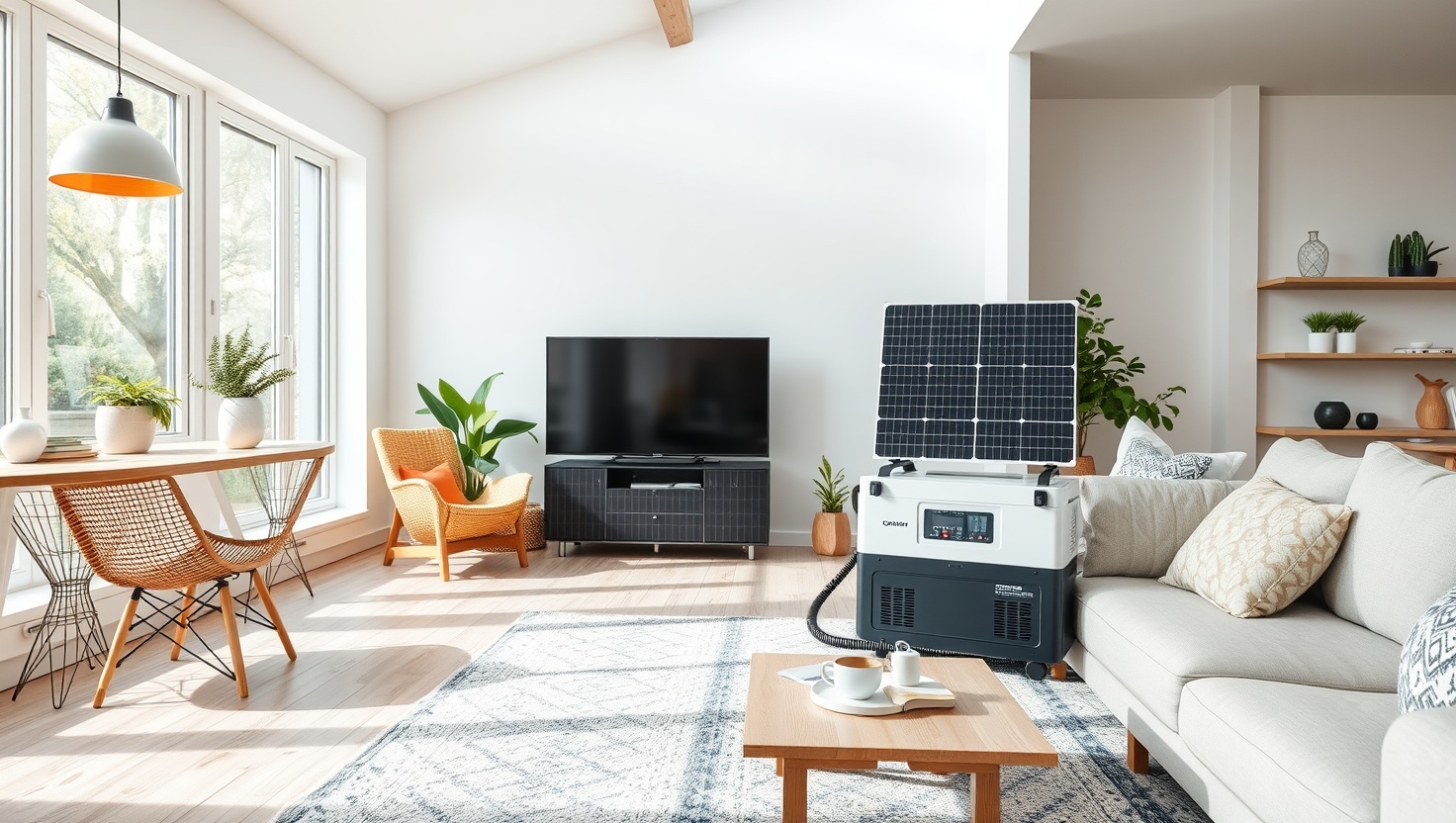
You want the lights on, the fridge cold and the well pump running even when the grid gives up. The right solar generator makes that quiet, fuel-free and automatic.
EcoFlow Delta Pro Ultra — Top Pick
For true off-grid freedom, the Delta Pro Ultra does it all: expandable to 90kWh, 240V split-phase for wells and AC, and up to 5,600W of solar input to refill fast. It's the one system that powers a full home without compromise.
In a hurry? That's our pick. Want the reasoning and the full comparison? Keep reading.
Off-grid power lives or dies on one question: does your battery and solar setup actually match what you run every day? Most people either overpay for capacity they never use or buy too small and end up sitting in the dark by 9 p.m. Neither feels like freedom.
This guide cuts through the spec sheets. You'll match battery size to your real loads, look at solar input so you can actually refill during the day, and figure out whether you need 240V for a well pump or air conditioner. Then we recommend four systems, from a whole-cabin powerhouse to a compact RV starter, with honest pros, cons and who each one is really for.
Key Takeaways
- Match battery capacity (Wh) to your daily load, not to the biggest number on the box.
- Solar input (max PV watts) decides how fast you refill during daylight; low input means you drain faster than you charge.
- You need 240V output for well pumps, central AC and many workshop tools; not every unit delivers it.
- LiFePO4 batteries last thousands of cycles, so they're the only sensible chemistry for daily off-grid use.
- Expandability lets you start smaller and grow the system as your loads and budget grow.
How to Match a Solar Generator to Your Off-Grid Life
Start with your loads, not the product. Add up what you actually run in a day: a fridge sips 1-2kWh over 24 hours, LED lights barely register, but a well pump, microwave or air conditioner spikes hard for short bursts. Write down the wattage of your heavy hitters and roughly how long each runs. That number, in watt-hours, tells you the battery size you need, plus a buffer for cloudy days.
Next, look at solar input, meaning the maximum PV watts the unit accepts. This is the spec most people skip, and it's the one that decides whether you stay powered. A 6kWh battery with weak solar input drains faster than the sun can refill it, so you end up rationing power. A unit that takes 3,000W or more of panels can top itself off in a few good hours of sun, which is what real off-grid independence looks like.
Finally, decide if you need 240V (split-phase) output. Standard 120V handles lights, fridges, laptops and most kitchen gear. But well pumps, central air conditioning, some deep freezers and heavy workshop tools want 240V. If your cabin or homestead runs any of those, a 120V-only unit simply can't drive them, no matter how big the battery is.
Battery Chemistry, Cycle Life and Why LiFePO4 Wins
For daily off-grid cycling, LiFePO4 (lithium iron phosphate) is the only chemistry worth your money. These cells hold up for roughly 3,000 to 6,000 full charge cycles before they even drop to 80% capacity. Cycle one every day and you're looking at a decade or more of service. Older lithium-ion packs fade far sooner, so a cheaper upfront price often hides a shorter lifespan.
Every unit in this guide uses LiFePO4, so you're covered there. The real difference is expandability. A modular system lets you buy one battery now and bolt on more later, which spreads the cost and lets your setup grow with your needs. If you're powering a tiny home today but planning a full cabin next year, that headroom matters more than any single spec.
Sizing It Right: Cabin, RV or Tiny Home
A full off-grid cabin with a well, fridge, freezer and occasional AC needs serious capacity and 240V, plus enough solar input to refill daily. That's whole-home territory, and it calls for an expandable powerhouse rather than a single portable box. Undersize here and you'll feel it every evening.
An RV or tiny home is a different animal. You're running lights, a compact fridge, a fan, device charging and maybe a small induction burner. A compact-to-mid unit around 1,000 to 2,000Wh keeps that going comfortably, especially with fast solar recharge so it refills while you're out for the day. Portability and weight matter more here than raw capacity, because you'll actually move the thing.
Quick Comparison
| Product | Capacity | Solar Input | 240V? | Best For |
|---|---|---|---|---|
| EcoFlow Delta Pro Ultra | 6kWh, expandable to 90kWh | Up to 5,600W | Yes | Whole off-grid home |
| Bluetti AC500 + B300S | 3kWh, expandable to 18kWh | Up to 3,000W | Yes (split-phase) | Expandable mid-large |
| Jackery Explorer 2000 v2 | 2,042Wh | Up to 1,300W | No | Mid-size portable |
| Anker Solix C1000 | 1,056Wh | Up to 600W | No | Compact RV / starter |
1. Delta Pro Ultra — Best for whole off-grid home
EcoFlow Delta Pro Ultra
This is the unit you buy when you want to run a whole cabin, not just keep the lights on. A single Delta Pro Ultra brings 6kWh of storage, and you can stack it into a system that reaches 90kWh, which is enough to carry a full homestead through several cloudy days. The 240V split-phase output drives well pumps and central air without an adapter, and up to 5,600W of solar input means you refill fast when the sun's out.
It's a big commitment in both price and footprint, so it makes sense when off-grid is your main power source, not a backup. If you're building real independence for a home, this is the one that removes the compromises. Check current price before you buy, because EcoFlow bundles panels and extra batteries at different tiers.
Pros
- Massive expandable capacity, from 6kWh up to 90kWh
- True 240V split-phase for wells, AC and heavy tools
- Huge solar input for fast daytime refills
- Long-life LiFePO4 cells built for daily cycling
- Grows with your homestead over time
Cons
- Highest upfront cost of the group
- Heavy and large; this is a fixed installation, not portable
- Overkill for a simple RV or weekend setup
2. Bluetti AC500 — Best expandable mid-large system
Bluetti AC500 + B300S
The AC500 is a smart middle path. The inverter head is separate from the B300S battery, so you start with one pack and add more as your loads or budget grow, all the way to around 18kWh. With up to 3,000W of solar input, it refills quickly, and its LiFePO4 cells are rated for thousands of cycles, so it holds up to daily use.
Pair two units and you can get split-phase output for heavier loads too. This is the pick for someone scaling up a cabin or tiny home who wants room to grow without jumping straight to a whole-home system. Check current price, since the modular design means costs vary with how many batteries you add.
Pros
- Modular design scales from 3kWh to about 18kWh
- Strong 3,000W solar input for fast recharging
- Long LiFePO4 cycle life for daily off-grid use
- Split-phase possible when you pair units
- Separate inverter and battery makes upgrades easy
Cons
- The inverter head plus battery is bulky and heavy
- Full expansion gets expensive
- More setup involved than a plug-and-play box
3. Explorer 2000 v2 — Best mid-size portable
Jackery Explorer 2000 v2
The Explorer 2000 v2 nails the middle ground for portable power. At 2,042Wh it runs a tiny home or RV fridge, lights, fans and device charging for a full day, yet it stays notably light for its class, so you can actually carry it and move it between the cabin and the truck. Up to 1,300W of solar input refills it in a handful of sunny hours.
It's simple by design: no separate inverter head, no complicated expansion, just a dependable box that works. If you want solid mid-size capacity without building a modular system, this is your unit. Check current price, as Jackery frequently pairs it with folding panels at a discount.
Pros
- Generous 2,042Wh in a genuinely portable package
- Light and easy to move compared to rivals its size
- Up to 1,300W solar input for quick refills
- LiFePO4 chemistry for long service life
- Simple, reliable, plug-and-play operation
Cons
- 120V only, so no well pumps or central AC
- Not expandable into a larger system
- Capacity falls short for a full off-grid house
4. Solix C1000 — Best compact RV / starter
Anker Solix C1000
The Solix C1000 is the easiest way to start living off-grid. At 1,056Wh it comfortably covers RV essentials: lights, a compact fridge, fans, laptops and phones, plus short bursts from a microwave or coffee maker. It's compact and light enough to move without a second thought, and it charges fast, both from the wall and from up to 600W of solar.
This is your entry point, not your whole-home solution. If you're testing off-grid life, outfitting a van, or want a dependable core you'll later supplement, the C1000 delivers a lot of value for its size. Check current price, since Anker often bundles it with a portable panel.
Pros
- Compact and light, ideal for vans and RVs
- Fast solar recharge with up to 600W input
- Quick wall charging when you need a top-up
- LiFePO4 cells for years of daily cycling
- Great value as an off-grid starter
Cons
- Smallest capacity here; not for whole-home use
- 120V only, no heavy 240V appliances
- You'll outgrow it if your loads climb
Which Should You Choose?
Powering a full cabin or homestead
Go with the EcoFlow Delta Pro Ultra. You need the expandable capacity, the 240V split-phase output for a well pump or AC, and the high solar input to refill daily. Nothing smaller will carry a real off-grid home without leaving you rationing power.
Scaling up over time
The Bluetti AC500 + B300S is built for you. Start with one battery, add more as your loads grow, and reach split-phase when you pair units. It spreads the cost and grows with your setup instead of forcing one big purchase.
RV, van or tiny home
The Anker Solix C1000 is the smart starter, and the Jackery Explorer 2000 v2 steps up when you need more headroom. Both stay portable and refill fast from solar, which is exactly what mobile off-grid living demands.
Ready to power your off-grid life?
Match the battery, solar input and voltage to your real loads, then take the free Emergency Readiness Scan to see where your setup still has gaps before the grid does.
Take the Free Emergency Readiness ScanFrequently Asked Questions
Add up your daily loads in watt-hours: a fridge runs 1-2kWh a day, lights and devices add a little more, and heavy appliances spike hard. A tiny home or RV usually lives on 1,000-2,000Wh, while a full cabin with a well and AC needs an expandable system of 6kWh or more.
Only if you run well pumps, central air conditioning, some deep freezers or heavy workshop tools. Those need 240V split-phase, which the EcoFlow Delta Pro Ultra and paired Bluetti AC500 provide. Lights, fridges and kitchen gear run fine on standard 120V.
LiFePO4 cells typically deliver 3,000 to 6,000 full charge cycles before dropping to about 80% capacity. Cycle one daily and that's a decade or more of use, which is why every unit here uses that chemistry for off-grid living.
Solar input, the maximum PV watts a unit accepts, decides how fast you refill during daylight. A big battery with weak input drains faster than the sun can recharge it, so you end up rationing power. Higher input means you top off in a few sunny hours and stay independent.
Yes, if you choose a modular system. The EcoFlow Delta Pro Ultra and Bluetti AC500 both let you add batteries over time, so you can start smaller and grow. Portable units like the Anker Solix C1000 and Jackery Explorer 2000 v2 don't expand, so size them for your real needs upfront.