
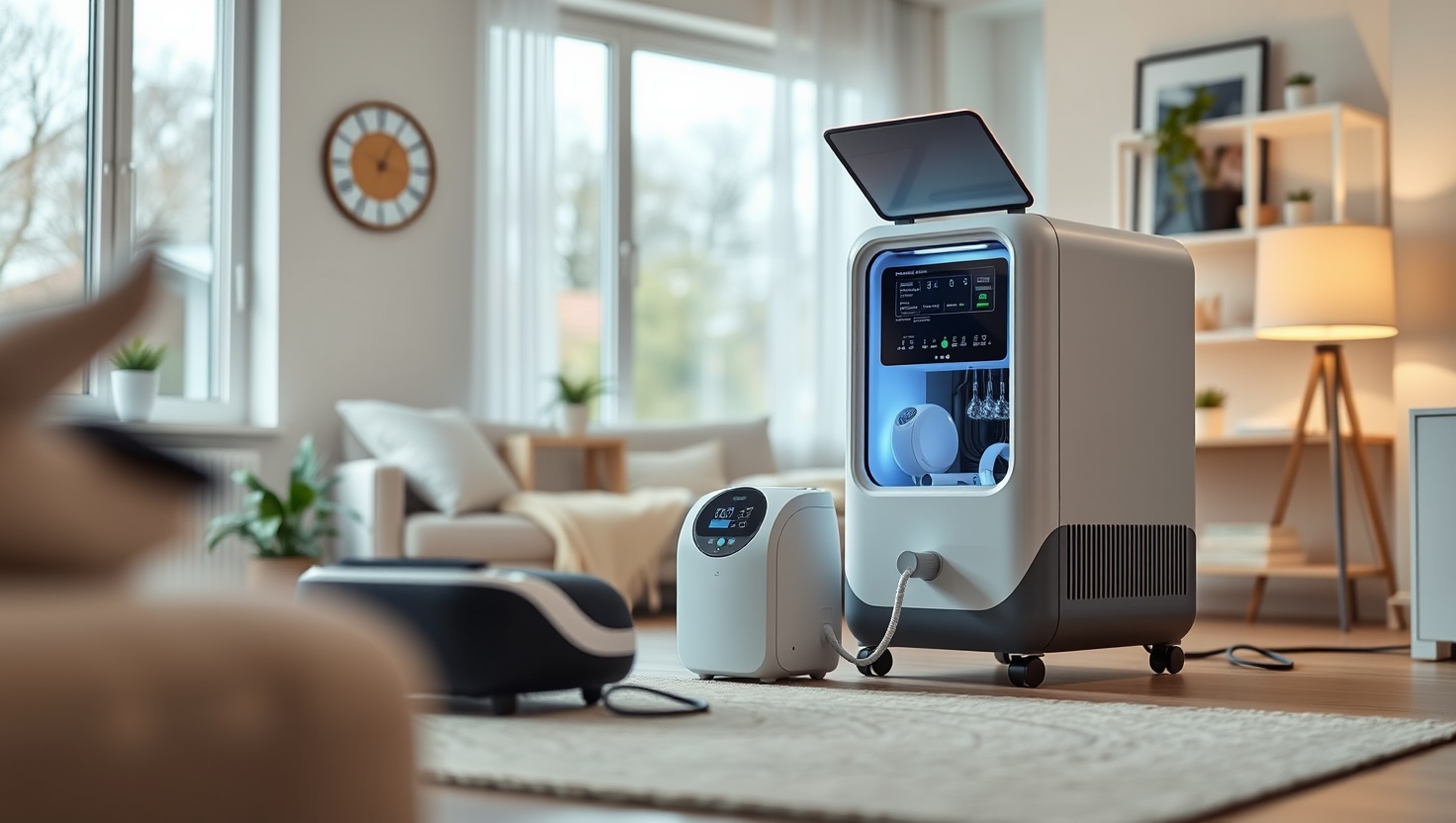
If you rely on a CPAP to sleep, a power outage is not an inconvenience. It is a night you dread. The good news: keeping your machine running is simpler and cheaper than you think.
Anker Solix C1000 — Top Pick
Clean pure sine wave power, a UPS switchover under 20ms, quiet eco mode, and enough capacity for two to three CPAP nights with the humidifier off. It is the reassuring, no-regrets choice for keeping your therapy running through an outage.
In a hurry? That's our pick. Want the reasoning and the full comparison? Keep reading.
You already know the feeling. The lights flicker, the fridge goes quiet, and your first thought is not the food or the Wi-Fi. It is your machine. You need it to breathe well through the night, and now the wall socket is dead. Take a breath, because this is a solved problem. A good portable power station sits between you and the outage and keeps your therapy running like nothing happened.
This guide keeps things practical. You will learn the three things that actually matter when you pick a power station for a CPAP or similar medical device, roughly how much power your machine really needs, and four honest picks for different budgets and situations. No jargon dumps, no fear-mongering. Just a calm, clear path to sleeping soundly even when the grid does not cooperate.
Key Takeaways
- Look for pure sine wave output. It is clean, stable power your CPAP electronics were designed for.
- Choose a unit with UPS or EPS passthrough that switches over in milliseconds, so an outage never interrupts your therapy.
- A CPAP draws only about 30-60W, but the heated humidifier and heated hose are the real battery hogs. Turn them off to roughly double your runtime.
- Aim for enough watt-hours for multiple nights. Around 1000Wh covers most people for two to three nights with the humidifier off.
- Our top pick is the Anker Solix C1000: clean power, fast UPS switchover, quiet, and enough capacity for several nights.
The 3 things that actually matter for a CPAP
Shopping for a power station can feel like drowning in spec sheets. You do not need most of those numbers. For keeping a CPAP running, three features carry almost all the weight, and once you understand them the choice gets easy.
First, pure sine wave output. Your CPAP is a sensitive electronic device with a small motor and a control board. Pure sine wave power is the smooth, clean waveform that comes out of a good wall socket. Cheaper units sometimes use a "modified sine wave," which is rougher and can make motors run hot, buzz, or behave oddly. Every unit in this guide is pure sine wave, so you can cross that worry off your list.
Second, quiet operation plus UPS or EPS passthrough. UPS stands for uninterruptible power supply. It means the station passes wall power straight through to your device while the grid is up, and the moment the power drops it switches to its battery in a few thousandths of a second. That switchover is so fast your CPAP never notices. You stay asleep, the machine keeps humming, and you wake up rested. Quiet matters too, because this thing sits by your bed. Look for an eco or quiet mode.
Third, enough watt-hours for multiple nights. Watt-hours (Wh) are the size of the fuel tank. More Wh means more nights of runtime. Here is the reassuring part: a CPAP itself sips power, only about 30 to 60 watts. The battery hog is the heated humidifier and heated hose, which can triple your consumption. Turn those off during an outage and a roughly 1000Wh station can carry most people through two to three nights on a single charge.
How much power does a CPAP really use?
Let us put real numbers to it so you can size a unit with confidence. Running just the airflow motor, a typical CPAP pulls somewhere around 30 to 60 watts. Over a full night of seven or eight hours, that lands in the neighborhood of 300 to 500 watt-hours. That is with the humidifier and heated hose switched off.
Switch the heated humidifier and heated hose back on and everything changes. Heating water and warming air is energy-intensive, and your overnight draw can climb well past double. That single toggle is the biggest lever you have. During an outage, turning off heating features is the easiest way to stretch one charge across more nights. Many people find the air comfortable enough without heat for a few nights, and your therapy pressure stays exactly the same either way.
So do the quick math for your own situation. If your machine uses about 400Wh a night with heating off, a 1000Wh station gives you roughly two and a half nights. A 245Wh travel unit gives you about one night, which is perfect for a weekend trip or a single-evening outage. Knowing your nightly number turns a guessing game into a simple, confident decision.
One calm safety note before the picks. This article is general information, not medical advice. Your device and your needs are unique, so always confirm your exact wattage on your machine's label or manual, keep a backup plan such as a second power source or a plan to reach a facility with power, and talk to your doctor or equipment provider about what is right for you.
Quick Comparison
| Product | Capacity | Output | UPS Switchover | Best For |
|---|---|---|---|---|
| Anker Solix C1000 | 1056Wh | Pure sine | <20ms | Overall best |
| EcoFlow Delta 3 Plus | 1024Wh | Pure sine | ~10ms | App + expandable |
| Jackery Explorer 1000 v2 | 1070Wh | Pure sine | Passthrough | Budget & simple |
| EcoFlow River 3 | 245Wh | Pure sine | ~10ms | Travel & carry-on |
1. Anker C1000 — Best Overall
Anker Solix C1000
The Anker Solix C1000 hits the sweet spot for medical backup, and it is why it takes our top spot. It packs 1056Wh of LiFePO4 battery, the long-lasting and stable chemistry you want in something living by your bed for years. The output is pure sine wave, so your CPAP gets the clean power it expects, and the built-in UPS switches from wall power to battery in under 20 milliseconds. That is faster than a blink, and far faster than your machine can sense.
In practice, you plug your CPAP into the C1000 and leave the C1000 plugged into the wall. Life goes on normally until the grid drops, at which point the battery takes over silently. With the humidifier off, most people get two to three nights before needing a recharge. A quiet eco mode keeps bedroom noise down, and the unit recharges quickly when power returns so you are ready for the next event.
Pros
- Clean pure sine wave power that CPAP electronics love
- Fast UPS switchover under 20ms, so therapy never interrupts
- Durable 1056Wh LiFePO4 battery rated for years of use
- Quiet eco mode suited to a bedside spot
- Enough capacity for two to three nights with heating off
Cons
- Around $700, a real investment up front
- Too heavy to be a travel or carry-on unit
- Not expandable, so very long outages need a recharge plan
2. Delta 3 Plus — Best App & Expandable
EcoFlow Delta 3 Plus
If you like knowing exactly where you stand, the EcoFlow Delta 3 Plus is made for you. Its 1024Wh LiFePO4 battery is right in line with the Anker, the output is pure sine wave, and the EPS/UPS passthrough switches over in around 10 milliseconds. The standout feature is the app, which shows your precise battery percentage and estimated runtime in real time. For anyone who wants reassurance at a glance from their phone, that peace of mind is genuinely useful.
The other big draw is expandability. You can add extra battery capacity when you need it, which is a smart option if you live somewhere with long or frequent outages, or if you simply want a bigger buffer as your needs grow. Out of the box it delivers roughly the same two to three CPAP nights as our top pick with heating off, and it stays quiet enough for bedside use.
Pros
- Excellent app shows exact battery percentage and runtime
- Fast ~10ms EPS/UPS passthrough for uninterrupted therapy
- Expandable capacity for longer or more frequent outages
- Pure sine wave, 1024Wh LiFePO4 battery
- Quiet operation suitable for the bedroom
Cons
- Around $700-800, slightly more than the Anker
- Expansion batteries add meaningful extra cost
- Heavier and larger, not a travel unit
3. Jackery 1000 v2 — Best Budget & Simple
Jackery Explorer 1000 v2
The Jackery Explorer 1000 v2 is the pick for anyone who wants capable backup without any fuss. It offers 1070Wh of LiFePO4 capacity, actually the largest tank in this comparison, with pure sine wave output your CPAP will run on happily. At 23.8 pounds it is also the lightest of the full-size units here, which makes it easier to move from the bedroom to the car or a friend's house when you need to.
What you are really buying is simplicity. The Jackery is straightforward to operate, with a clear display and no learning curve, and it usually sits at a friendly price point around $700. With heating features off, it delivers the same solid two to three nights of CPAP runtime as the others. If you want reliable, honest backup and do not care about apps or expansion, this is an easy recommendation.
Pros
- Largest capacity here at 1070Wh LiFePO4
- Lightest full-size unit at 23.8 lb, easy to carry
- Pure sine wave output safe for CPAP electronics
- Simple, clear interface with no learning curve
- Friendly price around $700
Cons
- No companion app for detailed monitoring
- Not expandable for very long outages
- Fewer smart features than the EcoFlow
4. River 3 — Best Travel & Small
EcoFlow River 3
Sometimes you do not need a whole night station at home, you need something that travels. The EcoFlow River 3 is tiny and light, with about 245Wh of capacity, and it fits in a carry-on. For a weekend away, a camping trip, or a hotel with an unreliable outlet, it can run a travel CPAP for roughly one night with the humidifier off. The output is still pure sine wave and it offers fast passthrough, so the quality of the power is not a compromise, only the size of the tank is.
Think of the River 3 as your portable insurance rather than your primary home backup. At around $180 it is by far the most affordable option here, and its light weight means you will actually bring it along. Many people pair it with a larger home unit: the big station guards the bedroom, and the River 3 goes wherever they do.
Pros
- Small and light enough for a carry-on
- Very affordable at around $180
- Pure sine wave with fast ~10ms passthrough
- Ideal companion for a travel CPAP
- Easy to bring anywhere, so you actually use it
Cons
- Only ~245Wh, roughly a single night of runtime
- Not enough for multi-night home backup
- Humidifier must stay off to reach a full night
Which Should You Choose?
If you want the best all-around home backup
Go with the Anker Solix C1000. It combines clean pure sine wave power, a UPS switchover under 20ms, quiet bedside operation, and enough capacity for two to three nights with heating off. For most people keeping a CPAP running at home, it is the confident, no-regrets choice.
If you want the best monitoring or plan to expand
Choose the EcoFlow Delta 3 Plus. Its app shows your exact battery percentage in real time, and you can add extra batteries later if your outages get longer or more frequent. Pick it when peace-of-mind monitoring and room to grow matter most to you.
If you are watching your budget or travel a lot
The Jackery Explorer 1000 v2 gives you the simplest, most affordable full-night backup around $700. For trips, add the tiny EcoFlow River 3 at roughly $180 to keep a travel CPAP running for a night wherever you go.
Sleep soundly, outage or not
You deserve a full night of therapy no matter what the grid does. Pick the power station that fits your home and budget, keep the humidifier off to stretch your runtime, and rest easy knowing your machine keeps running. Ready to take back control of your nights?
Take the Free Emergency Readiness ScanFrequently Asked Questions
Yes. A CPAP draws only about 30 to 60 watts and uses roughly 300 to 500 watt-hours per night with the humidifier off. A 1000Wh unit like the Anker Solix C1000 can typically cover two to three nights on one charge. Always confirm your own machine's wattage on its label first.
It is strongly recommended. Pure sine wave is the clean, smooth power your CPAP's motor and electronics were designed for, just like a good wall socket. Every unit in this guide is pure sine wave, so you are covered.
UPS passthrough means the station feeds your CPAP directly from the wall while power is on, then switches to its battery in milliseconds the instant the grid fails. That switchover is so fast, around 10 to 20ms, that your machine never stops running and you stay asleep.
Turn off the heated humidifier and heated hose. Those heating features are the biggest energy users and can more than double your consumption. Running just the airflow lets a single charge stretch across roughly twice as many nights.
No. This is general information only. Your device and health needs are unique, so confirm your exact wattage, keep a backup plan such as a second power source or a facility with power, and talk to your doctor or equipment provider about what is right for you.