
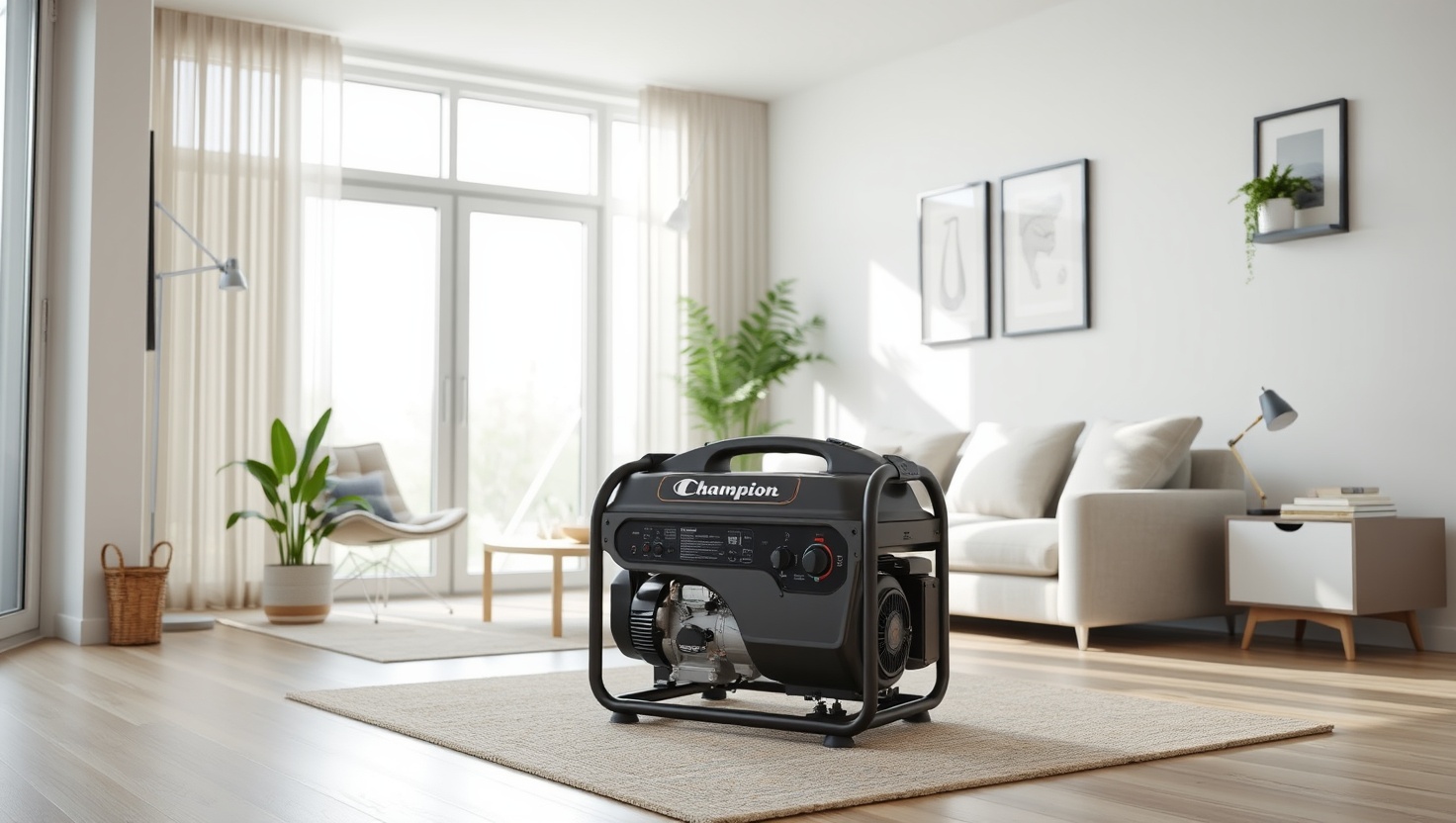
The power goes out, the neighborhood goes dark, and your house barely blinks. That is the promise of a standby generator. The question is whether Generac or Champion delivers it best.
Generac Guardian — Top Pick
With the widest installer and service network, mature transfer switches with smart load management, and app-based monitoring, the Generac Guardian is the safest, best-supported whole-house standby generator for keeping your home running when the grid fails.
In a hurry? That's our pick. Want the reasoning and the full comparison? Keep reading.
When the grid fails, a whole-house standby generator is the difference between a minor inconvenience and a freezer full of spoiled food, a flooded basement, and a cold, dark house. Unlike a portable unit you drag out and refuel by hand, a standby system sits permanently outside, wired into your home, and kicks on by itself within seconds of an outage. You do not have to be awake, home, or even paying attention. That automatic hand-off is the whole point, and it is exactly what separates a real backup plan from a box in the garage.
Two names dominate this space: Generac, the household brand that basically built the residential standby market, and Champion, the value-focused challenger that has been closing the gap fast. Both make reliable, air-cooled standby units that run on natural gas or propane and pair with an automatic transfer switch. But they are tuned for different buyers. Below we break down how each one handles power delivery, the transfer switch, install and fuel, warranty, and long-term value, so you can wire the right one into your home the first time.
Key Takeaways
- A standby generator's real job is sizing to your home's actual load in kilowatts, then handing power over automatically through a transfer switch the moment the grid drops.
- For most homeowners, Generac Guardian is our winner: the widest dealer and support network, proven reliability, and app-based monitoring make it the safest all-around pick.
- Champion Home Standby is the value play, delivering comparable whole-house coverage and a strong warranty for less, if you can line up a good local installer.
- Both run on natural gas or propane and require a professional install with permits, so budget for the electrician and gas hookup, not just the unit.
- Prefer a premium build or a specific dealer relationship? Kohler and Briggs & Stratton are worth a look before you commit.
Round 1: Power, Transfer Switch & Whole-House Coverage
Start with sizing, because a standby generator that is too small is worse than none at all. Every unit is rated in kilowatts (kW), and that number has to match the electrical load of what you want to run. A full whole-house setup that powers your air conditioning, well pump, electric range, and everything else needs a higher-kW unit than an essential-circuits setup that keeps the fridge, furnace, sump pump, and a few lights alive. Both Generac and Champion offer air-cooled units across the common residential range, so the real work is having an electrician calculate your home's actual load and pick a kW rating with a little headroom on top. Undersize it and the generator overloads and shuts down at the worst possible moment.
The transfer switch is the unsung hero of this whole system. When the grid drops, an automatic transfer switch (ATS) senses the outage, disconnects your home from the utility, and connects it to the generator, all in seconds and with no one touching a thing. Just as important, it prevents backfeed, which keeps generator power from flowing back onto the utility line and endangering repair crews. Generac and Champion both sell their units bundled with a matched ATS. Generac's transfer switches and its whole-home load-management options are especially mature, letting a smaller generator run a bigger house by intelligently shedding non-critical loads. Champion's transfer switches are straightforward and dependable, and cover the same core job cleanly.
On the coverage question, both brands can do whole-house or essential-circuits depending on the kW rating and switch you choose. Generac edges ahead here mainly on flexibility and load management: its ecosystem gives an installer more tools to right-size the system to an odd home layout. Champion keeps things simpler, which is not a weakness, just a different philosophy. If your needs are standard, either brand covers your house fine. If your home is large or has unusual high-draw appliances, Generac's deeper options give your installer more room to work.
Round 2: Install, Fuel, Warranty & Value
Neither of these is a plug-and-play purchase, and pretending otherwise leads to trouble. A whole-house standby generator requires a professional install: a licensed electrician to wire the transfer switch and a plumber or gas fitter to connect the fuel line, plus local permits and an inspection. Both Generac and Champion units are designed for this professional install path. Generac's advantage is its enormous network of certified installers and dealers, which makes finding qualified help, and warranty service later, genuinely easy in most of the country. Champion's dealer network is growing but thinner, so before you buy the value pick, confirm you can line up a good local installer, because a bargain unit installed poorly is no bargain at all.
Fuel is a wash in the best way. Both brands run on natural gas or propane. Natural gas is the set-and-forget option: if your home has a gas line, the generator can run indefinitely without refueling, which is the dream during a long outage. Propane is the alternative when you lack a gas line, giving you long run times from a large tank, though you do have to keep it filled. Whichever you pick, both Generac and Champion handle the conversion cleanly. Also plan for the weekly self-test both units run automatically, a brief exercise cycle that keeps the engine healthy and confirms the system will actually start when you need it.
Warranty and value are where the buyer's priorities decide the winner. Champion backs its home standby line with a strong multi-year warranty and undercuts Generac on price, which is the heart of its pitch: comparable whole-house coverage for less money. Generac's warranty is competitive too, but you are really paying for the ecosystem, the biggest support network, mature app-based monitoring so you can check status from your phone, and a track record that reassures buyers and, often, home resale value. If the budget is tight and your installer is solid, Champion is the smart-money buy. If you want the safest, most supported long-term ownership, Generac earns the premium.
Quick Comparison
| Generator | Best For | Coverage | Strength | Support Network |
|---|---|---|---|---|
| Generac Guardian | Overall pick | Whole-house or essential circuits | Huge dealer + app network | Excellent |
| Champion Home Standby | Best value | Whole-house or essential circuits | Strong warranty for the price | Good |
| Kohler Home Generator | Premium build | Whole-house | Commercial-grade engine | Good |
| Briggs & Stratton Standby | Runner-up alternative | Essential circuits or whole-house | Solid engine heritage | Fair |
1. Generac Guardian — Winner: Best Overall
Generac Guardian
The Generac Guardian is the standby generator we point most homeowners toward, and it is not a close call for the average buyer. Generac essentially built the residential standby category, and that head start shows up where it matters: the widest network of certified installers and service techs in the country, mature automatic transfer switches, and smart load management that lets a right-sized unit cover a surprisingly large home. When you need someone to install it, service it, or answer a warranty question, help is almost always nearby.
It also nails the modern conveniences. App-based monitoring lets you check the generator's status, run history, and self-test results from your phone, so you know the system is healthy before an outage ever hits. Running on natural gas or propane, paired with its matched ATS, the Guardian delivers the core promise flawlessly: the grid drops, and within seconds your house is back on without you lifting a finger. For most people, that combination of proven reliability and unmatched support is exactly what a backup plan should be.
Pros
- The largest network of certified installers and service techs, making setup and support easy
- Mature automatic transfer switch options with smart whole-home load management
- App-based monitoring so you can check status and self-test results from your phone
- Runs on natural gas or propane for flexible, long-duration backup
- Proven reliability and brand recognition that can help at home resale
Cons
- Commands a price premium over value-focused rivals
- Air-cooled units still require professional install, permits, and inspection
- The feature-rich ecosystem can feel like more than a simple home needs
2. Champion Standby — Best Value
Champion Home Standby
The Champion Home Standby is the value pick, and it makes a genuinely compelling case. You get comparable whole-house or essential-circuits coverage, a dependable automatic transfer switch, and dual-fuel flexibility on natural gas or propane, all for noticeably less than the market leader. Champion has spent years building a reputation on reliable, well-priced power equipment, and its standby line carries a strong multi-year warranty that backs up the pitch. For the budget-conscious homeowner who still wants automatic, hands-off backup, it delivers the essentials without the premium.
The trade-off is the support network. Champion's roster of certified installers and service centers is growing but still thinner than Generac's coast-to-coast coverage, so the smart move is to confirm you can line up a qualified local installer before you buy. Do that, and you get the same core experience, a house that stays on when the grid does not, for a meaningfully lower total cost. If price is doing the deciding and your installer is solid, Champion is the runner-up that punches well above its price.
Pros
- Strong price-to-coverage value versus the market leader
- Whole-house or essential-circuits coverage with a matched transfer switch
- Dual-fuel flexibility on natural gas or propane
- Robust multi-year warranty that backs the value pitch
- Clean, dependable automatic operation when the grid fails
Cons
- Smaller installer and service network than Generac
- Fewer advanced load-management options for unusual home layouts
- Less brand recognition, which can matter at resale
3. Kohler — Best Premium Alternative
Kohler Home Generator
If you want a step up in build quality, the Kohler Home Generator earns a serious look. Kohler has a long heritage in engines and power equipment, and its home standby units are known for commercial-grade construction, strong voltage regulation, and a reputation for durability under sustained load. For buyers who prioritize the quality of the machine itself and plan to keep it for the long haul, that engineering pedigree carries real weight.
You do give up some of Generac's sheer network reach, and Kohler typically sits at the premium end on price. But if you have a good local Kohler dealer and you want a generator that feels built like industrial equipment, it delivers. Running on natural gas or propane with a matched transfer switch, it covers a whole house cleanly and quietly, and it is the natural pick for the buyer who values a premium build over the lowest price.
Pros
- Commercial-grade engine and build quality for long-haul durability
- Strong voltage regulation for sensitive electronics
- Whole-house coverage on natural gas or propane
- Reputation for quiet, refined operation
- Appealing to buyers who prioritize premium engineering
Cons
- Premium pricing at the top of the residential range
- Dealer network is narrower than Generac's
- Overbuilt for a homeowner who just needs essential circuits
4. Briggs & Stratton — Best Runner-Up Alternative
Briggs & Stratton Standby
Briggs & Stratton brings decades of engine-making heritage to its standby line, and that experience shows in dependable, no-drama power. Its home standby units cover essential circuits or a whole house depending on the kW rating you choose, run on natural gas or propane, and pair with a matched automatic transfer switch for the same hands-off operation you expect from the category. For a homeowner who trusts the Briggs name from years of outdoor power equipment, it is a comfortable, sensible choice.
Where it lands behind the leaders is the depth of its residential standby support network and its smaller share of the modern-features conversation. It is a solid, straightforward unit rather than a flashy one. If your local landscape has a strong Briggs dealer and you want a reliable alternative to the top two, it deserves a spot on your shortlist as a capable runner-up.
Pros
- Long engine-making heritage behind a dependable unit
- Essential-circuits or whole-house coverage by kW rating
- Runs on natural gas or propane with a matched transfer switch
- Straightforward, no-drama automatic operation
- A trusted name for buyers loyal to the brand
Cons
- Thinner residential standby support network than Generac
- Fewer modern monitoring and load-management features
- Less market presence than the category leaders
Which Should You Choose?
Pick Generac if you want the safest, best-supported backup
If you want the surest bet, go with the Generac Guardian. Its unmatched network of certified installers and service techs means help is almost always close by, its transfer switches and load management are the most mature in the category, and app-based monitoring lets you confirm the system is healthy from your phone. You pay a premium, but you are buying peace of mind, proven reliability, and support that will still be there years from now.
Pick Champion if value drives the decision
If you want comparable whole-house coverage for meaningfully less, the Champion Home Standby is the smart-money buy. You get dual-fuel flexibility, a dependable automatic transfer switch, and a strong warranty at a lower total cost. The one homework item: confirm you can line up a qualified local installer first, since Champion's network is thinner. Do that, and you get the same hands-off, grid-down protection without the premium price.
Consider the alternatives if build or your dealer points elsewhere
Some buyers should look past the top two. If you prioritize premium, commercial-grade construction and have a good local dealer, the Kohler Home Generator is a superb long-haul machine. If you trust the Briggs & Stratton name and have a strong Briggs installer nearby, its standby line is a dependable runner-up. Your local support options matter as much as the badge, so let the best available installer help guide the call.
Ready to Keep Your Home Running Through Any Outage?
The Generac Guardian delivers automatic, hands-off backup power the moment the grid fails, backed by the biggest support network in the country and monitoring you can check from your phone. Check current pricing and see why it tops our 2026 standby generator comparison.
Explore Brainstamped's Free ToolsFrequently Asked Questions
For most homeowners, Generac is the better overall choice thanks to the largest network of certified installers and service techs, mature transfer switches with smart load management, and app-based monitoring. Champion is the better value: comparable whole-house coverage and a strong warranty for less, as long as you can line up a qualified local installer.
It depends on your home's electrical load in kilowatts, not its square footage. An electrician adds up your high-draw appliances, air conditioning, well pump, range, and essentials, then picks a kW rating with some headroom. A larger home with heavy loads needs a bigger unit, while an essential-circuits setup that keeps the fridge, furnace, and sump pump running can use a smaller one.
Both Generac and Champion units run on either. Natural gas is the set-and-forget option if your home has a gas line, since it can run indefinitely without refueling. Propane is the alternative when you lack a gas line, giving long run times from a large tank you keep filled. Your installer configures the unit for whichever fuel your home uses.
Yes. A whole-house standby generator requires a licensed electrician to wire the automatic transfer switch and a gas fitter to connect the fuel line, plus local permits and an inspection. This is not a DIY project. Both Generac and Champion are designed for this professional install path, so budget for the installation, not just the unit.
The automatic transfer switch senses when the grid goes down, disconnects your home from the utility, and connects it to the generator within seconds, all without anyone touching a thing. It also prevents backfeed, keeping generator power off the utility line to protect repair crews. Both brands ship with a matched transfer switch, and both run a weekly self-test to confirm the system will start when you need it.