
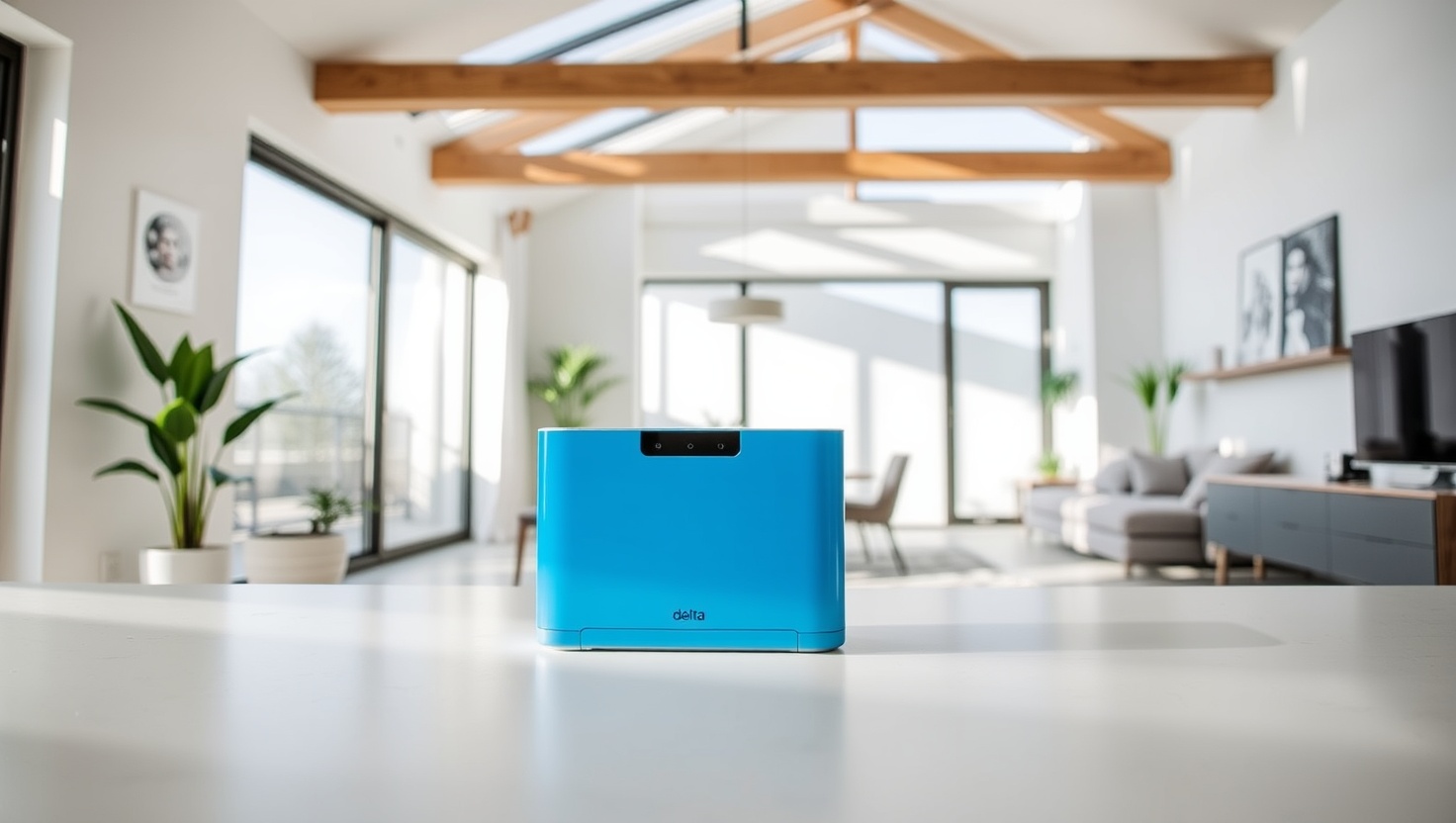
When the grid drops, a phone flashlight is not a plan. The EcoFlow Delta Pro promises to keep your whole life running, but does it earn the hype?
EcoFlow Delta Pro — Top Pick
With large expandable capacity, high surge output, transfer-switch home backup, and fast solar-ready recharging, the Delta Pro is the most complete power station for keeping your household running through real outages.
In a hurry? That's our pick. Want the reasoning and the full comparison? Keep reading.
The EcoFlow Delta Pro is the power station everyone points to when they talk about serious home backup, and for good reason. It packs a huge lithium battery, enough output to run a full-size fridge, and the ability to wire straight into your home's circuits so the lights stay on when the neighborhood goes dark. On paper it reads like a generator without the fumes, the noise, or the gasoline runs at 2 a.m. But paper and reality are two different things.
So we put the Delta Pro under a plain-English microscope: what it genuinely gets right, where it quietly falls short, and who should actually buy it instead of a cheaper or lighter rival. Below you get the full review of the flagship, plus three alternatives worth knowing about, so you understand watt-hours, surge output, LiFePO4 cycle life, expandable batteries, and home transfer switches before you spend real money. By the end you will know whether this is your backup or whether one of the others fits your life better.
Key Takeaways
- The Delta Pro's real strength is scale: a large watt-hour battery plus expandable packs and true home-circuit backup through a transfer switch.
- High continuous and surge output let it start and run demanding loads like a fridge, well pump, or window AC that smaller units stall on.
- It recharges fast from wall power and pairs with high-input solar via its MPPT charge controller for true off-grid topping up.
- The honest downside is weight and price: it is heavy to move alone and a real investment, so it is overkill for light, portable needs.
- If you want value, portability, or the fastest LiFePO4 charging instead, the Bluetti, Jackery, or Anker alternatives may fit you better.
What the Delta Pro Gets Right: Capacity, Output & Home Backup
Start with capacity, because that is the whole point of a flagship. The Delta Pro carries a large watt-hour battery, and watt-hours are simply how much energy you can store: multiply what a device draws in watts by how many hours you run it, and you know how long the station lasts. A big base capacity means you can keep a fridge cold, phones charged, and a few lights on through a long outage. What sets the Delta Pro apart is that it does not stop there. You can chain on expandable battery packs to multiply that storage, so the same unit that covers an evening blackout can be grown to cover days. Few rivals let you scale like that without buying a whole second machine.
Then there is output, which is where cheaper stations quietly fail. Capacity tells you how long you last; output in watts tells you what you can even turn on. The Delta Pro delivers high continuous output plus a much higher surge rating, and that surge headroom matters more than most buyers realize. Motors in fridges, well pumps, and window air conditioners spike hard for a split second when they kick on, and a unit without surge room simply trips and shuts off. The Delta Pro has the muscle to start those loads and then hold them, which is exactly what you want when the grid is down and the freezer is full.
The feature that truly earns the flagship label is real home backup. Instead of running extension cords across the floor, the Delta Pro can wire into a transfer switch on your electrical panel, letting it feed your actual circuits, the lights, outlets, and appliances already in your walls. It also acts as a UPS-style backup with fast EPS switchover, so when the power cuts, it takes over quickly enough that your fridge and Wi-Fi barely notice. That is the difference between a backup battery and a backup system, and it is the main reason people choose this unit over a pile of smaller ones.
Where It Falls Short + How the Alternatives Compare
No honest review pretends a product is flawless, and the Delta Pro has two real weaknesses. The first is weight. This is a large lithium battery in a metal box, and it is genuinely heavy, heavy enough that moving it solo is a two-handed, careful-with-your-back affair despite the built-in wheels and handle. If you picture tossing your power station in the trunk for a weekend of camping, this is not that unit; it is built to live in one spot and hold your home together. The second is that it is a serious investment. You are paying flagship money, and for someone who only needs to charge phones and run a fan, that is far more machine than the job requires.
That is where the alternatives come in, and each one answers a different version of 'the Delta Pro is more than I need.' If value is your priority, the Bluetti AC200 delivers a large LiFePO4 battery known for a very long cycle life, meaning it can be recharged thousands of times before capacity meaningfully fades, so it keeps paying off for years. If you actually want to carry your power, the Jackery Explorer 2000 trades some raw capacity for a lighter, friendlier form factor that suits camping, tailgating, and grab-and-go outages. And if slow recharge times drive you crazy, the Anker SOLIX leans into rapid charging, refilling its large LiFePO4 battery in a fraction of the time, which matters when a storm gives you a short window on the grid to top back up.
On recharge and solar, the Delta Pro still holds its own even against those specialists. It refills quickly from a wall outlet, and its built-in MPPT solar charge controller accepts high solar input, so you can pair it with panels and top up straight from the sun for true off-grid living. The companion app lets you watch charge level, control output, and set charging behavior from your phone, which is a genuinely useful touch during a long outage. So the Delta Pro is not beaten on features by the alternatives; it is simply outmatched on the one axis each rival specializes in, whether that is price, portability, or charge speed.
Quick Comparison
| Product | Best For | Capacity | Strength | Portability |
|---|---|---|---|---|
| EcoFlow Delta Pro | Whole-home backup | Large + expandable | Output + transfer switch | Heavy (has wheels) |
| Bluetti AC200 | Best value | Large LiFePO4 | Long cycle life | Heavy |
| Jackery Explorer 2000 | Portable use | Mid-large | Easier to carry | Very good |
| Anker SOLIX | Fast charging | Large LiFePO4 | Rapid recharge | Good |
1. Delta Pro — The Reviewed Flagship
EcoFlow Delta Pro
The Delta Pro is the closest thing to a fuel-free home generator we have tested, and it looks the part. Between its large base capacity, expandable battery packs, and high continuous and surge output, it can start and sustain the demanding loads, fridges, well pumps, window AC, that cause smaller stations to trip and die. Wire it into a transfer switch and it feeds your home's real circuits, so an outage becomes a minor blip instead of a scramble for candles and coolers.
What makes it feel flagship is the total system, not any single number. Fast wall recharging gets it back to full quickly, its MPPT controller drinks in high solar input for genuine off-grid topping up, and the app hands you full control from your phone. Yes, it is heavy and it is a real investment, but for someone who wants one machine to hold their household together through long or repeated outages, nothing on this list does it more completely.
Pros
- Large, expandable capacity that scales from an evening outage to days of backup
- High continuous and surge output starts fridges, well pumps, and window AC without tripping
- True home-circuit backup via a transfer switch, not just extension cords
- Fast UPS-style EPS switchover keeps sensitive devices running through a cut
- Fast wall recharge plus high-input MPPT solar for real off-grid use
Cons
- Genuinely heavy and awkward to move alone despite wheels and a handle
- A serious investment that is overkill for light, phone-and-fan needs
- Full home wiring benefits from a proper transfer switch install
2. Bluetti AC200 — Best Value Alternative
Bluetti AC200
The Bluetti AC200 is the pick for buyers who want most of the Delta Pro's usefulness for less outlay. Its large LiFePO4 battery holds plenty of energy for running a fridge, lights, and devices through an outage, and LiFePO4 chemistry is the real story here: it is rated for a very long cycle life, thousands of charge cycles, so it keeps its capacity for years of regular use. That longevity turns a mid-tier price into strong long-term value.
You give up the Delta Pro's deepest expandability and its most seamless whole-home wiring, so this is more of a powerhouse portable than a fixed home system. But if your goal is a dependable, long-lived station that covers the essentials without flagship spending, the AC200 is the sensible, hard-to-argue-with choice, and our runner-up for that reason.
Pros
- Excellent value for a large-capacity power station
- LiFePO4 battery rated for a very long cycle life
- Strong continuous output for fridges, lights, and devices
- Keeps its capacity for years of regular recharging
- Great sensible middle ground between light units and flagships
Cons
- Less expandable than the Delta Pro for whole-home scale
- Still heavy to move around solo
- Not as seamless for direct home-circuit backup
3. Jackery 2000 — Best Portable Alternative
Jackery Explorer 2000
If you actually want to pick up your power and take it somewhere, the Jackery Explorer 2000 is built for that. It trades some of the flagship's raw capacity for a friendlier, more carryable form factor, which makes it the natural choice for camping, tailgating, job sites, and grab-and-go outages. It still delivers enough output to run essentials and charge everything you own, just in a package you can move without recruiting a friend.
Jackery's app support and simple, reliable design make it approachable for people who do not want to think about transfer switches and expandable packs. It is not the unit to wire into your panel for whole-home backup, but as a do-anything portable that follows you off the grid and back, it hits a sweet spot the Delta Pro deliberately does not.
Pros
- Noticeably easier to carry and load than flagship stations
- Solid continuous output for essentials and device charging
- Great fit for camping, tailgating, and mobile use
- Simple, approachable design with helpful app support
- Pairs easily with portable solar panels for off-grid top-ups
Cons
- Lower capacity than the Delta Pro for long home outages
- Not designed for direct whole-home circuit backup
- Less headroom to start the heaviest motor loads
4. Anker SOLIX — Best Fast-Charging Alternative
Anker SOLIX
The Anker SOLIX is the answer to one specific frustration: waiting around for a power station to refill. It leans hard into rapid charging, filling its large LiFePO4 battery in a fraction of the time slower units need. That speed is not a gimmick; when a storm gives you a brief window on the grid before the next outage, or you need to top up fast between uses, quick recharge changes what the machine can do for you.
Beyond the charging speed you get a large LiFePO4 battery with the same long-life benefits and strong continuous output for running real loads. It does not match the Delta Pro's deep expandability and full home-wiring ambitions, but if your pain point is dead time on the charger, the SOLIX solves it better than any other unit here.
Pros
- Very fast wall recharge that minimizes downtime on the charger
- Large LiFePO4 battery with long cycle life
- High continuous output for demanding devices
- Ideal for quick top-ups between storms or uses
- Reliable, well-built design with app control
Cons
- Less expandable than the Delta Pro for whole-home scale
- Not as seamless for direct home-circuit backup
- Still a heavy unit to move on your own
Which Should You Choose?
Buy the Delta Pro if you want true whole-home backup
If your goal is to keep your actual household running, fridge, lights, Wi-Fi, even a well pump, through long or repeated outages, the EcoFlow Delta Pro is worth it. The large expandable capacity, high surge output, transfer-switch home wiring, and fast UPS-style switchover add up to a real backup system, not just a battery. For that job, nothing else on this list is as complete, and the weight and price are the fair cost of that capability.
Skip it and save with the Bluetti AC200 or Jackery 2000
If the Delta Pro is more machine than you need, do not overpay. The Bluetti AC200 gives you a large LiFePO4 battery and very long cycle life for strong value on the essentials. The Jackery Explorer 2000 trades some capacity for a lighter body you can actually carry to a campsite or throw in the car. Both cover most people's real needs without flagship spending, and the AC200 is our runner-up for value.
Go bigger or faster with expansion or the Anker SOLIX
Two buyers should push past the base setup. If you want the Delta Pro to cover days rather than hours, add its expandable battery packs and grow the same unit into a multi-day system. And if slow recharging is your dealbreaker, the Anker SOLIX refills its large LiFePO4 battery far faster, which matters when the grid only gives you a short window to top back up between outages.
Ready to Keep the Lights On No Matter What?
The EcoFlow Delta Pro turns an outage from a crisis into a non-event, feeding your real home circuits with fuel-free power you can expand and recharge from the sun. Check current pricing and see if the flagship is right for you.
Explore Brainstamped's Free ToolsFrequently Asked Questions
For whole-home or serious multi-day backup, yes. The Delta Pro's large expandable capacity, high surge output, and true transfer-switch home wiring make it worth the investment if you want to keep real appliances running through outages. If you only need to charge phones and run a fan, it is overkill, and the Bluetti AC200 or Jackery 2000 will serve you better for less.
It can back up essential circuits, not necessarily every load at once. Wired into a transfer switch on your panel, it feeds your real outlets and appliances, and its high surge output can start a fridge or well pump. Whether it covers your entire home depends on how much you run simultaneously and how many expandable batteries you add to boost total capacity.
LiFePO4 batteries are rated for a very long cycle life, often thousands of full charge and discharge cycles, before capacity meaningfully fades. That means a unit like the Bluetti AC200 or Anker SOLIX can be recharged regularly for many years and still hold most of its power, which is a big part of why LiFePO4 chemistry is worth prioritizing.
The Delta Pro recharges quickly from a wall outlet, and its built-in MPPT charge controller accepts high solar input, so you can top it up straight from panels for off-grid use. If recharge speed is your top priority, the Anker SOLIX refills even faster, but the Delta Pro's solar capability makes it strong for true self-sufficient setups.
It is genuinely heavy, since it is a large lithium battery in a metal case. Built-in wheels and a handle help you roll it across a room, but lifting it into a vehicle solo is a real strain. It is designed to live in one spot for home backup. If you want to carry your power to a campsite, the lighter Jackery Explorer 2000 is the better fit.