
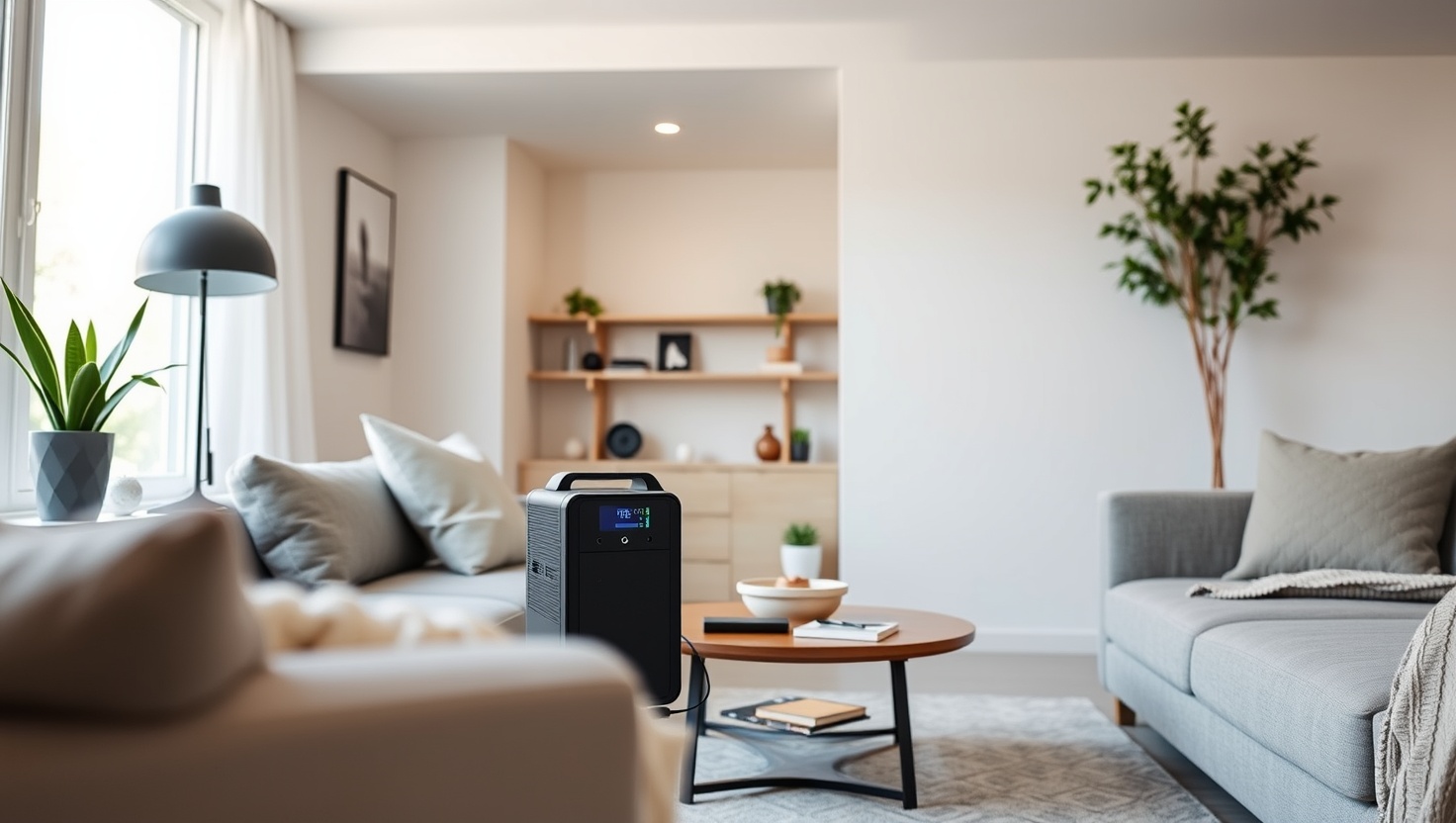
When the grid blinks out, a good power station keeps your fridge cold, your phones alive, and your calm intact. In 2026, the big LiFePO4 units finally do it for years, not months.
EcoFlow Delta Pro — Top Pick
With a large 2000Wh-plus LiFePO4 battery, high output, expandable batteries, and fast recharge plus UPS passthrough, the Delta Pro is the best all-around portable power station for scalable home backup in 2026.
In a hurry? That's our pick. Want the reasoning and the full comparison? Keep reading.
Losing power used to mean scrambling for candles and hoping the food in the fridge survived the night. A large portable power station changes that story completely. Plug your essentials into a 2000Wh-plus unit and you get quiet, fume-free backup that runs a refrigerator, keeps medical devices going, and charges every phone in the house, all without hauling a noisy gas generator into the yard. The best part is you carry it wherever you need it, from the garage during an outage to a campsite the following weekend.
The trick is that not all power stations are built the same, and the spec sheet hides as much as it reveals. Capacity in watt-hours tells you how long it lasts, but continuous and surge wattage decide what you can actually plug in. Battery chemistry decides whether it lasts three years or ten. Solar input, recharge speed, and passthrough for outages all matter more than the marketing photo of a family camping. Below you get the four stations worth your money right now, plus a plain-English breakdown of every number so you buy the right one the first time.
Key Takeaways
- Watt-hours (Wh) tell you how long a station runs; continuous and surge watts (W) tell you what you can plug in at all.
- For whole-home backup that scales, the EcoFlow Delta Pro is our top pick: huge output, expandable batteries, and fast recharge.
- Want the best value for a big LiFePO4 unit? The Bluetti AC200 delivers serious capacity for less.
- Heading off-grid or camping? The Jackery Explorer 2000 is the most carry-friendly of the heavy hitters.
- Need to top up fast between outages? The Anker SOLIX recharges quicker than almost anything in its class.
How to Read a Power Station Spec Sheet (Without Getting Fooled)
Start with capacity, measured in watt-hours (Wh). This is your fuel tank. A 2000Wh station can, in theory, run a 100W device for about 20 hours, though real-world losses trim that a bit. To size yours, add up the wattage of what you actually need during an outage: a modern fridge sips roughly 100 to 200W on average, a CPAP runs around 40 to 60W, and a laptop wants maybe 60W. Multiply by the hours you need and you have your target. The big 2000Wh-plus units in this guide are chosen precisely because they cover a full night of essentials with room to spare.
Next comes output, and this is where people get caught. Continuous wattage is how much the station can deliver steadily, while surge wattage is the brief spike it can handle when a motor kicks on. A fridge compressor or a well pump might idle at 150W but demand a 1500W surge to start. If your station's continuous or surge rating is too low, that appliance simply will not run, no matter how much capacity you have. So match the output to your heaviest load, not just your total energy need. The stations here all deliver strong continuous output with generous surge headroom for exactly this reason.
Then look at chemistry and connections. In 2026 you want LiFePO4 (lithium iron phosphate) cells, which typically last 3000 to 6000 charge cycles, roughly a decade of regular use, versus the 500 or so from older lithium chemistries. Check the outlet mix too: multiple AC outlets for appliances, high-watt USB-C PD ports for laptops and phones, and 12V DC for camping gear. Expandable models let you bolt on extra battery modules later, so you can start smaller and grow into whole-home backup without buying a whole new unit.
Solar, Recharge Speed, and Outage Passthrough: The Stuff That Matters in a Blackout
Solar input turns a power station from a big battery into a genuine off-grid power source. Look at two numbers: the maximum solar input in watts, and whether the built-in charge controller uses MPPT (maximum power point tracking), which squeezes noticeably more energy out of your panels than older PWM controllers. A station that accepts 500W or more of solar can meaningfully recharge during daylight, so in a multi-day outage you keep the lights on indefinitely instead of watching the battery drain to zero. Pair the unit with a folding solar panel kit and you have power that never truly runs out.
Recharge speed and passthrough decide how the station behaves when the grid is unreliable. Fast AC charging matters because you want to top up quickly the moment power returns, before the next flicker. Even better is UPS or EPS passthrough: the station sits between the wall and your gear, and when the grid drops it switches over in milliseconds, fast enough that your fridge, router, or desktop never notices. That makes a station like these double as an uninterruptible power supply for the appliances you cannot afford to lose. Finally, mind the weight. These 2000Wh-plus units are heavy, often 40 to 60 pounds, so a model with wheels and a telescoping handle, or a genuinely balanced carry design, is the difference between using it easily and dreading moving it.
Quick Comparison
| Product | Best For | Capacity | Strength | Portability |
|---|---|---|---|---|
| EcoFlow Delta Pro | Home backup | 2000Wh+, expandable | High output + scalable | Good (wheeled) |
| Bluetti AC200 | Best value | 2000Wh+ LiFePO4 | Capacity per dollar | Good |
| Jackery Explorer 2000 | Camping + off-grid | 2000Wh+ LiFePO4 | Easy to carry | Excellent |
| Anker SOLIX | Fast charging | 2000Wh+ LiFePO4 | Rapid recharge | Good |
1. Delta Pro — Best Overall
EcoFlow Delta Pro
The EcoFlow Delta Pro is the station we hand to anyone serious about riding out an outage. It pairs a large 2000Wh-plus LiFePO4 battery with high continuous output and generous surge headroom, so it runs demanding gear like fridges, well pumps, and power tools that trip up smaller units. The real magic is expandability: bolt on extra battery modules and you scale from a night of essentials to genuine whole-home backup, without buying a new unit. Built-in UPS passthrough means it switches over the instant the grid drops.
Recharge is where it pulls ahead. Fast AC charging tops it up quickly the moment power returns, and its high solar input with MPPT means a panel kit can keep it fed through a multi-day blackout. Integrated wheels and a handle make a heavy unit manageable to move from garage to living room. If you want one station that grows with you and handles the widest range of loads, this is the one to build your setup around.
Pros
- Large 2000Wh-plus LiFePO4 capacity with a long cycle life
- High continuous output and surge headroom for demanding appliances
- Expandable with extra battery modules for whole-home backup
- Fast AC recharge plus high solar input with MPPT
- Built-in UPS passthrough for seamless outage switchover
Cons
- Heavy, though wheels and a handle ease the load
- The most premium price in this lineup
- Full expandable setup gets bulky and costs more
2. Bluetti AC200 — Best Value
Bluetti AC200
The Bluetti AC200 is the smart-money pick for a big power station. It delivers a large 2000Wh-plus LiFePO4 battery and strong continuous output for noticeably less than the flagships, which makes it the easy call when you want maximum backup without maximum spend. Bluetti has a solid reputation for durable LiFePO4 packs rated for thousands of cycles, so you are not trading longevity to hit a lower price. The outlet mix covers AC appliances, USB-C PD for devices, and DC for camping gear.
You give up a little of the flagship polish and the deepest expandability, but you keep the part that matters most: real capacity and real output when the lights go out. It accepts solar input with an MPPT controller too, so you can recharge off panels during a long outage. If your budget is finite and you would rather put your money into watt-hours than into extras, the AC200 stretches every dollar further than the competition.
Pros
- Excellent capacity-per-dollar among 2000Wh-plus units
- Durable LiFePO4 battery rated for thousands of cycles
- Strong continuous output for household essentials
- Solar input with MPPT for off-grid recharging
- Versatile outlet mix including AC, USB-C PD, and DC
Cons
- Less expandable than the flagship EcoFlow
- Recharge speed trails the fastest rivals here
- Fewer premium extras than pricier stations
3. Explorer 2000 — Best Portable
Jackery Explorer 2000
When you want big capacity you can actually take with you, the Jackery Explorer 2000 makes the case. Jackery built its name on a genuinely carry-friendly design, and this unit keeps that DNA even at 2000Wh-plus: a balanced body and a comfortable handle make it the easiest of these heavy hitters to load into a truck or haul to a campsite. Its LiFePO4 battery delivers a long lifespan, and the output handles the appliances and gear most people bring off-grid.
Solar is where the Explorer shines for campers and off-grid users. It pairs cleanly with Jackery's folding SolarSaga panels through an MPPT controller, so a sunny afternoon meaningfully refills the tank while you are out there. You give up some of the raw expandability of the EcoFlow, but for weekend adventures, van life, or a backup you plan to move often, the Explorer 2000 is the friendliest big station to live with.
Pros
- The most carry-friendly design among these 2000Wh-plus units
- Long-lasting LiFePO4 battery for years of use
- Ample continuous output with surge headroom for gear
- Clean solar pairing with folding panels via MPPT
- Great fit for camping, van life, and off-grid trips
Cons
- Less expandable than the EcoFlow Delta Pro
- Fewer AC outlets than some rivals
- Priced above the best-value option here
4. Anker SOLIX — Best Fast Charging
Anker SOLIX
When you want the battery back to full fast, the Anker SOLIX answers. Anker tuned this station for rapid AC charging, so it refills far quicker than most big units, which matters a lot when the grid comes back for an hour and you need to bank as much energy as you can before the next flicker. It carries a large 2000Wh-plus LiFePO4 battery with high continuous output and strong surge, so it runs demanding household loads without complaint.
Beyond speed, the SOLIX rounds out the essentials well: high-watt USB-C PD ports for laptops and phones, a full set of AC outlets, and solar input with MPPT for off-grid recharging. Anker also has a strong reputation for build quality and long warranty support, which counts for a lot on gear you expect to rely on for years. If unreliable, on-again-off-again power is your reality, the fast recharge makes the SOLIX the pragmatic pick.
Pros
- Rapid AC recharge, among the fastest in its class
- Large 2000Wh-plus LiFePO4 battery with long cycle life
- High continuous output and surge for demanding loads
- High-watt USB-C PD ports plus a full AC outlet set
- Strong build quality and warranty support
Cons
- Fast charging can generate more fan noise while it tops up
- Less modular expansion than the EcoFlow Delta Pro
- Priced above the best-value station here
Which Should You Choose?
Pick the EcoFlow Delta Pro if you want scalable home backup
If your goal is riding out real outages and eventually powering much of your home, the EcoFlow Delta Pro is the clearest choice. The high output handles demanding appliances, the expandable batteries let you grow from a night of essentials to whole-home backup, and the UPS passthrough keeps critical gear running without a hiccup. It is the best balance of power, scalability, and recharge speed on this list.
Pick the Bluetti AC200 or Jackery Explorer 2000 for value or portability
Want the most watt-hours for your money in a big LiFePO4 unit? The Bluetti AC200 delivers serious capacity and output for less. Planning to move your station often, camp, or live off-grid? The Jackery Explorer 2000 is the easiest of these heavy hitters to carry and pairs cleanly with folding solar. Both trade some expandability for their strengths, and that is a smart trade if value or portability is your priority.
Pick the Anker SOLIX if fast recharging matters most
Some buyers face flickering, unreliable power and need to bank energy the moment the grid returns. The Anker SOLIX answers that with rapid AC charging, high output, and solid build quality. It still carries a large LiFePO4 battery and full outlet set, so you are not sacrificing capacity for speed. If quick turnaround between outages is your reality, the SOLIX is the pragmatic pick.
Ready to Keep the Power On No Matter What?
The EcoFlow Delta Pro gives you high output, expandable capacity, and seamless outage backup in one unit you can carry where you need it. Check current pricing and see why it tops our 2026 list.
Explore Brainstamped's Free ToolsFrequently Asked Questions
For most people, the EcoFlow Delta Pro is the best portable power station in 2026. It combines a large 2000Wh-plus LiFePO4 battery with high output, expandable batteries, fast recharge, and UPS passthrough, making it excellent for whole-home backup that scales. If you want the best value in a big unit, the Bluetti AC200 is the top alternative.
Add up the wattage of the essentials you want to run during an outage, then multiply by the hours you need. A fridge averages roughly 100 to 200W, a CPAP around 40 to 60W, and phones and lights very little. For a full night of essentials with headroom, a 2000Wh-plus station like the ones in this guide is the practical sweet spot.
LiFePO4 (lithium iron phosphate) cells typically last 3000 to 6000 charge cycles, roughly a decade of regular use, versus around 500 for older lithium chemistries. They also run cooler and safer. Every station in this guide uses LiFePO4, which is exactly why they hold up as long-term backup rather than a battery you replace in a couple of years.
Yes. Each of these stations accepts solar input and uses an MPPT charge controller to pull the most energy from your panels. A unit that takes 500W or more of solar can meaningfully recharge during daylight, so in a multi-day outage you keep the lights on indefinitely. Pair it with a folding solar panel kit for true off-grid power.
Continuous wattage is the power a station delivers steadily, while surge wattage is the brief spike it handles when a motor starts. A fridge might idle at 150W but demand a 1500W surge to kick on. If the surge rating is too low, that appliance will not run, so always match the output to your heaviest load, not just your total energy need.