
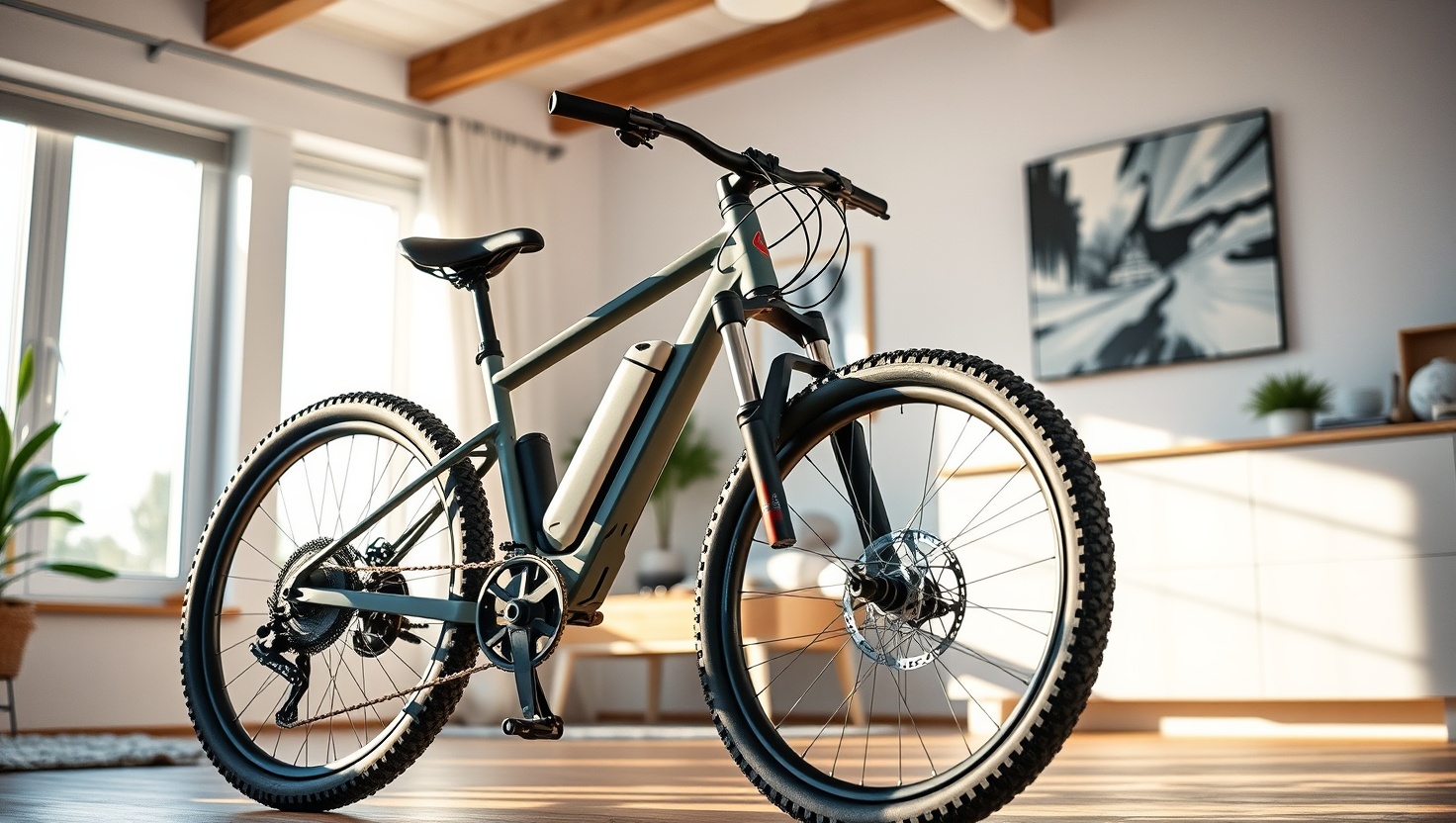
That hill you always walk your bike up? An electric mountain bike flattens it. Pedal-assist gives you a quiet push exactly when your legs start begging for mercy.
Aventon Ramblas — Top Pick
The Ramblas is the most complete electric mountain bike here. Its mid-drive motor and torque sensor deliver a natural, bike-like feel, its 100 Nm of torque devours climbs, and the quality build inspires confidence on real trails. For the best overall eMTB experience, this is the one.
In a hurry? That's our pick. Want the reasoning and the full comparison? Keep reading.
You want to ride farther, climb steeper, and still feel like you earned it. That's the whole promise of a good electric mountain bike, and in 2026 the choices finally match the hype. The right eMTB turns a lung-busting climb into a grin, then hands you the descent as a reward.
But specs get confusing fast. Mid-drive or hub motor? Hardtail or full suspension? How many watt-hours do you actually need? We cut through it below, rank four bikes that deliver real trail power, and show you which one fits your riding, your terrain, and your budget.
Key Takeaways
- The Aventon Ramblas is our top pick: a mid-drive motor with a torque sensor gives it the most natural, bike-like trail feel.
- Mid-drive motors sit at the pedals for better balance and climbing; hub motors sit in the wheel and cost less.
- A torque sensor reads how hard you pedal and matches it, while a cadence sensor just switches assist on or off.
- Battery capacity is measured in watt-hours (Wh) — more Wh means more range, but also more weight.
- Match the bike to your trails: full suspension soaks up rough terrain, hardtails stay lighter and simpler.
How to Choose an Electric Mountain Bike
Start with the motor, because it shapes everything about how the bike rides. A mid-drive motor sits at the cranks, so its power flows through your gears and keeps the weight low and centered. That balance makes a mid-drive bike feel planted on technical trails and downright hungry on climbs. A hub motor lives inside the rear wheel, pushes you forward directly, and costs a lot less to build. Hub motors ride great on smoother trails and gravel, and they stretch your dollar further.
Next, look at how the motor senses your effort. A torque sensor measures how hard you push the pedals and feeds you assist in proportion, so the bike amplifies your legs instead of taking over. A cadence sensor simply detects that you're pedaling and dumps in a preset boost, which feels more like an on-off switch. If you want that natural, earned-it ride, hunt for a torque sensor. The Aventon Ramblas builds its whole personality around one.
Then weigh suspension and battery together. A hardtail has a suspension fork up front and a rigid rear, which keeps it lighter, cheaper, and easier to maintain — perfect for flow trails and mixed riding. Full suspension adds a rear shock for chunky, rooty descents, at the cost of weight and price. For battery, think in watt-hours: a 500 Wh pack might carry you 25 to 40 miles depending on assist level and hills, while an 840 or 960 Wh pack pushes that range much higher. More capacity means fewer range worries but a heavier bike to lift onto your rack.
Torque, Tires, and Trail Class Explained
Torque, measured in newton-meters (Nm), tells you how hard the motor can shove you up a climb. Think of it as the muscle behind the assist. Numbers in the 50 to 60 Nm range handle rolling terrain comfortably, while 70 to 100 Nm chews through steep, loose fire roads without you standing on the pedals. If your local trails point mostly uphill, prioritize torque over top speed every time.
Tire size decides how much cushion and grip you get. Standard mountain bike tires around 2.4 to 2.6 inches wide roll fast and corner sharply on packed dirt. Fat tires, like the ones on the Heybike Brawn, balloon out to around four inches and float over sand, mud, and snow while adding grip and comfort on rough ground. They roll slower on pavement, but they turn sketchy surfaces into confidence.
Finally, understand e-bike class, because it governs where you can legally ride. Class 1 bikes assist up to 20 mph and only while you pedal, which is the class most trail systems allow. Class 2 adds a throttle, and Class 3 bumps pedal-assist to 28 mph for road and commuting use. Before you charge onto singletrack, check the posted rules — many mountain bike trails welcome Class 1 e-bikes but restrict throttles. And whatever you ride, buckle a helmet on. Speed plus roots is not the moment to skip protection.
Quick Comparison
| Product | Motor Type | Best For | Battery | Suspension |
|---|---|---|---|---|
| Aventon Ramblas | Mid-drive (torque) | Best overall trail feel | 708 Wh | Front (hardtail) |
| Ride1Up Rift | Hub motor | Best value power | 960 Wh | Front (hardtail) |
| Velotric Summit | Hub motor | Best all-rounder | 692 Wh | Front (hardtail) |
| Heybike Brawn | Hub motor | Best budget power | 840 Wh | Front (fat tire) |
1. Ramblas — Best Overall eMTB
Aventon Ramblas
The Aventon Ramblas is what happens when a brand stops treating an eMTB like an e-bike with knobby tires and builds it like a mountain bike first. The mid-drive motor keeps the weight low and centered, and the torque sensor reads your legs so precisely that the assist feels like a stronger version of you rather than a motor doing the work. On climbs, it's addictive — you dig in, and the bike digs in with you.
Aventon backs that feel with a genuinely nice build: a clean frame, a bright display, and a 708 Wh battery that carries you through long trail days. It's a hardtail, so you save weight and money over full-suspension rivals while still getting a plush front fork for the rough stuff. If you want the best all-around trail experience of this group, this is the one to beat.
Pros
- Mid-drive motor with a torque sensor delivers the most natural trail feel
- Strong 100 Nm of torque makes steep climbs feel easy
- Quality frame and components for confident, capable riding
- 708 Wh battery covers long days without range anxiety
- Class 1 rating keeps it trail-legal on most systems
Cons
- Costs more than the hub-motor bikes here
- Hardtail only, so no rear suspension for the roughest descents
- Mid-drive systems need slightly more drivetrain care
2. Rift — Best Value Power
Ride1Up Rift
The Ride1Up Rift is the bike for riders who want maximum grunt and range without paying flagship prices. Its powerful rear hub motor launches you off the line, and the massive 960 Wh battery means you can ride all day and still have juice to spare. Pound for pound, it delivers more raw capability per dollar than anything else in this lineup.
You do trade the refined torque-sensor feel of a mid-drive for a punchier, more direct hub-motor push, but on gravel, flow trails, and mixed terrain that trade-off barely registers. If your priority is 'give me the most power and range for the least money,' the Rift makes a loud, happy case for itself.
Pros
- Huge 960 Wh battery for exceptional range
- Powerful hub motor with strong low-end punch
- Outstanding value for the capability you get
- Comfortable, confidence-inspiring geometry
- Great for gravel, flow trails, and long adventures
Cons
- Hub motor feels less natural than a torque-sensing mid-drive
- Big battery adds noticeable weight
- Throttle capability may limit access on some trails
3. Summit — Best All-Rounder
Velotric Summit
The Velotric Summit is the friendliest bike here, and that's a compliment. It straddles the line between trail machine and capable commuter, so it climbs your local singletrack on the weekend and hauls you to work on Monday without complaint. The riding position is approachable, the controls are intuitive, and the whole package feels welcoming to riders stepping up from a regular bike.
With a 692 Wh battery and selectable classes, you can dial it to trail-legal Class 1 for the woods or open it up for road duty. It won't out-climb the Ramblas or out-muscle the Rift, but it does more things well than either — and for a lot of riders, versatility is exactly the point.
Pros
- Approachable, easy-to-ride design for newer riders
- Crosses over smoothly between trail and commuting
- Selectable class settings adapt to where you ride
- Balanced 692 Wh battery for solid everyday range
- Intuitive controls and comfortable geometry
Cons
- Not as climb-focused as a mid-drive eMTB
- Less raw power than the Ride1Up Rift
- Hardtail platform limits it on gnarly descents
4. Brawn — Best Budget Power
Heybike Brawn
The Heybike Brawn earns its name. Burly fat tires, a torquey hub motor, and an 840 Wh battery come together at a price that undercuts nearly everything with this much muscle. Those wide tires float over sand, mud, and roots, adding grip and cushion that make up for the hardtail frame. Point it at rough, loose terrain and it just plows through.
It's the heaviest, least refined bike in this group, and the fat tires roll slower on pavement. But if you want maximum go-anywhere power without emptying your wallet, the Brawn delivers a genuine grin-per-dollar bargain. For budget riders craving beefy capability, it's hard to argue with.
Pros
- Big fat tires float over sand, mud, and rough ground
- Strong hub motor with plenty of low-end power
- Large 840 Wh battery for long rides
- Aggressive, capable look and feel
- Excellent power and range for the price
Cons
- Heavier and less refined than pricier rivals
- Fat tires roll slower on pavement
- Hub motor lacks the natural feel of a mid-drive
Which Should You Choose?
Which electric mountain bike should you buy?
If you want the best all-around trail experience, buy the Aventon Ramblas. Its mid-drive motor and torque sensor give it a natural, earned-it feel that no hub-motor bike here matches, and the quality build backs it up on real terrain. It's the bike we'd hand a friend who asked for one recommendation.
What if you're watching your budget?
Chase value in two ways. The Ride1Up Rift delivers the most power and range per dollar, so it's the pick if you want big capability cheap. The Heybike Brawn goes even further down the price ladder while adding go-anywhere fat tires — ideal if your rides mean sand, snow, or mud.
New to e-bikes or riding mixed terrain?
Choose the Velotric Summit. It's the most approachable bike here and crosses over between trail and commuting with ease, so you get one bike that handles weekend singletrack and weekday errands. For a first eMTB that won't intimidate you, it's the safe, smart call.
Ready to Ride Farther and Climb Higher?
The right electric mountain bike turns dreaded climbs into the best part of your ride. Our top pick, the Aventon Ramblas, blends natural trail feel with real climbing muscle. Check the current price, grab a helmet, and go find some singletrack.
Explore Brainstamped's Free ToolsFrequently Asked Questions
It depends on the trail system. Many mountain bike trails welcome Class 1 e-bikes — pedal-assist only, up to 20 mph — but restrict throttle-equipped Class 2 and faster Class 3 bikes. Always check the posted rules or the land manager's website before you ride, and stick to Class 1 settings where required.
A mid-drive motor is generally better for serious trail riding because it sits low and centered for balance, channels power through your gears, and pairs beautifully with a torque sensor for natural climbing. Hub motors cost less and still ride great on smoother trails and gravel, making them the smart value choice.
Range depends on battery capacity, terrain, assist level, and rider weight. A 700 Wh battery often covers 25 to 45 miles of trail riding, while big 840 to 960 Wh packs like those on the Heybike Brawn and Ride1Up Rift push that even higher. Steep climbs and high assist drain the battery faster.
Yes. Pedal-assist bikes amplify your effort rather than replace it, so you still pedal the whole time. In fact, riders often ride longer and more often because climbs feel achievable, which adds up to more total exercise, not less. Dial the assist down for a bigger workout.
Solid trail-capable e-mountain bikes start in the budget-friendly range with bikes like the Heybike Brawn, while refined mid-drive models like the Aventon Ramblas sit higher. Spend based on your terrain and priorities: more for natural climbing feel and quality, less for raw hub-motor power and range. Check current prices, since they shift often.