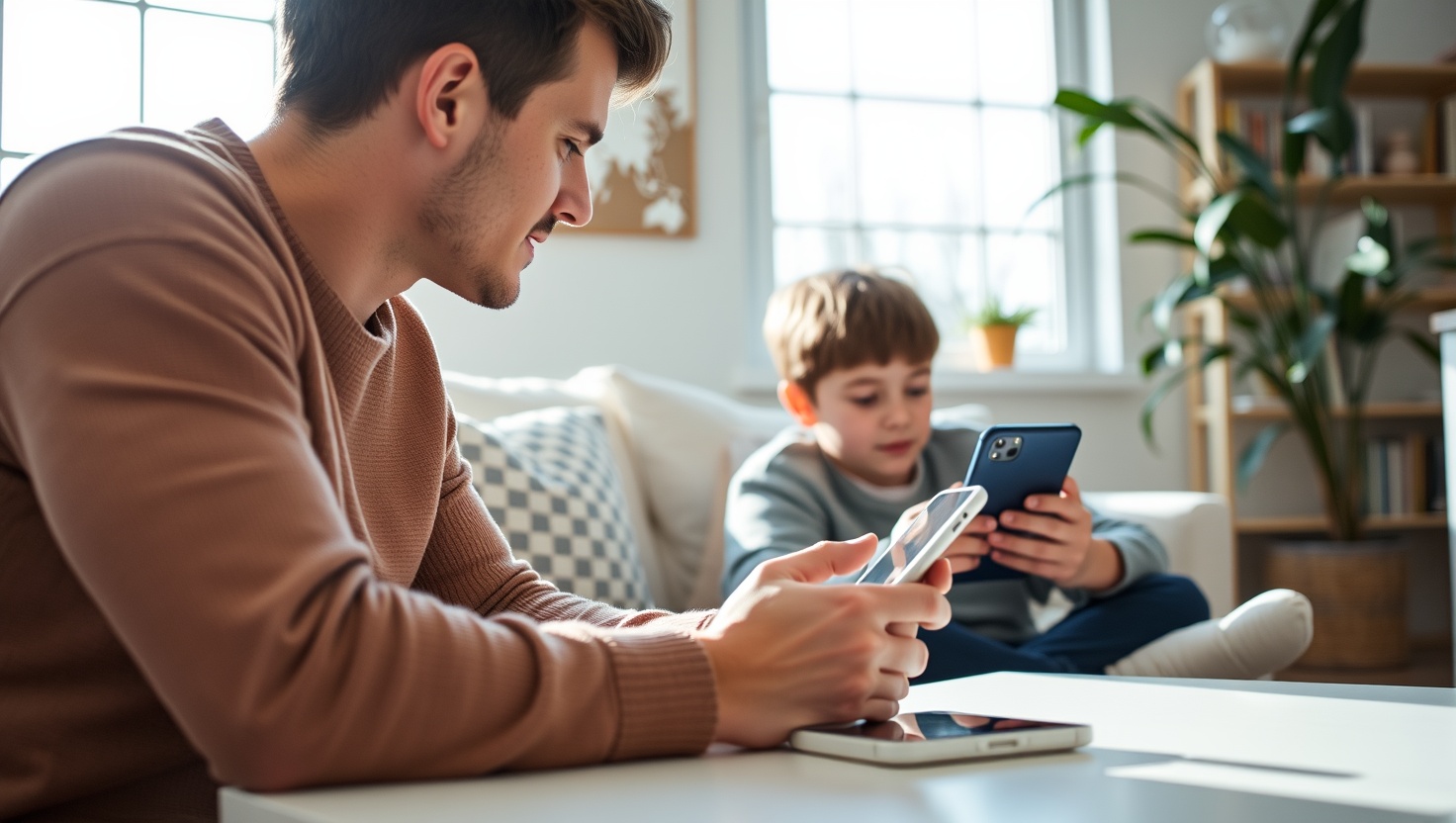
Your kid's school is probably banning phones next year. Maybe this year. Over 30 US states now have policies restricting cellphone use in schools, and the momentum is accelerating fast. If you haven't gotten the letter from your school district yet, it's coming.
Gabb Watch 3 — Best Overall
The Gabb Watch 3 is purpose-built for this exact situation. It gives your child GPS location tracking, phone calls, and basic text messaging — and nothing else. No internet browser, no app store, no…
In a hurry? That’s our pick. Want the reasoning and the full comparison? Keep reading.
This isn't a fringe movement anymore. New York, Michigan, Alabama, Arkansas, and dozens of other states all passed phone-free school legislation in 2025. And the research backing these bans is hard to argue with: better grades, fewer behavioral issues, and kids who actually talk to each other at lunch again.
But here's the part nobody's talking about: most parents have no idea how to prepare. You've spent years making sure your kid has a phone for safety. Now the school is taking that away for seven hours a day. What do you do? How do you stay connected? And how do you talk to your teenager about it without triggering a meltdown?
This guide covers all of it — the state-by-state landscape, the real reasons behind the bans, practical alternatives to smartphones, and exactly how to have the conversation with your kid.
🛒 Parental-Control Gear You Can Buy Today (on Amazon)
Settings help — but the strongest setups change the device itself. These four ship from Amazon and a kid can't just turn them off.
As an Amazon Associate, Brainstamped earns from qualifying purchases — at no extra cost to you.
Key Takeaways
- 30+ states now have policies governing cellphone use in schools — only 7 states have no statewide restrictions at all
- Research consistently shows phone-free schools improve test scores, reduce bullying, and boost face-to-face social interaction
- 24% of parents oppose bans because they want emergency contact with their kids — but every school still has office phones and many allow GPS watches
- Smart alternatives exist: GPS watches like Gabb Watch 3 (~$100) give your kid calling and GPS without internet access
- Parent-led movements like Phone-Free Schools Movement and Wait Until 8th are growing rapidly — you're not alone in this
- How you frame the ban to your teenager matters more than the ban itself — approach it as freedom from distraction, not punishment
The Map: Where Are Phones Banned in Schools?
The school phone ban wave hit critical mass in 2025. Here's where things stand right now.
New York made the biggest splash when Governor Hochul signed a phone-free schools law, affecting millions of students across the state. Michigan followed with HB 4141, banning phones during instructional time starting in the 2026-2027 school year. Alabama, Arkansas, Nebraska, North Dakota, Oklahoma, and West Virginia all passed their own versions of phone-free school legislation in 2025.
Add those to the states that already had restrictions, and the picture is clear: over 30 US states now have policies governing cellphone use in schools. The specifics vary — some ban phones entirely during school hours, others only during instructional time, and some leave it up to individual districts — but the direction is unmistakable.
Only about 7 states have no statewide restrictions. Wyoming, Montana, and Massachusetts are among the holdouts. But even in those states, individual school districts are implementing their own bans.
If your state hasn't passed legislation yet, watch your school board. Many districts aren't waiting for the state to act.
Why Schools Are Doing This (And Why the Data Backs Them Up)
Schools didn't wake up one morning and decide to make your life harder. The data pushed them here.
Mental Health Impact
Teen anxiety, depression, and loneliness have all spiked since smartphones became standard in schools. That's not speculation — it's what the research shows consistently. When kids have phones in their pockets, they're checking notifications during class, comparing themselves on social media between periods, and dealing with cyberbullying in real time during the school day.
Phone-free schools report a noticeable drop in these issues. Students describe feeling less anxious when the phone isn't an option. The constant pull of "who texted me?" and "what did they post?" disappears for seven hours. That matters.
Academic Performance
A University of Chicago study found that students in phone-free environments scored significantly higher on standardized tests. The biggest gains showed up among students who previously struggled academically — the kids who were most distracted by their devices.
Teachers report the same thing from the front lines: when phones go away, classroom engagement goes up. Students ask more questions. They participate in discussions. They make eye contact. These seem like small things, but they compound into better learning outcomes.
Social Skills Are Coming Back
Walk into a school cafeteria where phones are banned and you'll see something that feels almost retro: kids talking. Playing cards. Making jokes that require reading the room, not reading a screen. Schools that implemented bans report stronger peer connections and fewer social conflicts rooted in online drama spilling into the hallway.
The Safety Concern: "But What If There's an Emergency?"
Let's address this head-on, because it's the number one reason parents push back. 24% of parents oppose school phone bans specifically because they want to reach their child during the day. That's a valid concern. No parent wants to feel cut off from their kid for seven hours.
But here's the reality: schools have always had ways to reach parents in emergencies. Every school has an office phone. Every school has a system for notifying parents during lockdowns or evacuations. These systems existed long before smartphones, and they still work.
What actually happens when kids have phones during emergencies? Often, they make things worse. During lockdown drills and real incidents, kids texting parents can cause panic, spread misinformation, and interfere with emergency protocols. School administrators consistently say phones during crises create more problems than they solve.
That said, your concern about staying connected is real and worth solving. Here are the practical options:
- GPS watches — devices like the Gabb Watch 3 or TickTalk let your child call and text you without internet access. Many schools allow these because they don't have apps, cameras, or social media.
- Basic phones — a simple flip phone for calls and texts stays in the backpack. Some schools allow these; check your district's specific policy.
- School office — the front desk can always reach your child's classroom, and your child can always call you from the office.
The goal isn't to leave you with zero connection to your kid. It's to remove the device that's designed to be addictive from an environment designed for learning.
How to Prepare Your Family
Whether the ban starts this fall or next year, here's your step-by-step plan.
Step 1: Know Your School's Specific Policy
Not all bans work the same way. Contact your school or check their website for the exact rules. Key questions to ask:
- Are phones completely banned, or just during instructional time?
- Does the school use phone pouches (like Yondr), phone lockers, or an honor system?
- Are GPS watches and basic phones allowed?
- What's the consequence if a phone is found during banned hours?
- How does the school handle parent-child communication during the day?
Step 2: Practice at Home First
Don't wait until the first day of school to go phone-free. Start now. Try a family digital detox challenge where everyone — parents included — puts their phone away during dinner, weekends, or a full Saturday. Let your teenager experience what it feels like to be unreachable for a few hours. It's uncomfortable at first. Then it becomes normal. Then it becomes kind of nice.
Step 3: Get the Right Alternative Device
If your child needs a way to reach you before and after school, pick a device that solves the communication problem without recreating the distraction problem. We break down the best options in the next section.
Step 4: Set Expectations for After-School Phone Use
Here's the part most guides skip: the ban only covers school hours. Your kid still comes home and picks up their smartphone. That's where a monitoring tool like Bark becomes valuable — it helps you keep an eye on what's happening during the hours they do have their phone, without hovering over their shoulder. Learn more about your options in our guide to AI parental control apps.
Step 5: Connect with Other Parents
You're not doing this alone. Parent-led movements are growing fast:
- Phone-Free Schools Movement (Pennsylvania) — organizes parents who want phone-free policies in their districts
- Mothers Against Media Addiction (New York) — advocacy group pushing for stronger school phone policies
- Wait Until 8th (Texas) — a pledge where parents agree to wait until 8th grade to give their child a smartphone
A Brookings survey found that both parents and teens actually support phone bans once they're in place. The resistance mostly comes before the policy starts. Once the phones are gone, most families feel relieved.
The 5 Best Alternatives to a Smartphone for School
You need a device that lets your child communicate without giving them the entire internet in their pocket. Here are the best options we've found.
Gabb Watch 3 — ~$100 + $10/month
The Gabb Watch 3 is purpose-built for this exact situation. It gives your child GPS location tracking, phone calls, and basic text messaging — and nothing else. No internet browser, no app store, no social media, no camera. It's a phone on the wrist that stays out of the way.
School-friendly because it doesn't disrupt learning the way a smartphone does. Most schools that ban phones still allow GPS watches.
Pros
- GPS tracking gives you peace of mind
- Call and text without internet access
- Most schools allow it
- Durable and water-resistant
- Affordable monthly plan
Cons
- Limited contacts (parent-approved list only)
- Small screen for texting
- Requires monthly service plan
- Battery lasts about 1-2 days
Nokia 2780 Flip — ~$90
If your teenager refuses to wear a watch ("I'm not five, Mom"), the Nokia 2780 Flip is the next best thing. It handles calls and texts. It has a basic camera. It does not have Instagram, TikTok, Snapchat, or any of the apps that make smartphones a problem in schools.
The flip phone is also having a cultural moment right now. Some teens actually think they're cool — which works entirely in your favor.
Pros
- Full calls and texting capability
- Long battery life (days, not hours)
- No smartphone apps or social media
- Low one-time cost, no required plan
- Surprisingly trendy among teens
Cons
- No GPS tracking for parents
- No touchscreen (T9 texting)
- Some schools may still ban it
- Teens might resist the "downgrade"
Yondr-Style Phone Pouches — ~$30
Some schools handle the phone ban by giving every student a magnetic locking pouch. Your child puts their phone inside at the start of the day, and it unlocks at the end. The phone stays physically with them — they just can't access it.
If your school uses this system, you don't need an alternative device at all. Your child keeps their smartphone and gets it back every afternoon. You can buy your own pouch to practice at home before the policy starts.
Pros
- Child keeps their own phone
- No extra monthly costs
- Easy transition for families
- Good for home practice too
Cons
- Only useful if school uses this system
- Some kids try to break into them
- No communication during school hours
- Phone still at risk of damage
Bark App — $14/month
Bark doesn't replace the phone at school — it monitors what happens on the phone when your child does have it. It scans texts, emails, YouTube, and 30+ social media platforms for signs of cyberbullying, depression, online predators, and other risks. You get alerts only when something concerning comes up.
Think of Bark as the complement to a phone ban. The school handles the distraction problem during the day. Bark handles the safety problem outside of school.
Pros
- Monitors 30+ platforms automatically
- AI-powered alerts for real risks only
- Covers unlimited devices and kids
- Screen time management built in
Cons
- Doesn't replace a school-day device
- Monthly subscription required
- Older teens may feel surveilled
- Some app coverage gaps on iOS
TickTalk Watch — ~$150
The TickTalk is a GPS smartwatch built for kids ages 5-12. It does video calling, voice calling, text messaging, and real-time GPS tracking. The screen is larger than the Gabb Watch, which makes it easier for younger kids to use.
It's slightly pricier than the Gabb Watch 3, but the video calling feature makes it worth it for parents of elementary-age kids who want that face-to-face check-in after school.
Pros
- Video calling capability
- Real-time GPS tracking
- Larger screen for small hands
- SOS emergency button
- Parent-approved contact list
Cons
- Higher price point
- Monthly service plan required
- Younger design may not suit teens
- Battery life is average
Quick Comparison: Which Option Is Right for Your Family?
| Product | Price | Best For | GPS | Calls/Texts | Internet |
|---|---|---|---|---|---|
| Gabb Watch 3 | ~$100 + $10/mo | Ages 6-14 | Yes | Yes | No |
| Nokia 2780 Flip | ~$90 | Teens 13+ | No | Yes | Basic only |
| Phone Pouch | ~$30 | Pouch schools | N/A | N/A | N/A |
| Bark App | $14/mo | After-school safety | Yes | N/A (monitoring) | N/A (monitoring) |
| TickTalk Watch | ~$150 + plan | Ages 5-12 | Yes | Yes + video | No |
What to Tell Your Teenager (A Conversation Guide)
The way you frame this ban matters more than the ban itself. Get the conversation wrong, and you've got a resentful teenager who sees you as the enemy. Get it right, and they might actually see the upside.
Don't Say This:
- "Your generation is addicted to phones and this is what you get."
- "When I was your age, we didn't have phones and we survived."
- "Just deal with it."
Try This Instead:
- "I know this feels like a big deal." Validate their feelings first. A phone ban is a real change in their daily routine. Dismissing that makes them stop listening.
- "This isn't about punishing you." Make it clear that the school is doing this because the research shows students learn better and feel better without phone distractions — not because teenagers did something wrong.
- "Let's figure out the communication thing together." Give them agency. Ask what they need to feel safe and connected. A watch? A flip phone? Let them be part of the decision.
- "Most kids actually end up liking it." This is true. The Brookings survey data shows teens themselves support phone bans once they experience them. Knowing they're not the only ones going through this helps.
- "I'll put my phone down more too." Nothing kills a conversation about phone use faster than hypocrisy. If you're asking your kid to go phone-free for seven hours, show them you can do it too.
The underlying message should always be empowerment, not punishment. Your teenager isn't losing something — they're gaining seven hours of freedom from the thing that constantly demands their attention.
Not Sure Where to Start?
Take our quick emergency scan to find out which tools and strategies match your family's specific situation.
Take the Free ScanCompare Parental Control Apps
The Bigger Picture: This Is a Good Thing
It's easy to get lost in the logistics — the pouches, the watches, the policies. But step back for a second and look at what's actually happening.
For the first time in over a decade, schools, parents, and researchers are aligned on the same conclusion: smartphones in schools are doing more harm than good. And instead of just complaining about it, they're doing something. Parent-led movements in Pennsylvania, New York, and Texas are driving real change. State legislators are actually listening.
Your kid might grumble about the ban for a week. Maybe two. But by the third week, they'll notice something different. They'll have a conversation at lunch they wouldn't have had. They'll focus on a lesson they would have missed. They'll experience what it feels like to be present without a screen pulling their attention in seventeen directions.
That's not a loss. That's the whole point.
And when they come home? You'll still have the tools to keep them safe online. Bark monitors the platforms that matter. GPS watches keep you connected during the school day. The ban doesn't leave you helpless — it gives your family a structure that technology companies were never going to build for you.
Your kid's school is making a brave call. Your job is to make it work for your family. And now you know how.
Frequently Asked Questions
Yes. Every school with a phone ban still has a front office where students can call parents for emergencies. Many schools also allow phone-free devices like GPS watches (Gabb Watch, TickTalk) that only do calls and texts. If your school uses Yondr pouches, your child still physically has their phone — they just can't unlock the pouch until the end of the day.
Over 30 US states now have policies governing cellphone use in schools. States that passed legislation in 2025 include Alabama, Arkansas, Michigan, Nebraska, New York, North Dakota, Oklahoma, and West Virginia. Only about 7 states — including Wyoming, Montana, and Massachusetts — have no statewide restrictions yet.
Research says yes. A University of Chicago study found that students in phone-free schools scored significantly higher on standardized tests, with the biggest gains among students who previously struggled academically. Schools that implemented bans also report fewer disciplinary issues and better classroom engagement.
The best alternatives depend on your child's age. For younger kids (ages 6-12), a GPS smartwatch like the Gabb Watch 3 or TickTalk lets them call and text without internet access. For teens, a basic flip phone like the Nokia 2780 handles calls and texts. If your school uses phone pouches, your child keeps their smartphone but it stays locked during school hours.
Rarely. Most schools provide Chromebooks or tablets for any digital learning. The "I need it for school" argument usually means "I need it for social media between classes." That said, some high schoolers genuinely use their phone for note-taking apps or two-factor authentication. Talk to your child's school about what digital tools they provide and what gaps exist.