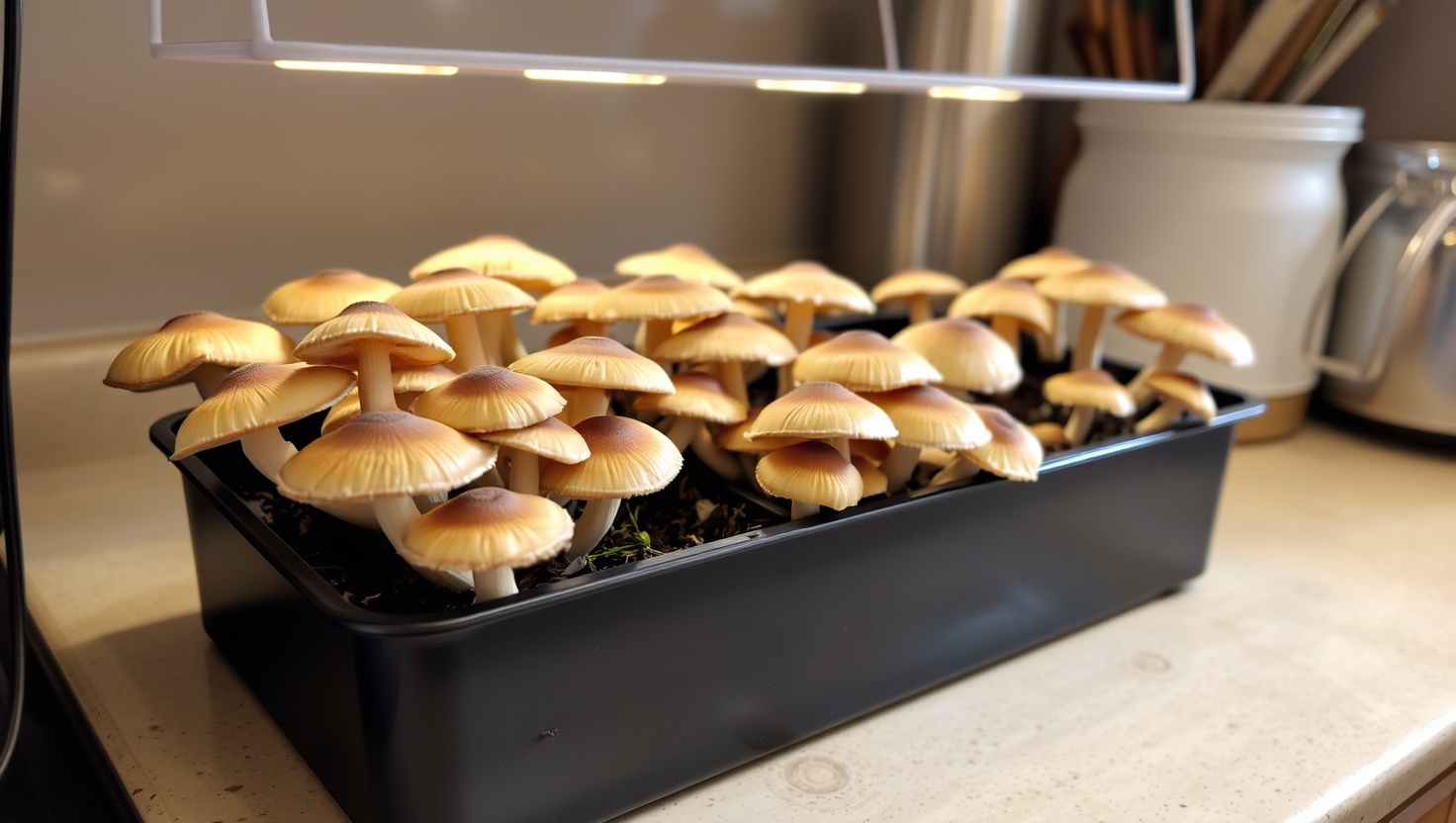
You do not need a single ray of sunlight to grow food. Mushrooms thrive in the dark, in the cold, in your closet, under your bathroom sink, or on your kitchen counter. They are the ultimate apartment crop — no yard, no balcony, no grow light required.
North Spore Spray & Grow Kit — Our Top Recommendation
The gold standard for beginner mushroom kits. North Spore is a Maine-based company that grows their own spawn and has an excellent reputation in the mushroom community. Their Spray & Grow kits come…
In a hurry? That’s our pick. Want the reasoning and the full comparison? Keep reading.
A $25 oyster mushroom kit produces a pound or more of gourmet mushrooms in about 10 days. Those same mushrooms cost $8-14 per pound at the grocery store. The math works. The process is stupidly simple. And once you see clusters of oyster mushrooms erupting from a bag on your counter, you will understand why mushroom growing has become one of the fastest-growing food hobbies in 2026.
Here is everything you need to know: which varieties to start with, step-by-step growing from a kit, how to level up to growing from scratch, and the best kits and supplies for beginners.
Key Takeaways
- Oyster mushrooms are the best beginner variety — fast, forgiving, and delicious
- A ready-to-fruit kit requires almost nothing: cut a hole, mist with water, harvest in 7-14 days
- Mushrooms need humidity (80%+), fresh air, and indirect light — no direct sunlight
- Most kits produce 2-3 flushes (harvests), yielding 1-2 pounds total from a $25 kit
- Once you are hooked, you can grow from bulk substrate for about $1-2 per pound
- Pairs perfectly with microgreens — grow both on the same kitchen counter for year-round fresh food
Why Mushrooms Are the Perfect Indoor Crop
Most food crops need sunlight, soil, and patience. Mushrooms need none of those things — at least not in the traditional sense. Here is what makes them unique:
- No sunlight required. Mushrooms are fungi, not plants. They do not photosynthesize. Indirect ambient light is all they need to know which direction to grow. A north-facing window, a bathroom, or even a closet with the door cracked open works.
- No soil required. Mushrooms grow on a substrate — typically hardwood sawdust, straw, or coffee grounds. Pre-made kits come with the substrate fully colonized and ready to fruit.
- Fast. From the moment you open a kit to your first harvest is typically 7-14 days. Compare that to 60-90 days for tomatoes.
- Nutritious. Oyster mushrooms are rich in protein, B vitamins, vitamin D (when exposed to UV light), and beta-glucans that support immune function.
- Year-round. No growing season. No weather concerns. Mushrooms grow indoors in any climate, any month.
Best Mushroom Varieties for Beginners
| Variety | Difficulty | Days to Harvest | Flavor | Temp Range |
|---|---|---|---|---|
| Blue Oyster | Very easy | 7-10 days | Mild, velvety | 55-75°F |
| Pink Oyster | Easy | 5-7 days | Meaty, seafood-like | 65-85°F |
| King Oyster | Moderate | 14-21 days | Rich, scallop-like | 55-65°F |
| Lion's Mane | Moderate | 10-14 days | Crab-like, sweet | 55-70°F |
| Shiitake | Moderate | 7-14 days | Earthy, umami | 55-75°F |
| Wine Cap | Easy (outdoor) | 60-90 days | Earthy, nutty | Outdoor beds |
Start with Blue Oyster. It germinates fast, tolerates temperature swings, and produces generous flushes even when your technique is rough. Once you nail the basics, try Pink Oyster for speed or Lion's Mane for flavor.
Growing from a Kit: Step by Step
If you have never grown mushrooms before, start with a ready-to-fruit kit. The substrate is already colonized with mycelium — all you do is trigger fruiting conditions.
Open and Cut (2 minutes)
Remove the kit from its box. Cut an X-shaped slit (about 3-4 inches) in the plastic bag where indicated. Some kits have a perforated window — just peel it off. The exposed area is where mushrooms will emerge.
Find the Right Spot
Place the kit somewhere with indirect light, good airflow, and consistent temperature. A kitchen counter away from direct sunlight works great. Avoid placing it near heating vents, drafty windows, or in sealed closets with no air exchange. Mushrooms need fresh air to form properly — stale air produces leggy, deformed stems.
Mist 2-3 Times Daily
Use a spray bottle to mist the exposed area and surrounding air 2-3 times per day. You are aiming for visible moisture on the surface without soaking the block. If your home is dry (below 50% humidity), drape a loose plastic bag over the kit with several holes punched in it — this creates a humidity tent while still allowing air exchange.
Watch for Pins (Days 3-7)
Within 3-7 days, you will see tiny white bumps forming at the cut opening. These are primordia (pins) — baby mushrooms. This is the most exciting part. Once pins appear, maintain your misting schedule and keep the humidity up. Do not touch the pins — they are fragile.
Harvest (Days 7-14)
Oyster mushrooms double in size daily once pins form. Harvest when the cap edges start to flatten out or slightly curl upward — this is right before they drop spores. Twist and pull the entire cluster off at the base, or cut with a clean knife. Do not wait too long — overripe mushrooms become tough and spore-dusty.
Second Flush (Days 14-28)
After harvesting, soak the entire block in cool water for 6-12 hours (submerge it in a bowl or bucket). This rehydrates the substrate. Drain, return to its spot, and resume misting. A second flush of mushrooms will appear in 1-2 weeks. Most kits produce 2-3 flushes total, with yields decreasing each time.
Best Mushroom Grow Kits for 2026
North Spore Spray & Grow Kit
The gold standard for beginner mushroom kits. North Spore is a Maine-based company that grows their own spawn and has an excellent reputation in the mushroom community. Their Spray & Grow kits come fully colonized and ready to fruit. Available in Blue Oyster, Pink Oyster, Lion's Mane, and Golden Oyster varieties. The kit includes a misting instruction card and typically produces 2-3 generous flushes.
Pros
- Consistently high germination and fruiting rates
- Multiple variety options including Lion's Mane
- Made by a respected mushroom company
- Generous block size for multiple flushes
Cons
- $25-30 is mid-range pricing for kits
- Ships from Maine — transit time varies
- No included humidity tent
We earn a commission on purchases — at no extra cost to you.
Back to the Roots Mushroom Kit
The most affordable and widely available kit — sold at Target, Whole Foods, and Amazon. Grows organic pink oyster mushrooms in about 10 days. The smaller block size means slightly lower yield than premium kits, but it is a perfect entry point if you want to try mushroom growing without committing $30. Great gift item too.
Pros
- Most affordable kit at $16-20
- Widely available in retail stores
- Organic certified
- Compact and beginner-friendly
Cons
- Smaller block — lower total yield
- Usually only 1-2 flushes
- Only pink oyster variety
We earn a commission on purchases — at no extra cost to you.
Forest Origins Mushroom Grow Kit
Forest Origins offers the widest variety selection: Blue Oyster, Pink Oyster, Brown Oyster, White Oyster, and Lion's Mane. Their kits use USDA-certified organic substrate and typically begin pinning within 7-14 days. Good mid-range option with strong customer support and clear growing instructions.
Pros
- 5 variety options — most selection
- USDA organic certified
- Detailed instruction booklet included
- Reliable 2-3 flush production
Cons
- Some varieties ship seasonally
- Smaller brand than North Spore
We earn a commission on purchases — at no extra cost to you.
Leveling Up: Growing from Scratch
Once you have successfully fruited a few kits, the natural next step is growing from bulk substrate. This drops your cost per pound from $10-15 (kit) to $1-3 (DIY) and lets you grow any variety on any scale.
The basic process:
- Buy grain spawn ($15-25 per bag, inoculates 25-50 lbs of substrate)
- Prepare substrate — pasteurize straw (soak in hot water for 1 hour) or sterilize hardwood sawdust + wheat bran in a pressure cooker
- Mix spawn into substrate in grow bags or buckets
- Incubate in a dark, warm space for 2-3 weeks while mycelium colonizes
- Fruit by cutting holes, misting, and maintaining humidity
The key investment is maintaining cleanliness. Contamination (green mold, especially Trichoderma) is the primary challenge at this level. Working in a clean space, using proper pasteurization, and handling spawn with clean hands eliminates most issues.
For serious growers, a quality grain spawn supplier makes all the difference. North Spore, Field & Forest, and Fungi Perfecti all sell reliable spawn that ships ready to use.
Common Mistakes and How to Fix Them
Not Enough Humidity
The most common problem. Mushroom pins abort (dry out and stop growing) when humidity drops below 80%. If your home is dry, build a simple fruiting chamber: a clear plastic tote with holes drilled in the sides, lined with wet perlite. Place your kit inside. The perlite holds moisture and maintains 85-95% humidity passively.
Too Little Fresh Air
Mushrooms exhale CO2 just like you do. If there is not enough air exchange, CO2 builds up and mushrooms grow long, thin stems with tiny caps — they are stretching toward fresh air. Increase ventilation: open the humidity tent more, add more holes, or fan the kit briefly twice per day.
Harvesting Too Late
Oyster mushrooms go from perfect to past-prime within a single day. Harvest when caps are still slightly curled downward or just flat. Once edges curl upward and start waving, they are dropping spores (you will see a fine white dust beneath the cluster). Overripe mushrooms are still edible but tougher and less flavorful.
Green Mold (Trichoderma)
If you see bright green patches on your kit, that is Trichoderma — the most common mushroom contaminant. Small patches can sometimes be scraped off and the kit may still fruit. Large patches mean the kit is compromised. Compost it and start fresh. Prevention: do not over-wet the block, maintain good air circulation, and keep the growing area clean.
Growing more of your own food?
Combine mushrooms with microgreens for year-round indoor harvests — no yard required.
Microgreens Guide Composting GuideFrequently Asked Questions
Get practical food growing guides in your inbox
One email per week. No spam, no fluff — just honest advice on growing your own food.