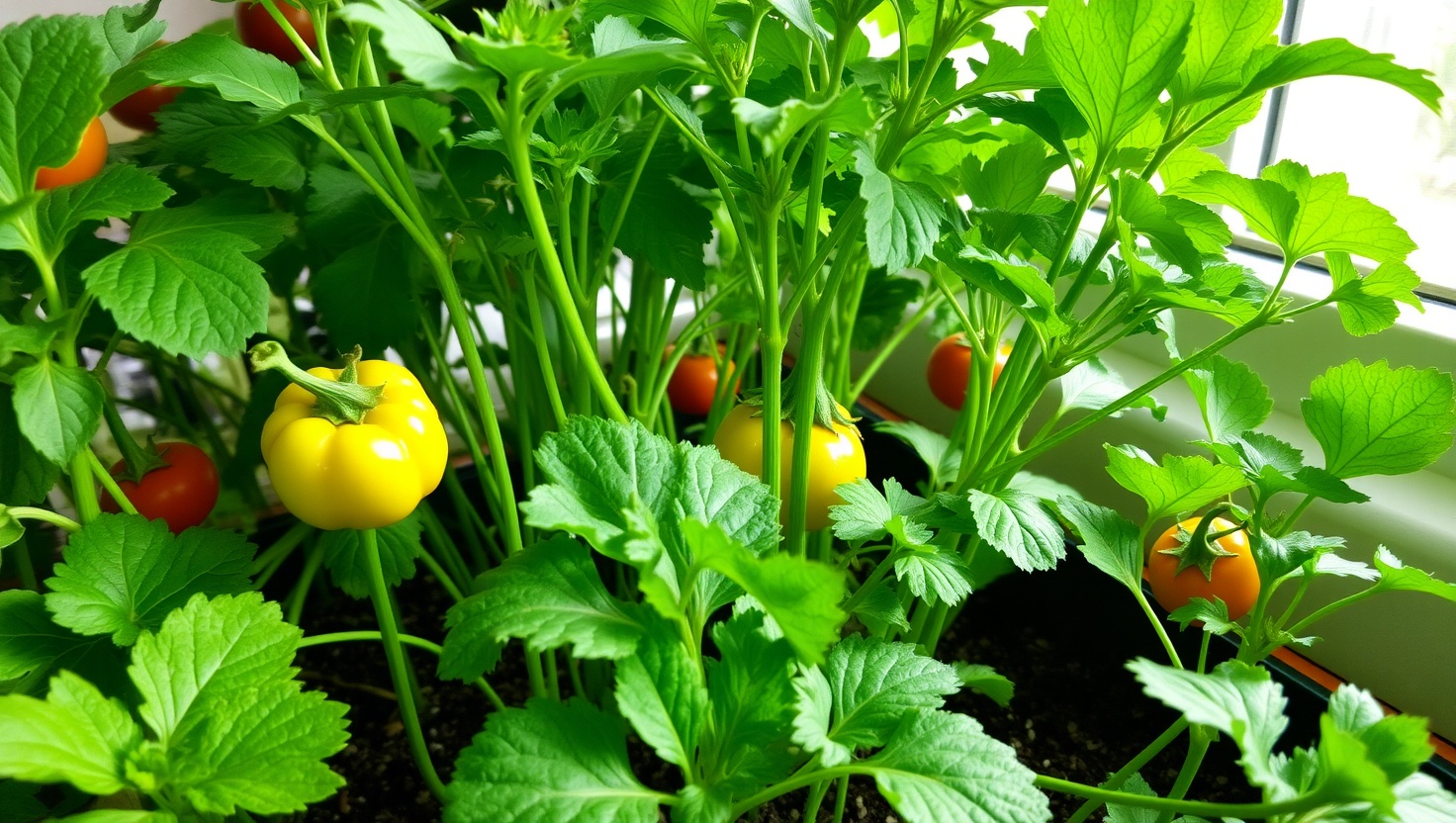
Imagine harvesting fresh, nutrient-dense greens from your kitchen counter every single week. No backyard. No special skills. No waiting months for tomatoes that may or may not survive the squirrels.
Hamama Microgreen Kit — Our Top Recommendation
The easiest possible entry point for microgreens. Pre-seeded quilted mats eliminate the mess of soil and seed spreading. Just add water, place the mat in the tray, and wait. Perfect for people who…
In a hurry? That’s our pick. Want the reasoning and the full comparison? Keep reading.
Microgreens are the fastest path from seed to plate that exists. You plant them, ignore them for a few days, give them some light, and harvest a tray of greens that contain 4 to 40 times more nutrients than their fully grown counterparts. A USDA study found that red cabbage microgreens pack 40x more vitamin E and 6x more vitamin C than mature red cabbage. All in a plant you grew on your windowsill in about a week.
The startup cost is laughably low. Two trays, some soil, a packet of seeds — you are in business for under $25. And unlike that AeroGarden gathering dust on someone's counter, microgreens actually produce usable quantities of food, fast enough that you stay motivated.
Here is the complete beginner's guide to growing microgreens at home — the easy varieties to start with, step-by-step growing instructions, common mistakes, and the best kits and supplies for 2026.
Key Takeaways
- Microgreens are baby plants harvested 7-14 days after germination — packed with concentrated nutrients
- You need almost nothing to start: two shallow trays, soil, seeds, and a spot near a window or a basic grow light
- Start with radish, broccoli, or sunflower — they are the most forgiving and fastest to harvest
- One 10x20 tray produces enough greens for a week of salads, smoothies, and meal toppings for two people
- Stagger your planting (start a new tray every 5-7 days) for a continuous supply that never runs out
- Total startup cost: $20-40. Ongoing: $2-4 per tray. Grocery store equivalent: $15-25 per week
What Are Microgreens (And Why Are They Worth Growing)?
Microgreens are young vegetable or herb plants harvested after the first true leaves develop — typically 7-14 days after planting. They are bigger than sprouts (which are just germinated seeds eaten whole, root and all) but smaller than baby greens.
The difference that matters: microgreens grow in soil or a growing medium and are cut above the root line. Sprouts grow in water and are eaten whole. This distinction is important because sprouts carry a higher risk of bacterial contamination (they grow in warm, moist conditions without sunlight), while microgreens grow more like regular plants and are significantly safer.
The Nutrition Advantage
A landmark 2012 study published in the Journal of Agricultural and Food Chemistry tested 25 commercially grown microgreens and found that nearly all contained higher concentrations of vitamins C, E, K, and beta-carotene than their mature counterparts. The standouts:
- Red cabbage: 40x more vitamin E, 6x more vitamin C
- Cilantro: 3x more beta-carotene
- Radish: High in vitamin E and beta-carotene, plus a satisfying peppery kick
- Broccoli: Rich in sulforaphane, linked to reduced inflammation and cancer cell inhibition
The reason is straightforward: young plants concentrate all their seed energy into those first tiny leaves. You are eating the most nutrient-dense version of the plant.
Best Microgreens for Beginners
| Variety | Days to Harvest | Difficulty | Flavor | Best For |
|---|---|---|---|---|
| Radish | 5-7 days | Very easy | Spicy, peppery | First-time growers |
| Broccoli | 7-10 days | Easy | Mild, fresh | Smoothies, salads |
| Sunflower | 8-12 days | Easy | Nutty, crunchy | Sandwiches, snacking |
| Pea shoots | 8-14 days | Easy | Sweet, mild | Stir-fries, salads |
| Red cabbage | 7-10 days | Easy | Mild cabbage | Color, nutrition |
| Basil | 12-16 days | Moderate | Sweet basil | Italian dishes |
| Wheatgrass | 7-10 days | Very easy | Sweet, grassy | Juicing |
Start with radish. It germinates in 24 hours, grows fast, tolerates mistakes, and produces a satisfying peppery green that tastes great on anything. Once you have one successful radish tray under your belt, branch out to broccoli and sunflower.
What You Need to Get Started
The beauty of microgreens is the minimal equipment list. Here is everything:
- Two 10x20 inch shallow trays — one with drainage holes (growing tray), one without (water tray). Standard nursery flats work perfectly. Cost: $4-6 per pair.
- Growing medium — organic seed-starting mix or coconut coir. Do not use garden soil — it is too dense and can harbor pathogens. Cost: $5-8 per bag (covers 10+ trays).
- Seeds — buy seeds specifically marketed for microgreens. They come in larger quantities at lower per-seed cost than garden seed packets. Cost: $4-12 per variety.
- Spray bottle — for misting during the first few days. You probably already own one.
- Optional: grow light — a basic LED panel ($20-30) gives you consistent results year-round, especially in darker apartments. Cost: $20-30.
How to Grow Microgreens: Step by Step
Prepare the Tray (5 minutes)
Fill your drainage tray with 1-1.5 inches of pre-moistened growing medium. The soil should feel like a wrung-out sponge — damp but not dripping. Level the surface gently with your hand. Do not pack it down.
Sow the Seeds (2 minutes)
Scatter seeds densely and evenly across the surface. Microgreens are planted much thicker than garden vegetables — you want nearly complete coverage. For small seeds (broccoli, radish), aim for 10-12 seeds per square inch. For large seeds (sunflower, pea), place them shoulder to shoulder. Mist lightly with water.
Blackout Phase (Days 1-4)
Cover the seeded tray with your second tray (the one without holes) placed upside down on top. This creates darkness and gentle pressure that encourages strong root development. The seeds do not need light yet — just moisture and warmth. Check daily and mist if the surface feels dry. Room temperature (65-75°F / 18-24°C) is perfect.
Uncover and Light (Day 4-5)
When you see pale yellow shoots pushing up against the cover tray, it is time for light. Remove the cover. The seedlings will look stretched and yellow — that is normal. Place under your grow light (12-16 hours daily) or on a bright windowsill. Within 24-48 hours, they will turn green as chlorophyll kicks in.
Water From Below (Days 4-10)
Switch from misting to bottom watering. Set the growing tray inside the solid tray and add water to the bottom. The soil wicks moisture upward. This keeps the stems and leaves dry, which prevents mold — the number one microgreen killer. Water when the tray feels noticeably light.
Harvest (Day 7-14)
When the first set of true leaves appear (the second pair of leaves after the initial seed leaves), grab sharp scissors or a clean knife and cut just above the soil line. Rinse gently, pat dry, and eat immediately or store in a container with a paper towel in the fridge for up to 5-7 days.
The Stagger System: Never Run Out
The secret to a continuous supply is simple: start a new tray every 5-7 days. By the time you harvest tray one, tray two is in its light phase, and tray three is in blackout. Three trays in rotation means fresh microgreens every single week without gaps.
Label each tray with the plant date and variety. After a few weeks, you will dial in the timing and have a reliable weekly harvest cycle running on autopilot.
Common Mistakes (and How to Avoid Them)
Mold
The most common problem. Causes: overwatering, poor air circulation, planting seeds too thickly in humid conditions. Fix: switch to bottom watering, run a small fan near the trays for airflow, and reduce seed density slightly. A light sprinkle of food-grade hydrogen peroxide (1 tsp per cup of water) on the surface can prevent mold in humid environments.
Leggy, Pale Growth
Means not enough light. Move trays closer to the window or add a grow light. Even a $20 LED panel makes a dramatic difference. Aim for 12-16 hours of light per day during the greening phase.
Uneven Germination
Usually caused by uneven moisture or old seeds. Pre-soak large seeds (sunflower, pea) for 8-12 hours before planting. Ensure the growing medium is evenly moist. Buy fresh seeds from reputable suppliers — microgreen seeds have a shelf life and old stock germinates poorly.
Bitter Taste
Microgreens left too long past their prime can turn bitter. Harvest when the first true leaves appear — do not wait for the plant to get "bigger." Bigger is not better with microgreens. The sweet spot is typically 7-14 days depending on variety.
Best Microgreen Kits and Supplies for 2026
Hamama Microgreen Kit
The easiest possible entry point for microgreens. Pre-seeded quilted mats eliminate the mess of soil and seed spreading. Just add water, place the mat in the tray, and wait. Perfect for people who want to try microgreens before committing to a full setup. Includes tray and 3 seed mats.
Pros
- Zero mess — no soil, no seed measuring
- Foolproof for complete beginners
- Includes everything for first 3 harvests
- Compact design fits any countertop
Cons
- Higher ongoing cost per tray vs DIY
- Limited variety (only Hamama mats work)
- Less satisfying for hands-on gardeners
We earn a commission on purchases — at no extra cost to you.
Bootstrap Farmer 1020 Trays (10-Pack)
The go-to trays for serious microgreen growers. Heavy-gauge plastic that lasts years without cracking. Available in with-holes and without-holes versions (you need both). Much sturdier than flimsy nursery trays — these handle hundreds of cycles.
Pros
- Thick, durable — no warping or cracking
- Perfect 10x20 standard size
- BPA-free food-safe plastic
- 10-pack means you can run multiple rotations
Cons
- Trays only — seeds and soil sold separately
- Takes up storage space between uses
We earn a commission on purchases — at no extra cost to you.
True Leaf Market Microgreen Seed Assortment
High-germination seeds in quantities sized for microgreen growing. Variety packs let you try multiple types (radish, broccoli, sunflower, pea, red cabbage) without buying five separate bags. Organic certified options available. Each packet grows 3-5 standard trays.
Pros
- Tested for high germination rates
- Variety packs reduce decision fatigue
- Organic certified options
- Enough seeds for 15-25 trays per pack
Cons
- Specialty seeds cost more than bulk garden seeds
- Some varieties in packs may be less exciting
We earn a commission on purchases — at no extra cost to you.
The Economics: Microgreens vs Store-Bought
| Factor | Home-Grown | Store-Bought |
|---|---|---|
| Cost per serving | $0.50-1.00 | $3-5 per clamshell |
| Freshness | Cut seconds before eating | 3-7 days old minimum |
| Variety | Unlimited — any seed you want | 2-4 varieties at most stores |
| Nutrition | Peak — consumed at harvest | Declining from day of cut |
| Startup cost | $20-40 one-time | $0 |
| Monthly cost (daily use) | $8-16 | $50-80 |
If you eat microgreens regularly, home growing pays for itself within the first month. Even at hobby scale (one tray per week), you save $150-200 per year compared to buying them at the store. And yours are fresher, more varied, and — honestly — more satisfying because you grew them yourself.
Want to grow more of your own food?
Microgreens are just the beginning. Check out our other food growing guides.
Composting Guide Container GardeningFrequently Asked Questions
Get practical food growing guides in your inbox
One email per week. No spam, no fluff — just honest advice on growing your own food.