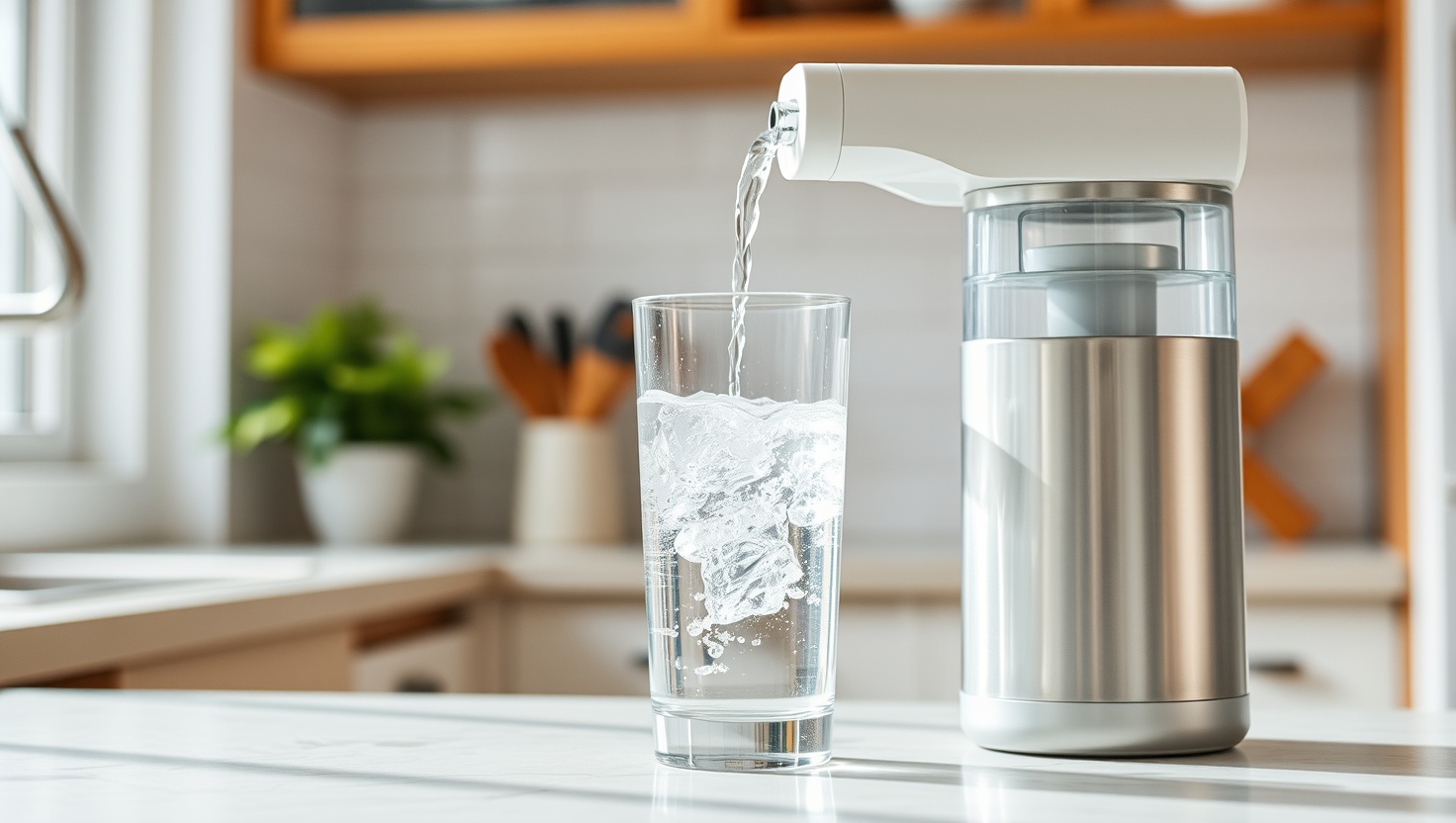
In a grid-down scenario — a hurricane, a prolonged power outage, a busted water main — your stored water supply runs out in about three days. After that, you are on your own. You need to make water safe to drink from whatever source you can find: a stream, a rain barrel, a swimming pool, even a puddle. The good news? With the right emergency water purification methods, you can remove 99.99% of the bacteria, viruses, and parasites that make untreated water dangerous.
Sawyer Squeeze Water Filter System — Our Top Recommendation
The Sawyer Squeeze is the portable filter we recommend for every emergency kit, hiking pack, and vehicle. It weighs practically nothing, filters up to 100,000 gallons (you will never need to replace…
In a hurry? That’s our pick. Want the reasoning and the full comparison? Keep reading.
The bad news? Most people have zero purification capability at home. They assume the tap will always work, or that a single water bottle filter is enough. It is not. Different threats require different solutions, and the smartest approach is layering multiple methods so you are never dependent on just one.
We break down five proven purification methods, explain exactly which pathogens each one handles, and recommend specific products that are affordable enough to buy right now — before you actually need them.
Key Takeaways
- No single purification method handles every threat — layering two or three methods gives you real redundancy
- Boiling is the most reliable method for killing all pathogens, but it requires fuel and time
- Portable filters like the Sawyer Squeeze remove bacteria and protozoa but NOT viruses — pair with chemical or UV treatment
- Chemical treatment (bleach or tablets) is the cheapest and lightest option, effective against bacteria, viruses, and most parasites
- Always pre-filter cloudy water through cloth or a coffee filter before using any purification method
- A complete home water purification kit costs under $100 and covers you for months
The Three Threats in Untreated Water
Before you pick a purification method, you need to understand what you are actually fighting. Untreated water can contain three categories of biological threats, and each one requires a different level of treatment.
Bacteria
The most common waterborne threat. E. coli, Salmonella, Cholera, Campylobacter — these cause everything from stomach cramps and diarrhea to life-threatening infections. Bacteria are relatively large (0.2-10 microns), which means most filters catch them effectively. Boiling, chemical treatment, and UV light all destroy bacteria. In a survival situation, bacterial contamination is the most likely problem you will face.
Viruses
Here is where it gets tricky. Viruses like Hepatitis A, Norovirus, and Rotavirus are tiny — as small as 0.02 microns. That means most portable pump filters and squeeze filters cannot catch them. They pass right through the 0.1 micron pores. To eliminate viruses, you need boiling, chemical treatment, UV purification, or a specialized purifier (not just a filter). This is the gap that catches most people off guard.
Protozoa and Parasites
Giardia and Cryptosporidium are the big ones here. These parasites form hard-shelled cysts that are resistant to chlorine at normal doses — meaning standard chemical treatment alone might not eliminate Crypto. The good news: they are large enough (4-15 microns) for filters to catch easily. Boiling kills them outright. UV treatment is effective too. The practical takeaway: if your water source might contain parasites (streams, lakes, flood water), filtration or boiling should be in your lineup.
Method 1: Boiling — The Gold Standard
If you can make fire, you can purify water. Boiling is the oldest, simplest, and most universally effective purification method. A rolling boil for one minute (three minutes above 6,500 feet elevation) kills bacteria, viruses, AND parasites — no exceptions. Nothing survives.
Step-by-Step
- Pre-filter the water through a clean cloth, bandana, or coffee filter to remove visible sediment and debris
- Bring to a rolling boil — not just steaming, but actively bubbling
- Maintain the boil for at least one full minute (three minutes above 6,500 feet)
- Let it cool naturally — do not add ice or cold water, as those could reintroduce contaminants
- Store in clean containers with lids to prevent recontamination
Strengths: Kills everything. No special equipment beyond a pot and heat source. No chemicals, no batteries, no expiration dates. You can purify large volumes at once.
Limitations: Requires fuel (propane, wood, stove). Takes time — heating plus cooling. Does not remove chemical contaminants or sediment. Not practical for on-the-go situations. In a prolonged emergency, fuel becomes a precious resource you might not want to burn on water purification alone.
Method 2: Chemical Treatment — Bleach and Purification Tablets
This is the lightest, cheapest, and most portable purification method available. A small bottle of bleach or a strip of purification tablets weighs almost nothing, costs next to nothing, and can treat hundreds of gallons.
Using Household Bleach
- Use regular unscented bleach with 6-8.25% sodium hypochlorite — no fragrances, no "splash-less," no color-safe
- Pre-filter cloudy water through cloth or a coffee filter
- Add 8 drops (about 1/8 teaspoon) per gallon of clear water — double to 16 drops for cloudy water
- Stir well and let it sit for 30 minutes
- Smell test: the water should have a slight chlorine odor. If not, repeat the dose and wait another 15 minutes
Using Purification Tablets (Aquatabs, Potable Aqua)
- Pre-filter cloudy water
- Drop in the tablet — follow the dosage on the package (typically one tablet per liter)
- Wait 30 minutes before drinking (some brands say 4 hours for full Crypto protection)
- The water may taste slightly chemical — this is normal and safe
Strengths: Incredibly cheap ($12 for 100 tablets). Almost weightless. Kills bacteria and viruses effectively. Long shelf life (5+ years for sealed tablets). The CDC and EPA endorse this method.
Limitations: 30-minute wait time before drinking. Less effective against Cryptosporidium cysts. Leaves a slight taste. Bleach loses potency over time — replace your bottle annually. Not ideal for chemically contaminated or very cloudy water.
Method 3: Portable Pump Filters — Sawyer Squeeze and LifeStraw
Portable water filters have revolutionized emergency preparedness. They are fast, require no fuel or chemicals, and can process thousands of gallons before needing replacement. The Sawyer Squeeze and LifeStraw are the two most popular options, and for good reason.
How They Work
These filters use hollow fiber membrane technology with pores as small as 0.1 microns. Water is forced through the membrane (by squeezing a pouch or sucking through a straw), and anything larger than 0.1 microns gets trapped. That includes all bacteria and protozoan cysts — but NOT viruses, which can be as small as 0.02 microns.
Step-by-Step (Sawyer Squeeze)
- Fill the included pouch with water from your source
- Attach the filter to the pouch opening
- Squeeze — clean water flows out the other end into your bottle or container
- Backflush regularly using the included syringe to maintain flow rate
Strengths: Instant clean water — no waiting. Filters up to 100,000 gallons (Sawyer Squeeze). Lightweight and packable. No chemicals, no power needed. Removes 99.99999% of bacteria and 99.9999% of protozoa.
Limitations: Does NOT remove viruses — pair with chemical treatment or UV for complete protection. Flow rate decreases with use (backflush to restore). Can freeze and crack in winter if water is left inside. The pouches that come with the Sawyer are flimsy — consider using a standard water bottle or hydration bladder instead.
Method 4: Gravity-Fed Filters — Home Base Purification
If you are sheltering in place during an extended emergency, you do not want to squeeze individual liters through a portable filter all day. Gravity-fed systems like the Big Berkey and Alexapure Pro handle large volumes with zero effort — just pour water in the top, and clean water collects in the lower chamber by gravity.
How They Work
These systems use multi-stage filter elements (typically a combination of activated carbon and proprietary media) that water passes through under the force of gravity alone. No pumping, no squeezing, no electricity. The Berkey's Black Elements, for example, are classified as purifiers — not just filters — because they address viruses in addition to bacteria and protozoa.
Step-by-Step
- Prime the filter elements before first use (saturate them with water for 10-15 minutes)
- Assemble the upper and lower chambers with elements installed
- Pour untreated water into the upper chamber — pre-filtering very cloudy water extends element life
- Wait — gravity does the work. A fully loaded Berkey processes about 3.5 gallons per hour with two elements
- Dispense clean water from the spigot on the lower chamber
Strengths: Hands-free operation. Handles large volumes for families or groups. No electricity or fuel required. Berkey elements last for up to 6,000 gallons per pair. Addresses bacteria, viruses, parasites, and even some chemical contaminants. Works as an everyday home filter too — not just for emergencies.
Limitations: Not portable — these are countertop systems that weigh 7-15 lbs. Upfront cost is higher ($250-350 for a quality system). Slow flow rate compared to pump filters. Filter elements eventually need replacement. Takes up counter or storage space.
Method 5: UV Purification — The SteriPen
UV-C light scrambles the DNA of pathogens, rendering them unable to reproduce or infect you. The SteriPen is the most popular portable UV purifier — it looks like a thick pen, runs on batteries or USB recharge, and treats a liter of water in about 90 seconds.
Step-by-Step
- Pre-filter the water until it is reasonably clear — UV light cannot penetrate murky water effectively
- Fill a clear container (water bottle or included vessel) with the pre-filtered water
- Activate the SteriPen and submerge the UV lamp in the water
- Stir gently for the treatment cycle (60-90 seconds depending on model)
- The indicator light turns green when treatment is complete
Strengths: Kills bacteria, viruses, AND parasites — one of the few portable methods that handles all three. Fast — 90 seconds per liter. No chemical taste. Lightweight. Thousands of treatments per UV lamp.
Limitations: Requires batteries or USB power — when the battery dies, you have no purification. Only works on clear water — sediment and cloudiness block UV rays. Treats small volumes (1 liter at a time). Does not remove sediment, chemicals, or physical contaminants. More expensive than chemical methods. Fragile electronics — can break if dropped.
All 5 Methods Compared
Here is how they stack up side by side. Use this to decide which combination works best for your situation.
| Method | Bacteria | Viruses | Parasites | Speed | Cost | Portability |
|---|---|---|---|---|---|---|
| Boiling | Yes | Yes | Yes | 10-20 min | Free (fuel cost) | Low |
| Chemical (bleach/tablets) | Yes | Yes | Partial | 30 min | Very low ($12) | Excellent |
| Portable filter | Yes | No | Yes | Instant | Low ($35) | Excellent |
| Gravity-fed filter | Yes | Yes* | Yes | 1-2 hrs/batch | High ($250+) | None |
| UV purifier | Yes | Yes | Yes | 90 seconds | Medium ($60) | Good |
*Gravity-fed virus removal depends on specific filter elements. Berkey Black Elements are rated for virus removal; not all gravity filters are. Prices approximate.
Our Top 3 Product Picks
Sawyer Squeeze Water Filter System — Best Portable Filter
The Sawyer Squeeze is the portable filter we recommend for every emergency kit, hiking pack, and vehicle. It weighs practically nothing, filters up to 100,000 gallons (you will never need to replace it), and produces clean water instantly by squeezing a pouch. The 0.1 micron hollow fiber membrane removes 99.99999% of bacteria and 99.9999% of protozoa. It does not handle viruses — pair it with purification tablets for complete coverage. At $35, there is no reason not to have one. We keep three: one in the home emergency kit, one in the car, and one in a go-bag.
Pros
- 100,000 gallon lifespan — practically unlimited
- Weighs only 3 oz — fits anywhere
- Instant filtration, no wait time
- Versatile — fits on bottles, bladders, inline setups
Cons
- Does NOT remove viruses — need secondary treatment
- Included pouches are flimsy and tear easily
- Must protect from freezing (cracks the membrane)
We earn a commission on purchases — at no extra cost to you.
Aquatabs Water Purification Tablets (100-Pack) — Best Budget Option
Aquatabs are used by humanitarian organizations, relief agencies, and militaries worldwide — and they cost about 12 cents per liter of treated water. Each tablet treats one liter in 30 minutes, killing bacteria and viruses effectively. A 100-pack fits in your pocket and treats enough water for one person for over three months. The shelf life is 5 years sealed, so you can stash these in every kit, every vehicle, and every go-bag without worrying about rotation. The taste is mildly chlorinated — similar to a swimming pool — but perfectly drinkable. Pair them with a Sawyer Squeeze filter for the best budget-friendly full-spectrum purification system available.
Pros
- Incredibly affordable — $12 for 100 treatments
- 5-year shelf life, no maintenance
- Weightless and pocket-sized
- Kills bacteria and viruses effectively
Cons
- 30-minute wait time per treatment
- Less effective against Cryptosporidium
- Slight chlorine taste
We earn a commission on purchases — at no extra cost to you.
SteriPen Adventurer UV Water Purifier — Best for Full-Spectrum Portable Treatment
The SteriPen Adventurer is the portable purification method that handles what filters cannot: viruses. In 90 seconds, UV-C light destroys bacteria, viruses, AND parasites without any chemical taste or 30-minute wait time. It runs on two CR123 batteries (widely available) and treats up to 8,000 liters per UV lamp. The catch: it only works on clear water. Turbid or cloudy water blocks UV rays, so you need to pre-filter first. This makes the SteriPen the perfect companion to a Sawyer Squeeze — the Sawyer removes sediment, bacteria, and parasites, while the SteriPen kills any viruses the filter missed. Together they cost under $100 and handle every pathogen you will encounter.
Pros
- Kills bacteria, viruses, AND parasites
- Fast — 90 seconds per liter
- No chemical taste whatsoever
- 8,000 treatments per UV lamp
Cons
- Requires batteries — dead battery means no purification
- Only works on clear, pre-filtered water
- Fragile electronics — not drop-proof
We earn a commission on purchases — at no extra cost to you.
Building a Layered Water Purification Kit
The single biggest mistake in water preparedness is relying on one method. Batteries die. Fuel runs out. Filters clog. Tablets expire. When your only method fails, you are drinking untreated water — and that is how people get seriously sick in emergencies.
The solution is redundancy. Three methods beat one method every time. Here is how to build a layered kit that covers every scenario.
The Essential Three-Layer Kit (~$107)
- Layer 1: Sawyer Squeeze ($35) — your primary filter for daily use. Handles bacteria and protozoa instantly with no consumables. This is your workhorse.
- Layer 2: Aquatabs 100-pack ($12) — your virus insurance. Use after filtering to catch what the Sawyer misses. Also works as a standalone method if the filter breaks.
- Layer 3: Boiling capability ($0-60) — the universal fallback. If you have a camping stove, a fire pit, or even a charcoal grill, you can boil water. Keep a stainless steel pot in your emergency supplies.
Add a SteriPen ($60) as a fourth layer if your budget allows — it gives you the fastest full-spectrum treatment for on-the-go situations.
For Home Base: Add a Gravity-Fed System
If you are sheltering in place with family, a gravity-fed system like the Big Berkey or Alexapure Pro transforms water purification from a chore into a background process. Fill it up, walk away, come back to gallons of clean water. It is the difference between surviving and living comfortably during an extended disruption. Check out our emergency water storage guide for how to pair storage with purification for complete water security.
Three Mistakes That Ruin Your Water Safety
1. Not Pre-Filtering Cloudy Water
This is the most common mistake. Cloudy, sediment-heavy water reduces the effectiveness of every purification method. Sediment clogs filters faster, blocks UV light entirely, and reduces the potency of chemical treatment. Always pre-filter through a bandana, coffee filter, or clean cloth before applying any purification method. It takes 30 seconds and dramatically improves results. Let very muddy water settle in a container for an hour first, then pour off the clearer top layer before filtering.
2. Forgetting About Viruses
You bought a Sawyer Squeeze or a LifeStraw and think you are covered. You are not. Portable filters do not remove viruses. In North American wilderness, this is usually fine — viral waterborne illness from backcountry streams is rare. But in an emergency scenario involving flood water, urban runoff, or water contaminated by sewage overflow? Viruses become a real threat. Always pair filtration with a secondary method — tablets, bleach, or UV — that addresses viral contamination.
3. Relying on Expired Supplies
Those purification tablets you bought five years ago and tossed in a drawer? Check the package. Bleach loses about 20% of its potency per year — that bottle from 2023 is effectively water. Tablets last longer (typically 5 years sealed) but not forever. Batteries for your SteriPen discharge over time. Build a rotation schedule: check supplies every 6 months when you check your first aid kit. Replace bleach annually. Verify tablet expiration dates. Test your SteriPen batteries. Ten minutes of maintenance keeps your entire water safety system reliable.
Ready to build your water safety kit?
Start with the Sawyer + Aquatabs combo for under $50, or add the SteriPen for full portable coverage.
Get the Sawyer Squeeze Get AquatabsFrequently Asked Questions
Get practical emergency readiness guides in your inbox
One email per week. No spam, no fear-mongering — just honest advice on being prepared for real life.