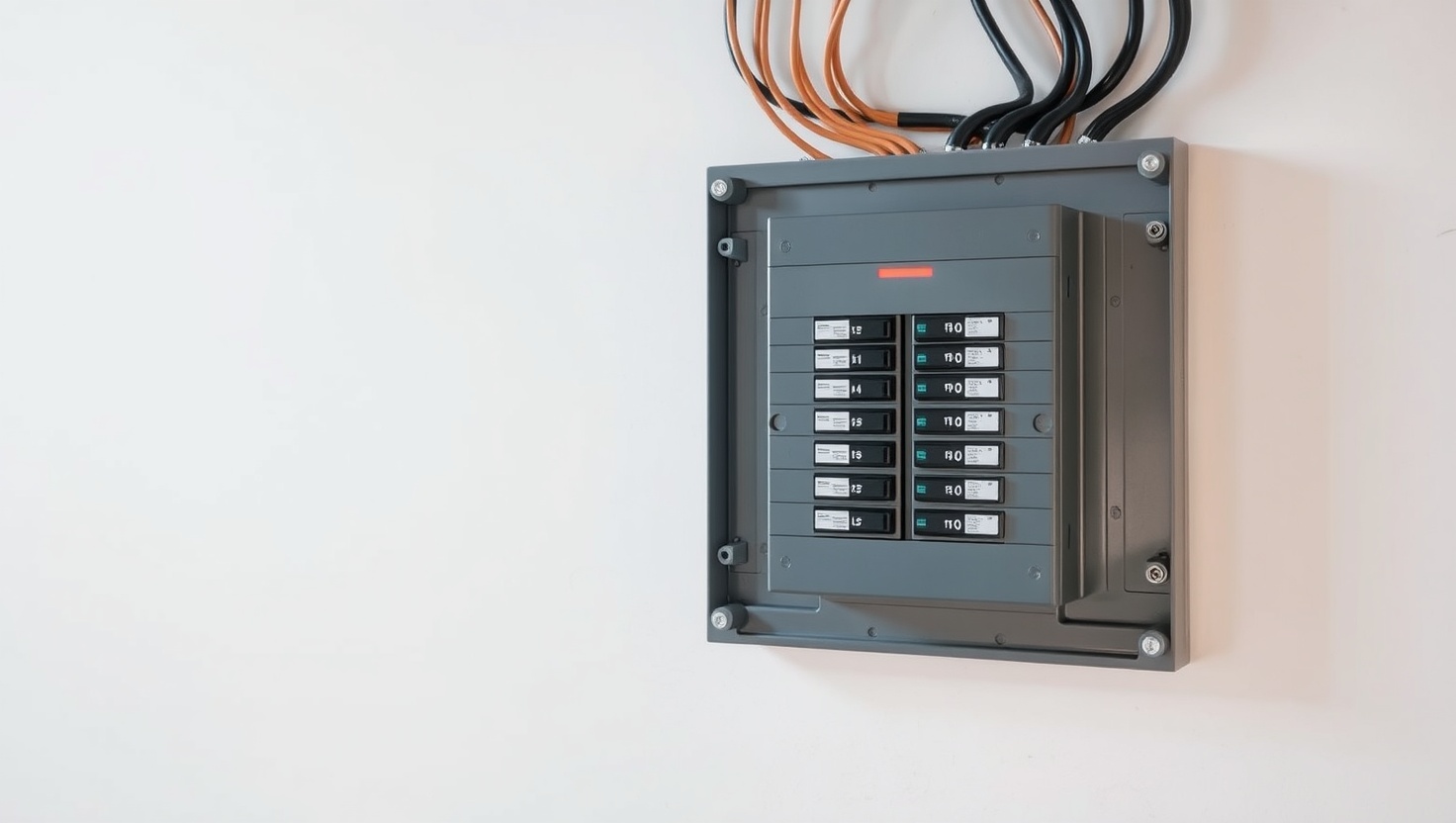
One lightning strike. One utility switching event. One grid surge from a failing transformer two blocks away. That's all it takes to fry your smart TV, your HVAC control board, your solar inverter, your EV charger — and anything else that was powered on when the voltage spike arrived. The average American home now has over $15,000 in electronics and appliances. A whole house surge protector at your electrical panel costs $40-$120 and takes less than an hour to install. It's the cheapest insurance policy you'll ever buy.
Eaton CHSPT2ULTRA — Our Top Recommendation
The Eaton CHSPT2ULTRA is the whole house surge protector most electricians reach for when a customer asks for their best recommendation — and it earns that status through the combination of specs…
In a hurry? That’s our pick. Want the reasoning and the full comparison? Keep reading.
This guide covers the five best whole house surge protectors in 2026 — tested and ranked by surge capacity (kA rating), panel compatibility, notification systems, and value. Whether you're protecting a solar + EV setup, a smart home loaded with sensitive electronics, or just the basics, there's a right device for your panel and your budget.
Key Takeaways
- A single lightning strike or grid surge can destroy $10,000+ in electronics and appliances in milliseconds
- Whole house surge protectors cost $40-$120 — the cheapest insurance you'll ever buy for your home's electrical system
- The Eaton CHSPT2ULTRA at ~$100 fits any panel brand and offers 108kA protection — our top overall pick
- Surge protectors work silently in the background — install once, protect every circuit in your home automatically
- If you have solar panels or an EV charger, a whole house surge protector is non-negotiable — those systems are high-value and highly surge-sensitive
- Professional installation takes 30-60 minutes and costs $100-$200 in labor — money well spent on live panel work
Why Your Home Needs Whole House Surge Protection
Most people think surge protection means plugging their computer into a $20 power strip. That strip does protect the devices plugged into it — but it does nothing for your refrigerator, your HVAC system, your EV charger, your solar inverter, or any other hardwired appliance in your home. A whole house surge protector at the electrical panel is the foundation layer that protects everything.
Lightning and nearby strikes. A direct lightning strike on your home is relatively rare. What's far more common — and far more frequently misunderstood — is the induced surge. When lightning strikes a utility pole, a transformer, or even the ground within a few hundred feet of your home, the resulting electromagnetic pulse can inject thousands of volts into your utility lines. That energy arrives at your panel in microseconds, faster than any circuit breaker can respond. A surge protector with metal oxide varistors (MOVs) clamps that excess voltage before it reaches your circuits.
Grid switching and utility events. Lightning gets the blame, but it accounts for only about 20% of surge events. The rest come from the grid itself. Utility companies switch large capacitor banks and transformers to manage load — each switch creates a transient voltage spike. A large motor nearby (an industrial HVAC, a pump station, a neighbor's pool motor) creates inductive kickback every time it cycles. These "internal" surges are smaller than a lightning-induced event but happen constantly and accumulate wear on sensitive electronics over time.
Your own appliances. The biggest motors in your home — the air conditioner compressor, the refrigerator compressor, the washing machine — create small surges on your internal wiring every time they start and stop. Over months and years, these micro-surges degrade capacitors and microcontrollers in sensitive equipment. A whole house protector reduces this noise at the source.
Modern homes have more to lose. A home built in 1990 had a TV, a VCR, and a desktop computer. A home in 2026 has a smart TV, a gaming console, a smart fridge, a smart thermostat, an EV charger drawing 40+ amps, potentially a solar inverter and battery storage system, smart lighting throughout, a home office with multiple computers, and a whole-home audio system. The total value of surge-sensitive equipment has multiplied by an order of magnitude. The cost of protection has not.
How Whole House Surge Protectors Work
Understanding the basics makes it much easier to choose the right device and interpret the specs. You do not need to be an electrician — but knowing what kA means will save you from buying an underpowered unit.
Clamping voltage and MOVs
Inside every surge protector are metal oxide varistors (MOVs) — components that conduct electricity only when voltage exceeds a threshold. Under normal conditions (120V or 240V), they sit dormant. When a surge arrives and voltage spikes above the clamping threshold — typically 400-700V for residential units — the MOVs turn on and shunt the excess energy to ground. This happens in nanoseconds. The clamping voltage spec tells you how high voltage gets before the protector engages: lower is better for sensitive electronics.
kA rating explained
The kA (kiloampere) rating is the most important spec on a whole house surge protector. It measures the maximum surge current the device can handle without failing — higher is better. Think of it as the total capacity of the "surge battery": a 36kA unit can handle smaller, more frequent surges or one larger event; a 140kA unit can handle significantly more. The NEMA/IEEE standard for residential surge protection recommends a minimum of 40kA — anything below that is marginal for whole-house installation. For homes with solar systems or EV chargers, 80kA+ is advisable. For high-lightning areas or premium protection, 100kA+ is the target.
Joule rating
You'll also see joule ratings on some specs. Joules measure the total energy-absorption capacity — how much total surge energy the protector can absorb over its lifetime. Higher joules means the unit degrades more slowly over time. For whole house units, kA rating is the primary spec to prioritize; joules are more relevant to point-of-use power strips. Most quality whole house protectors don't even publish a joule rating because the MOV configuration is optimized for fast, high-current events rather than sustained energy absorption.
The 5 Best Whole House Surge Protectors for 2026
Eaton CHSPT2ULTRA — Best Overall
The Eaton CHSPT2ULTRA is the whole house surge protector most electricians reach for when a customer asks for their best recommendation — and it earns that status through the combination of specs that actually matter. At 108kA, it delivers the highest surge capacity in its price range for residential installations. That rating is achieved through dual-mode protection: it suppresses surges on both line-to-neutral and line-to-ground paths, which catches more of the surge energy that would otherwise reach your circuits.
The universal fit is Eaton's standout advantage over the competition. Unlike Siemens or Square D units that are optimized for their own panel ecosystems, the CHSPT2ULTRA installs in any residential panel — Eaton, Square D, Siemens, Leviton, Cutler-Hammer, Murray, GE — by hardwiring into two dedicated breaker slots with the supplied conductors. An electrician can knock this out in 30 minutes on any panel. The dual LED indicators tell you at a glance whether the unit is powered and whether surge protection is active — two separate lights, so you know immediately if a surge event has degraded the protection and replacement is needed.
- 108kA — highest residential surge rating in this price range
- Universal fit — works with any residential panel brand
- Dual LED indicators show power status and protection status separately
- Indoor/outdoor rated (NEMA 3R) — can install outside the panel if needed
- UL Listed Type 1 and Type 2 — meets the most stringent installation standards
- No audible alarm — silent failure notification only via LED
- Requires two dedicated breaker slots — may be tight in a full panel
- No connected equipment warranty like the Square D HEPD80
- Hardwire installation means professional install recommended
Best for: Any homeowner who wants top-tier protection and panel-brand flexibility. Especially good if you have solar, an EV charger, or a home with expensive electronics.
Check Price on Amazon →Siemens FS140 — Best Surge Capacity
If raw surge capacity is what you're after, the Siemens FS140 is the undisputed leader in the residential category with a 140kA rating — the highest available for a whole-home installation. That extra headroom matters in genuinely high-risk scenarios: homes in Florida or the Gulf Coast (which record the most lightning strikes per square mile in the US), properties with solar and battery storage systems where surge events can cascade through high-value inverter equipment, or large homes with significant HVAC systems that create substantial internal surge activity.
The three-stage notification system is the most informative status reporting on this list. An audible alarm triggers when a major surge event occurs so you know it happened even if you're asleep. A green status LED confirms active protection. A separate service LED lights up when protection has degraded and replacement is needed. You never have to guess whether it's still working. The NEMA 4X rating (weatherproof, dust-tight) allows outdoor mounting, which is useful for homes where panel access is in a garage or exterior enclosure. The premium $120 price is justified if you're in a high-risk environment or have significant assets to protect.
- 140kA — highest surge capacity available for residential installation
- Three-stage notification: audible alarm + status LED + service LED
- NEMA 4X weatherproof rated — suitable for outdoor panel locations
- Siemens build quality — known for long service life
- Audible alarm means you know a surge event happened
- Designed for Siemens and Murray panels — compatibility check required for other brands
- $120 is the highest price on this list
- Larger physical footprint — may require panel space planning
- No connected equipment warranty
Best for: High-lightning-risk areas, homes with solar and battery storage, and anyone with a Siemens panel who wants maximum protection and notification capability.
Check Price on Amazon →Square D HEPD80 — Best Value
The Square D HEPD80 makes a compelling case that you do not need to spend $100+ for excellent whole house surge protection. At 80kA, it meets and comfortably exceeds the IEEE recommended minimum for residential installations. But the feature that truly sets the HEPD80 apart from every other unit on this list is the connected equipment warranty: if a surge damages your connected equipment while the HEPD80 is properly installed and functioning, Schneider Electric will cover up to $75,000 in replacement costs. That is not a marketing claim — it is a legally binding product warranty backed by Schneider Electric, one of the world's largest electrical equipment manufacturers.
The 5-year product warranty (double what most competitors offer) and the compact form factor round out a package that punches well above its $80 price. Installation fits two breaker slots in a Square D QO or Homeline panel, and while it works best in its intended panel ecosystem, it can be hardwired into other panel brands with appropriate conductors. The LED indicator confirms protection status. If you have a Square D panel — the most common residential panel in North America — the HEPD80 is the straightforward choice at a fair price.
- $75,000 connected equipment warranty — unique in this category
- 5-year product warranty — double the typical coverage
- 80kA exceeds IEEE residential minimum recommendation
- Compact design — easier to fit in a full panel
- Proven Schneider Electric manufacturing quality
- Optimized for Square D panels — verify compatibility for other brands
- 80kA is adequate but lower than Eaton and Siemens options
- No audible alarm — LED indicator only
- Warranty claim process requires proof of proper installation
Best for: Homes with Square D panels who want strong protection with the security of a connected equipment warranty. Also a smart choice for budget-conscious buyers who still want quality.
Check Price on Amazon →Once your home is protected from surges, knowing exactly what each circuit draws helps you optimize energy use and catch anomalies early.
Leviton 51120-1 — Best for Panel Space
Panel real estate is a genuine constraint in many homes — especially in older properties where the panel was sized for a simpler electrical load. The Leviton 51120-1 solves this problem elegantly. Its ultra-compact design integrates directly inside the panel as a single breaker-width unit with a surge counter display that shows how many events have been intercepted. That counter is practically useful: it tells you whether your home is in a high-surge environment and gives you evidence to show an insurance company or electrician that your panel has seen significant electrical stress.
At 50kA, the protection capacity is lower than the other units on this list — sufficient for typical residential use but on the lower end for homes with solar panels or EV chargers in high-lightning zones. The compact size is the trade-off you accept for the space efficiency. For light commercial applications — small retail spaces, offices, studios — the 51120-1 is listed for both residential and light commercial use, making it versatile. The surge counter adds a layer of transparency that more expensive units don't offer.
- Ultra-compact — integrates in one breaker width, minimal panel space used
- Surge counter display — shows cumulative surge events recorded
- Rated for residential and light commercial use
- Direct panel integration for clean, permanent installation
- ~$90 competitive price for Leviton quality
- 50kA is the lowest capacity on this list — not ideal for high-risk environments
- Not recommended as sole protection for solar or EV charger setups
- No audible alarm
- Panel compatibility should be verified before purchase
Best for: Homes with full panels where space is the primary constraint, light commercial applications, and lower-risk environments where compact form factor matters more than maximum kA rating.
Check Price on Amazon →Siemens FSPD036 — Best Budget
At $40, the Siemens FSPD036 is the entry point for whole house surge protection — and for many standard homes in low-to-moderate lightning-risk areas, it does the job. The plug-on design is its most distinctive feature: rather than hardwiring with conductors through knockout holes, it snaps directly onto a Siemens breaker slot in the panel, making installation simpler than any other unit on this list. An LED indicator confirms the protection is active. The 36kA rating is at the lower end of what IEEE considers adequate for residential use, but it's still a significant improvement over no panel-level protection at all.
The compatibility restriction is important: the FSPD036 is designed specifically for Siemens QP breaker panels. If you have a Siemens panel — and many homes do — this is the fastest, most affordable way to add a baseline layer of whole-house protection. Think of it as a stepping stone: install the FSPD036 now, then upgrade to the FS140 if you add solar or an EV charger down the road. For a rental property, a starter home, or a budget renovation, $40 of protection beats $0 of protection by a very wide margin.
- $40 — genuinely accessible price for panel-level protection
- Plug-on design — simpler installation than hardwired alternatives
- LED indicator confirms active protection
- Siemens quality and reliability at an entry price
- Good stepping stone before upgrading to higher-capacity unit
- 36kA is below IEEE recommended minimum for full residential protection
- Siemens panels only — not compatible with other brands
- Not recommended for homes with solar panels, EV chargers, or high-lightning risk
- No audible alarm or equipment warranty
Best for: Budget-conscious homeowners with Siemens panels who want baseline protection, rental properties, and as an affordable entry point before upgrading to a higher-capacity unit.
Check Price on Amazon →Quick Comparison Table
| Product | Price | kA Rating | Warranty | Fit | Best For |
|---|---|---|---|---|---|
| Eaton CHSPT2ULTRA | ~$100 | 108kA | 2-year product | Universal | Best overall |
| Siemens FS140 | ~$120 | 140kA | Standard | Siemens/Murray | Max capacity |
| Square D HEPD80 | ~$80 | 80kA | 5-yr + $75K equip. | Square D | Best value |
| Leviton 51120-1 | ~$90 | 50kA | Standard | Multi-brand | Panel space savings |
| Siemens FSPD036 | ~$40 | 36kA | Standard | Siemens only | Budget entry |
Especially Important If You Have...
Not every home has equal surge risk. These scenarios significantly raise your stakes — and your recommended minimum kA rating.
Solar panels and battery storage
A solar inverter and battery management system (BMS) are among the most surge-sensitive and expensive pieces of equipment in a modern home. A quality solar inverter runs $1,000-$3,000 and contains precision power electronics that can be destroyed by a surge that your HVAC compressor would shrug off. If you have solar, 100kA+ is the minimum to consider — the Eaton CHSPT2ULTRA or Siemens FS140 are the right choices. Many solar installers now include whole house surge protection as a standard part of the installation package; if yours did not, ask about it or add it separately.
EV charger
Level 2 EV chargers draw 30-50 amps on a dedicated circuit and contain sophisticated electronics that manage charging communication with your vehicle. A surge event on that circuit can damage both the charger and potentially the vehicle's onboard charging system. EV chargers are not cheap to replace — $500-$1,500 installed — and the vehicle's charging system warranty may not cover surge damage. A panel-level protector with 80kA+ rating guards this circuit automatically since it protects every circuit in the panel.
Smart home devices
A home loaded with smart switches, smart speakers, smart thermostats, and connected appliances has dozens of low-voltage microcontrollers spread throughout every room. These are highly surge-sensitive — a spike that trips a circuit breaker on the way to your lights will also fry the smart switch controlling them. The cumulative replacement cost of a fully smart home's control electronics can easily exceed $2,000-$5,000. Panel-level protection covers all of these simultaneously.
Home office with multiple computers
Power strips with surge protection help at the desk. But the utility-side surge arrives at the panel first — your power strip only sees what gets past the panel. With a whole house protector in place, the incoming surge is clamped to a safe level before it reaches the strip, and then the strip handles any residual noise. Both layers together provide genuinely comprehensive protection for your workstation, NAS storage, monitors, and networking equipment.
Adding a wind turbine to your home energy system? Surge protection at the panel is especially critical when you're generating your own power.
Installation: DIY or Electrician?
This is the most common question about whole house surge protectors — and the honest answer is: for most people, hire a licensed electrician.
Here's the reality. Your main electrical panel contains live 240V wiring that remains energized even when you flip the main breaker off — the utility service conductors entering the top of the panel are always hot unless the utility itself shuts off power at the meter. An electrician knows this and works accordingly. A homeowner who opens a panel without understanding this has a genuine risk of electrocution. It is not like changing an outlet.
The exception is the Siemens FSPD036, which uses a plug-on design that snaps into a Siemens QP breaker slot without requiring you to work near the live service conductors. If you're comfortable with basic electrical work, understand panel safety, and have a compatible Siemens panel, this is a reasonable DIY install.
For every other unit on this list — the Eaton, the Square D, the FS140, the Leviton — an electrician is the right call. Here's the good news: this is a 30-60 minute job. Labor rates vary by region but expect $100-$200 in most markets. Add that to the $80-$120 device cost and you're at $180-$320 total — still the most cost-effective protective investment you can make for your home's electrical system.
When you call an electrician, ask for: installation of a Type 1/Type 2 whole house surge protector at the main panel. Any residential electrician will know exactly what you mean. Show them the unit you purchased and confirm compatibility before they arrive if you've already bought a panel-specific model.
Get the Brainstamped Energy Independence Scan
Our free scan walks you through the key steps to protect, monitor, and optimize your home's energy system — from surge protection to solar readiness to EV charging setup.
Our Top Pick: Eaton CHSPT2ULTRA
For most homeowners — regardless of panel brand — the Eaton CHSPT2ULTRA at ~$100 delivers 108kA of protection with universal compatibility and dual LED status monitoring. Install it once, protect everything, and stop thinking about it.
Get the Eaton CHSPT2ULTRA on Amazon →Frequently Asked Questions
Yes — and this is one of the most common misconceptions about surge protection. Point-of-use power strips only protect the devices plugged into them. A whole house surge protector at your electrical panel intercepts the surge before it reaches any circuit in your home, protecting hardwired appliances like your HVAC, refrigerator, EV charger, dishwasher, and washing machine that cannot be plugged into a surge-protected strip. It also reduces the surge load on your individual strips, extending their lifespan. The two layers work together: panel protection handles large incoming surges; individual strips handle residual internal noise. Use both.
Technically, some models are designed for DIY installation — the Siemens FSPD036, for example, uses a plug-on design that snaps directly into a Siemens panel breaker slot without wire splicing. However, for most whole house surge protectors, a licensed electrician is strongly recommended and in many jurisdictions legally required. The installation involves opening your main electrical panel, which contains live 240V wiring that can cause fatal electrocution if mishandled — even with the main breaker off. Labor typically runs $100-$200 and takes 30-60 minutes. Given that you're spending $40-$120 on the device to protect $10,000+ in electronics, the electrician cost is a non-issue.
Most whole house surge protectors last 3-10 years depending on how many surges they absorb. Each surge event partially depletes the metal oxide varistors (MOVs) inside — the components that clamp the excess voltage. A home that experiences frequent lightning strikes or lives near industrial equipment that causes grid fluctuations will exhaust a protector faster than a home in a stable grid area. Most quality units have indicator LEDs that turn red or a notification LED that lights up when the protection has degraded and the unit needs replacement. The Eaton CHSPT2ULTRA and Siemens FS140 both include status indicators — check them annually. Never assume the unit is still protecting without verifying the indicator.
It provides significant protection against lightning-induced surges traveling through your utility lines — the most common cause of home electrical damage during storms. A direct lightning strike on your home is a different matter: the energy involved can exceed even the highest-rated residential protectors. However, direct strikes are rare; the far more common scenario is a nearby strike that sends a surge through the grid into your home, or a strike on a utility pole down the street. For this — which is what most people mean by "lightning protection" — a properly rated whole house surge protector (100kA or higher) provides strong defense. Pair it with point-of-use protection for your most sensitive electronics for the best coverage.
Panel compatibility is the most important spec to check before buying. The Eaton CHSPT2ULTRA uses a universal fit that works with virtually any residential panel brand — it hardwires in via two dedicated breaker slots, so panel brand does not matter. The Siemens FS140 and Siemens FSPD036 are designed for Siemens and Murray panels. The Square D HEPD80 is optimized for Square D QO and Homeline panels but can hardwire into other panels. The Leviton 51120-1 installs inside the panel as a breaker-space unit and works across brands. If you're unsure of your panel brand, look at the main breaker — it should have the manufacturer name embossed on the panel door or breaker itself. When in doubt, the Eaton CHSPT2ULTRA's universal fit eliminates guesswork entirely.