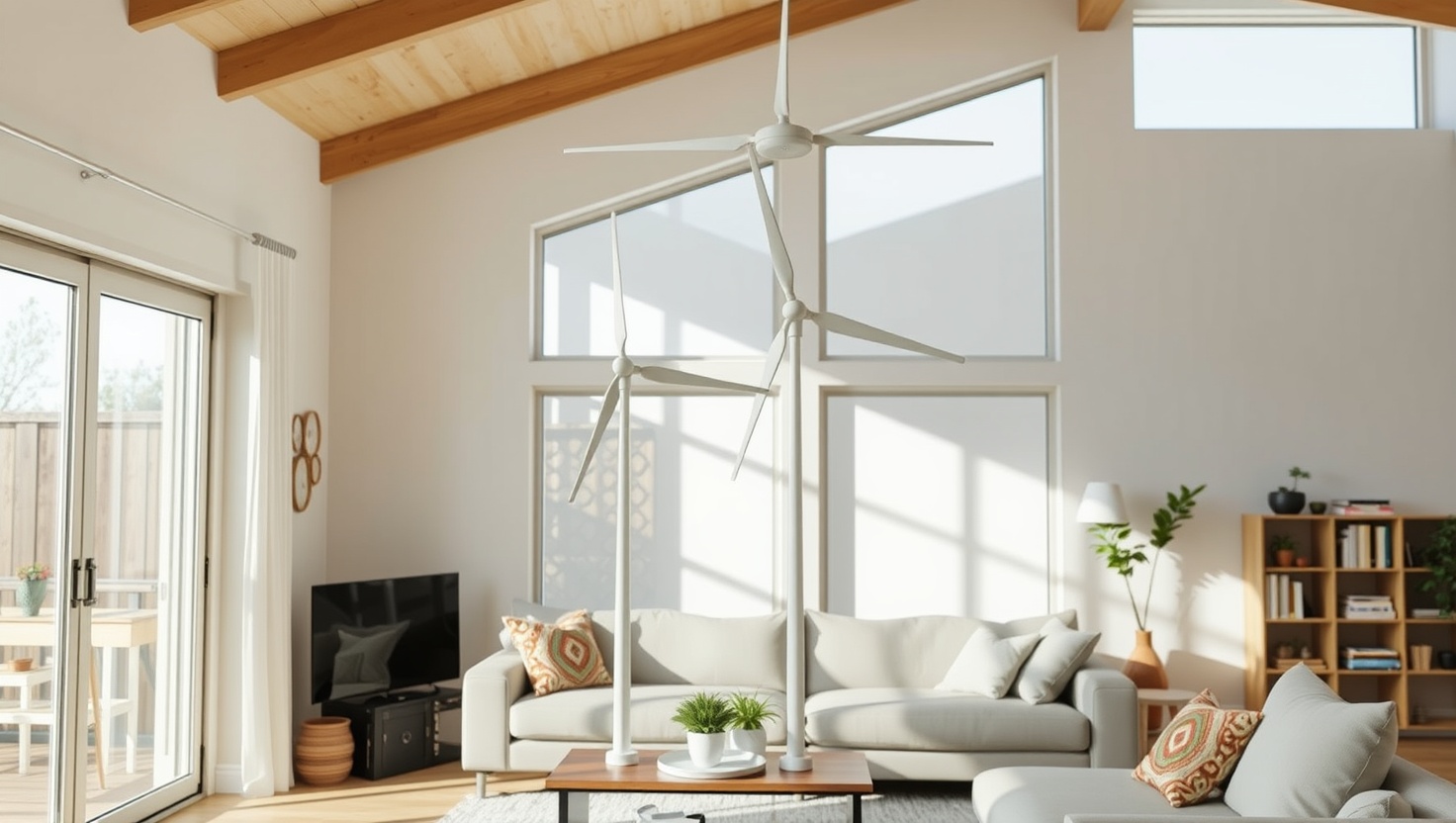
Solar panels are great — until the sun goes down. Or a storm rolls in. Or winter cuts your daylight to eight hours. That is exactly when the wind picks up. A small wind turbine fills the gap that solar cannot: generating power at night, during storms, and through overcast winter days when your panels are barely producing. For anyone building a home energy system — whether off-grid, backup, or just trying to cut the electric bill — wind is the missing half of the equation.
Automaxx Windmill 1500W — Our Top Recommendation
The Automaxx 1500W is the best balance of power, features, and price in the residential wind turbine market. It delivers 1,500 watts of rated output — enough to meaningfully charge a battery bank or…
In a hurry? That’s our pick. Want the reasoning and the full comparison? Keep reading.
The turbines in this guide range from a $120 entry-level unit for a shed or RV to an $800 aerospace-grade system used by emergency agencies. None of them will power your entire house alone. But paired with a solar panel setup and a battery bank, they create a hybrid system that generates around the clock — and that changes the math on energy independence entirely.
Key Takeaways
- Automaxx Windmill 1500W (~$400) is the best overall — MPPT controller included, handles winds up to 110mph, multiple voltage options
- Pikasola 400W (~$150) is the best budget pick — starts in just 5mph winds, built-in controller, solid supplemental power
- Missouri Wind Freedom II (~$600) is the most durable — American-made permanent magnet generator built to last 30+ years
- Primus Air 40 (~$800) is the quietest and most refined — aerospace-grade blades, microprocessor-controlled, used by FEMA
- VEVOR 400W (~$120) is the best entry-level — six-blade design with controller, great for sheds, RVs, and learning the basics
- Wind + solar together is the real play — wind generates when solar cannot, giving you the closest thing to 24/7 renewable power
Why Add Wind to Your Energy Setup
Solar and wind are not competitors. They are partners. Solar panels peak at midday in clear weather. Wind turbines often peak at night, during storms, and in seasonal transitions when weather is volatile. A property that gets decent wind and decent sun can run a hybrid system that produces power around the clock — without needing the grid as a backup at all.
Here is the practical reality: a 400W solar panel produces zero watts after sunset. A 400W wind turbine in a 15mph breeze produces 200-300W continuously through the night. Over a week, that nighttime generation adds up to the equivalent of an extra panel and a half — for the price of a single panel. If you already have a home battery system, adding wind means that battery stays charged through weather events and winter nights that would otherwise drain it.
The economics are straightforward. A small turbine costs $120-$800 and produces power for 15-30 years with minimal maintenance. There are no moving parts to break (the generator and blades are the only components), no fuel costs, and most models include a charge controller in the box. For off-grid setups, cabins, workshops, and emergency backup systems, wind closes the generation gap that solar leaves open.
Quick Comparison: All 5 Wind Turbines
| Product | Price | Rated Power | Cut-In Speed | Best For |
|---|---|---|---|---|
| Automaxx 1500W | ~$400 | 1,500W | 6 mph | Best overall |
| Pikasola 400W | ~$150 | 400W | 5 mph | Best budget |
| Missouri Freedom II | ~$600 | 2,000W max | 6 mph | Most durable |
| Primus Air 40 | ~$800 | 400W (160W avg) | 7 mph | Quietest / premium |
| VEVOR 400W | ~$120 | 400W | 5.6 mph | Best entry-level |
The 5 Best Small Wind Turbines for Home (2026)
1. Automaxx Windmill 1500W — Best Overall
Automaxx Windmill 1500W
The Automaxx 1500W is the best balance of power, features, and price in the residential wind turbine market. It delivers 1,500 watts of rated output — enough to meaningfully charge a battery bank or supplement a solar system — and comes with an MPPT charge controller in the box, which is a significant cost saving since standalone MPPT controllers run $100-200 on their own.
The turbine is rated for wind speeds up to 110 mph, which means it handles serious storms without needing to be shut down or taken apart. The three-blade design cuts in at 6 mph and reaches rated output around 28 mph. It supports 12V, 24V, and 48V battery configurations, so it works whether you are running a small cabin battery bank or a full home storage system.
Installation is straightforward for a pole mount — the turbine weighs about 25 lbs, and Automaxx includes a wiring diagram for connecting to your battery bank alongside solar. For most people building a hybrid energy system for the first time, this is the turbine to get. It produces real power, includes the controller you need, and does not require a second mortgage to buy.
- Rated output: 1,500W
- Cut-in speed: 6 mph
- Max wind survival: 110 mph
- Voltage options: 12V / 24V / 48V
- Controller: MPPT included
- MPPT charge controller included — saves $100+
- 1,500W rated output — real usable power
- Handles up to 110 mph winds
- Multiple voltage options for different battery setups
- Excellent price-to-power ratio
- Pole mount not included — budget $50-150 extra
- Heavier than smaller units at ~25 lbs
- Audible at high wind speeds
2. Pikasola 400W — Best Budget
Pikasola 400W Wind Turbine
The Pikasola 400W is the turbine to get if you want to add wind generation without a major investment. At $150, it is less than most individual solar panels — and it produces power when those panels cannot. The three-blade design starts spinning in just 5 mph winds, one of the lowest cut-in speeds in this category, which means it generates in light breezes that other turbines ignore.
It includes a built-in charge controller and comes ready to connect to a 12V or 24V battery bank. The compact size makes it practical for RVs, boats, small cabins, and garden sheds where a larger turbine would be overkill. Output is modest — you will see 50-200W in typical conditions — but that steady overnight trickle is exactly what keeps a battery topped off when solar is offline.
Build quality is solid for the price. The blades are nylon-fiber reinforced and the housing is weather-sealed. It is not a 30-year investment like the Missouri Wind, but for learning the basics of wind power, supplementing a small solar setup, or adding backup charging to a portable power station, the Pikasola does exactly what it needs to at a price that makes experimenting painless.
- Rated output: 400W
- Cut-in speed: 5 mph
- Voltage: 12V / 24V
- Blade material: Nylon-fiber reinforced
- Controller: Built-in
- Lowest cut-in speed at 5 mph
- Budget-friendly at ~$150
- Compact and lightweight — easy install
- Built-in charge controller
- Great for RVs, boats, sheds
- 400W rated — supplemental power, not primary
- Plastic components may not last 10+ years
- No 48V option
3. Missouri Wind Freedom II PMG — Most Durable
Missouri Wind Freedom II PMG
The Freedom II is built by Missouri Wind and Solar, one of the few American manufacturers making small wind turbines for the residential market. The permanent magnet generator (PMG) at its core is the key differentiator — it uses high-grade rare earth magnets that produce electricity more efficiently than the induction generators in cheaper turbines, especially at low wind speeds where every watt counts.
This is a turbine you mount once and expect to run for decades. The generator housing is heavy-duty cast aluminum. The bearings are industrial-grade sealed units. Missouri Wind publishes real-world output data from their own test installations, and the Freedom II consistently delivers its rated power — which is refreshing in a market where many manufacturers inflate their specs. Peak output reaches 2,000W in strong winds, with steady generation starting around 6 mph.
The Freedom II is designed for people who are serious about off-grid power — homesteaders, cabin owners, and anyone building a long-term energy system where replacing equipment every few years is not acceptable. It is more expensive than the Automaxx, but the build quality justifies the premium if longevity is your priority.
- Rated output: 2,000W max
- Generator type: Permanent magnet (PMG)
- Cut-in speed: 6 mph
- Construction: Cast aluminum housing, industrial bearings
- Made in: USA (Missouri)
- American-made with real-world tested output
- Permanent magnet generator — more efficient at low speeds
- Built to last 30+ years
- Highest peak output at 2,000W
- Industrial-grade bearings and construction
- $600 price point — significant investment
- Charge controller sold separately
- Heavier — requires sturdy mounting
4. Primus Wind Power Air 40 — Quietest and Most Refined
Primus Wind Power Air 40
The Primus Air 40 is what happens when aerospace engineering meets residential wind power. The three fiberglass blades are designed with the same aerodynamic principles used in aircraft propellers — optimized for quiet operation and maximum energy extraction across a wide range of wind speeds. The integrated microprocessor continuously monitors wind conditions and adjusts the turbine's behavior automatically, including a built-in braking system that protects the unit in extreme winds.
Noise is where the Air 40 separates itself from everything else on this list. At typical operating speeds, it is virtually silent — measured at under 40 dB, which is quieter than a refrigerator. If you live in a residential area where neighbors are a consideration, or if noise sensitivity is a factor, this is the only turbine on this list that truly disappears into the background. The microprocessor control also means it runs at optimal efficiency without any manual adjustment.
At $800, it is the most expensive option here and only produces 400W rated (160W average in typical conditions). You are paying for engineering refinement, not raw wattage. For permanent installations where reliability, noise levels, and longevity matter more than peak output, the Air 40 is the professional's choice.
- Rated output: 400W (160W average)
- Cut-in speed: 7 mph
- Noise level: Under 40 dB — virtually silent
- Blade material: Aerospace-grade fiberglass
- Controller: Built-in microprocessor
- Near-silent operation — under 40 dB
- Aerospace-grade fiberglass blades
- Microprocessor-controlled for optimal efficiency
- Built-in automatic braking system
- Proven track record with emergency agencies
- Most expensive at ~$800
- Lower power output than cheaper alternatives
- Higher cut-in speed at 7 mph
5. VEVOR 400W Wind Turbine Generator — Best Entry-Level
VEVOR 400W Wind Turbine Generator
The VEVOR 400W is the cheapest way to add wind generation to any setup. At $120, it costs less than a nice dinner out — and it includes a charge controller, six blades, and everything you need except the mounting pole. The six-blade design (versus the typical three) catches more wind at low speeds, which makes it practical for areas with light, inconsistent breezes.
This is the turbine for sheds, workshops, RVs, boats, and anyone who wants to try wind power without risking serious money. The build quality is what you would expect at this price — functional but not overbuilt. The plastic blades and housing will last several years in moderate conditions but are not designed for extreme weather environments. Think of it as a learning tool and a supplemental charger rather than a cornerstone of your energy system.
For the price, it is genuinely useful. Mount it on a shed roof to keep a 12V battery charged for lights and tools. Put it on a boat to supplement shore power. Use it as the wind half of a beginner hybrid system alongside a small solar panel. If it works well in your location, you will know exactly what to upgrade to. If your location turns out to be low-wind, you are only out $120.
- Rated output: 400W
- Cut-in speed: 5.6 mph
- Blades: 6 (catches more light wind)
- Voltage: 12V / 24V
- Controller: Included
- Cheapest turbine at ~$120
- Six-blade design for better low-wind capture
- Charge controller included
- Great for learning and experimentation
- Works for sheds, RVs, boats
- Plastic construction — not built for extreme conditions
- Will not match output claims in light wind
- Shorter lifespan than premium models
How to Choose the Right Turbine
If you are building a hybrid solar + wind system
The Automaxx 1500W is the clear choice. The included MPPT controller, multiple voltage options, and 1,500W output make it the strongest complement to a solar array. It charges the same battery bank your panels feed during the day, and it does it at the power levels that actually matter for a home-scale system.
If you want to try wind power on a budget
Start with the VEVOR 400W or Pikasola 400W. Both cost less than $150, include charge controllers, and give you real-world data on how much wind your property actually gets. That information is worth far more than any wind map can tell you.
If you are building a permanent off-grid system
The Missouri Wind Freedom II is built for exactly this. The permanent magnet generator is more efficient, the construction is industrial-grade, and it is designed to run for 30+ years. Pair it with an off-grid solar kit and a solar cooker for a system that keeps producing through any weather.
If noise is a priority
The Primus Air 40 is the only choice. Under 40 dB means your neighbors will not even know it is there. The premium price buys engineering refinement that cheaper turbines simply cannot match.
Ready to add wind to your setup?
The Automaxx 1500W gives most people the best balance of power, features, and price. Pair it with solar for around-the-clock generation.
Get the Automaxx 1500W →Read: Off-Grid Solar Kit for Beginners →
Frequently Asked Questions
A 400W turbine produces 30-50 kWh per month in 10-12 mph average winds. A 1500W turbine in the same conditions produces 100-200 kWh. The average US home uses about 900 kWh monthly, so a small turbine supplements your solar and battery system rather than replacing the grid entirely. The real value is in generating power when solar cannot — at night, during storms, and through overcast winter days.
It depends on your location. Many areas allow small turbines under 35-65 feet without special permits, but HOA rules, noise ordinances, and setback requirements vary widely. Check with your local planning department and HOA before buying. Roof-mounted turbines under 1kW often face fewer restrictions than pole-mounted systems.
Yes — and it is the smartest setup for consistent power. Solar produces during daylight, wind often peaks at night and during storms. A hybrid system with a battery bank gives you the closest thing to 24/7 renewable generation. Most charge controllers in this guide support both wind and solar inputs on the same battery bank.
Most small turbines start generating at 5-7 mph and reach rated output at 25-30 mph. If your area averages 8-12 mph winds, a small turbine will be productive. Below 7 mph average, output will disappoint. Check the US Department of Energy wind resource map for your area. Higher mounting always means more consistent wind.
Modern small turbines produce 35-55 dB at rated speed — roughly the volume of a quiet conversation. Premium models like the Primus Air 40 run under 40 dB, which is quieter than a refrigerator. Noise increases in very high winds, but ambient wind noise masks it. Avoid cheap turbines with unbalanced blades if noise is a concern.