Best Solar Power Banks for Emergency and Outdoor Use in 2026
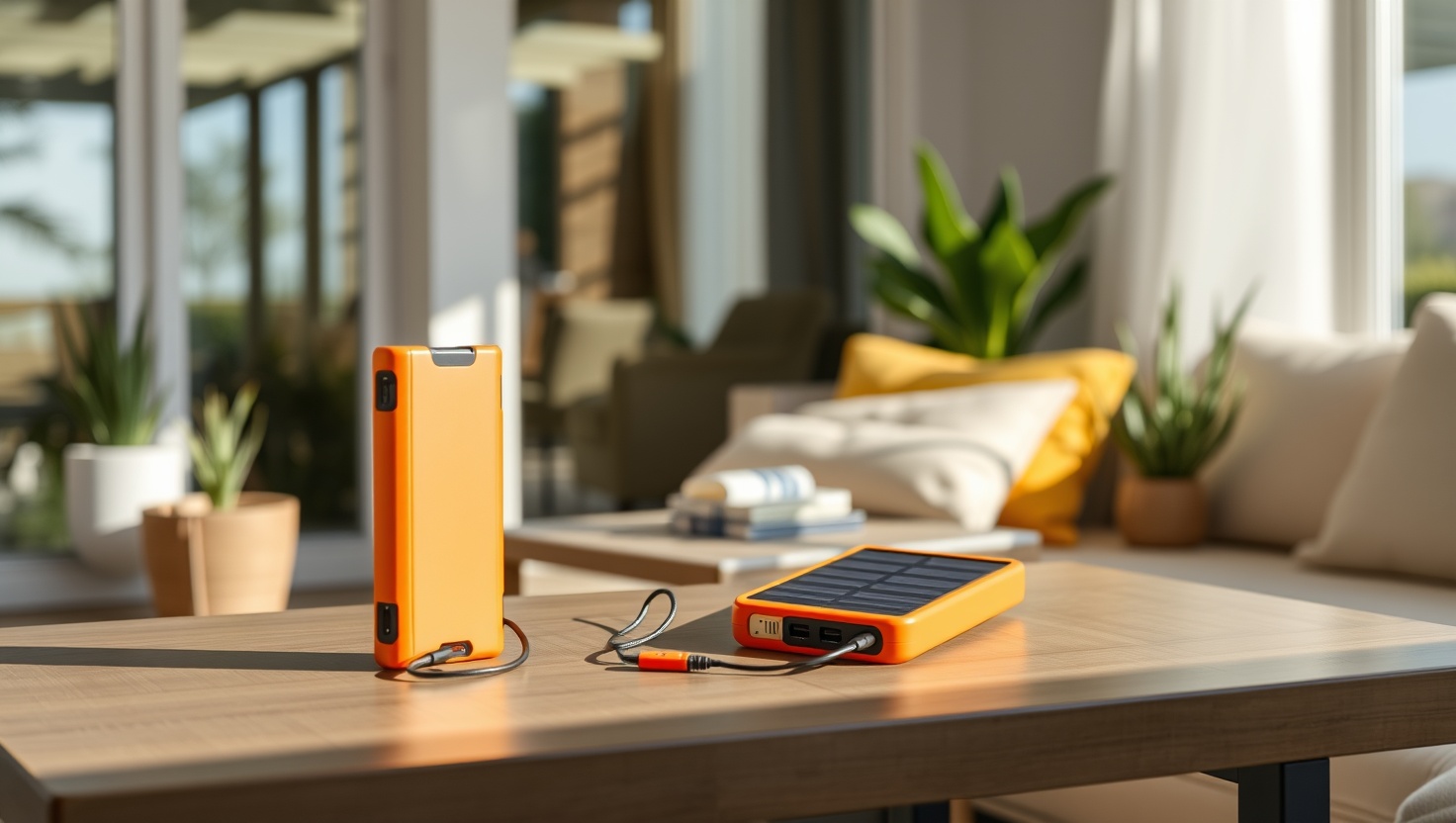
Your phone dies. The power's been out for six hours. Or you're three days into a backcountry trip and your GPS is at 4%. Either way, you need power — and the wall outlet isn't coming. Solar power banks solve this quietly and indefinitely. No fuel, no noise, no expiration date. Just sunlight converted into usable charge. They're slower than wall charging, sure. But when there's no wall, slow beats dead. Whether you're building an emergency kit or packing for a week off-grid, here are the best solar power banks in 2026.
BioLite SolarPanel 10+ — Best for Hikers
The BioLite SolarPanel 10+ gets one thing right that most solar panels miss: it tells you exactly where to point it. The built-in sundial alignment indicator is a small bubble level that shows you…
In a hurry? That’s our pick. Want the reasoning and the full comparison? Keep reading.
Key Takeaways
- Solar power banks combine a rechargeable battery with built-in solar panels — charge from sun or wall, use anywhere
- Best overall value: Anker 625 Solar Bundle (~$150) — 24000mAh, 100W panels, charges phones 5-6 times
- Best for hikers: BioLite SolarPanel 10+ (~$80) — ultralight 15.8oz, sundial alignment, kickstand included
- Best waterproof: Jackery SolarSaga 40 Mini (~$100) — IP68 rated, 40W, magnetic kickstand
- Best budget direct charger: BigBlue 28W (~$65) — 3 USB ports, no internal battery, lightest high-watt option
- Always start with a full wall charge — solar tops you up; it doesn't replace a charged battery from the start
Why Solar Power Banks Belong in Every Kit
The grid isn't as reliable as it used to be. Extreme weather, aging infrastructure, and increasingly unpredictable outage patterns mean more households are quietly building backup power plans. Solar power banks aren't a survival fantasy — they're a practical answer to a real problem that more people face every year.
For emergency preparedness, the case is simple: your phone is your lifeline. It's how you call for help, receive alerts, navigate, and stay connected to family. A solar power bank gives that lifeline an indefinite power source without requiring fuel, a generator, or a working electrical outlet. One decent solar panel and a few hours of sunshine keep your phone charged for days.
For outdoor use, they've replaced the old anxiety of rationing battery life on long trips. A 28W foldable panel clipped to a backpack charges devices while you hike. A 40W waterproof panel handles rain and splashes without a second thought. You stop thinking about power and start thinking about the trip.
The other advantage over generators is the obvious one: they weigh ounces, not pounds. A generator powerful enough to charge your phone weighs 30+ lbs and requires stored fuel. A solar power bank weighs under a pound and runs on light. For anyone building an emergency kit with portability in mind — an evacuation bag, a hiking pack, a vehicle kit — solar power banks win on every dimension that matters.
How to Choose the Right Solar Power Bank
Panel wattage vs. battery capacity — two different numbers
These are two separate specs that serve different purposes. Panel wattage (measured in watts, W) tells you how fast the solar panel can generate power in full sun. Battery capacity (measured in milliamp-hours, mAh) tells you how much charge the internal battery can store. A high-watt panel charges faster but doesn't store more. A large mAh battery stores more but may charge slowly if the panel is small. Look at both numbers relative to your needs.
mAh explained — how many phone charges do you get?
A modern smartphone has a battery of roughly 3000-5000mAh. A power bank transfers energy at about 85-90% efficiency, so a 10000mAh bank gives you roughly two full charges for a 5000mAh phone. A 24000mAh bank gives you five to six. For emergency use, bigger is better — but for hiking, every extra mAh adds weight. Find the balance that matches your trip length and device needs.
Charge time reality check
Marketing specs for solar charge times assume ideal conditions: full midday sun, no clouds, optimal panel angle. Real-world solar charging is typically 30-50% slower than stated. A 10W panel will take a full sunny day to charge a large power bank from empty. The practical mindset: keep the internal battery topped up from a wall outlet before every trip, and use the solar panel to extend your range rather than recover from zero. It works beautifully as a range-extender. As a sole charging source from empty, it requires patience.
IP rating — water resistance matters outdoors
IPX4 means splash-resistant from any direction — fine for rain, light splashing, and humid conditions. IPX6 means jet-spray resistant. IP68 means submersible up to 1 meter for 30 minutes. For most hiking and emergency use, IPX4 is the minimum worth buying. If you're near water, kayaking, or operating in serious wet conditions, go IP68. A panel that dies in the rain is worse than useless — it's a false sense of security.
Number of ports and passthrough charging
Passthrough charging means you can charge a device from the power bank while the bank itself charges from solar. Not all units support this. For emergency use, it's a valuable feature — you keep your devices charged while simultaneously capturing solar energy. Count your ports too. If you need to charge a phone and a headlamp simultaneously, a single USB port won't cut it.
Built-in vs foldable panels
Built-in panels (like the BioLite SolarPanel 10+) are integrated into the device body — simpler, more compact, and easier to use. Foldable panels (like the BigBlue 28W or Jackery SolarSaga 40) unfold to expose more surface area and capture more sunlight, then pack flat for transport. For serious solar charging, foldable wins on wattage. For simplicity and minimum pack size, built-in is cleaner.
Quick Comparison
| Model | Price | Panel | Battery | Water Resistance | Best For |
|---|---|---|---|---|---|
| BioLite SolarPanel 10+ | ~$80 | 10W | 3000mAh | IPX4 | Ultralight hikers |
| Goal Zero Nomad 20 + Flip 24 | ~$120 | 20W | 6700mAh | Rugged | Expandable setups |
| Anker 625 + 537 Bundle | ~$150 | 100W | 24000mAh | IPX3 | Best overall value |
| BigBlue 28W | ~$65 | 28W | None (direct) | IPX4 | Budget direct charger |
| Jackery SolarSaga 40 Mini | ~$100 | 40W | None (panel only) | IP68 | Best waterproof |
The 5 Best Solar Power Banks in 2026
The BioLite SolarPanel 10+ gets one thing right that most solar panels miss: it tells you exactly where to point it. The built-in sundial alignment indicator is a small bubble level that shows you when you've hit the optimal angle for maximum sun capture. No guessing, no rotating the panel and hoping — the indicator turns green when you're dialed in. On a multi-day hike, that tiny feature translates to meaningfully faster charging.
The integrated 3000mAh battery gives you one full charge for most smartphones, stored and ready for when you actually need it — even if the sun isn't shining. The kickstand props the panel at the ideal angle without you having to find a rock or lean it against your pack. At 15.8 oz it's genuinely lightweight; you'll barely notice it in a side pocket.
The 10W panel is modest — this isn't the device for charging a laptop or a large power station. But for phone, GPS, headlamp, and a small GPS tracker, it's exactly the right size. BioLite built this for people who measure every gram and still need energy on long routes. It delivers without compromise.
Pros
- Sundial angle indicator — unique and useful
- 15.8 oz — ultralight for solar
- Kickstand for hands-free positioning
- Integrated 3000mAh battery
- Compact and packable
Cons
- 3000mAh — only about one full phone charge
- 10W panel charges slowly in low light
- USB-A only, no USB-C output
Goal Zero has been building solar gear longer than almost anyone in the consumer space, and the Nomad 20 panel shows that experience. The 20W foldable design packs flat and opens to a full panel surface that clips to a tent, a backpack, or props against a rock. The integrated smart charge controller automatically optimizes output for whatever device you plug in — no manual settings, no fried batteries.
The Flip 24 power bank (6700mAh) pairs perfectly with the Nomad panel. One to two full phone charges in storage, with USB-A and USB-C ports for simultaneous charging of two devices. The real advantage of the Goal Zero ecosystem is what the word "chainable" actually means: you can add more Goal Zero panels, larger Goal Zero batteries, or eventually a Yeti power station to the same chain. Your $120 investment today becomes the starting point of a larger solar system later.
The rugged build quality — reinforced fabric, weather-resistant coating, and rubberized housing on the Flip bank — means this kit can handle the abuse that camping actually involves. Goal Zero warranties are solid, and their customer service reputation backs it up.
Pros
- Chainable with larger Goal Zero batteries
- Smart charge controller included
- Rugged, weather-resistant build
- 20W panel — faster charging than 10W
- Goal Zero ecosystem compatibility
Cons
- 6700mAh battery — modest capacity
- Expanding the ecosystem adds cost quickly
- Heavier than ultralight alternatives
This is the kit you buy when you're serious about emergency preparedness or extended outdoor power. The 100W four-panel foldable solar array is genuinely powerful — on a clear day it will fully recharge the 24000mAh power bank in 4-5 hours. That bank stores enough energy to charge a modern smartphone five to six times. Charge it from the wall before a trip and top it up from the sun as you go, and you effectively have unlimited phone power for any reasonable emergency scenario.
The Anker 537 power bank is compact and well-built for its 24000mAh capacity — smaller than you'd expect, with two USB-C ports (one with Power Delivery at 60W) and two USB-A ports. You can charge four devices simultaneously. The USB-C PD port handles fast-charging for modern phones and tablets. This is the power bank you pull out at a campsite and becomes the charging hub for your entire group.
At $150 for 100W of solar and 24000mAh of storage, the value here is hard to argue with. Competing bundles at this spec level run $200-250. Anker's reputation for reliability is well-earned — they make some of the best consumer charging hardware on the market, and this bundle reflects that.
Pros
- 24000mAh — 5-6 full phone charges
- 100W solar charges bank in 4-5 hours
- USB-C PD for fast device charging
- 4 output ports simultaneously
- Best value at price point
Cons
- Heavier than ultralight options
- 100W panel takes up pack space
- Not IP68 waterproof
The BigBlue 28W does one thing: turns sunlight into USB power, as fast and efficiently as possible at its price point. Three panels fold into a compact pouch and unfold to a surface area that squeezes 28W of output from a sunny day — substantially more than the 10W integrated-panel options. Three USB ports let you charge three devices simultaneously, and the Smart IC chip automatically detects each device and delivers the fastest safe charging current for it.
The trade-off is simple: no internal battery means it only works when the sun is shining. The moment you walk into shade, charging stops. You need to pair it with an external power bank (or your phone directly) to get any stored energy benefit. For most people, that's not a problem — you probably already own a power bank. The BigBlue becomes the solar input source that feeds it.
IPX4 water resistance means it handles rain without panic. At $65 it's one of the most affordable high-wattage solar options available. If your goal is to add solar capability to your existing power bank on the cheap, this is the cleanest path to doing it.
Pros
- 28W — best wattage-to-weight ratio here
- $65 — lowest price in this guide
- 3 USB ports simultaneously
- Smart IC auto-detects device speed
- IPX4 rain-resistant
Cons
- No internal battery — no sun, no charge
- USB-A only, no USB-C
- Charging stops the moment you hit shade
The Jackery SolarSaga 40 Mini is the only panel in this guide with full IP68 waterproofing — meaning you can submerge it in a meter of water for 30 minutes and it keeps working. That's not a spec you'll test on purpose, but in a kayak capsize, a river crossing, or three days of Pacific Northwest drizzle, the difference between IP68 and "splash-resistant" is everything.
The ETFE (ethylene tetrafluoroethylene) coating on the solar cells increases efficiency and durability versus standard laminated panels. In real terms it means better performance in diffuse light conditions — overcast days, partial shade, early morning — and a longer service life before the cells degrade. The 40W output with both USB-C and USB-A means you charge modern devices fast and legacy devices without an adapter.
The magnetic kickstand is a clever feature: it snaps into place, holds the panel at an optimal angle, and collapses flat for transport without a hinge to break. Jackery designed this panel to work natively with their Explorer power station line, making it an obvious addition if you own a Jackery station — but it works with any USB device or power bank.
Pros
- IP68 — genuinely submersion-proof
- ETFE coating for better low-light efficiency
- USB-C + USB-A dual output
- Magnetic kickstand — no hinge to fail
- Compatible with Jackery Explorer stations
Cons
- No internal battery — panel only
- 40W panel is mid-range, not highest wattage
- Best value if you own a Jackery station
Getting the Most Out of a Solar Power Bank
Angle matters more than you think
A panel at 90 degrees to the sun captures roughly twice the energy of the same panel lying flat. The difference between optimal angle and lazy flat placement is 40-60% of your charging speed. If you're hiking, clip your panel to the back of your pack facing skyward and toward the sun. At camp, spend 30 seconds propping it correctly. The BioLite's sundial indicator and the Jackery's magnetic kickstand both exist to make this easy — use them.
Start full, extend with solar
The best solar strategy is not emergency recovery from zero — it's daily extension. Before any trip, charge your power bank fully from the wall. Then use the solar panel to add charge every day so you never drop below 50%. You'll never face the slow, anxious math of waiting for enough sun to rescue a dead battery. You're always ahead of the curve.
Know what you need to keep running
Write a short list before any trip or emergency prep: phone, GPS, headlamp, radio. Estimate the mAh each device needs per day. Compare that against your power bank capacity. A 3000mAh bank covers a phone for one day with nothing left. A 24000mAh bank covers five to six days of phone use alone. Match your battery size to your realistic power draw — don't under-buy and don't carry more than you need.
Clean the panels
Dust, grime, and tree sap on the solar cells reduce output measurably. Wipe your panels with a damp cloth after every few uses. This takes 30 seconds and can recover 5-15% of panel efficiency that you'd otherwise leave on the table. It matters most on multi-day trips where cumulative charging is the difference between full and empty.
Power Your Kit Before You Need It
The Anker 625 bundle is the best all-around solar power solution at $150 — 100W of panels, 24000mAh of storage, and enough output to charge your whole group. Don't wait for the next outage to wish you'd bought one.
See the Anker 625 Bundle →