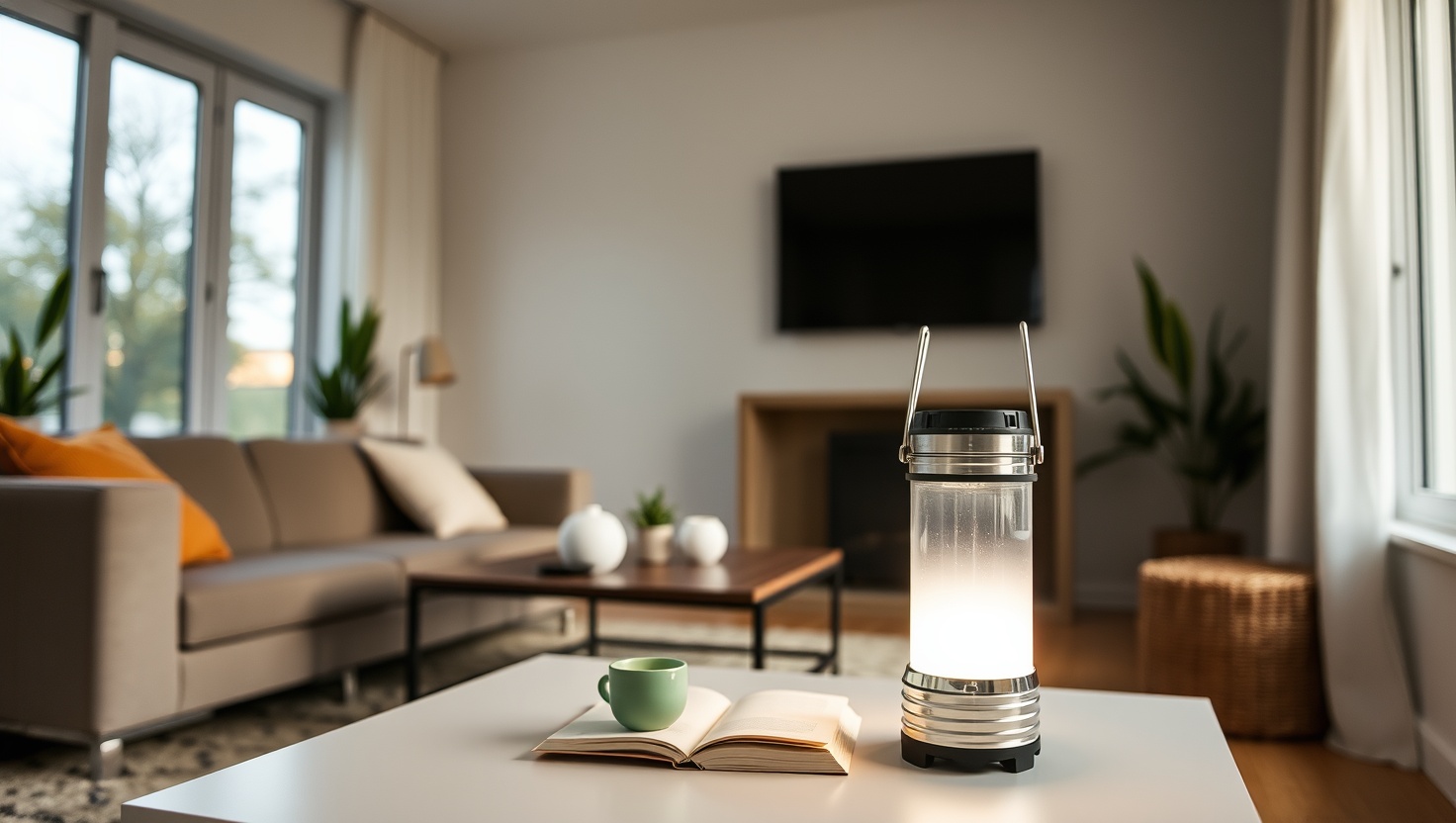
Goal Zero Lighthouse 600 — Our Top Recommendation
Goal Zero has been building gear for off-grid adventurers and emergency prep for over a decade, and the Lighthouse 600 is their best lantern yet. It pumps out 600 lumens at max and can be recharged…
In a hurry? That’s our pick. Want the reasoning and the full comparison? Keep reading.
Why Rechargeable Beats Disposable Batteries Every Time
Here's a scene most people know: the power goes out, you dig through three drawers to find flashlights, shake each one to check if it works, and discover you've got two dead D batteries and one that's corroded beyond use. Meanwhile, the kids are getting nervous and the candles are nowhere to be found.
Disposable battery lanterns have one fundamental problem: they're never ready when you need them. Batteries drain in storage. You forget to replace them. Then the grid goes down and you're improvising.
A quality rechargeable LED lantern changes that equation entirely. You keep it plugged in (or top it off every few months), and when the outage hits, you've got a full charge ready to go. No scrambling. No dead batteries. No problem.
Beyond reliability, rechargeable lanterns are significantly more cost-effective over time. A single charge cycle replaces what would otherwise be 4–8 disposable batteries. Over several years of use, the savings add up — and you're not throwing chemicals in the trash every time the grid hiccups.
Lumens Explained: How Much Light Do You Actually Need?
Marketing loves big lumen numbers. "1200 lumens!" sounds impressive. But for a power outage in your home, raw lumen output is often the least important spec — runtime and usability matter far more.
Lumen ranges and what they're good for
- 50–150 lumens: Bedside or camping mode. Comfortable for reading, basic tasks in a small room
- 200–400 lumens: The sweet spot for most home outage use. Lights up a kitchen or living room clearly without blinding everyone
- 500–800 lumens: Ideal for garages, basements, or open spaces where you need to see clearly at a distance
- 1000+ lumens: Impressive on paper. Brutally short battery life on high. Useful if you need to flood a large outdoor area briefly
The practical takeaway: buy a lantern with enough maximum output for your worst-case scenario, but expect to run it at 20–40% brightness most of the time. That's where the runtime numbers that actually matter live.
Runtime vs Brightness: The Tradeoff Nobody Talks About
Every lantern spec sheet lists runtime at max brightness. That number is almost useless for planning an outage setup.
What you want to know is: how long does this run at a comfortable brightness level? A lantern rated 600 lumens for 8 hours might run 200+ hours at 20 lumens. That's the stat that matters when you're three days into a winter storm.
When shopping, look for brands that publish runtime at multiple brightness settings — not just max. Goal Zero and BioLite both do this well. Budget brands often hide this data because the low-brightness runtime is where their batteries really shine (or don't).
A good rule of thumb: for every outage kit lantern you buy, plan to run it at 30–50% brightness. Bring extra charging capacity (a power station or solar panel) if you expect a multi-day outage rather than cranking it to full blast.
USB Charging: Your Lantern as a Mini Power Bank
One of the most underrated features in modern rechargeable lanterns is the USB output port. During an extended grid-down situation, your phone battery becomes one of your most critical resources — for communication, weather updates, and emergency alerts.
A lantern with a USB-A or USB-C output can act as a backup power bank. The capacity varies widely: a budget lantern might hold 4,000–6,000 mAh (one or two phone charges), while a premium model can hold 10,000–20,000 mAh (enough to keep two phones going for several days at moderate use).
If you're serious about outage preparedness, the math is simple: get a lantern with a large internal battery and a USB output, and treat it as two products in one — emergency light and emergency phone charger.
Weatherproofing: Because Outages Don't Happen in Perfect Conditions
Power outages are most common during storms. Floods. Blizzards. High winds. These are not indoor-friendly conditions if you need to step outside, retrieve items from a garage, or handle anything near water.
Look for IP ratings:
- IPX4: Splash-resistant. Fine for rain exposure and accidental spills. Covers the vast majority of home outage scenarios.
- IPX6: Powerful water jets won't damage it. Good for outdoor use in heavy rain.
- IPX7: Submersible to 1 meter for 30 minutes. The gold standard if you live in a flood-prone area.
Don't pay a premium for IPX7 if you're in a low-flood-risk area — IPX4 handles 95% of real-world outage conditions just fine. But if your basement floods or you're in hurricane territory, the extra protection is worth every dollar.
Where to Place Lanterns in Your Home During an Outage
One lantern for a 2,000 square foot home isn't enough. Here's how to think about coverage:
- Kitchen: Non-negotiable. Cooking in the dark is a safety hazard. Place one on the counter where you prep food.
- Bathrooms: Falls and accidents spike during power outages. Every bathroom needs some light source.
- Hallways and stairwells: The most dangerous spots in the dark. A small lantern on lowest brightness is enough to prevent accidents.
- Main living area: This is where your family will gather. A 300–500 lumen lantern on medium makes this space functional.
- Master bedroom: Keep one accessible from your bed so you're not fumbling in the dark when you wake up.
- Garage or basement: If you're doing any outage-related work (generator, water shutoff, stored supplies), you need bright, hands-free light here.
A practical outage kit has at least 3–4 lanterns. One main room lantern, two smaller accent lanterns for bathrooms and hallways, and one bright utility lantern for work areas. You'll thank yourself the first time a storm rolls through at midnight.
The 5 Best Rechargeable LED Lanterns for Power Outages in 2026
Goal Zero Lighthouse 600
Goal Zero has been building gear for off-grid adventurers and emergency prep for over a decade, and the Lighthouse 600 is their best lantern yet. It pumps out 600 lumens at max and can be recharged via USB or — crucially — via an integrated hand crank if you're completely off-grid. The built-in USB output means it doubles as a phone charger, and the 7800 mAh battery gives you serious reserves.
Pros
- Hand crank backup charging — works with zero power source
- USB output to charge phones and devices
- Up to 300 hours runtime on lowest setting
Cons
- Relatively heavy at 1.1 lbs — not the most portable
- Takes 16 hours to fully recharge via USB
BioLite AlpenGlow 500
The BioLite AlpenGlow 500 is what happens when a gear company takes lantern design seriously. It's a 360-degree orb that throws warm, diffused light in every direction — no harsh hotspots, no shadows. The 8,000 mAh battery powers it for up to 150 hours on low, and it charges via USB-C (both ways — charge it and charge from it). It has 7 color modes including warm amber and ember flickering, which sounds like a gimmick until you're three days into an outage and need something that feels a little less bleak.
Pros
- 360-degree diffused light — best ambient coverage of any lantern here
- USB-C bidirectional charging (phone in, phone out)
- Color modes including warm amber for low-stress lighting
Cons
- No hand crank — fully dependent on USB recharging
- Orb form factor doesn't hang as easily as traditional lanterns
Lepro Rechargeable LED Camping Lantern
The Lepro delivers far more than its $25 price tag suggests. It's collapsible, lightweight, and runs up to 90 hours on its lowest brightness setting. The built-in 4000 mAh battery charges via USB and provides a USB output for device charging — a feature you rarely see at this price. It's not the brightest or the most rugged, but as a starter lantern or a secondary bathroom/hallway unit, it's outstanding value.
Pros
- Collapsible design saves storage space
- USB output for phone charging included at this price
- Up to 90 hours runtime on low — impressive for the battery size
Cons
- 4000 mAh battery limits phone charging capacity
- Build quality not suited for rough outdoor conditions
Streamlight Super Siege Rechargeable
Streamlight makes gear for firefighters and law enforcement. The Super Siege is built to that standard. It's IPX7 rated — fully submersible — and its housing can take a beating that would destroy a typical consumer lantern. At 1120 lumens maximum with a 12,000 mAh internal battery and dual USB outputs, this is the lantern you want if you're in a hurricane zone, flood area, or simply demand gear that refuses to quit. It also has a red emergency mode, which is a nice touch for signaling in worst-case scenarios.
Pros
- IPX7 waterproof — submersible to 1 meter for 30 minutes
- 12,000 mAh battery with dual USB outputs
- Red emergency/signaling mode built in
Cons
- Most expensive option on this list at $90
- Heavy and bulky — not designed for portability
Glocusent 1200 Lumen Camping Lantern
The Glocusent 1200 punches well above its price class on raw brightness. At 1200 lumens maximum it can flood a garage or large room with light, and its 10000 mAh battery gives surprisingly long runtime. It charges via USB-C and includes a USB-A output for phone charging. The build is plastic and lightweight — this isn't a rugged lantern — but for anyone who needs serious illumination on a serious budget, it's hard to argue with the specs per dollar.
Pros
- 1200 lumens for just $20 — best brightness-to-cost ratio here
- 10000 mAh battery — more capacity than many $60+ lanterns
- USB-C charging and USB-A output included
Cons
- Plastic build won't survive serious drops or outdoor abuse
- No weatherproofing rating — keep it indoors
Quick Comparison: All 5 Lanterns Side by Side
| Lantern | Price | Max Lumens | Battery | USB Out | IP Rating |
|---|---|---|---|---|---|
| Goal Zero Lighthouse 600 | $70 | 600 | 7800 mAh | Yes | — |
| BioLite AlpenGlow 500 | $65 | 500 | 8000 mAh | Yes | — |
| Lepro Rechargeable | $25 | 400 | 4000 mAh | Yes | — |
| Streamlight Super Siege | $90 | 1120 | 12000 mAh | Dual | IPX7 |
| Glocusent 1200 | $20 | 1200 | 10000 mAh | Yes | — |
How to Choose the Right Lantern for Your Situation
There's no single best lantern for everyone. Here's a quick decision guide:
- Serious emergency prep, want true grid independence: Goal Zero Lighthouse 600 — the hand crank means you can generate power from nothing
- Want the best ambient light quality and modern design: BioLite AlpenGlow 500 — makes your home feel like home during an outage
- Budget-conscious, want multiple lanterns for coverage: Buy 2–3 Lepro units — $75 total covers your whole home
- Live in a hurricane or flood zone: Streamlight Super Siege — the only lantern here rated for submersion
- Want maximum brightness per dollar for one main lantern: Glocusent 1200 — nothing else comes close on specs-to-price ratio
Maintenance Tips: Keep Your Lanterns Ready to Go
A rechargeable lantern only helps you if it's charged when the power goes out. Here's how to stay ready:
- Top off every 3 months: Li-ion batteries self-discharge over time. A calendar reminder every quarter keeps them full without overcharging.
- Store at 50–80% charge: If you're storing a lantern long-term (over 6 months), partial charge is better for battery longevity than full or empty.
- Don't leave in a car in summer heat: Extreme heat degrades lithium batteries fast. Keep lanterns indoors in a cool, accessible location.
- Test the USB output annually: Plug in an old phone or a USB device to verify the output port works — you don't want to discover it's failed during an actual outage.
- Clean the charging port: Dust and debris can prevent proper charging. A quick clean with compressed air every six months keeps connections solid.