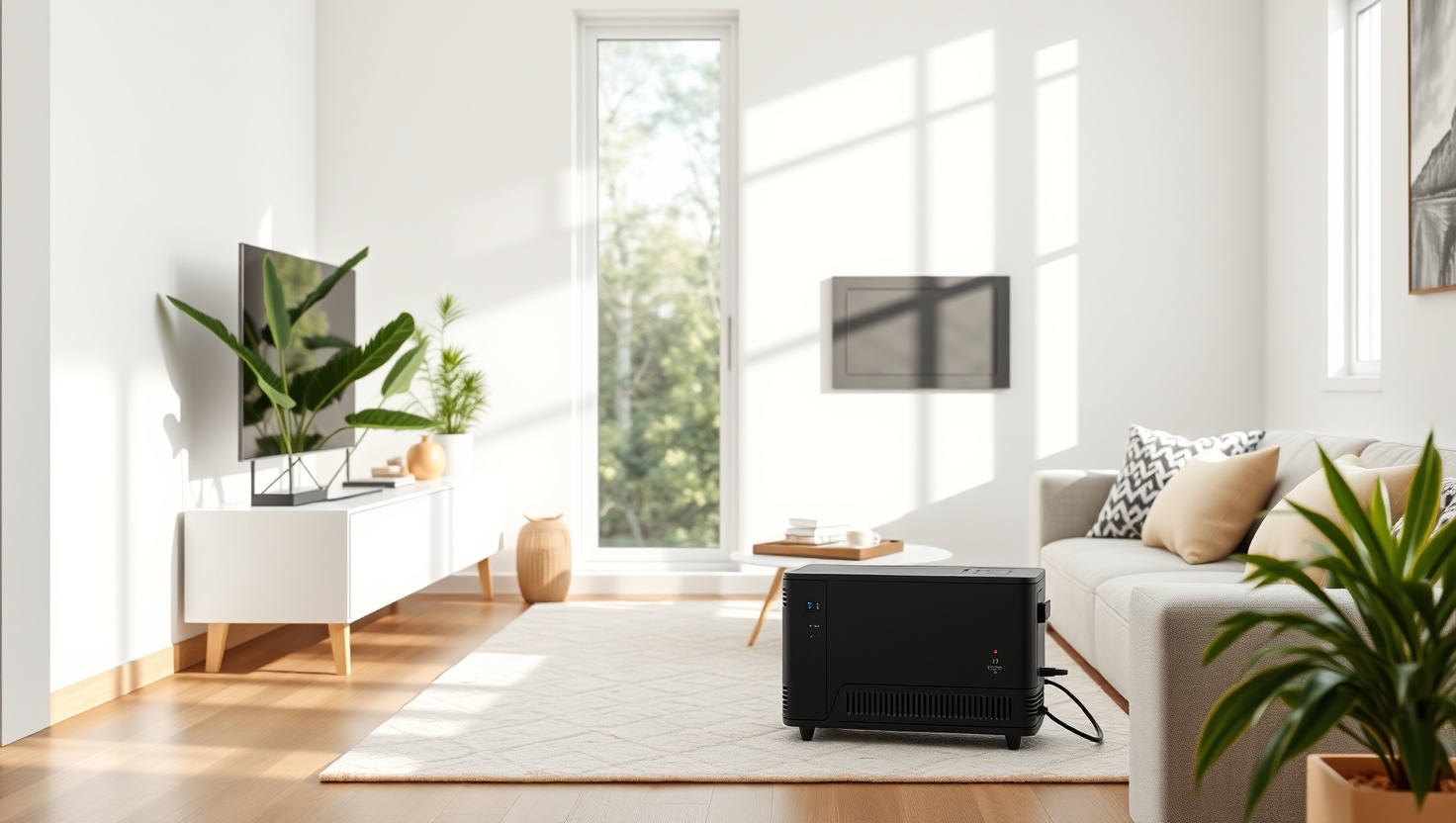
EcoFlow DELTA 3 Plus — Our Top Recommendation
The EcoFlow DELTA 3 Plus earns the top spot because it nails the balance between capacity, speed, and smart features that most households actually need. The 1024Wh LiFePO4 battery runs a standard…
In a hurry? That’s our pick. Want the reasoning and the full comparison? Keep reading.
When the power goes out, a portable power station keeps your fridge running, your phones charged, and your medical devices online — without the noise, fumes, or fire risk of a gas generator. LiFePO4 battery tech made them genuinely practical for home backup in 2026. The best portable power station for home backup now delivers 3,000+ charge cycles, switches to battery in under 10 milliseconds when the grid fails, and recharges from solar panels in a few hours.
Five years ago, these units were expensive novelties for camping enthusiasts. Today, they rival gas generators for real-world home backup — and beat them on every metric that matters for indoor use. No carbon monoxide risk. No fuel to store. No maintenance schedule. No noise complaints from neighbors at 3 AM during a storm. Just plug in your essentials and keep living normally while the grid sorts itself out.
We tested and compared five portable power stations across different budgets and use cases. Whether you need to keep a full fridge running for 24 hours or just want a compact backup for phones and a WiFi router, one of these fits your situation.
Key Takeaways
- LiFePO4 batteries last 3,000+ cycles — roughly 10 years of daily use — and are significantly safer than older lithium-ion chemistry
- UPS mode switches to battery in under 10 milliseconds, keeping computers, routers, and medical devices running without interruption
- The EcoFlow DELTA 3 Plus (~$1,000) is our top pick for most households — 1024Wh, fast charging, expandable capacity
- Portable power stations produce zero fumes and zero noise, making them safe for indoor use unlike gas generators
- Pair any of these units with solar panels for indefinite off-grid backup during extended outages
- Even a budget unit like the Jackery Explorer 300 Plus (~$250) keeps phones, a router, and a CPAP running through a full night
The 5 Best Portable Power Stations for Home Backup
This article contains affiliate links. We earn a small commission on purchases at no extra cost to you. We only recommend products we genuinely believe improve your home emergency readiness.
1. EcoFlow DELTA 3 Plus — Best Overall
The EcoFlow DELTA 3 Plus earns the top spot because it nails the balance between capacity, speed, and smart features that most households actually need. The 1024Wh LiFePO4 battery runs a standard refrigerator for about 8 hours, a CPAP machine for 15+ hours, or keeps your WiFi router and phones charged for days. And when the grid drops, the 10-millisecond UPS switchover means your devices never skip a beat.
What sets the DELTA 3 Plus apart is charging speed. Wall charging hits 80% in just 50 minutes using EcoFlow's X-Stream technology. That matters during rolling blackouts where you get short windows of grid power between outages. The unit also accepts up to 800W of solar input, making it a strong candidate for solar pairing. You can expand the capacity with add-on batteries up to 5kWh total — enough to run critical appliances for a full day or longer.
Pros
- 10ms UPS switchover — seamless for sensitive electronics
- Fastest wall charging in its class (80% in 50 min)
- Expandable up to 5kWh with extra batteries
- LiFePO4 rated for 3,000+ cycles
- Smart app control and monitoring
- Clean 1800W pure sine wave output
Cons
- At ~$1,000, it is a significant investment
- 30 lbs — portable but not ultralight
- Expansion batteries add substantial cost
- Fan noise under heavy load
We earn a commission on purchases — at no extra cost to you.
2. Jackery Explorer 2000 v2 — Best for Extended Outages
If your main concern is long outages — ice storms, hurricanes, or rural grid instability — raw battery capacity matters most. The Jackery Explorer 2000 v2 packs 2042Wh into a single unit, nearly double the EcoFlow's base capacity. That means running a refrigerator for 14-16 hours straight, or keeping your essential electronics going for two to three full days without recharging.
The 2200W output handles everything from a full-size fridge to a microwave, small heater, or multiple devices simultaneously. Jackery's build quality is solid and field-proven — the brand has been making portable power products longer than most competitors. The unit weighs 48 lbs, which makes it a two-hand carry but still manageable for moving between rooms or loading into a vehicle. At ~$800, the cost per watt-hour actually beats most competitors in this class.
Pros
- 2042Wh — largest single-unit capacity on this list
- Runs a fridge for 14-16 hours on one charge
- 2200W output handles heavy appliances
- LiFePO4 battery with 3,000+ cycle life
- Excellent price-to-capacity ratio
- Proven Jackery reliability and support
Cons
- 48 lbs — heavier than other options
- No built-in UPS switchover
- Slower wall charging than EcoFlow (~2.5 hrs)
- Not expandable with add-on batteries
We earn a commission on purchases — at no extra cost to you.
3. Bluetti AC200L — Best for Solar Charging
If you want a power station that doubles as a true off-grid energy system, the Bluetti AC200L accepts up to 1200W of solar panel input — more than any other unit on this list. With the right panel setup, you can fully recharge 2048Wh in under 2 hours of direct sunlight. That transforms a single-charge backup into an indefinite power source for as long as the sun shines.
The AC200L also supports dual charging: solar and AC wall power simultaneously. During an extended outage, you might have brief windows of grid power between rolling blackouts. Dual input lets you charge from both sources at once, hitting full capacity as fast as physically possible. The 2400W continuous output runs nearly anything in a typical household — fridge, lights, fans, laptops, medical devices — all at the same time. Bluetti's app provides real-time monitoring of input, output, and remaining capacity.
Pros
- 1200W solar input — fastest solar charging available
- Dual charging (solar + AC simultaneously)
- 2048Wh capacity runs a household for 24+ hrs
- 2400W output handles heavy loads
- LiFePO4 with 3,500+ cycle rating
- Expandable with Bluetti B300 batteries
Cons
- ~$1,200 — highest price on this list
- 62 lbs — the heaviest unit here
- Solar panels sold separately (add $300-600)
- Bulky footprint takes up floor space
We earn a commission on purchases — at no extra cost to you.
4. Anker SOLIX C1000 — Best Mid-Range
The Anker SOLIX C1000 hits a sweet spot that most households will appreciate: enough capacity to run essentials through a full night outage, solid 1800W output for a fridge and electronics simultaneously, and a price tag that does not require a family meeting. At ~$600, you get roughly the same battery chemistry and output as the EcoFlow DELTA 3 Plus for 40% less money.
Anker's engineering shines in the compact design. The C1000 is noticeably smaller and lighter than competing 1000Wh units. It tucks under a desk, fits in a closet, or slides into a car trunk without eating all your cargo space. The built-in UPS mode switches to battery in under 20 milliseconds — fast enough for routers and laptops, though not quite as fast as EcoFlow's 10ms switchover. For most home backup scenarios, 20ms is effectively instant. Wall charging takes about 58 minutes to 80%, which is competitive with top-tier charging speeds.
Pros
- Best value in the 1000Wh class
- Compact and lightweight for its capacity
- UPS mode with ~20ms switchover
- Fast wall charging (80% in 58 min)
- Trusted Anker brand and warranty
- LiFePO4 with 3,000+ cycle rating
Cons
- Not expandable with add-on batteries
- 20ms UPS switchover (vs 10ms on EcoFlow)
- Lower solar input limit (600W max)
- Fewer output ports than larger competitors
We earn a commission on purchases — at no extra cost to you.
5. Jackery Explorer 300 Plus — Best Budget
Not everyone needs to keep a full refrigerator running. If your backup priorities are phones, a WiFi router, a CPAP machine, a laptop, and some LED lights, the Jackery Explorer 300 Plus handles all of that at a price point that makes "I'll get one later" sound ridiculous. At $250 and 7.5 pounds, this is the power station you actually buy and have ready instead of the $1,000 unit you keep researching.
The 288Wh capacity runs a CPAP machine for a full night (roughly 5-6 hours), keeps a WiFi router going for 15+ hours, or charges a smartphone about 20 times. The 300W output limit means you cannot run a fridge or microwave, but it handles everything else most people reach for during an outage. The 7.5-pound weight makes it genuinely portable — toss it in a bag, bring it to another room, or take it in the car. The LiFePO4 battery gives you the same 3,000+ cycle durability as units costing four times more.
Pros
- ~$250 — lowest price with LiFePO4 quality
- 7.5 lbs — truly portable, one-hand carry
- Runs CPAP, phones, router, and lights all night
- 3,000+ cycle LiFePO4 battery
- Solar panel compatible (up to 100W input)
- No reason not to own one at this price
Cons
- 288Wh — not enough for a refrigerator
- 300W output limit excludes heavy appliances
- Slower charging than larger units
- No UPS mode
We earn a commission on purchases — at no extra cost to you.
Side-by-Side Comparison
Here is how all five portable power stations stack up on the specs that matter most for home backup use.
| Model | Capacity | Weight | Output | Charge Time | Price |
|---|---|---|---|---|---|
| EcoFlow DELTA 3 Plus | 1024Wh | 30 lbs | 1800W | 80% in 50 min | ~$1,000 |
| Jackery Explorer 2000 v2 | 2042Wh | 48 lbs | 2200W | Full in 2.5 hrs | ~$800 |
| Bluetti AC200L | 2048Wh | 62 lbs | 2400W | Full in 2 hrs | ~$1,200 |
| Anker SOLIX C1000 | 1056Wh | 26 lbs | 1800W | 80% in 58 min | ~$600 |
| Jackery Explorer 300 Plus | 288Wh | 7.5 lbs | 300W | Full in 2 hrs | ~$250 |
Portable Power Station vs Gas Generator
The real competition for portable power stations is not each other — it is the gas generator sitting in your garage. Gas generators still deliver more raw wattage for the money, which matters if you want to run a central AC unit or a full kitchen. But for everything else, portable power stations win on almost every practical measure.
| Factor | Portable Power Station | Gas Generator |
|---|---|---|
| Indoor use | 100% safe indoors | NEVER — carbon monoxide kills |
| Noise level | Near silent (30-50 dB) | Loud (65-85 dB) |
| Fumes/emissions | Zero | Carbon monoxide, exhaust |
| Fuel storage | None needed — charges from outlet or sun | Gasoline (flammable, expires) |
| Maintenance | Virtually none | Oil changes, spark plugs, carburetor |
| Startup time | Instant (press button) | Pull-start, warm-up required |
| UPS capability | Yes — 10-20ms switchover | No — manual startup |
| Nighttime use | Silent and safe | Noise disturbs neighbors |
| Lifespan | 3,000+ cycles (10+ years) | 2,000-3,000 hours runtime |
| Upfront cost | $250-$1,200 | $300-$1,000 |
| Ongoing fuel cost | $0 (electricity/solar) | $5-15 per outage day |
How to Size Your Power Station
The most common mistake people make when buying a portable power station is getting one that is too small for their actual needs — or too large for their budget. Here is how to figure out exactly what capacity you need.
1 List Your Essential Devices
Write down every device you need to run during a power outage. Be honest — you probably do not need the coffee maker, but you definitely need the WiFi router, your phone charger, and any medical devices. Here are the common draws:
- Refrigerator: ~150W average (runs in cycles, not constant)
- WiFi router: ~15W (runs 24/7)
- Phone charging: ~15W per phone
- CPAP machine: ~50W average
- Laptop: ~50-65W while in use
- LED lights: ~10W each
- Fan: ~50W on medium
2 Calculate Your Watt-Hours
Multiply each device's wattage by the number of hours you want it running. A refrigerator at 150W for 12 hours uses 1800Wh. A CPAP at 50W for 8 hours uses 400Wh. A router at 15W for 24 hours uses 360Wh. Add everything together for your total watt-hour requirement. Factor in about 15% efficiency loss for the inverter.
3 Match to a Power Station
Now compare your total to the power station capacities above. For most households wanting to keep a fridge, phones, and WiFi running through a 12-hour outage, you need roughly 1000-1500Wh. That puts the EcoFlow DELTA 3 Plus or Anker SOLIX C1000 in the right range. For longer outages or more devices, the Jackery 2000 v2 or Bluetti AC200L give more headroom. If you only need phones and small electronics, the Jackery 300 Plus handles it at a fraction of the cost.
4 Check Peak Wattage Requirements
Some appliances draw a brief power spike when they start up. Your fridge might run at 150W but surge to 1200W when the compressor kicks on. Make sure your power station's peak output rating covers the startup surge of your largest appliance. Every unit on this list publishes both continuous and peak wattage — check the peak number matches your heaviest device's startup draw.
Solar Charging: Turn Your Power Station Off-Grid
Every power station on this list accepts solar panel input, which transforms a single-charge backup into an indefinite power source. During extended outages — the kind caused by major storms, grid failures, or infrastructure problems that take days to repair — solar charging means you never run out of power as long as the sun rises.
The math is straightforward. A 200W solar panel produces roughly 150-180W of real-world output under good sunlight (clouds, angle, and temperature reduce the theoretical maximum). The Bluetti AC200L with its 1200W solar input and a set of 400W panels can recharge its full 2048Wh battery in under 3 hours of direct sun. Even a single 100W panel paired with the Jackery 300 Plus charges the 288Wh battery in about 4 hours.
We cover solar panels and portable solar generators in detail in our best portable solar generators guide. If you already own or are considering a whole-home battery system, a portable power station still makes sense as a mobile backup you can take to other rooms or bring with you during evacuations.
Setting Up Your Home Backup System
A portable power station works best when it is already set up and ready before the outage hits. Here is how to position it for maximum effectiveness.
UPS Mode Setup
If your power station has UPS mode (EcoFlow DELTA 3 Plus, Anker SOLIX C1000), plug it into a wall outlet and connect your most critical devices — WiFi router, modem, medical equipment — to the power station's outlets. The station passes grid power through normally and switches to battery instantly when the grid drops. Set this up once and forget about it. Your critical devices never lose power during an outage.
Charging Strategy
Keep your power station charged above 80% at all times. LiFePO4 batteries handle staying at high charge levels much better than older lithium-ion chemistry — there is no significant battery degradation from staying plugged in. When severe weather warnings hit, charge to 100% and unplug anything non-essential to preserve full capacity for the outage.
Pair With Your Emergency Kit
Your power station is one part of a complete outage plan. Make sure you also have a blackout kit with flashlights, batteries, and a hand-crank radio as a backup to your backup. If you are in an area prone to extended outages, combine your power station with solar panels and a portable solar generator setup for indefinite off-grid capability.
Ready to keep your home powered when the grid goes down?
A portable power station means your fridge keeps running, your phones stay charged, and your medical devices stay online — silently and safely, right inside your home.
Check EcoFlow DELTA 3 Plus Check Jackery Explorer 2000 v2Frequently Asked Questions
Get practical emergency readiness guides in your inbox
One email per week. No spam, no fear-mongering — just honest advice on protecting what matters most.