The power goes out at 11pm. You need to check the breaker box in the basement. Your phone flashlight works — for about three minutes until you remember you're at 12% battery. Sound familiar?
A good rechargeable EDC flashlight costs less than two dinners out and changes that entire scenario. The best rechargeable EDC flashlight in 2026 is small enough to forget in your pocket — and bright enough that you'll remember exactly why you carry it the moment you need it. We tested five of the best options across real-life situations: power outages, walking the dog at midnight, checking under the car hood, and camping without running out of propane lantern fuel.
Here's what actually holds up.
Key Takeaways
- USB-C charging means you can top off from any power bank, car charger, or wall outlet
- 500-1000 lumens is the sweet spot for everyday use — turbo modes are for emergencies, not daily carry
- IP68 waterproofing is standard on quality EDC lights — rain and splashes are no problem
- The Olight Baton 3 Pro wins on overall performance; the Wurkkos FC11 wins on value
- A magnetic tail cap turns any flashlight into a hands-free work light
- Your phone's flashlight drains your battery when you need it most — a dedicated light fixes that
Why a Good Flashlight Beats Your Phone's Light (Every Time)
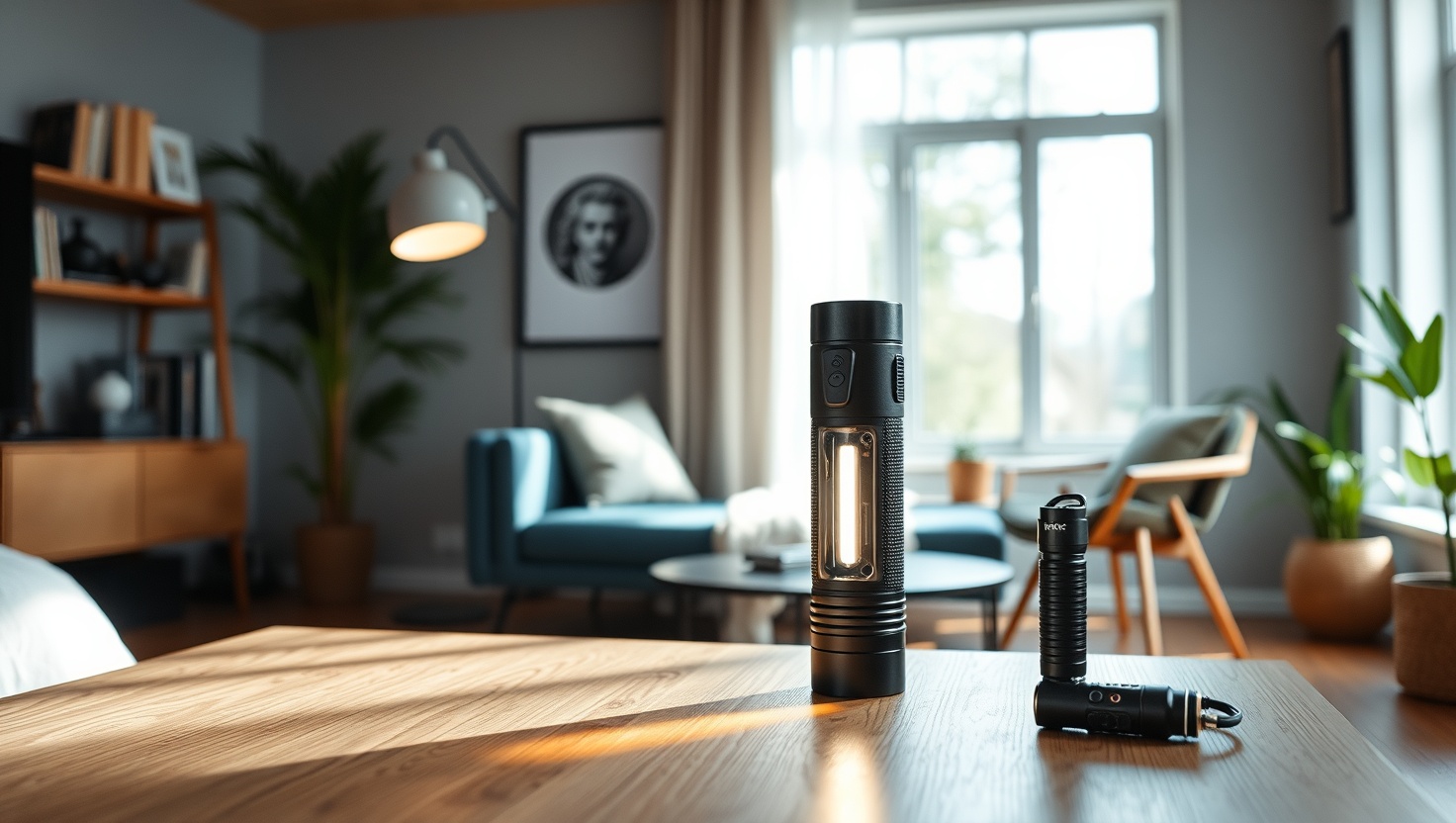
Your phone flashlight is a backup camera flash. It was never designed to be your primary light source. It's fine for finding your keys under the couch. The moment you actually need real light — a proper power cut, a dark trail, checking the tire under the car — it falls short in every way that matters.
Olight Baton 3 Pro — Best Overall
The Olight Baton 3 Pro is what happens when you don't cut corners. It's small enough to fit in a coin pocket, produces a class-leading 1500 lumens at max output, and recharges magnetically via USB-C…
In a hurry? That’s our pick. Want the reasoning and the full comparison? Keep reading.
A dedicated EDC flashlight gives you focused beam control, multiple brightness modes, a battery you don't share with your Netflix app, and a rugged body that won't shatter if you drop it. Modern compact flashlights deliver 800-3000 lumens from something the size of a marker pen. That's not a novelty — it's a practical tool.
The phone argument also breaks down in water. Try using your phone's torch in the rain while fixing a flat tire. Then try an IP68-rated flashlight. The difference is immediate.
And there's the readiness factor. If you carry a rechargeable flashlight and charge it when you charge your phone, you are always ready. No dead batteries. No scrambling for AAAs at midnight. Just a charged, capable light in your pocket.
How to Pick the Right EDC Flashlight (Lumens, Runtime, Size)
Three things determine whether a flashlight actually works for everyday carry: how bright it gets, how long it lasts, and whether you'll actually keep it in your pocket.
Lumens: This is raw brightness. 200 lumens is comfortable for close-up tasks. 500-800 covers most outdoor situations. 1000+ is genuinely blinding and useful for longer distances or emergencies. Most quality EDC lights have 4-6 modes so you can dial it in.
Runtime: On high mode, expect 1-3 hours. On low or eco mode, the same flashlight might run 20-60 hours. For power outages and everyday use, low mode is your best friend. It's also much easier on the battery.
Size and carry: True EDC means it disappears into your pocket. Anything over 4 inches starts feeling like a commitment. The sweet spot is 2.5-3.5 inches. A good pocket clip is non-negotiable — you want it to stay put, not rattle around.
Charging: USB-C is the modern standard and what you should insist on. It means one cable type for everything. Some lights also accept standard batteries as a backup, which is worth considering for extended emergencies.
The 5 Best Rechargeable EDC Flashlights for 2026
The Olight Baton 3 Pro is what happens when you don't cut corners. It's small enough to fit in a coin pocket, produces a class-leading 1500 lumens at max output, and recharges magnetically via USB-C in about 90 minutes. The moonlight mode (0.5 lumens) is genuinely useful — preserving your night vision without blinding yourself while reading a paper map or checking on sleeping kids during a power cut.
Five brightness levels means you have precise control rather than just cycling between "weak" and "the sun." The magnetic tail cap means you can stick it to your car hood and work with both hands free. IP68 waterproofing means weather is not a concern. This is simply the best pocket flashlight available at this price point.
Pros
- 1500 lumens max in a tiny CNC aluminum body
- USB-C magnetic charging — fast and easy
- 5 brightness levels including moonlight mode
- Pocket clip + magnetic tail cap for hands-free use
- IP68 waterproof for any weather
- 6-day battery life on lowest setting
Cons
- Most expensive option on this list
- Proprietary battery (not standard AA/18650)
- Turbo mode generates heat after a few minutes
- Magnetic tail attracts metal debris in your pocket
Streamlight has been building professional-grade lights for decades, and the Microstream USB-C shows why that reputation holds. It's slim like a pen, clips onto your shirt collar or pants pocket without looking awkward, and delivers a focused TIR beam that actually reaches across a room rather than just lighting up your immediate surroundings.
What sets it apart for everyday use: it accepts both the built-in rechargeable battery and standard AAA batteries as a backup. That means in a genuine extended emergency when your USB charger isn't available, you can pick up disposable batteries anywhere and keep going. Reliability engineers and outdoor guides swear by Streamlight — and for good reason.
Pros
- Slim pen-style body fits any pocket naturally
- 800 lumens on high — more than enough for everyday
- Runs on rechargeable or standard AAA battery
- Dual clip works on hat brim or pocket
- TIR optic for a focused, useful beam
- Incredibly reliable professional-grade brand
Cons
- Single button cycles modes — less intuitive
- Lower max output than competitors at similar price
- Plastic lens (not glass) — minor durability concern
- No memory mode — always starts on high
Three thousand lumens from a flat, pocketable light the size of a credit card in profile. The NITECORE EDC27 sounds like marketing nonsense until you see it in action. The flat "slab" form factor is genuinely different — it sits in your pocket more like a wallet than a cylinder, and the OLED display shows you exactly how much battery you have left and which mode you're in. No guessing.
For people who work in their garage, do outdoor projects, or want a serious backup light for extended power outages, the raw output of the EDC27 is unmatched at this price. The 200-meter beam distance means you can light up the end of your driveway, a campsite, or check that strange noise in the backyard with proper visibility.
Pros
- 3000 lumens — most powerful compact light on this list
- OLED display shows exact battery percentage and mode
- 200m beam distance for genuine outdoor range
- USB-C fast charging (under 2 hours)
- 37-hour total runtime across all modes
- Instant strobe access in one press for emergencies
Cons
- Flat slab shape takes getting used to vs tube lights
- Integrated battery not user-replaceable
- OLED screen adds a small passive battery drain
- Heavier than standard tube-style EDC lights
Under $25 with USB-C charging, an included 18650 battery, high-CRI LED, magnetic tail cap, and 1300 lumens. The Wurkkos FC11 shouldn't exist at this price. And yet it does, and it works. The high Color Rendering Index LED is a practical feature that often gets overlooked — it renders colors accurately, which matters when you're assessing a wound, checking the color of a wire, or identifying plants on a nighttime garden walk.
The Anduril open-source firmware is beloved by flashlight enthusiasts for giving you granular control over every brightness setting, ramp speed, and strobe pattern. If you just want to turn a flashlight on and off, you don't need to explore those settings. But they're there if you want them.
Pros
- Incredible value — full feature set under $25
- USB-C charging with 18650 battery included
- 1300 lumens — bright enough for any everyday task
- High-CRI LED for accurate, natural color rendering
- Magnetic tail cap for hands-free mounting
- 6 modes with memory — picks up where you left off
Cons
- Budget build quality — not as refined as premium options
- Anduril UI has a learning curve for new users
- Pocket clip not included on all versions
- Larger than keychain-style compact lights
Two-point-seven inches. That's the entire body length of the Fenix E18R V2. It's so small it clips onto a keyring and disappears into your coin pocket. And yet it produces 1200 lumens, charges via USB-C, is IP68 waterproof, and is built from aircraft-grade aluminum that will survive anything a keychain can throw at it.
The dual-direction pocket clip is a thoughtful touch — it clips bezel-up or bezel-down depending on how you prefer to carry. One-handed operation is intuitive even wearing gloves. This is the flashlight you stop noticing you carry because it's so small — right up until the moment it's the most useful thing you own.
Pros
- Tiny 2.7" body — lives on your keychain permanently
- 1200 lumens in an incredibly compact package
- Built-in USB-C charging (no separate cable needed)
- IP68 waterproof — completely weather resistant
- Dual-direction pocket clip for flexible carry
- Aircraft-grade aluminum body — seriously durable
Cons
- Smaller battery means shorter runtime on high
- Proprietary 16340 battery format
- No magnetic tail cap
- Limited throw distance compared to larger lights
USB-C vs. Battery: Which Charging Style Fits Your Life?
This question comes up constantly, and the honest answer depends on your situation.
USB-C rechargeable is the smart default for most people. You're already carrying USB-C cables. You charge from your laptop, power bank, car charger, or wall plug. You never need to buy or stock batteries. The Olight, NITECORE, Fenix, and Wurkkos on this list all fall in this category.
Replaceable battery (like the Streamlight Microstream) makes sense if you're building a serious emergency preparedness kit. When USB power isn't available for days at a time, being able to walk into any petrol station or grocery store and buy fresh batteries is genuinely valuable. It's the backup plan for your backup plan.
For most people reading this: USB-C is the answer. Charge it when you charge your phone and you'll never have a dead flashlight. If you're putting together a 72-hour emergency kit, consider the Streamlight as your dedicated bag light.
5 Everyday Situations Where a Pocket Flashlight Saves the Day
If "flashlight" still sounds like something you only need once a decade, consider how often these situations actually come up:
- Power outage at home. It's Tuesday evening. The power cuts. Your phone is at 40%. A pocket flashlight means you navigate the house, find candles, check the breaker box, and keep your phone battery for the things that actually need it — without burning through your battery reserve in the first 20 minutes.
- Walking the dog after dark. A proper beam helps you see what your dog has found in the bushes before they eat it. It also makes you visible to traffic. Your phone works once. A dedicated light works every single night without thinking about it.
- Car breakdown or roadside issue. Checking under the bonnet, reading a tyre pressure gauge, looking for a reflective triangle in the boot — all of these need two hands and a steady light. A magnetic tail cap sticks to your car body and lets you work properly.
- Home repairs and DIY. Checking inside a wall cavity, looking into a boiler flue, crawling under the house, working in the loft. A pocket light is more useful than a headtorch half the time because you can angle it precisely where you need it.
- Camping without the fuss. Not every camping trip needs a lantern. Walking to the toilet block at 2am, reading a map, finding gear in a bag — a pocket flashlight handles all of it without the weight and faff of a full lantern setup.