Best Outdoor Toys That Actually Get Kids Off Screens in 2026
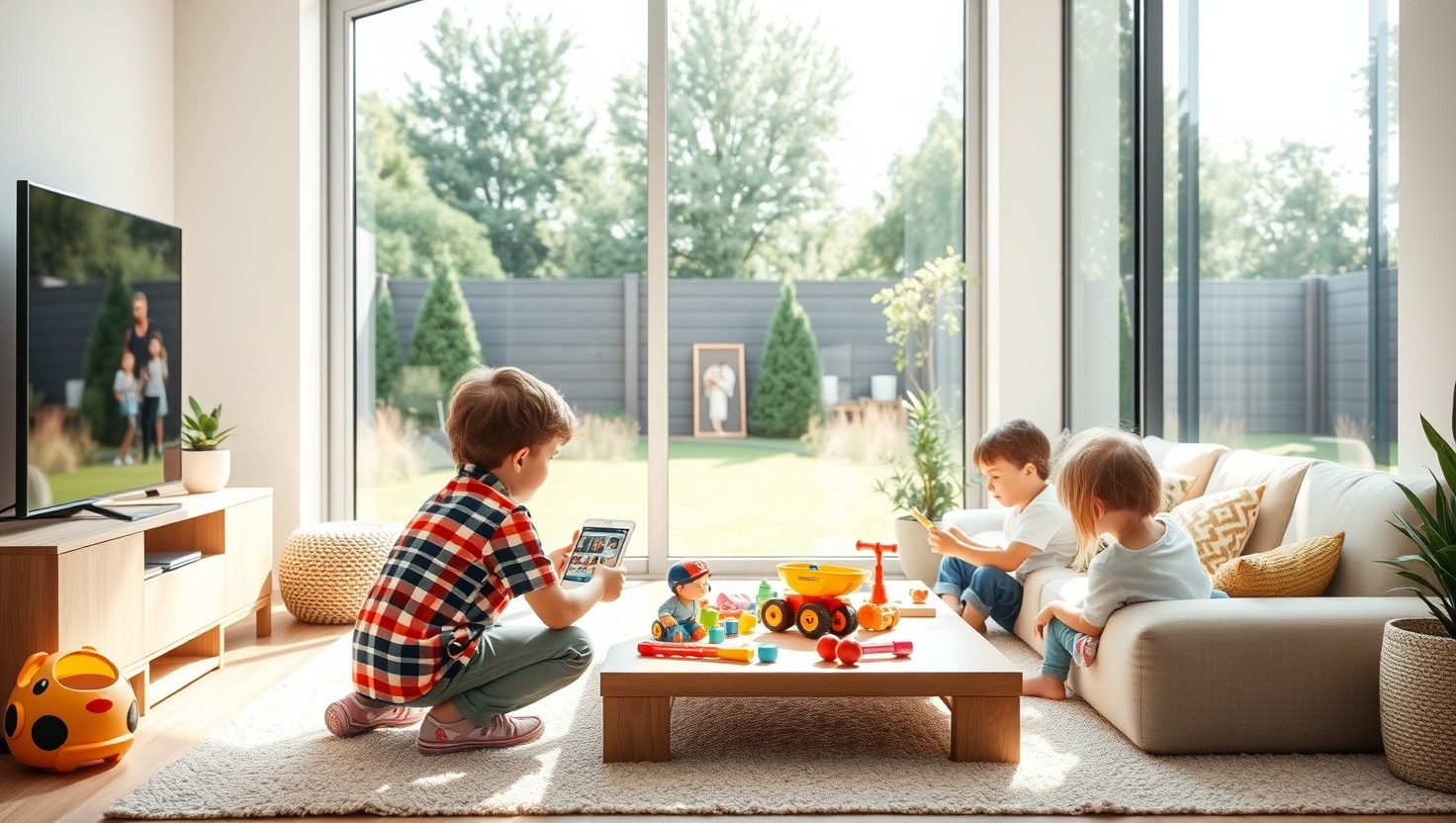
You can't just say "go play outside." Not anymore. Outside has to compete with YouTube, Roblox, and an infinite scroll of dopamine hits. The trick isn't banning screens — it's making the alternative genuinely better. The toys on this list aren't educational gimmicks or nostalgia purchases. They're the ones that actually work — the ones where kids go outside, lose track of time, and come back muddy, tired, and happy. That's the goal. Here's how to get there.
Stomp Rocket Ultra — Best for Instant Excitement
The Stomp Rocket Ultra might be the single most effective screen-to-outside transition tool on this list. Here's why: it works in five seconds. Assemble the launch pad, put a foam rocket on the tube…
In a hurry? That’s our pick. Want the reasoning and the full comparison? Keep reading.
Key Takeaways
- The best outdoor toys beat screens by delivering immediate physical excitement — something no app can replicate in real space
- Best instant excitement: Stomp Rocket Ultra ($25) — stomp once, rocket flies 200 feet, kids are hooked from the first launch
- Best for daily use: Razor A5 Lux Kick Scooter ($80) — large wheels, foldable, built for ages 8+ and actual everyday riding
- Best backyard adventure: Slackers NinjaLine 36' Intro Kit ($60) — ninja warrior obstacle course between two trees, exhausting in the best way
- Best for curious minds: National Geographic Mega Fossil Dig Kit ($30) — 15 real fossils, real science, real outdoor discovery
- Best simple fun: Activ Life Kids LED Frisbees ($15) — glows at night, extends outdoor play past sunset, works for all ages
Why the Right Toy Changes Everything
Screens aren't the enemy. Boredom is. When a child has nothing genuinely interesting to do outside, of course they drift back to the phone — it's engineered to be the most reliably interesting object in any room. The question isn't how to remove the screen. It's how to build something outside that competes on its own terms.
This is the dopamine competition problem, and it's real. Every app your child uses has been refined by armies of product designers whose entire job is maximizing time-on-screen. YouTube's autoplay, Roblox's reward loops, TikTok's perfectly calibrated scroll — these are not accidents. They are precision instruments for capturing and holding attention. A generic "go play outside" order sends your kid into an undesigned space with no engineered payoff. Of course they come back inside.
The answer is to stack the outside deck. Give the outdoor space things that deliver their own immediate, powerful payoff. A rocket that launches 200 feet on a single stomp. An obstacle course that triggers the same achievement drive as a video game — but with real, physical sweat and a body that earns actual tiredness. The outdoors can win this competition. You just have to give it the right tools.
Physical play benefits go beyond the screen battle
When kids play outside, their bodies do things screens actively prevent: gross motor development, proprioception, genuine exertion that produces real tiredness rather than the overstimulated fake-exhaustion of screen time. Sunlight exposure regulates circadian rhythms and improves sleep quality in ways no supplement can match. Unstructured physical play builds problem-solving instincts that can't be replicated in digital environments. And the effect parents feel most immediately: a kid who has genuinely run around outside for two hours is a completely different person at the dinner table. Calmer. More present. Ready to actually talk.
What Makes an Outdoor Toy Actually Work
Most outdoor toys fail the same way: they're interesting for twenty minutes and forgotten by the end of the weekend. The toys that actually pull kids off screens consistently share a specific set of qualities. These are the criteria used to build this list.
Immediate wow factor
A toy needs to deliver a reaction in the first thirty seconds. Not after assembly. Not after reading instructions. Thirty seconds from first contact. The Stomp Rocket Ultra does this perfectly — stomp once, watch a rocket disappear into the sky. That first launch is the hook. Everything after is repetition, variation, and competition with siblings. If a toy doesn't deliver a moment of genuine awe immediately, it won't overcome the gravity of the screen.
Open-ended play potential
Single-use toys die fast. A toy that does one thing — even an impressive thing — has a fixed shelf life. The best outdoor toys create scenarios where kids invent their own games, set their own challenges, and keep extending the play session because there's always something new to try. The Slackers NinjaLine doesn't have a rulebook. Kids make up their own course challenges, time each other, invent rules for what counts as completing the course. That open-endedness is what keeps a toy relevant for months, not days.
Solo and group play compatibility
A toy that only works with multiple kids fails on quiet Tuesday afternoons. A toy that only works solo doesn't build the social play that makes outdoor time self-reinforcing — once a friend is involved, social momentum keeps kids outside long after novelty would have worn off alone. The best toys on this list work both ways. The Stomp Rocket is fun alone and competitive with a sibling. The NinjaLine is a personal challenge course and a group obstacle competition.
Durability that survives real play
Kids play hard. Toys that break become cautionary tales — "we can't get that, remember what happened to the last one." Every pick on this list was chosen for construction quality that actually survives what children do to things outside. No flimsy plastic that shatters on first contact with a sidewalk. No components that corrode after one rain. These toys are investments, not gambles.
Our Top 5 Picks for 2026
| Product | Price | Best For | Ages | Solo / Group |
|---|---|---|---|---|
| Stomp Rocket Ultra | $25 | Instant excitement | 5+ | Both |
| Razor A5 Lux Kick Scooter | $80 | Daily use | 8+ | Both |
| Slackers NinjaLine 36' Kit | $60 | Backyard adventure | 5-12 | Both |
| Nat Geo Fossil Dig Kit | $30 | Curious minds | 6+ | Both |
| Activ Life LED Frisbees | $15 | Simple everyday fun | All ages | Both |
The Stomp Rocket Ultra might be the single most effective screen-to-outside transition tool on this list. Here's why: it works in five seconds. Assemble the launch pad, put a foam rocket on the tube, stomp on the air bladder, and watch that rocket disappear 200 feet into the sky. That's it. That's the entire pitch. The gasp that follows the first launch is the hook that holds.
There are no batteries, no charging, no app, no setup instructions that take longer than the play session itself. The physics are immediate and satisfying — the harder you stomp, the higher it goes. Children immediately start experimenting: angling the launch pad, stomping harder, jumping onto the bladder with both feet. It turns into a science experiment without any adult framing it that way. How high can we get it? How far can we make it fly? Can we land it on the trampoline?
At $25, it's the lowest-risk purchase on this list. Buy it tonight. Have it ready for tomorrow morning before screens get involved. The window between wake-up and first screen contact is when outdoor habits get set. The Stomp Rocket makes that window genuinely exciting.
Pros
- Instant payoff — results in under 5 seconds
- Zero batteries or setup required
- Teaches real physics through play naturally
- Works solo or competitive with friends
- Extremely affordable at $25
Cons
- Foam rockets get lost — buy extras
- Needs open outdoor space to fly safely
- Under 5s may lack stomp power for full height
Most scooters get ridden twice and then lean against the garage wall gathering dust. The Razor A5 Lux is different because it was engineered to be genuinely usable rather than just fun-in-theory. The extra-large 200mm polyurethane wheels are the key — they roll over sidewalk cracks, pebbles, and uneven pavement that would stop a smaller-wheeled scooter dead. When a ride is smooth and fast, kids actually ride. When it's bumpy and frustrating, they go back inside.
The foldable design matters more than it sounds. A scooter that folds fits in a car trunk, which means it comes on family outings. It fits in a school locker, which means it becomes part of the daily routine rather than a weekend toy. Daily routine is exactly what you're building toward. A scooter that's always with your child is a scooter that actually gets ridden.
The A5 Lux handles up to 220 pounds, which means it grows with the child through early teen years. The aluminum deck and reinforced frame won't flex or crack under the rough treatment kids apply to things. At $80, it's the most expensive pick on this list — but it's also the one most likely to still be in daily use two years from now, which makes it the best value on a per-use calculation.
Pros
- Large 200mm wheels handle real-world terrain
- Foldable — fits in car trunks and school lockers
- Durable enough for years of daily use
- Handles up to 220 lbs — grows with the child
- Becomes a genuine daily transport habit
Cons
- Most expensive pick at $80
- Ages 8+ — not for younger children
- Needs helmet and safety gear to ride properly
The NinjaLine taps into something very specific about how kids engage with challenge: they want to feel like they're in a real-world version of something they've seen on a screen. American Ninja Warrior. Playground obstacle courses. The parkour videos they watch on YouTube. The Slackers NinjaLine delivers exactly that — a genuine overhead obstacle course between two trees that kids can climb, swing, hang from, and traverse until their arms give out.
Setup takes about twenty minutes with two adults and requires two trees roughly 36 feet apart. Once it's up, it's up permanently until you take it down — which is the single most important feature of any outdoor toy. Friction kills play. When your child can walk outside and immediately start playing, without asking someone to set anything up, they actually do. The barrier to entry is zero.
The intro kit includes eight hanging obstacles — rings, hand holds, a cargo net, and a slackline component — with room to add more pieces from the Slackers expansion range. Kids naturally build their own challenge progressions: trying new grips, racing siblings, inventing their own rules for what counts as completing the course. The achievement loop is genuinely strong. Getting across a new section for the first time feels as satisfying as unlocking a game level — but you did it with your body.
Pros
- Permanent backyard install — always ready to play
- Eight obstacles with expandable attachment points
- Builds real upper body strength and coordination
- Open-ended challenge that evolves as kids improve
- Works as group competition or solo challenge
Cons
- Requires two suitable trees or posts 36 feet apart
- 20-minute setup with two adults needed
- Ages 5-12 — outgrown by older teens
The kids who are hardest to get off screens are often the curious ones — the ones watching documentary content, nature videos, science channels, paleontology explainers. They're not just consuming entertainment; they're feeding a genuine intellectual appetite. The mistake is trying to cut off that curiosity drive. The right move is redirecting it into the physical world.
The National Geographic Mega Fossil Dig Kit does exactly that. Fifteen real fossils are embedded in a large excavation block. Your child uses the included chisel and brush to carefully extract each one. The fossils are genuine specimens — shark teeth, ammonites, trilobites, plant impressions — with the National Geographic authenticity that curious kids already associate with credible science. Each excavated fossil comes with a guide about what it is and when it lived. The dig becomes a real learning session, but nobody has to call it that.
This one works particularly well as an outdoor project during school breaks. The excavation takes time — it is not a thirty-minute activity — which means it fills afternoon hours that might otherwise default to screens. And once a child has excavated real fossils, they look at rocks and dirt differently. The outside world becomes a place where actual things can be found, not just a background for running around. That shift in perception is exactly what you're building toward.
Pros
- 15 real fossils — genuine scientific specimens
- Fills multiple outdoor hours across several sessions
- Redirects screen curiosity into hands-on discovery
- Educational without feeling like school
- Great for solo focus or parent-child bonding time
Cons
- One-time activity — not reusable like other picks
- Creates dust and debris — best done outside
- Kids under 6 may need adult supervision
The cheapest pick on this list is also one of the most consistently used. The Activ Life Kids Frisbees are LED ring frisbees — lightweight, soft enough for close quarters — that glow brightly at night. That night-glow feature is the secret weapon: it extends outdoor play past sunset, which is exactly the high-risk screen time window. After dinner, when the light fades and going inside feels inevitable, a glowing frisbee in the backyard gives everyone a reason to stay outside twenty more minutes.
The ring design makes them genuinely easier to throw and catch than traditional frisbees — the hole in the middle creates a more stable flight path, and smaller hands can grip the rim securely. Kids who gave up on regular frisbees after bad experiences with discs that veered wildly often discover they're actually good at this version. That competence feeling matters: when outdoor play makes you feel capable rather than frustrated, you want to keep doing it.
At $15, keep a set in the car, in the camping bag, and on the back porch. They show up at barbecues and beach days and become a household staple rather than a scheduled activity. The best outdoor habits aren't planned — they're opportunistic. A toy that's always within reach becomes a toy that always gets used.
Pros
- LED glow extends play past sunset
- Ring design — genuinely easier to throw and catch
- Only $15 — easy to keep multiple sets everywhere
- Lightweight and packable for every trip
- Works for all ages with no skill floor
Cons
- Batteries will eventually need replacing
- Better with two or more players than solo
- Can disappear in tall grass after dark
How to Make the Switch Stick
Buying the right toy is step one. Getting it to actually replace screen time as a default habit takes a little more intention — but not much. Here's what works.
Don't announce "no screens today"
The moment you frame outdoor time as a screen deprivation — as a punishment or a substitution — you've already lost the framing battle. Kids understand "no screens" as a removal. They don't understand it as an opportunity. Instead of announcing what's not happening, just start the alternative. Walk outside with the Stomp Rocket. Set up the NinjaLine yourself. Start digging in the fossil kit at the picnic table. Curiosity is contagious. A child who sees a parent actually engaged in something interesting will follow. Every time.
Join them the first few times
The most powerful outdoor play signal a parent can send is participation. Not supervision — participation. If you're standing in the doorway watching, outside time feels monitored and mildly uncomfortable. If you're stomping the rocket yourself and cheering when it hits 200 feet, outside time is exciting and social. Your presence in the first few sessions establishes that outside is a place where good things happen. Once that association is set, you don't need to be there every time.
Let it be messy
Mud, grass stains, dirty knees — these are the evidence of real outdoor play. The instinct to keep children clean and tidy works directly against outdoor engagement. When kids know they'll be corrected for getting dirty, they unconsciously throttle their play. When they know mess is allowed and expected, they go all in. Set the expectation clearly once: outside play makes a mess, and that's fine, and that's what the laundry machine is for. Then let it go entirely.
Build the habit at a consistent time
The highest-leverage outdoor time slot is the after-school window — roughly 3:30pm to 5:30pm. This is when most kids default to screens, and when outdoor energy levels are still high. If you can make "outside first" the consistent rule for this window — before homework, before screens, before anything else — the habit forms within two to three weeks. The key is consistency, not perfection. Some days it rains. Some days it doesn't happen. But on most days, the window opens, and you've already made the decision in advance.
Start with the One That Works First
The Stomp Rocket Ultra is the fastest path from screen to outside. $25, zero setup, and a 200-foot rocket launch within the first thirty seconds. Buy it tonight and have it ready tomorrow morning.
Get the Stomp Rocket Ultra →