Best Night Vision Monoculars for Home Security and Survival in 2026
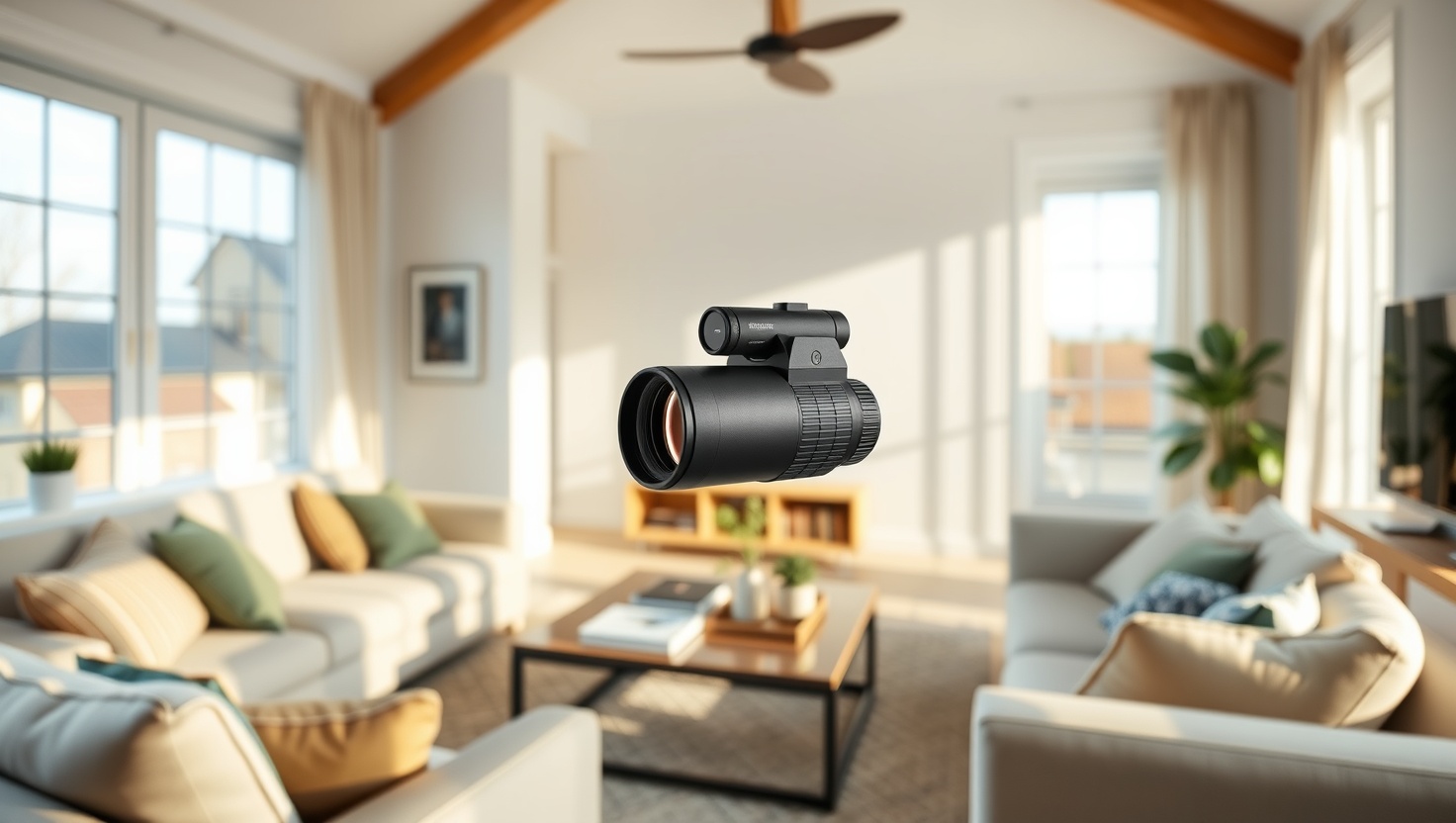
When the power goes out, most people are blind. Literally. Your eyes need 30 minutes to partially adjust to darkness, and even then you can barely see past your front porch. Night vision changes that equation completely. For under $100, you can see clearly in total darkness — check your property, spot wildlife, navigate without a flashlight that announces your position to everyone within half a mile. Whether you’re securing your home during an outage or navigating unfamiliar terrain in an emergency, seeing in the dark isn’t a luxury. It’s a tactical advantage.
Creative XP Digital Night Vision Monocular — Best Budget Pick
The Creative XP Digital Night Vision Monocular is the most accessible entry point in this guide, and it delivers more than the price tag suggests. A 300-meter claimed detection range, built-in IR…
In a hurry? That’s our pick. Want the reasoning and the full comparison? Keep reading.
The consumer night vision market has changed dramatically in the past five years. Digital infrared technology has made functional night vision accessible at prices that were impossible a decade ago. You no longer need to spend $1,000+ on a military-surplus image intensifier tube to see in the dark. Here are the best options for 2026 — from a capable $80 entry point all the way to a $500 thermal imager that sees heat signatures through smoke, fog, and total darkness.
Key Takeaways
- Night vision gives you a critical advantage during power outages — check your property without announcing yourself with a flashlight
- Best budget pick: Creative XP Digital Night Vision at $80 — 300m range, photo/video recording, rechargeable battery
- Best mid-range: Bushnell Equinox X2 at $180 — 4.5x magnification, trusted brand, tripod mountable for property monitoring
- Best for beginners: Night Owl Optics NOXM50 at $150 — point and see, no learning curve, 5x magnification
- Best color night vision: SiOnyx Aurora Sport at $400 — full color (not green), GPS, weatherproof IP67
- Best thermal: FLIR Scout TK at $500 — detects heat signatures through smoke and fog, different capability entirely
- Digital night vision is the right choice for most home security and preparedness needs under $200
Why Night Vision Belongs in Your Preparedness Kit
Most emergency preparedness conversations focus on food, water, and communication. Night vision rarely comes up — and that is a gap in most people’s thinking. The reality is that a significant percentage of emergency situations either happen at night or extend into nighttime hours. Extended power outages. Severe weather events that start in the evening. Property monitoring when you hear something outside but cannot see anything.
Power outages and property security
The most practical use case for home night vision is also the most common: a grid-down situation where your exterior lights, your motion-sensor floodlights, and your powered security cameras are all offline. In that scenario, walking outside with a flashlight to investigate a noise is a reasonable impulse — but it has a significant downside. A flashlight makes you immediately visible. Anyone or anything you are trying to observe knows exactly where you are and that you are looking. Night vision flips that dynamic. You can observe your property from a dark window or doorway, gather information, and make a calm decision about what you are seeing.
This is not paranoia — it is the same logic that makes a peephole on your front door useful. You want to know what is outside before you open up. A night vision monocular extends that capability to your full yard, driveway, and perimeter.
Wildlife awareness on rural and suburban properties
If you have chickens, a garden, livestock, or pets, nocturnal wildlife is a real practical concern. Foxes, raccoons, coyotes, deer, and other animals do most of their work after dark. Identifying what has been visiting your property and from which direction helps you decide on appropriate deterrents. A five-minute scan with a night vision monocular gives you information that would otherwise require setting up multiple trail cameras and checking them the next morning.
Navigation without light signatures
A flashlight is functional but highly visible. On your own property during a power outage, navigating to your outbuilding, generator, or water source with a flashlight creates an obvious beacon visible from considerable distance. Night vision allows you to move through familiar terrain without any light output at all — or with only the low-output infrared illuminator that is invisible to the naked eye. For navigation purposes, even an entry-level unit at $80 provides a meaningful capability upgrade over stumbling around with a flashlight or waiting for dawn.
Monitoring without alerting
Motion-sensor cameras are excellent passive monitoring tools when power is available. But they notify you after the fact, and they require a functional network to relay alerts. A night vision monocular gives you real-time situational awareness that you can act on immediately. Scan the perimeter, identify what triggered the dog, confirm it is just a deer crossing your yard — and go back to sleep. That peace of mind is worth something independent of any worst-case scenario.
Understanding Night Vision Technology
Marketing in the night vision space is genuinely confusing. You will see terms like “Gen 1,” “Gen 2,” “digital,” “IR illuminator,” and “thermal” thrown around without much explanation. Here is what actually matters for a home security and preparedness purchase.
Gen 1 vs Gen 2 vs digital: what you actually need
Generation 1 night vision uses image intensifier tubes to amplify existing light. It is the classic green-glow night vision you have seen in movies. Gen 1 works adequately in moonlit conditions but degrades significantly in near-total darkness. Gen 2 uses a microchannel plate technology that dramatically amplifies the electron signal — the result is much clearer imagery in very dark conditions. Gen 2 gear starts around $1,000 and goes up from there. For genuine professional-grade performance, Gen 2 is the benchmark — but most people do not need it for home preparedness.
Digital night vision uses a camera sensor with active infrared illumination. Instead of amplifying ambient light like a tube-based device, it floods the scene with invisible infrared light and captures the reflection with a sensitive digital sensor. The result looks like a black-and-white or green-tinted video feed. The key advantages: much lower cost, ability to record video and photos, no tube degradation over time, and reliable performance when paired with a good IR illuminator. For home security and preparedness use, modern digital night vision in the $80–$200 range is the practical sweet spot.
IR illuminators: the invisible flashlight
Most consumer night vision devices include a built-in infrared illuminator — essentially an LED that emits infrared light invisible to the naked eye but detectable by the device’s sensor. This is how they achieve usable performance in genuinely dark conditions where there is no ambient light to amplify. Built-in IR illuminators on units like the Bushnell Equinox X2 and Night Owl NOXM50 cover 50–100 meters effectively. Some units also accept an external IR illuminator for extended range in larger properties. The infrared light is invisible to unaided eyes but is detectable by cameras — your IR illuminator will show up on security cameras as a faint red glow from the emitter.
Image quality: what the specs actually mean
Resolution specs in night vision marketing are often misleading. A device claiming 640x480 resolution sounds modest compared to a smartphone camera — but in night vision, sensor quality, IR illuminator strength, and lens quality matter as much as raw resolution numbers. The more useful question is: can I recognize a person or large animal at the distances I need? For property monitoring at home, that means 30–100 meters. Every device on this list handles that range. Detection of large objects at 200–300 meters is realistic for mid-range units. Identification of faces or reading text at those distances is not.
Battery life in the field
In an extended power outage, battery management matters. Units with rechargeable lithium batteries need to be pre-charged — make it a habit to top them off monthly alongside your other emergency gear. The Creative XP and SiOnyx Aurora Sport on this list use rechargeable batteries. The FLIR Scout TK runs on two AA batteries, which is excellent for preparedness: you can rotate in fresh AA alkalines from your emergency supply rather than hunting for a specific charger. Consider which battery format fits your overall preparedness battery management approach.
Quick Comparison
| Device | Price | Type | Key Feature | Best For |
|---|---|---|---|---|
| Creative XP Digital | ~$80 | Digital IR | 300m range, records video | Best budget pick |
| Bushnell Equinox X2 | ~$180 | Digital IR | 4.5x zoom, tripod mount | Best mid-range |
| Night Owl NOXM50 | ~$150 | Digital IR | 5x zoom, simple controls | Best for beginners |
| SiOnyx Aurora Sport | ~$400 | Color digital | Full color, IP67, GPS | Best color night vision |
| FLIR Scout TK | ~$500 | Thermal | Heat signatures, fog/smoke | Best thermal imaging |
Our Top 5 Picks for 2026
The Creative XP Digital Night Vision Monocular is the most accessible entry point in this guide, and it delivers more than the price tag suggests. A 300-meter claimed detection range, built-in IR illuminator, and the ability to record both photos and video to a micro SD card give you real capabilities for home perimeter monitoring and property observation. The rechargeable battery handles multiple hours of use on a single charge.
At this price point, the image quality is functional rather than sharp. You are not going to identify faces at 150 meters or read a license plate in the dark. What you will do is clearly see that something large is moving near your garden, confirm that your gate is closed, or navigate your backyard without turning on a flashlight. For the core use cases — property awareness during an outage, wildlife observation, and dark navigation — it delivers exactly what you need.
The video recording capability is a genuine bonus for home security applications. You can document what you observed during an outage or unusual event without relying on memory. Store the recorded footage with your other home security documentation. At $80, buying one for home and one for your go-bag makes straightforward financial sense.
Pros
- $80 — most accessible price on this list
- 300m claimed detection range
- Photo and video recording built in
- Rechargeable battery via USB
- Compact and lightweight
Cons
- Image detail limited at distance
- IR illuminator range modest in total darkness
- Budget build quality
- Not weatherproof
Bushnell has been making optics since 1948. The Equinox X2 reflects that heritage — this is not a budget unit dressed up with spec-sheet numbers but a genuinely capable digital night vision monocular with 4.5x magnification, a built-in IR illuminator, and solid video recording capability. The 4.5x magnification is meaningfully useful for property monitoring: you can hold position at a doorway or window and observe activity across a full yard or driveway with real clarity.
The tripod mount capability is underrated for home security use. Set the Equinox X2 on a tripod pointed at your driveway gate or property entrance during an extended outage, and you have a positioned observation tool that does not require you to hold it. That matters when you are managing a household in a stressful situation — you can position the monocular, check it periodically, and attend to other tasks in between. The recording function captures what it sees to a micro SD card even when you are not actively watching.
The IR illuminator on the Equinox X2 performs well at 50–75 meters in genuine darkness — the range you need to cover a residential property perimeter. Build quality is noticeably better than the Creative XP: the housing is solid, the controls are tactile and glove-friendly, and it handles being knocked around without losing calibration. This is the pick if you want something you can rely on for years.
Pros
- 4.5x magnification — strong for property monitoring
- Tripod mountable for stationary observation
- Built-in IR illuminator with variable power
- Video recording to micro SD
- Trusted Bushnell brand with strong warranty support
Cons
- $180 — noticeable jump from budget options
- Not waterproof (splash resistant only)
- Proprietary battery format
- Larger and heavier than pocket-sized units
Night vision devices can be surprisingly fiddly — adjusting IR illuminator intensity, focus wheels for near and far, gain controls, recording settings. The Night Owl Optics NOXM50 strips that complexity away. The controls are minimal and intuitive: power on, hold up, look through, see in the dark. The built-in IR illuminator activates automatically. The 5x magnification gives you clear observation at meaningful distances without needing to fiddle with zoom settings.
For home preparedness purposes, that simplicity is a genuine advantage. In a stressful situation — a power outage at 2 a.m. with the dog barking at something outside — you do not want to be hunting through a menu or adjusting a dial you have never used before. The NOXM50 is what it is: a point-and-see device that works immediately in the hands of anyone who picks it up, including household members who have never used night vision before.
The lightweight design and comfortable ergonomics make extended observation sessions less fatiguing. Night Owl has been in the consumer night vision business for over two decades and the NOXM50 reflects that experience in its usability design. This is not the highest-spec device on this list for its price, but it is the one you will actually use when you need it because there is no barrier to operation.
Pros
- Point-and-see simplicity — no setup required
- 5x magnification for clear distance observation
- Lightweight and ergonomic for extended use
- Automatic IR illuminator activation
- Proven brand with long track record
Cons
- Fewer manual controls than competitors
- No built-in video recording
- Not waterproof
- IR range modest compared to higher-end units
Every other night vision device on this list produces either a green-tinted or black-and-white image. The SiOnyx Aurora Sport uses a proprietary CMOS sensor technology to produce full-color night vision in conditions where the human eye sees almost nothing. In moonlit or starlit environments, the Aurora Sport shows you a near-natural color image of your surroundings. This is not a marketing claim — it is the product of genuine sensor innovation that SiOnyx has been developing for years.
The practical significance: color information helps you identify what you are seeing much faster than a monochrome image. A person wearing a red jacket, a specific vehicle color, the difference between a gray fox and an orange cat — details that are invisible in classic night vision are visible in the Aurora Sport’s color output. For property security and wildlife observation, that identification capability is a meaningful upgrade.
The IP67 weatherproof rating means it handles rain, splashes, and brief submersion without concern. GPS tagging embeds location data in your recorded footage. The video quality is excellent and the recordings are genuinely useful as documentation. At $400, this is not a budget purchase — but it is the most technologically sophisticated consumer night vision device available at anything approaching this price point, and it justifies the premium for serious home security and preparedness applications.
Pros
- Full-color night vision — unique at this price
- IP67 weatherproof — submersible protection
- GPS tagging on recorded footage
- Excellent video recording quality
- Future-proof sensor technology
Cons
- $400 — significant investment
- Color performance drops in truly zero-light conditions
- Larger and heavier than basic monoculars
- Steeper learning curve to use all features
The FLIR Scout TK is not a night vision device in the traditional sense — it is a thermal imager. Instead of detecting light, it detects heat. Every warm object in its field of view — a person, an animal, a running vehicle engine, a warm pipe in a structure — appears as a bright signature against the cooler background. It works in complete optical darkness, through smoke, through light fog, and in driving rain because none of those conditions affect heat detection.
For home security perimeter awareness, thermal imaging provides a capability that standard night vision cannot match. A person standing still in the shadows is difficult to spot with standard night vision if there is no IR illuminator reaching them. On the FLIR Scout TK, any warm-blooded person or animal shows up clearly regardless of their position or camouflage, because their body heat is always present. Detection range for human-sized subjects is 100+ yards even in conditions of total optical darkness.
The FLIR Scout TK is pocket-sized — smaller than many of the optical night vision units on this list. It runs on two AA batteries, giving you the flexibility to run it from alkalines from your emergency supply indefinitely. The device does not produce detailed visual imagery like standard night vision — you see heat silhouettes, not faces or clothing. But for the purpose of knowing whether something warm is moving on your property and where it is, the Scout TK is unmatched at anywhere near its price.
Pros
- Sees heat — works through smoke, fog, darkness
- Detects people and animals at 100+ yards
- Pocket-sized and lightweight
- Runs on standard AA batteries
- No IR illuminator needed — completely passive
Cons
- $500 — highest price on this list
- Shows heat silhouettes, not visual detail
- Cannot read text or identify faces
- Different use case from standard night vision — consider both
Getting the Most From Your Night Vision
Buying a night vision monocular is the easy part. Using it effectively under stress requires some practice. A few practical habits make a significant difference.
Practice in your yard first — before you need it
This sounds obvious, but most people never do it. Take your unit out on a clear night before any emergency situation and spend 20 minutes walking your own property. Identify the landmarks and reference points in night vision — how your gate looks, where the shadows fall between structures, what the fence line looks like from your back door. When you are familiar with what “normal” looks like on your property through the device, anything abnormal stands out immediately. Without that baseline experience, even a good device is harder to use effectively under the cognitive load of a stressful situation.
IR illuminator management
Built-in IR illuminators consume battery power faster than passive sensor operation. In a battery management situation, use the lowest illuminator setting that gives you adequate visibility for your immediate need. For close-range navigation (within 10–20 meters), a low illuminator setting is usually sufficient. Reserve high illuminator output for scanning at distance. If your unit has an illuminator power switch, turn it off during daylight even if you use the device in low-light indoor conditions — some digital units work in dim indoor light without any IR illumination at all.
Battery management for extended outages
For units with rechargeable batteries, a top-off protocol is essential. Add your night vision device to your monthly emergency gear check alongside your flashlight batteries and radio batteries. A fully charged unit that has been sitting for two months will hold most of its charge — a unit that was partially discharged and left for six months may not have enough power when you need it. For the FLIR Scout TK with AA batteries, rotate a set of fresh alkalines in every six months and keep the used set as a secondary backup.
Legal considerations for property monitoring
Using night vision on your own property is entirely legal everywhere in the US and most other countries. The general privacy principles that apply to normal observation apply equally to night vision: what you can legally see from your own property in daylight, you can legally observe with night vision in darkness. Do not point optics into neighboring homes or private spaces. For property boundary observation where your view might include a neighbor’s yard, the same courtesy norms that apply to any outdoor observation apply. Night vision is a tool — use it responsibly for the legitimate preparedness and security purposes it serves.
Start With the Creative XP. Upgrade When You Know What You Need.
The Creative XP at $80 gets you functional night vision capability immediately. Use it, practice with it, identify where you need more range or better image quality. When you know your specific gaps, you will know whether the Bushnell Equinox X2’s magnification, the SiOnyx Aurora Sport’s color imaging, or the FLIR Scout TK’s thermal capability is the right next step.
Get the Creative XP →