The average age kids get their first smartphone is 11 years old. And 73% of parents say they regret giving it that early. Not because their kid doesn't need a way to call home — they do. But because a smartphone is so much more than a phone. It's a portal to TikTok at 2am, strangers in DMs, and an algorithm engineered to keep a child's brain locked in forever.
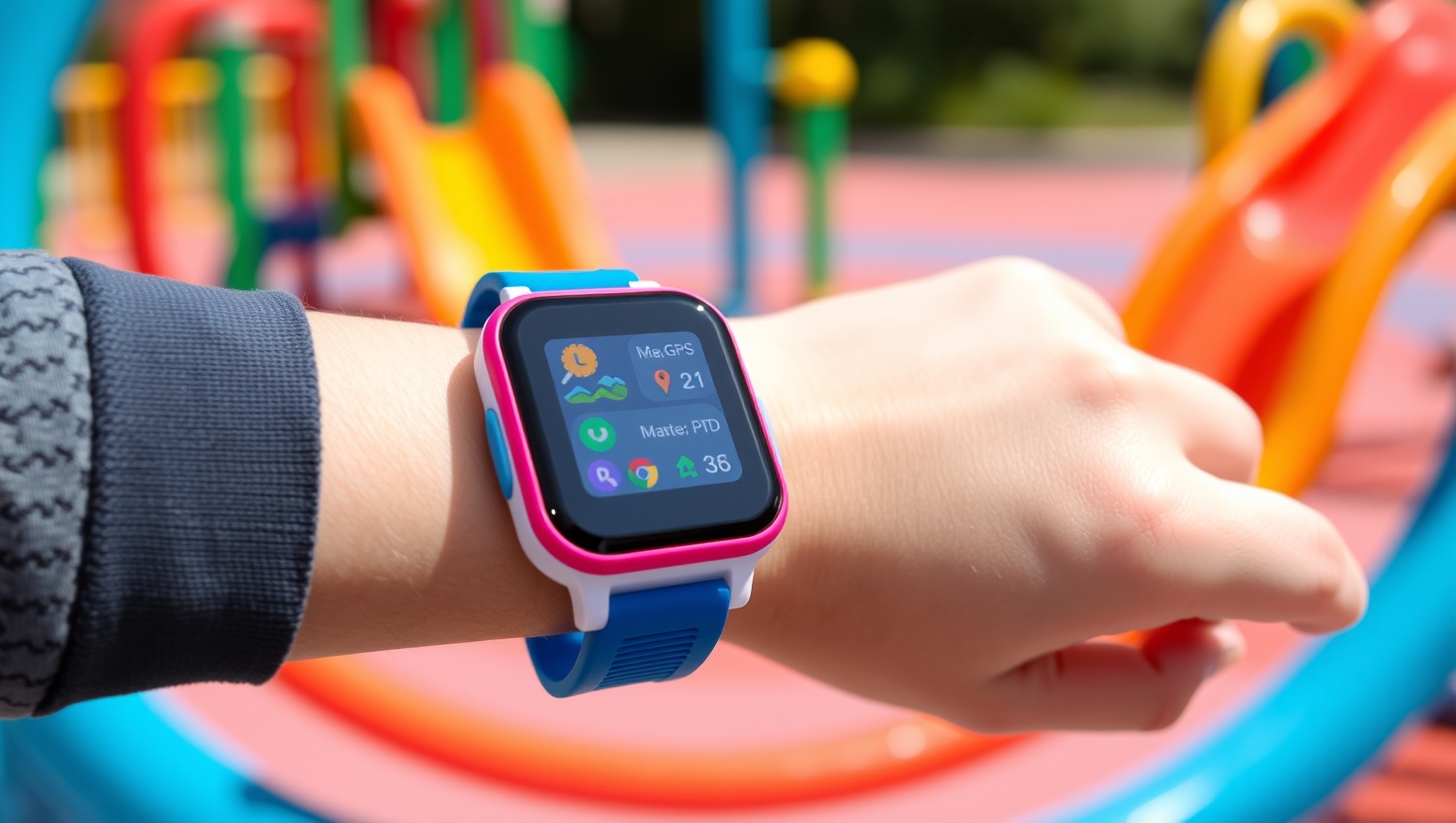
A kids GPS smartwatch is the middle ground nobody talks about enough. Your child can call you from anywhere. You can see exactly where they are. They get real independence — without you handing them the most addictive device ever built. These watches have no browser. No app store. No social media. On purpose.
Here are the five best options in 2026, tested and ranked from best overall to best budget.
Key Takeaways
- Kids GPS smartwatches let children call you without accessing social media or the internet
- The average kid gets a smartphone at 11 — 73% of parents regret it; a GPS watch is the smarter step
- All picks here have GPS tracking, calling to approved contacts, and SOS alerts — nothing else
- Plans run $5–$15/month, far cheaper than a smartphone plan with zero of the risks
- TickTalk 5 is the best overall; COSMO JrTrack 3 wins on budget
- Look for school mode, geofencing, and waterproofing if your kid is active or young
73% of parents regret giving their child a smartphone early — and the biggest reason isn't screen time in general, it's social media access. A GPS smartwatch removes that regret entirely. Your kid gets independence. You get peace of mind. Nobody gets a TikTok account at age 9.
Why a GPS Smartwatch Instead of a Phone?
This question comes up every time. "Why not just get them a basic phone?" Because a basic phone — even a cheap Android — comes with a browser. A browser means YouTube. YouTube means the algorithm. And the algorithm doesn't care how old your child is.
A kids GPS smartwatch is engineered from the ground up to not have those things. The hardware manufacturer locked it down. There's no loophole, no workaround your 9-year-old can find. The device does three things: call, text approved contacts, and report GPS location. That's the whole product.
You're not managing a smartphone with parental controls — a cat-and-mouse game you'll eventually lose. You're giving your child a device that literally cannot do the things you're worried about.
What to Look for in a Kids GPS Smartwatch
Before we get into the picks, here's what matters — and what's just marketing noise.
Non-Negotiables
Real GPS tracking — not just Wi-Fi or Bluetooth proximity. Cellular GPS means you can see your child anywhere, not just near your router. All five picks here have this.
No social media, no browser, no app store — this should be the default, but always double-check. Some "kids watches" have a locked browser "for homework." Skip those unless the lock is airtight.
SOS button — a physical button your child can press in an emergency to call you and share their location simultaneously. Non-negotiable for school-age kids.
Approved contacts only — your child should only be able to call and receive calls from numbers you've approved. Strangers shouldn't be able to reach your kid through any channel on the watch.
Nice to Have
School mode locks down the watch entirely during school hours — no incoming calls, no distractions, just GPS running silently. Great for teachers, great for focused classrooms.
Geofencing / Safe Zones lets you draw a virtual boundary on a map (your neighborhood, their school, your parents' house) and get an alert if your child leaves it. Sounds dramatic until you actually need it.
Waterproofing — kids are not careful. IPX7 or IPX8 means pool-proof, rain-proof, splash-proof. This should matter to any parent buying a watch for an active child.
The 5 Best Kids GPS Smartwatches in 2026
The most full-featured kids smartwatch with the most parental controls — and zero social media.
The TickTalk 5 is the closest thing to a complete communication device that still keeps your child completely safe. You get HD video and voice calls, a 40+ control dashboard for parents, and AI SmartPin GPS that pins location more accurately than older A-GPS tech. The 137-hour standby battery is a genuine standout — charge it on Sunday, forget about it until mid-week. There's no browser, no social media, no way for your child to wander somewhere they shouldn't. Plans start at $9.99/month with no contract.
Pros
- HD video calls (rare at this price)
- 137hr standby battery
- 40+ parental controls
- AI SmartPin GPS accuracy
- Plans from $9.99/mo
Cons
- $180 upfront cost
- Requires TickTalk SIM/plan
- Larger profile on small wrists
Plans from $9.99/month • No contract required
Dead simple, completely safe — built for the kid who just needs GPS and a way to call mom.
Gabb's whole brand philosophy is "phones for kids that aren't smartphones." The Watch 3e lives that out. It does GPS, Safe Zones geofencing, and approved-contact calling — and that's genuinely it. No internet. No apps. No social media. For parents of younger kids (ages 5-10), the simplicity is a feature, not a limitation. Your child won't be confused. They know how to call you and that's the point. Gabb's geofencing is particularly well-designed — you set the zones from the app and get instant alerts when your kid leaves.
Pros
- Extremely simple interface
- Safe Zones geofencing built in
- Trusted brand with safe-tech focus
- Perfect for ages 5-10
Cons
- No video calls
- Fewer features than TickTalk
- Gabb plan required (~$9.99/mo)
Gabb Wireless plan required • ~$9.99/month
IPX8 waterproof with video calls and school mode — for the kid who never sits still.
If your child is active, in the pool regularly, or just destroys electronics with unusual efficiency, the myFirst Fone R2 is your pick. IPX8 means it can survive submersion up to 1.5 meters — not just rain resistance, actual underwater. Beyond the waterproofing, this is a fully capable device: GPS tracking, video calls to approved contacts, school mode that silences everything during class, and all-day battery that holds up even with active GPS running. No social media, no browser, no rabbit holes.
Pros
- IPX8 waterproof rating
- Video calls supported
- All-day battery with GPS active
- School mode built in
Cons
- Less brand recognition in US
- App slightly less polished
- $170 mid-range price
Works with standard nano SIM • Plan costs vary by carrier
GPS, SOS, camera, step counter, messaging — at the most competitive price point on this list.
The Xplora X6Play punches well above its price. For $130 you get GPS tracking, an SOS button, a camera for photos (not video calls), messaging to approved contacts, and a step counter that gamifies daily activity. There's no browser — Xplora removed it entirely by design. The step-counter gamification is genuinely clever: kids can earn "Xcoins" by hitting daily step targets and redeem them for content on the Xplora platform. It keeps kids moving instead of staring. Good price, solid build, minimal compromise.
Pros
- Best price on this list ($130)
- Step counter with rewards system
- Camera included
- SOS button standard
- No browser by design
Cons
- No video calling
- Xcoins ecosystem feels gimmicky to some
- Less customizable parental controls
Works with standard nano SIM • Xplora plan ~$10/month
Under $100, genuinely functional — for parents who want GPS safety without the premium price tag.
The COSMO JrTrack 3 is proof you don't have to spend $180 to get the essentials. GPS tracking, calling and texting to approved contacts, SOS alerts, and school mode all come standard. No social media, no internet access. The COSMO app is clean and the setup takes about 10 minutes. Battery life is good for a full school day with GPS running. The trade-off is build quality — it feels less premium than the TickTalk 5 — and there's no video calling. But if your budget is tight or you want to test whether your child will actually wear a watch before investing more, this is the right starting point.
Pros
- Under $100 retail
- GPS + SOS + school mode all included
- Simple app, fast setup
- Full school day battery
Cons
- No video calling
- Less premium build quality
- Fewer parental control options
COSMO/T-Mobile plans available • ~$10/month
Quick Comparison: All 5 Picks
| Watch | Price | GPS | Video Calls | Waterproof | School Mode | Social Media |
|---|---|---|---|---|---|---|
| TickTalk 5 | ~$180 | Yes | Yes (HD) | IPX5 | Yes | None |
| Gabb Watch 3e | ~$150 | Yes | No | Water resistant | Yes | None |
| myFirst Fone R2 | ~$170 | Yes | Yes | IPX8 | Yes | None |
| Xplora X6Play | ~$130 | Yes | No | Water resistant | Yes | None |
| COSMO JrTrack 3 | ~$100 | Yes | No | Water resistant | Yes | None |
How to Choose the Right Watch for Your Kid
For Kids Ages 5-8: Gabb Watch 3e or COSMO JrTrack 3
At this age, simple wins. Your child doesn't need HD video calls or a step counter. They need to press a button and hear your voice. The Gabb Watch 3e is purpose-built for this — minimal interface, maximum safety. The COSMO JrTrack 3 is the budget version of the same idea. Either works well. Start here, upgrade later if needed.
For Active Kids Ages 8-12: myFirst Fone R2 or Xplora X6Play
If your kid is in the pool, on a sports team, or just physically rough on everything they own, waterproofing becomes important fast. The myFirst Fone R2's IPX8 rating is the real deal. The Xplora X6Play adds a step counter and camera at a lower price — good for the kid who wants something that "does more" but where that "more" is still completely safe.
For the Kid Who Wants the Full Package: TickTalk 5
If your child is on the older end of the GPS watch demographic (10-12) and is pushing for a smartphone, the TickTalk 5 is your best counter-offer. HD video calls, full-featured parent dashboard, the most polished app experience. It looks and feels like real tech. It just can't access TikTok. That's the whole point.
The "But My Kid Wants a Real Phone" Conversation
Every parent who buys a GPS smartwatch eventually has this conversation. Your child sees their friends with iPhones. They want one. You know the stats — 73% of parents who gave their kid a smartphone early say they regret it. What's the right move?
Be honest with your kid. Tell them this watch does the important thing: it lets them call you, lets you know where they are, and keeps them connected. What it doesn't do is put them in front of the same algorithm that keeps adults awake at night. You're not restricting them to be mean. You're giving them the part that matters and protecting them from the part that causes real harm.
Most kids, when they understand the actual reason — not just "because I said so" but "because here's what the research shows about teenage brains and social media" — respond better than you'd expect. Jonathan Haidt's research in The Anxious Generation is worth reading if you want to have this conversation grounded in something concrete.
What These Watches Won't Solve
A GPS smartwatch is not a parenting strategy. It's a tool. It solves one specific problem — your child needs to reach you and you need to know where they are — without creating the social media problem. But it doesn't address every challenge of raising kids in a digital world.
When your child is around other kids with smartphones (which will happen by age 10 at the latest), they'll encounter social media through their friends' screens. The conversation about why social media is designed to be addictive, why the algorithm isn't their friend, and what healthy technology use looks like — that's a parenting conversation, not a hardware solution.
Think of the GPS watch as buying you time to have those conversations at the right pace, rather than being forced into them at age 9 when your kid gets their first phone and immediately discovers group chats.
Give Your Kid Connection Without the Addiction
Your child deserves to grow up — not scroll up. A GPS smartwatch gives them independence, safety, and the ability to reach you. Nothing more, nothing less.
See the TickTalk 5 →