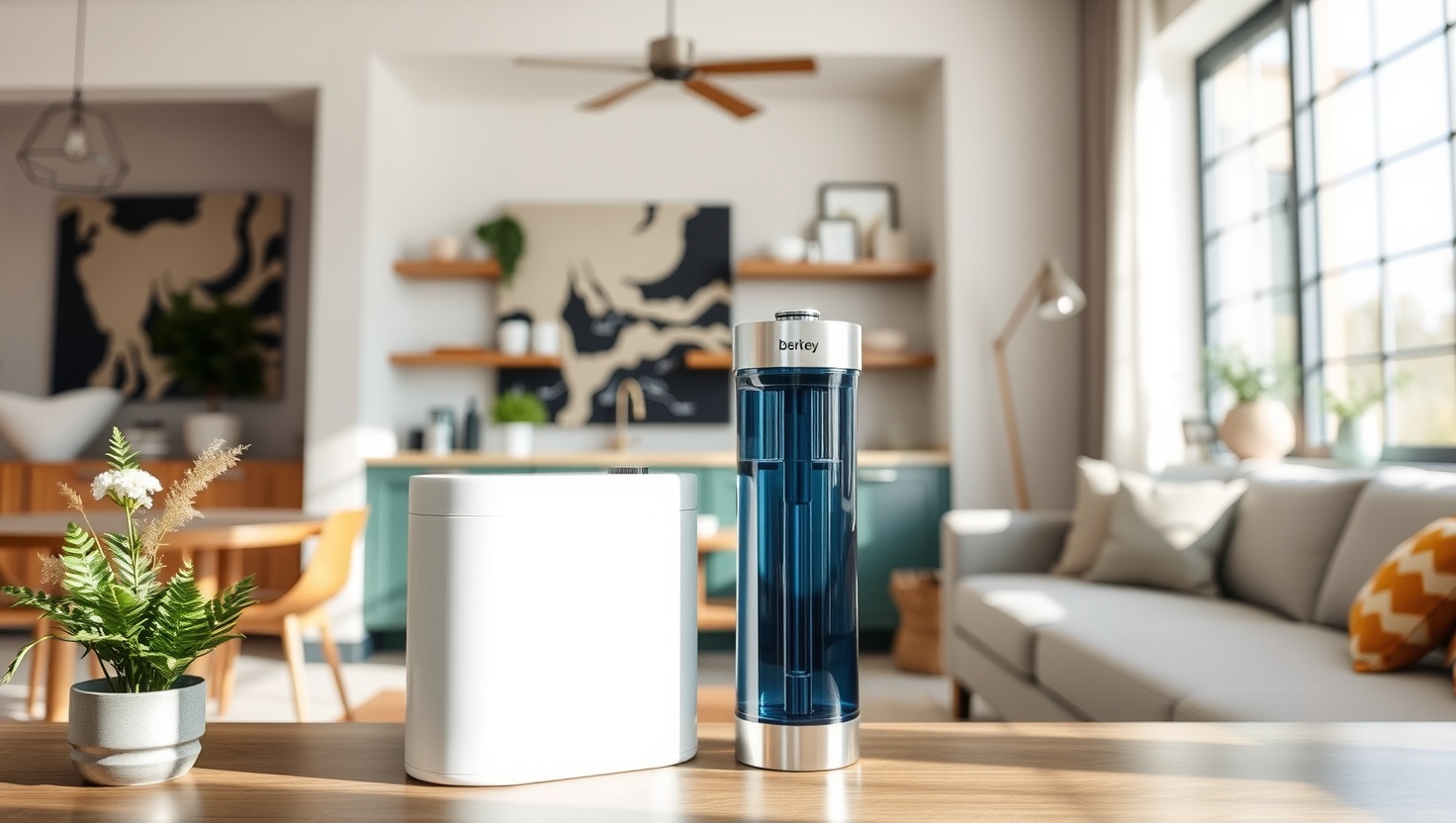
Here's a fact that should make every prepper and homesteader stop in their tracks: Berkey — the gold standard of gravity water filters for two decades — is no longer available in the United States. An EPA Stop Sale order hit their entire supply chain, the Supreme Court declined their appeal, and the iconic Black Berkey filter elements are gone.
British Berkefeld with Ultra Fluoride Filters — Our Top Recommendation
If you want the most rigorously certified gravity filter on the market, the British Berkefeld is the answer. Made in the UK with a lineage dating back to the 1800s, these ceramic filter systems have…
In a hurry? That’s our pick. Want the reasoning and the full comparison? Keep reading.
That created a wave of panic buying, sketchy knockoffs flooding Amazon, and a lot of confused people wondering: what do I do now? The answer is straightforward — and the good news is the alternatives are genuinely excellent, some with better certifications than Berkey ever had.
Gravity filters work without electricity, without plumbing, without any infrastructure at all. Pour water in the top, gravity does the work, clean water comes out the bottom. For off-grid homesteaders, emergency preparedness, and anyone who wants reliable clean water independent of the grid, they're irreplaceable. Here are the five that actually deserve your money in 2026.
Key Takeaways
- Berkey's Black Berkey elements were hit with an EPA Stop Sale order — the silver in the filters was classified as an unregistered pesticide under FIFRA
- Gravity filters work with zero electricity or water pressure — they're the ultimate off-grid and emergency water solution
- The British Berkefeld achieves the highest contaminant reduction score (9.37/10) with strong third-party certifications
- The Alexapure Pro is the most popular Berkey alternative — stainless steel, 200+ contaminants removed, single-element design
- The ProOne Big+ uses NSF/ANSI 42 & 53 certified, American-made filters and fits existing Berkey housings
- The Santevia Gravity System stands out for remineralizing filtered water — not just removing bad stuff, but adding good minerals back
What Happened to Berkey?
Berkey didn't go out of business because their filters were bad. They went under because of a regulatory classification fight that they ultimately lost.
The Black Berkey filter elements contain silver, which acts as an antimicrobial agent — it kills bacteria inside the filter housing to prevent biofilm buildup. This is a smart design feature. But the EPA classifies any product that makes pesticidal claims (including killing bacteria) as a pesticide under the Federal Insecticide, Fungicide, and Rodenticide Act (FIFRA). That means it must be registered as a pesticide — which Berkey's filters were not.
The EPA issued Stop Sale orders against Berkey beginning in 2022. Berkey's parent company New Millennium Concepts fought back in court. The Supreme Court declined to hear their appeal in late 2024. The lawsuit ended. The filters stopped.
If you already own a Berkey housing — the stainless steel body — don't throw it away. Several of the filters on this list are compatible drop-in replacements. You just need new elements.
Why Gravity Filters Are in a Class of Their Own
Before diving into the picks, it's worth understanding why gravity filters are uniquely valuable — and why no other filter type fully replaces them.
Reverse osmosis systems need electricity and water pressure. Pitcher filters are fine for daily use but hold tiny volumes and use fragile cartridges that don't work in an emergency. UV filters need power. Countertop filters need plumbing connections.
A gravity filter needs nothing. You pour water in the top. Gravity pulls it through the filter media. Clean water collects in the lower chamber. The whole process happens at atmospheric pressure, with no moving parts, no power draw, no dependency on municipal infrastructure.
For an emergency where the tap stops working, for an off-grid cabin, for a homestead that sources water from a well or a stream — a gravity filter is the most reliable option you can own. It works the same way whether the grid is up or down.
The 5 Best Gravity Water Filters in 2026
These five covers the full range — from the highest-certified premium option to an excellent budget entry. Each has been researched for real-world performance, filter lifespan, certification status, and value.
1. British Berkefeld with Ultra Fluoride Filters
If you want the most rigorously certified gravity filter on the market, the British Berkefeld is the answer. Made in the UK with a lineage dating back to the 1800s, these ceramic filter systems have been tested and trusted longer than almost any competitor. The current generation paired with Ultra Fluoride filter candles achieves a 9.37 out of 10 contaminant reduction score in independent third-party testing — the highest of any gravity filter tested.
The Sterasyl ceramic candle filters remove bacteria to 99.999%, cysts, chlorine, turbidity, and a wide range of heavy metals. Pair them with the Super Sterasyl or Ultra Fluoride upgrade and you add fluoride reduction to the list. The stainless steel housing is built for decades of use. Filter candles are cleanable with a soft brush, extending their lifespan significantly.
One genuine practical advantage: ceramic filters are visually honest. When they're clogged, flow rate drops. When they crack, water bypasses them — and the cracks are visible. You always know exactly where you stand with your filtration, which is valuable in an emergency scenario.
- Highest independent certification score (9.37/10)
- Ceramic filters are cleanable and visually inspectable
- Removes fluoride with Ultra Fluoride candles
- Long-established brand with 100+ year track record
- No silver — no EPA classification concerns
- Slower flow rate than some competitors
- Ceramic elements can crack if dropped
- Less widely available in US than domestic alternatives
- Premium price point
2. Alexapure Pro Gravity Water Filter
The Alexapure Pro is the filter that absorbed most of the Berkey refugee demand — and for good reason. It's a stainless steel gravity system with a clean, kitchen-friendly design, a single proprietary filter element, and claims of removing over 200 contaminants including bacteria, viruses, heavy metals, chlorine, pharmaceuticals, and more.
The single-element design is both a strength and a limitation. On the strength side: setup is dead simple, replacement is straightforward, and cost per replacement filter is competitive. On the limitation side: flow rate is slower than two-element systems like the British Berkefeld — expect around 1-2 gallons per hour depending on water source quality. For a family of two, this is perfectly fine. For a larger household relying on it as a primary water source, you'll be refilling more often.
Where the Alexapure earns particular praise is reliability and value. The unit holds 2.25 gallons in the lower chamber, the stainless steel housing is durable, and replacement filters are widely available. This is the most practical "just works" option for the majority of buyers making the switch from Berkey.
- Removes 200+ contaminants including viruses
- Simple single-element design — easy setup and maintenance
- Stainless steel housing — kitchen-friendly
- 2.25-gallon lower chamber capacity
- Replacement filters widely available and affordable
- Slower flow rate with single element
- Not NSF certified (uses independent lab testing)
- Less ideal for large households or high-volume use
- Does not add minerals back to water
3. Purewell Gravity Water Filter
If the premium options are outside your current budget but you refuse to compromise on having a capable gravity filter, the Purewell Gravity Water Filter delivers surprising value. It's a stainless steel, Berkey-style gravity system at roughly half the price of the Alexapure Pro — and the filter performance is solid for everyday use and emergency situations.
The Purewell uses ceramic and activated carbon filter elements that remove bacteria (99.99%), chlorine, heavy metals, and sediment. It won't match the pathogen removal depth of the British Berkefeld or the breadth of the Alexapure Pro, but for most households dealing with municipal tap water, questionable well water, or emergency water sourced from rain or a stream, it covers the critical bases competently.
The stainless steel build quality is respectable for the price point. The 2.25-gallon system sits on a countertop without looking out of place. Replacement filters are affordable and available. This is the "start now, upgrade later" option — and starting now, with something, always beats waiting until the perfect moment that never comes.
- Half the price of premium alternatives (~$120)
- Stainless steel construction — durable and food-safe
- Removes bacteria, chlorine, heavy metals, sediment
- Affordable and available replacement filters
- Good entry point for new preppers and homesteaders
- No virus removal (unlike Alexapure or British Berkefeld)
- No fluoride reduction
- Less comprehensive contaminant removal than premium picks
- Fewer user reviews than established brands
4. Santevia Gravity Water System
The Santevia Gravity Water System takes a different approach than every other filter on this list. It doesn't just remove contaminants. It adds minerals back. The multi-stage filtration process — ceramic pre-filter, activated carbon, mineral stones, and a final polishing stage — removes chlorine, lead (99%), bacteria, and other contaminants, then adds calcium, magnesium, and other trace minerals that get stripped from heavily treated municipal water.
Why does that matter? Filtered water without minerals can taste flat and slightly acidic. Remineralized water tastes like good spring water. For daily drinking, the difference is noticeable — and the added minerals have genuine health value. This is why independent water experts frequently rank the Santevia as the best all-round gravity system when both filtration quality and drinking experience are factored in.
The multi-stage design does mean more components to maintain — each filter stage has its own replacement schedule. But the system is well-documented, replacement parts are available, and the overall cost over time is competitive. If your goal is the best-tasting, most minerally balanced water possible — while maintaining full off-grid capability — the Santevia is genuinely impressive.
- Remineralizes water — calcium, magnesium, trace minerals added back
- 99% lead removal certified
- Best-tasting gravity-filtered water of any system here
- Highly rated by independent water quality experts
- Fluorite media reduces fluoride
- Multi-stage means more components and replacement schedules
- Slightly smaller capacity than some competitors
- Not ideal for very turbid or heavily contaminated source water
- Replacement parts require tracking multiple filter types
5. ProOne Big+ Gravity Water Filter
The ProOne Big+ earns its place on this list with something none of the other stainless gravity systems fully match: actual NSF/ANSI certification. The ProOne G2.0 filter elements are certified under NSF/ANSI Standards 42 (aesthetic effects — chlorine, taste, odor) and 53 (health effects — lead, cysts, VOCs) and P231 (purification — bacteria and viruses). These are real, independently verified certifications — not just lab test claims.
Beyond certification, the ProOne G2.0 elements are manufactured in the United States, include fluoride reduction built-in (no separate add-on required), and are the most popular drop-in replacement for existing Berkey housings. If you already own a Berkey and just need new elements, ProOne is the most straightforward upgrade path.
The system holds 2.75 gallons in the lower chamber, uses a dual-filter configuration for a faster flow rate, and the stainless steel construction is solid. Replacement elements are priced competitively at around $79 per element. For buyers who want certified performance, American manufacturing, and a clear Berkey upgrade path, the ProOne Big+ is the most well-rounded choice on this list.
- NSF/ANSI 42, 53, and P231 certified — independently verified
- American-made filter elements
- Removes fluoride without separate add-on
- Drops into existing Berkey housings
- Larger 2.75-gallon lower chamber
- Higher price point (~$270 for full system)
- Replacement elements cost ~$79 each
- Fewer retail locations than some competitors
- Flow rate slower than two-element Berkefeld at first use
Quick Comparison: How the 5 Stack Up
| Filter | Price | Certification | Fluoride | Viruses | Best For |
|---|---|---|---|---|---|
| British Berkefeld | ~$300 | 3rd-party (9.37/10) | Yes (Ultra) | No | Certification & score |
| Alexapure Pro | ~$250 | Independent labs | No | Yes | Most popular alternative |
| Purewell Gravity | ~$120 | Basic | No | No | Budget entry point |
| Santevia Gravity | ~$200 | Independent | Yes | No | Best taste + minerals |
| ProOne Big+ | ~$270 | NSF/ANSI 42, 53, P231 | Yes | Yes | Strongest certifications |
How Gravity Filters Work (And Why They're So Reliable)
The mechanism is simple enough that it's been in use for over a century — which is also why it's so reliable in emergencies. Water is poured into an upper chamber. Gravity pulls it through one or more filter elements into a lower chamber where it collects for drinking.
The filter elements do the real work. Ceramic elements physically block particles, bacteria, and cysts because their pore sizes are smaller than those pathogens. Activated carbon adsorbs chemicals — chlorine, chloramines, VOCs, pharmaceuticals — by bonding them to the carbon surface. Some elements combine ceramic with carbon. Others add ion exchange media for heavy metals, fluorite for fluoride, or silver for antimicrobial action (which, as we've covered, is what got Berkey into trouble).
Flow rate is the main trade-off with gravity filtration. You're not going to get water on demand. Expect 1-3 gallons per hour depending on your system, the condition of your elements, and the turbidity of your source water. The solution is simple: refill the upper chamber regularly, and the lower chamber stays full. For a family of four using about 2 gallons of drinking water per day, this is not a limitation that will cause any real inconvenience.
Filter Lifespan: What to Expect and How to Extend It
Filter element longevity varies by type and usage, but here are realistic estimates based on a household using roughly 1-2 gallons of filtered water per day:
- British Berkefeld Sterasyl candles: ~1,000 gallons each, but ceramic elements are cleanable — scrub them with a soft brush to restore flow rate and extend life. Many users get 2,000+ gallons with proper cleaning.
- Alexapure Pro element: Rated for 5,000 gallons — roughly 5-7 years of daily household use. One of the longest-lasting elements available.
- Purewell ceramic element: Typically 500-1,000 gallons. More budget-friendly to replace. Keep a spare on hand.
- Santevia multi-stage filters: Each stage has its own schedule. Ceramic pre-filter: ~750 gallons. Carbon block: ~750 gallons. Mineral stones last much longer — typically 1-2 years.
- ProOne G2.0: Rated for 1,500-2,000 gallons per element. The dual-element setup gives you 3,000-4,000 gallons of combined capacity before replacement.
The universal best practice: always have at least one set of replacement elements stored with your system. Filter elements degrade over time even in storage, so rotate them — use the oldest stored set first, buy a new spare, repeat. This is especially important for emergency preparedness.
Who Should Buy a Gravity Filter?
The honest answer is: almost anyone concerned about water quality and resilience. But gravity filters are especially valuable for:
- Off-grid homesteaders sourcing water from wells, springs, rain collection, or surface water. A gravity filter turns any freshwater source into safe drinking water without any infrastructure.
- Emergency preparedness households who want clean water regardless of what happens to the grid, municipal systems, or supply chains. A gravity filter plus a proper water storage system covers you for extended disruptions.
- Anyone with aging infrastructure concerns — lead pipes, rural wells with agricultural runoff risk, areas with known water quality issues. A gravity filter gives you water quality control that doesn't depend on your utility company fixing anything.
- Families trying to break the bottled water habit — the economics are compelling. At $1-2 per gallon for bottled water, a $250 gravity filter pays for itself in months and reduces plastic waste dramatically.
For more on water independence as part of a broader preparedness plan, see our guide on whole-house water filters in 2026 and solar well pumps for off-grid living.
The grid goes down. Is your water secure?
A gravity filter needs no electricity, no plumbing, no infrastructure. It just works — with any freshwater source, anywhere. Pick the one that fits your budget and start building real water independence today.
See the ProOne Big+ on AmazonSee the Alexapure Pro
What to Read Next
- Best Berkey Alternatives in 2026 — if you already own a Berkey housing and just need replacement elements
- Best Whole-House Water Filters in 2026 — for comprehensive filtration at the point of entry
- Best Emergency Water Storage Containers in 2026 — pair your filter with proper storage
- Best Solar Well Pumps for Off-Grid Living in 2026 — the next step in water independence
Frequently Asked Questions
The EPA issued a Stop Sale order against Berkey starting in 2022-2023 because the silver embedded in the Black Berkey filter elements acts as an antimicrobial agent. Under FIFRA (the Federal Insecticide, Fungicide, and Rodenticide Act), any product making pesticidal claims — including killing bacteria — must be registered as a pesticide. Berkey disputed this classification but the Supreme Court declined to hear their appeal. The original Black Berkey elements are no longer sold or manufactured in the US.
For the closest equivalent to the Berkey experience with better certifications, the British Berkefeld with Ultra Fluoride filters is the top pick — it holds NSF-equivalent third-party certifications and achieves a 9.37/10 contaminant reduction score. The Alexapure Pro is the most popular alternative for budget-conscious buyers. The ProOne Big+ is the best drop-in replacement if you already own a Berkey housing.
It depends on the system and how much you use it. British Berkefeld ceramic elements last around 1,000 gallons each — but can be extended with cleaning. Alexapure Pro's single element is rated for 5,000 gallons. ProOne G2.0 elements last 1,500-2,000 gallons. Santevia's multi-stage filters have varying lifespans per stage. Always track your usage and keep a spare set of replacement elements on hand.
Not all of them do by default. The British Berkefeld with Ultra Fluoride filters specifically removes fluoride. The Santevia Gravity System uses fluorite media to reduce fluoride. The ProOne G2.0 elements include fluoride reduction without a separate add-on. Alexapure Pro does not list fluoride removal as a primary feature. If fluoride reduction is a priority, check your chosen filter includes fluoride media.
Yes, and for most households it's a much smarter choice. A quality gravity filter removes the same contaminants that concern people about tap water — chlorine, lead, chloramines, bacteria — plus much more. Filtered tap water costs a fraction of a penny per gallon versus $1-2 for bottled water, produces no plastic waste, and puts clean water control in your hands. For everyday use and emergency preparedness, a gravity filter is one of the highest-value investments you can make.