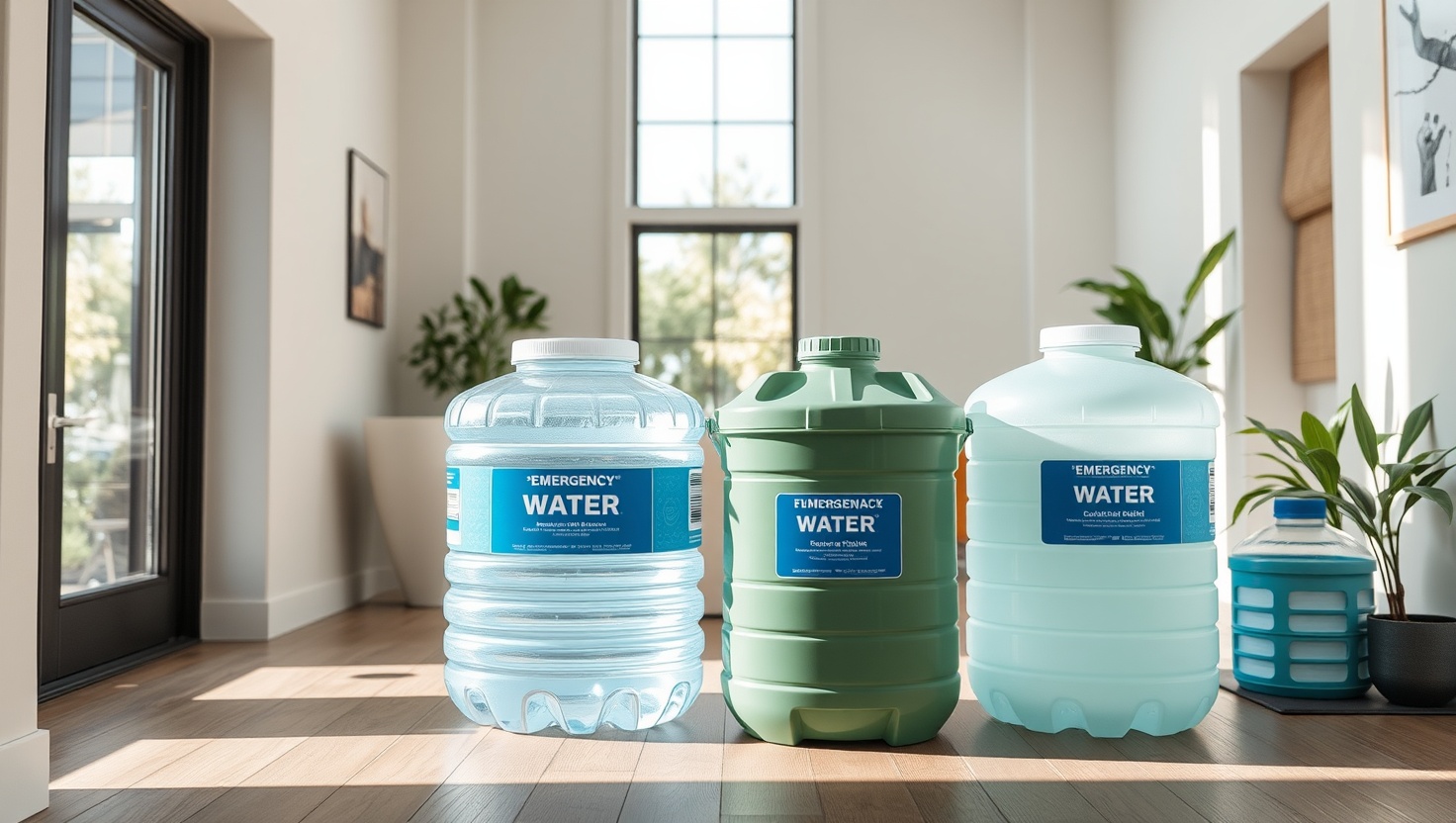
FEMA recommends 1 gallon of water per person per day. That sounds manageable until you do the math: a family of four needs 56 gallons for just two weeks. A natural disaster, extended power outage, or water main contamination can cut your supply in hours. Most American households have zero water stored. Zero.
WaterBrick Stackable Container — Our Top Recommendation
The WaterBrick is the smartest water storage solution for anyone living in an apartment, condo, or home with limited storage space. The design is the key differentiator: each container features an…
In a hurry? That’s our pick. Want the reasoning and the full comparison? Keep reading.
Water is the one thing you absolutely cannot improvise in an emergency. You can skip food for days. You can find shelter creatively. But without safe drinking water, a 72-hour emergency becomes life-threatening. The good news: storing water does not require a bunker or a huge budget. The right containers make it simple, affordable, and space-efficient — whether you live in an apartment, a house, or somewhere in between.
This guide reviews the five best emergency water storage containers in 2026. We evaluated them on material safety, storage efficiency, durability, portability, and real-world practicality. From a $12 collapsible bag for your go-bag to an $85 prepper-standard 55-gallon barrel, every pick on this list earns its place.
Key Takeaways
- FEMA's 1 gallon per person per day is the bare minimum — aim for 2 gallons per person for cooking and sanitation
- The WaterBrick Stackable Container ($22) is the best overall for apartments and tight spaces — interlocks like LEGO bricks
- The Reliance Aqua-Tainer 7-gallon ($15) is the best budget portable option — most popular jug on the market for a reason
- The Augason Farms 55-Gallon Barrel ($85) is the prepper standard for whole-family long-term storage
- All containers must be food-grade HDPE — never repurpose milk jugs, bleach bottles, or non-food containers
- Treat stored tap water with water preserver concentrate to extend safe storage life up to 5 years
How Much Water Does Your Family Actually Need?
Before picking a container, know your target. FEMA recommends 1 gallon per person per day as a minimum — that covers drinking water and basic hygiene. In practice, if you want to cook meals, wash hands properly, and handle any medical needs, plan for 2 gallons per person per day. If you live somewhere hot, have young children, or are caring for someone with health needs, add 50% on top of that.
Here is a quick reference table. Find your household size and decide your target storage period. These numbers use the 1-gallon FEMA minimum — double them for the more realistic 2-gallon estimate.
| Household Size | 3 Days | 2 Weeks | 30 Days |
|---|---|---|---|
| 1 person | 3 gal | 14 gal | 30 gal |
| 2 people | 6 gal | 28 gal | 60 gal |
| 3 people | 9 gal | 42 gal | 90 gal |
| 4 people | 12 gal | 56 gal | 120 gal |
| 5 people | 15 gal | 70 gal | 150 gal |
Do not forget pets. Add roughly 1 quart per day for a small dog or cat, more for larger animals. Once you know your target volume, the container choices below will make much more sense. Most households need a combination of container types — stackable smaller units for day-to-day access and a large barrel for deep reserves.
For more detail on planning your full water supply, see our complete emergency water storage guide.
Quick Comparison: All 5 Containers Side by Side
| Product | Capacity | Price | Material | Best For |
|---|---|---|---|---|
| WaterBrick Stackable | 3.5 gal each | $22 each | BPA-free HDPE | Apartments, tight spaces |
| Reliance Aqua-Tainer | 7 gal | $15 | FDA-approved HDPE | Rotation, portability |
| Augason Farms Barrel | 55 gal | $85 | Food-grade HDPE | Long-term family storage |
| Scepter Military Can | 5 gal | $35 | BPA-free HDPE | Vehicles, rough handling |
| HydroBlox Collapsible | 5 gal | $12 | BPA-free food-grade | Go-bags, car kits |
The 5 Best Emergency Water Storage Containers (2026)
1. WaterBrick Stackable Container (3.5 gal) — Best for Apartments & Small Spaces
WaterBrick Stackable Container
The WaterBrick is the smartest water storage solution for anyone living in an apartment, condo, or home with limited storage space. The design is the key differentiator: each container features an interlocking top and bottom — like LEGO bricks — so you can stack them tightly into corners, under beds, in closets, or along walls without anything shifting or falling. Other containers just stack loosely and topple. WaterBricks lock into stable columns.
Each container holds 3.5 gallons and is made from BPA-free HDPE — the same food-grade plastic used in approved water and food storage applications. The rectangular form factor is far more space-efficient than round jugs, which waste corners and edges. The built-in carrying handle and compact size mean one filled container weighs about 29 lbs — manageable for most adults to move alone. Buy them in sets of four or more; at $22 each, eight WaterBricks gives you 28 gallons of storage — enough for a family of two for two weeks.
The sealed cap provides an airtight, leak-proof closure and threads on securely without any hardware. For the most efficient apartment water storage system on the market, nothing competes with the WaterBrick at this price point.
- Capacity: 3.5 gallons per unit
- Material: BPA-free HDPE
- Stacking: Interlocking top/bottom design
- Weight (full): ~29 lbs
- Best buy: Sets of 4-10 for maximum efficiency
- Interlocking design stacks securely — no toppling
- Space-efficient rectangular shape
- BPA-free food-grade HDPE
- Portable at 29 lbs per unit when full
- Great value when bought in sets
- Airtight, leak-proof cap
- Higher per-gallon cost than large barrels
- No integrated spigot — need a separate pump or spout
- Smaller individual capacity than 7-gallon jugs
Best for: Apartment dwellers, anyone with limited floor space, and households that want modular storage they can expand incrementally. Buy 4 to start, then add more as your budget allows.
Check Price →2. Reliance Aqua-Tainer (7 gal) — Best Portable Jug for Rotation
Reliance Aqua-Tainer 7-Gallon
The Reliance Aqua-Tainer is the most popular emergency water jug on the market, and it earns that position honestly. At $15, it delivers a well-engineered 7-gallon container with features that more expensive options skip: an integrated recessed spigot that stays protected during transport, UV-blocking blue HDPE that slows the breakdown of stored water in light-exposed areas, and FDA-approved food-grade plastic throughout. One Aqua-Tainer holds 7 gallons — that is a week's supply for one person at the FEMA minimum.
The real strength of the Aqua-Tainer is its rotation system. Emergency water should not sit forever — rotate your supply every 6-12 months to ensure freshness. The Aqua-Tainer is light enough when empty to fill at any tap, heavy enough at 58 lbs full that moving it requires either a cart or two people, but manageable for portability within the home. The built-in spigot means you do not need a separate pump or siphon to access the water — just position the jug and open the valve.
Buy several and rotate them seasonally. At $15 each, four Aqua-Tainers gives a family of four a full two-week supply for $60. That is the most cost-effective water storage system available for most households.
- Capacity: 7 gallons
- Material: FDA-approved HDPE, UV-blocking blue
- Spigot: Integrated, recessed for protection
- Weight (full): ~58 lbs
- Rotation: Every 6-12 months recommended
- Best price-per-gallon of any portable container
- Integrated spigot — no separate pump needed
- UV-blocking blue plastic protects water quality
- FDA-approved food-grade HDPE
- Lightweight and easy to fill when empty
- Industry-standard for emergency rotation
- 58 lbs full — difficult to move alone
- Round shape wastes corner storage space
- Spigot quality is functional but not premium
Best for: Anyone starting their water storage from scratch. Buy four, fill them, and label them with the fill date. Rotate on a schedule. At $15 each this is the most practical first step for most households.
Check Price →3. Augason Farms 55-Gallon Water Barrel — The Prepper Standard
Augason Farms 55-Gallon Water Barrel
If you are serious about long-term water security for your family, the Augason Farms 55-gallon barrel is the benchmark. One barrel holds enough water for a family of four for nearly two weeks at the FEMA minimum — and when treated with water preserver concentrate, that water stays safe for up to five years. No rotating jugs every six months. No stacking dozens of smaller containers. One barrel, properly positioned, covers your family's most critical emergency resource for years at a time.
The barrel is constructed from food-grade HDPE — thick, durable, and free of BPA or chemical leaching concerns. The 55-gallon size is the sweet spot for home storage: large enough to be meaningful, small enough to fit through most standard doorways (just barely, with planning). The kit includes a bung wrench for opening the barrel's sealed bung holes — but it does not include a siphon pump, which you will need to access the water. Budget an extra $15-20 for a hand pump or electric barrel pump to complete your setup.
One important note: a full 55-gallon barrel weighs approximately 460 lbs. You must position it before filling it. Choose your location first — a basement corner, garage wall, or utility room — and fill it in place. It is not going anywhere once it is full, which is actually fine for a long-term reserve.
- Capacity: 55 gallons
- Material: Food-grade HDPE
- Includes: Barrel + bung wrench
- Storage life: Up to 5 years when treated
- Weight (full): ~460 lbs — position before filling
- 55 gallons covers a family of 4 for nearly 2 weeks
- 5-year storage life when treated — minimal maintenance
- Food-grade HDPE construction
- Best cost-per-gallon of any container on this list
- Includes bung wrench
- 460 lbs full — must position before filling, not portable
- Requires separate pump/siphon to access water (~$15-20)
- Not suitable for apartments or buildings without ground floor access
- Requires treatment chemicals for long-term storage
Best for: Homeowners with a basement, garage, or utility room. The single most efficient way to store a family water reserve. Pair it with water preserver concentrate and a hand pump and you have a 5-year supply covered in one setup.
Check Price →4. Scepter Military Water Can (5 gal) — Best for Vehicles & Tough Conditions
Scepter Military Water Can
The Scepter Military Water Can was designed to the same specs as military-issue water containers — and it shows in the construction quality. The BPA-free HDPE walls are noticeably thicker than consumer-grade jugs. The cap is a multi-turn leak-proof design that will not loosen from vibration or rough handling. The rectangular form stacks cleanly and fits in truck beds, SUV cargo areas, and gear storage systems. This is not a container you need to handle delicately.
At 5 gallons and around 42 lbs full, the Scepter hits the sweet spot for single-person portability. It is heavy enough to take seriously, light enough for one adult to move and pour from. The smooth exterior has no integrated spigot — access is through the cap opening, so a collapsible spout or funnel is useful for dispensing water without lifting the full container. The stackable flat-bottom and flat-top design means you can pile several of these in a vehicle or storage area without the rocking that round containers create.
Military-grade durability at a $35 price point is genuine value. These containers do not crack, do not leak, and do not degrade in vehicle temperature extremes the way cheaper plastic does. If you are building an emergency kit for your car, truck, or camper, the Scepter is the right call.
- Capacity: 5 gallons
- Material: BPA-free HDPE, mil-spec construction
- Cap: Multi-turn leak-proof design
- Weight (full): ~42 lbs
- Stackable: Yes, flat-bottom/flat-top design
- Military-spec durability — built for rough handling
- BPA-free, food-grade HDPE
- Leak-proof multi-turn cap
- Stackable rectangular design
- Handles vehicle temperature extremes well
- 42 lbs full is manageable for most adults
- No integrated spigot — need a separate spout or funnel
- More expensive per gallon than the Aqua-Tainer
- Plain exterior — no color-coded ID
Best for: Vehicle emergency kits, garage storage, camping, or anyone who needs a container that handles rough treatment without complaint. Buy two for each vehicle and store them in the trunk year-round.
Check Price →5. HydroBlox Collapsible Water Container (5 gal) — Best Lightweight Backup
HydroBlox Collapsible Water Container
The HydroBlox Collapsible solves a specific problem: how do you include water storage capacity in a go-bag or car kit without dedicating space to an empty rigid container? When empty, this 5-gallon container folds flat — roughly the size of a folded rain poncho. Toss it in your bug out bag, your car trunk, or a hiking pack. When you need water storage at an evacuation shelter, a campsite, or any location with a water source, unfold it and fill it up. At $12, it costs less than a meal out.
The material is BPA-free food-grade plastic with a reinforced handle and a reliable threaded cap. It is not designed to withstand the same abuse as the Scepter — this is a backup option, not a primary storage solution. At 5 gallons full it weighs around 42 lbs, which is the practical ceiling for most people to carry without a cart. The wide-mouth opening makes filling from any source straightforward, and the flat panels stack more cleanly when full than round containers.
Think of the HydroBlox as insurance. It stores in almost no space when empty, and when a crisis hits and you need to fill containers fast, it is already with you. Pair it with purification tablets or a portable water purification method and you have a complete emergency water system that fits in a backpack.
- Capacity: 5 gallons
- Material: BPA-free food-grade plastic
- Collapsed size: Folds flat — minimal space when empty
- Weight (full): ~42 lbs
- Best use: Go-bag backup, car kit, evacuation scenarios
- Folds flat — near-zero storage space when empty
- Most affordable option at $12
- BPA-free food-grade materials
- 5-gallon capacity is meaningful backup volume
- Wide-mouth opening for easy filling
- Not a primary storage solution — backup use only
- Less durable than rigid containers over time
- No spigot — need to pour or use a separate pump
Best for: Go-bags, bug out bags, car emergency kits, or any situation where you need water storage capacity that takes up no space until you need it. Everyone should have at least one folded in their vehicle.
Check Price →Water Storage Tips That Actually Matter
Buying the right container is only half the job. How you store, treat, and rotate your water determines whether it is safe when you need it. These are the practices that make the difference.
1 Choose the Right Location
Store water containers in a cool, dark place away from direct sunlight, heat sources, and chemicals. Heat accelerates bacterial growth; sunlight degrades plastic over time; chemical vapors (gasoline, cleaning products, pesticides) can permeate plastic and contaminate water. A basement, interior closet, or shaded garage corner are all solid options. Elevate containers slightly off bare concrete to prevent moisture contact and make them easier to move. And never forget: a 55-gallon barrel weighs 460 lbs when full — pick the spot before you fill it.
2 Treat Your Water for Long-Term Storage
Tap water from a municipal supply is safe to store as-is in sealed containers for 6-12 months. For storage beyond that, add a water preserver concentrate (Aquatabs, Purogene, or similar) according to the product instructions — this extends safe storage life to 5 years. If you are storing well water or any untreated source, treat it before storage. Label every container with the fill date and treatment date. When in doubt before drinking, use a quality emergency water filter or purification tablets.
3 Build a Rotation Schedule
Untreated tap water should be rotated every 6-12 months. Treated water can stay for up to 5 years. The simplest system: fill your containers with the current date written on a piece of tape, set a calendar reminder for your rotation date, and when it comes due, use the water for your garden or cleaning and refill with fresh tap water. This way your emergency supply never goes stale and you always know exactly what you have. For a family using the Aqua-Tainer system, four containers rotated twice a year is a 30-minute twice-yearly task.
4 Always Keep a Pump or Spigot Nearby
Most large containers — including the Augason Farms barrel and the Scepter can — do not have integrated spigots. A hand barrel pump ($15-20) or a simple collapsible spout makes accessing stored water dramatically easier and reduces spilling. Keep the pump stored on or next to your water containers so it is never misplaced. For a complete water system, pair your storage containers with a portable water filter so you can purify any supplemental source in a crisis.
How We Picked These Containers
We evaluated every container on this list against five criteria that matter in real emergencies — not theoretical ones.
- Material safety: Every container must be BPA-free food-grade HDPE or equivalent. No repurposed containers, no chemical leaching risk, no shortcuts on what holds your family's drinking water.
- Storage efficiency: How much water can you fit in a given footprint? Stackability, form factor, and space-per-gallon ratios all matter.
- Durability: Will this container survive drops, pressure from stacking, vehicle vibration, and temperature extremes? We prioritized containers used in field and military contexts for validation.
- Portability: Some containers are meant to be permanent; others need to move. We evaluated each for its intended use case rather than applying a single standard to all.
- Practical value: Does the price match what you actually get? Could you build the same solution cheaper with another approach?
We did not include containers made from unknown or non-food-grade plastic, standard milk jugs or soda bottles, or any product that received consistent complaints about leaking under normal use. Water storage is too important to cut corners on.
Don't Wait for a Crisis to Think About Water
Pick a container, order it today, and fill it this weekend. Your family's two-week water supply costs less than one restaurant dinner.
Start With the WaterBrick →Read: Complete Emergency Water Storage Guide Browse: All Emergency Preparedness Picks
What to Read Next
- Emergency Water Storage Guide 2026 — the complete planning guide: how much to store, how to treat it, and how to build a system that actually works for your household
- Emergency Water Purification Methods for Home 2026 — boiling, chemical treatment, UV, and filter options explained — what to use when and why
- Best Water Filters for Emergencies 2026 — the top portable and countertop filters for supplementing stored water with purified water from any source
- Best Whole House Water Filters 2026 — for households that want long-term water quality protection beyond emergency preparedness
Frequently Asked Questions
Commercially sealed water pouches last up to 5 years. Tap water stored in clean, food-grade containers treated with water preserver concentrate lasts up to 5 years. Untreated tap water in sealed containers should be rotated every 6-12 months. Use food-grade HDPE containers (look for the #2 recycling symbol on the bottom) to prevent chemical leaching. Keep containers away from direct sunlight and heat, which speed up degradation. When in doubt, purify before drinking — a quality water filter or purification tablets handle anything you are unsure about.
If you are storing tap water from a municipal supply, the existing chlorine treatment keeps it safe in a clean, sealed food-grade container for 6-12 months without additional treatment. For longer storage up to 5 years, add a water preserver concentrate like Aquatabs or Purogene when filling. If you are storing well water, treat it before storing — well water is not pre-treated and can develop bacterial growth. For any water you are uncertain about after long storage, run it through a quality filter or add purification tablets before drinking. When in doubt, treat it.
Yes, absolutely. Municipal tap water is safe to store in clean, food-grade containers. Rinse your container with a diluted bleach solution before filling, fill straight from the tap, and seal it tightly. Stored this way, it stays safe for at least 6 months — up to 5 years with water preserver concentrate. Do not use milk jugs (too thin and difficult to thoroughly clean), bleach or chemical containers, or any non-food-grade plastic. All five containers on this list are designed exactly for storing tap water safely.
FEMA recommends a minimum of 1 gallon per person per day — covering drinking and basic hygiene. For a realistic two-week supply, a family of four needs 56 gallons minimum. Most emergency preparedness experts recommend planning for 2 gallons per person per day (covering cooking and more thorough sanitation), which doubles those numbers. Add 1 quart per day for small pets. Start with a two-week supply and scale toward a 30-day reserve as your budget allows. The Augason Farms 55-gallon barrel covers a family of four for nearly two weeks in a single container — the most efficient starting point for whole-family storage.
Store water containers in a cool, dark location away from direct sunlight, heat sources, and household chemicals. Ideal spots include a basement, interior closet, or shaded garage corner. Avoid storing near gasoline, pesticides, or cleaning chemicals — plastic can absorb vapors over time. For large containers, position them on a solid, level surface before filling — a full 55-gallon barrel weighs over 450 lbs and cannot be moved. Elevate smaller containers slightly off concrete floors to prevent moisture contact. In apartments, under beds, inside closets, and in kitchen corners all work well for stackable containers like the WaterBrick.