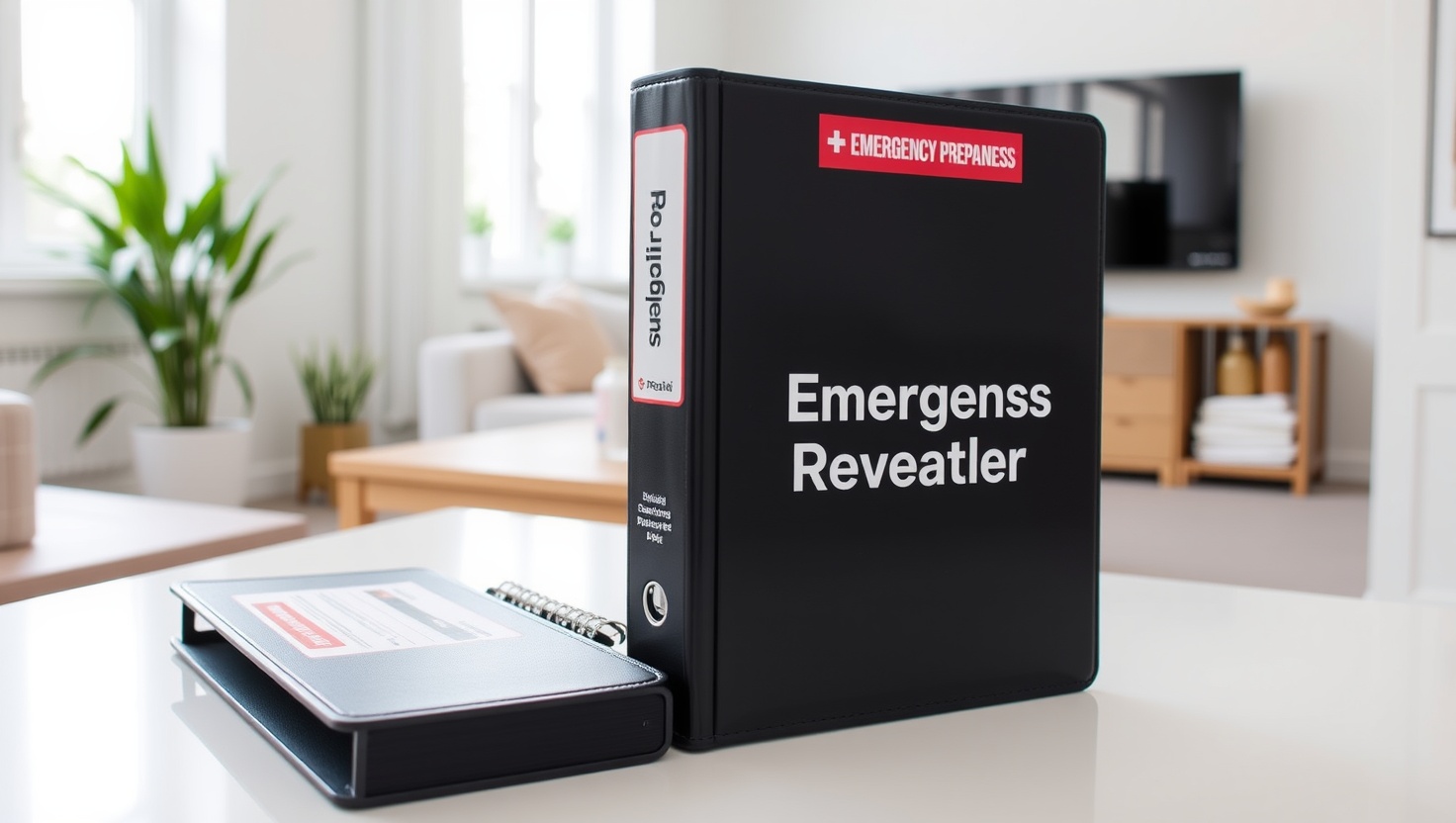
Emergency
If something happened to you tomorrow, could your family find your insurance policies, mortgage documents, and medical records? An emergency preparedness binder puts everything in one grab-and-go location — organized, accessible, and ready. Most families don't realize how chaotic document retrieval becomes during an actual emergency. After a wildfire evacuation notice, a flood warning, or a medical crisis, the last thing you want to do is dig through filing cabinets, search email inboxes, or call your insurance agent while sirens are going off outside.
The good news: building a complete family emergency binder takes about two hours — and once it's done, it works for years with minimal upkeep. We've tested and ranked the best emergency preparedness binders available in 2026, from full kit systems with pre-printed tabs to DIY setups using heavy-duty binders and fireproof pouches.
Think about everything that happens when disaster strikes. You've got minutes — sometimes seconds — to make decisions. First responders need your medical information. Insurance adjusters need your policy numbers. FEMA assistance requires proof of address and ownership. Your kids need their immunization records to stay in a shelter. Your bank needs to verify your identity before releasing emergency funds.
None of that is possible if your documents are scattered across three email accounts, a filing cabinet in the garage (which just flooded), and a safe deposit box at the bank that closed two hours ago.
This is the entire point of an emergency preparedness binder: you are building a single, portable command center for your family's most critical information. It doesn't need to be fancy. It needs to be done.
Protecting documents is only one layer. Read our complete guide to building a family emergency communication plan for 2026 to cover what happens when you can't reach each other.
Your binder should be divided into clearly labeled sections. Here's exactly what belongs in each one.
Your emergency binder should hold certified copies or high-quality photocopies — not originals. Keep originals in a fireproof safe at home or a bank safe deposit box. The binder is for rapid access in an emergency. If you grab it and run, you haven't lost anything irreplaceable — just copies you can replace.
There's a persistent myth that "everything is in the cloud" counts as emergency preparedness. It doesn't.
When your phone is dead, the power is out, and the cell network is jammed, your Google Drive is worthless. Physical documents handed directly to a first responder, an ER nurse, or an insurance adjuster don't require signal or a working battery.
But physical documents can be destroyed. A house fire, a flood, or a simple forgotten binder in an evacuated home means your paperwork is gone. That's where digital backup earns its place.
The right setup: a well-organized physical binder that travels with you, backed up by an encrypted USB drive in your go-bag and a password-protected cloud folder you can access from any device anywhere in the world. Use both. Trust neither alone.
Going further? See our picks for best fireproof document bags and safes for 2026 — the natural companion to your emergency binder.
A binder without a clear structure is just a pile of paper in a cover. Use tabbed dividers — color-coded if possible — to separate your 8 core sections. Label each tab clearly and add a table of contents on the first page so anyone can find what they need, not just you.
Suggested tab order:
Use page protector sleeves for laminated cards and frequently-handled pages. They add maybe $5 to your setup and make a serious difference over years of use.
The 60-second rule: your emergency binder must be reachable within 60 seconds from anywhere in your home. Not in a basement that floods. Not in a garage you can't access when your car is on fire. Not buried in a filing cabinet that requires a key you can't find.
Good locations: a dedicated shelf near the front door, a bedside drawer, a hall closet at eye level. Keep it consistent — every adult in your home should know exactly where it is without having to ask.
Pair it with your go-bag (bug-out bag) if you have one. Or keep it in a waterproof tote that also holds your go-bag essentials — some of the products below are designed exactly for this combination.
Building a complete emergency kit? Start with our wildfire evacuation go-bag checklist for 2026 — your binder belongs in or next to that bag.
We evaluated these picks on organization, durability, ease of use, portability, and value. Whether you want a complete done-for-you kit or just need the right hardware to build your own, there's an option here for your situation.
This is the closest thing to a "plug and play" emergency binder you'll find. The kit comes pre-assembled with a sturdy 1.5-inch binder, color-coded tabbed dividers already labeled across all major document categories, and a full set of fillable prompt sheets that walk you through exactly what to put where. No guessing, no research — just fill and file. It's designed specifically for families, so there are dedicated sections for kids, pets, and per-person medical information.
This option leans into the printable-and-organize approach. You get a quality binder alongside a comprehensive set of printable worksheets — contact sheets, medication logs, insurance summary forms, vehicle information pages, and more. The printables are clear, logically designed, and sized to fit standard pages. If you prefer to have a physical form you can write on (rather than just dropping in photocopies), this setup delivers a cleaner, more organized result. It's also easy to update — just print a fresh page when anything changes.
If you'd rather build your own system exactly to your specifications, the Avery Heavy-Duty 2-Inch View Binder is the gold standard foundation. The rings are reinforced and won't pop open under pressure — a common failure point in cheaper binders. The spine and cover accept customizable inserts so you can label it your way. Two inches gives you enough capacity for a full family document set plus page protectors without the binder bulging. Add your own tabbed dividers, page protectors, and a table of contents, and this becomes a highly personalized system.
This is the premium pick for anyone who takes document protection seriously. The ROLOWAY combo gives you a large fireproof and waterproof bag rated to withstand high temperatures, alongside a compatible binder system that fits inside. Your documents are protected from fire, flood, and physical damage all in one unit. The exterior handles make it easy to grab and run. This is the kind of product that pays for itself the first time a neighbor's house burns down and reminds you it could have been yours.
The Vaultz Locking File Tote takes a different approach to document organization: instead of a ring binder format, it's a portable file tote with hanging file folders and a combination lock. This works better for families with lots of loose documents that don't fit neatly into binder sleeves — like full booklets, pamphlets, or thick insurance documents. The lock gives you a layer of security if the tote is left in a vehicle or at a secondary location. Durable construction and a comfortable handle make it a genuine grab-and-go option.
Building your binder once isn't enough. Documents expire, policies change, and families grow. Here's how to keep your binder current without it becoming a burden.
Set a calendar reminder twice a year — many people tie it to daylight saving time changes. During your review, check: have any insurance policies renewed with new numbers? Are all medications still current? Have contact details changed? Are passports or licenses expiring in the next 12 months? A 20-minute check twice a year keeps everything accurate.
Don't wait for your scheduled review when any of these happen: you move to a new address, a family member joins or leaves the household, you get a new insurance policy, someone starts a new medication, you change banks, or any ID document is renewed or replaced.
Every time you update your physical binder, update your digital backup too. Use a password manager like Bitwarden to store the encrypted digital copies, and keep a second copy on an encrypted USB drive in your go-bag. Name files clearly: "Smith_Health_Insurance_2026.pdf" beats "scan001.pdf" every time.
| Product | Price | Fireproof | Pre-organized | Best For |
|---|---|---|---|---|
| Family Binder Kit | $30 | No | Yes | Most families |
| ICE Binder + Printables | $25 | No | Yes | Detail-oriented organizers |
| Avery Heavy-Duty Binder | $12 | No | No | DIY builders |
| ROLOWAY Combo | $45 | Yes | Partial | High-risk areas |
| Vaultz File Tote | $20 | No | Partial | Bulky documents + lock needed |
For most families starting from scratch, the Emergency Binders Family Emergency Binder Kit is the right call. It eliminates the planning and setup time, comes ready to fill in, and costs less than two trips to a coffee shop. Pair it with the ROLOWAY Fireproof Document Bag to protect your completed binder from fire and water, and you have a system that rivals what professional emergency planners recommend.
If you want to build your own and already have a clear sense of your family's document needs, the Avery Heavy-Duty Binder combined with downloadable printable forms is a more flexible and equally effective option at minimum cost.
Your emergency binder should hold copies of passports, birth certificates, Social Security cards, insurance policies (health, home, auto, life), medical records and medication lists, financial account info, property deeds or lease agreements, vehicle titles, emergency contacts, pet vaccination records, and a digital password backup.
Originals stay in a fireproof safe or bank safe deposit box. The binder holds certified copies or high-quality photocopies — so if you grab it and run, you haven't lost anything irreplaceable.
Keep your emergency binder somewhere you can reach in under 60 seconds — a closet near your front door, a dedicated shelf in a bedroom, or beside your go-bag. Avoid basements (flooding risk) and garages (fire risk, often inaccessible during emergencies).
Every adult in your household should know exactly where it is. Also maintain a digital encrypted backup accessible from anywhere.
At minimum, review and update your binder twice a year. Many people time this with daylight saving time changes as an easy reminder. Beyond that, update it immediately after any major life event: new insurance policy, medication change, address change, new family member, or any renewed ID document.
Twenty minutes twice a year keeps your binder current and your family protected.
Use both. A physical binder works when power is out, cell networks are jammed, or you need to hand a document directly to a first responder or ER nurse. A digital backup — encrypted USB drive in your go-bag plus a password-protected cloud folder — ensures you can access everything remotely if your physical binder is destroyed.
These two approaches complement each other. Never rely on just one.
A fireproof bag protects your documents from heat and water damage, but it doesn't help you find anything quickly. In a real emergency, rummaging through a bag of loose documents costs time you don't have.
The best setup combines a structured binder (with labeled tabs for fast retrieval) inside or alongside a fireproof bag or pouch. The ROLOWAY combo is built exactly for this purpose.
One email per week with practical gear reviews and readiness tips. No fearmongering.
Unsubscribe anytime. We respect your inbox.