Best Emergency Food Bars and Survival Rations in 2026
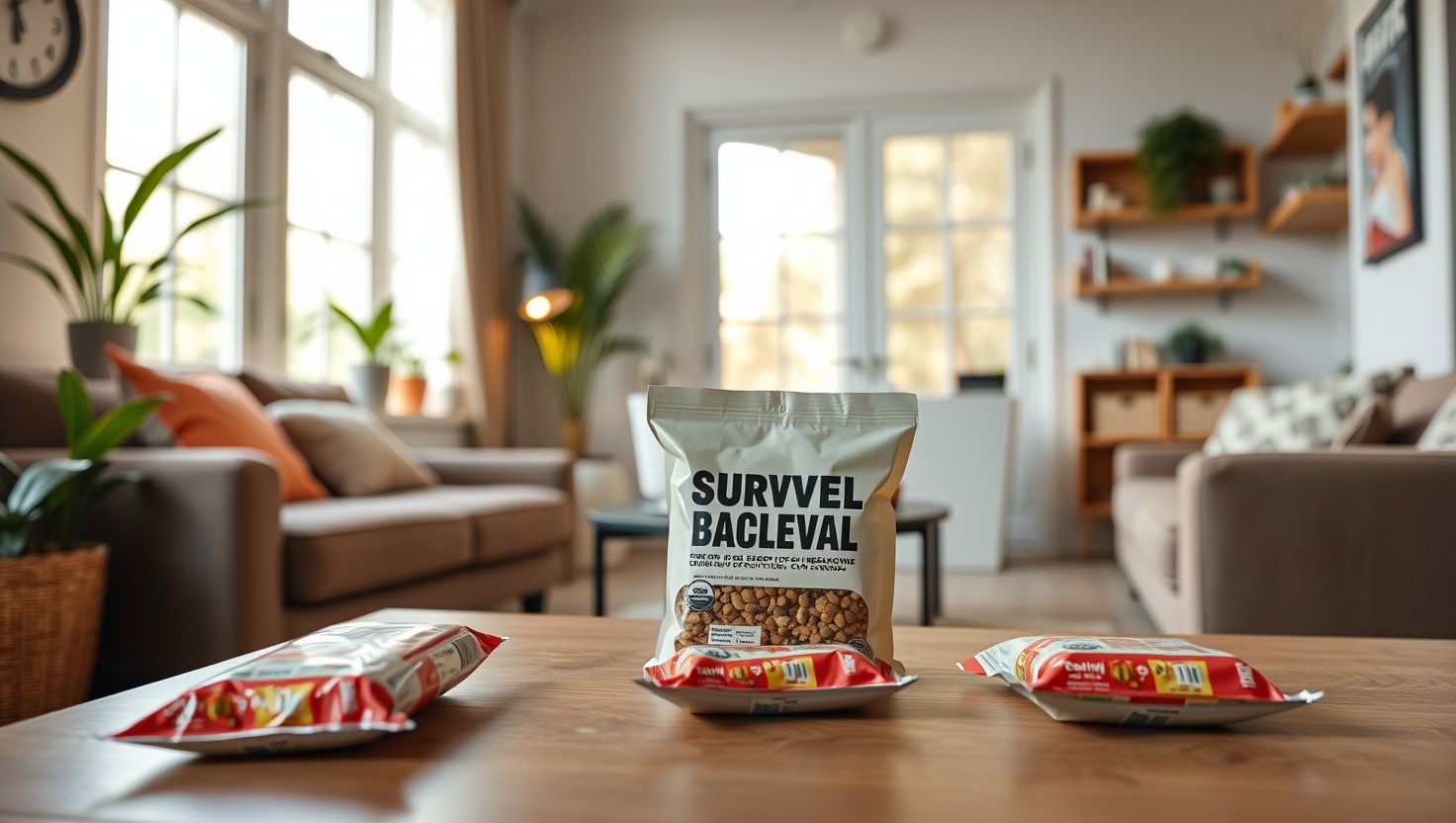
Your emergency kit probably has water, a flashlight, maybe a radio. But what about food that actually lasts? Not canned soup that expires in a year. Not freeze-dried meals that need boiling water you might not have. Emergency food bars are designed for exactly this: tear open, eat, survive. They're calorie-dense, non-thirst-provoking (critical when water is limited), need zero preparation, and last 5 to 25 years on the shelf. Every household should have at least a 72-hour supply. Here's what to get.
Key Takeaways
- Emergency food bars need zero prep — no cooking, no boiling water, no gear whatsoever
- Non-thirst-provoking formulation is critical when your water supply may be limited
- Best overall: Datrex 3600 — US Coast Guard approved, 18 individually wrapped bars, industry standard
- Best for bug-out bags: Survival Tabs — 25-year shelf life, ultracompact, weighs almost nothing
- Best taste variety: Millennium Energy Bars — individual 400-cal bars in multiple flavors
- Plan for 1,200–2,400 calories per adult per day; store at minimum a 72-hour supply per person
Why Emergency Food Bars Beat Other Survival Food
Walk into any prepper forum and someone will argue that freeze-dried meals are the gold standard. They're not wrong — for long-term food storage, freeze-dried is excellent. But freeze-dried meals have a fatal assumption baked in: you have access to boiling water, a pot, and five to ten minutes of uninterrupted time.
Emergencies don't always cooperate with that assumption. A power outage during a winter storm. Evacuating your home fast with a car full of kids. Sheltering in place when your gas is off and your stove doesn't work. In those moments, a food bar you tear open with your teeth is worth ten pouches of freeze-dried beef stew you can't make.
Emergency food bars were specifically engineered for the worst-case scenario. Here's what makes them different from everything else in your kit:
Zero preparation required
No water, no heat, no tools. You open the wrapper and eat. That's the entire process. For an elderly family member, a young child, or someone in shock, this matters enormously.
Non-thirst-provoking formula
This one gets overlooked. Standard food — even healthy food — contains sodium and sugars that increase your body's water demand. When water is already rationed, eating the wrong thing makes your situation worse. Emergency bars certified as non-thirst-provoking are specifically formulated to minimize that demand. US Coast Guard-approved bars must meet this standard because sailors in survival rafts have very limited fresh water.
Extreme shelf life
Standard emergency bars last five years. The Survival Tabs on this list last 25 years. Buy them once, rotate every five years (or forget about them for a decade), and they're still there when you need them. Canned goods, by comparison, typically last one to three years and require a can opener.
Temperature-resistant packaging
Coast Guard-approved bars must survive temperatures from -22°F to 149°F without degrading. That means they can live in your car, your garage, or a storage shed and still be safe to eat. Most food can't say that.
Compact and lightweight
A 3,600-calorie emergency bar pack — three days of food for one adult — fits in your hand. Compare that to three days of canned goods and you understand why every bug-out bag needs these.
How to Choose the Right Emergency Food Bars
Calories per bar and per pack
The math matters here. An adult needs 1,200 to 2,400 calories per day in an emergency, depending on activity level. A sedentary adult sheltering in place can function on 1,200 calories. Someone physically active — walking, carrying gear, managing stress — needs closer to 2,000. A 3,600-calorie pack gives one adult roughly 1.5 to 3 days of fuel. Know your household's needs before you buy.
Shelf life and storage requirements
Most emergency bars last five years. Survival Tabs extend that to 25 years. Either way, store them in a cool, dry environment away from direct sunlight. A dedicated emergency kit box stored indoors is ideal. Avoid attics (too hot in summer) and basements prone to flooding. Check dates annually — five minutes once a year keeps your kit current.
Taste actually matters
Nobody wants to think about this, but in a multi-day emergency, morale is real. A food bar you hate eating is a food bar you'll delay eating, and in a genuine survival situation, delayed calories mean degraded decision-making. Coconut and vanilla are common flavors. If you hate coconut (common), buy a different brand. Test before you store.
Allergens
Most bars contain wheat and tree nuts. If anyone in your household has celiac disease, a gluten intolerance, or a nut allergy, verify the allergen information before buying in bulk. Survival Tabs are gluten-free and represent one of the better options for restricted diets.
Packaging durability
Look for vacuum-sealed, heavy-duty foil packaging. The outer package protects against moisture, oxygen, and pests. For bug-out bags, individual wrapping within the package is a huge plus — you can eat one bar at a time without exposing the rest of the pack to air and humidity.
US Coast Guard approval
The USCG certification is the gold standard for emergency rations. It means the bar meets strict requirements for caloric density, non-thirst-provoking formula, temperature resistance, and shelf stability. If a bar has this certification, it's been genuinely tested for real emergencies — not just packaged and marketed as "survival food."
Quick Comparison
| Bar | Price | Calories | Shelf Life | Best For |
|---|---|---|---|---|
| Datrex 3600 | ~$10 | 3,600 cal | 5 years | Best overall |
| SOS Food Labs 3600 | ~$8 | 3,600 cal | 5 years | Best budget |
| Millennium Energy Bars | ~$25 (12-pack) | 400 cal each | 5 years | Best taste variety |
| Grizzly Gear | ~$15 | 2,400 cal | 5 years | Best tasting |
| Survival Tabs 15-Day | ~$30 | ~240 cal/day | 25 years | Bug-out bag / longest shelf life |
The 5 Best Emergency Food Bars in 2026
The Datrex 3600 is the emergency food bar that professional emergency managers, maritime crews, and preparedness organizations reach for first. It contains 18 individually wrapped 200-calorie bars in a single vacuum-sealed package. US Coast Guard approved. Non-thirst-provoking. Five-year shelf life. Coconut flavor.
The individual wrapping is a bigger deal than it sounds. In a multi-day emergency, you eat one bar at a time — two or three per day. The remaining bars stay sealed, protected from moisture and air, until you need them. Compare this to a single large bar you have to break pieces from and you understand why this format won the emergency food market.
At $10 for 3,600 calories, the Datrex is also one of the best calorie-per-dollar values in emergency food. Stock four packs per adult for a 72-hour supply at roughly 2,400 calories per day — under $40 per person. That's not expensive for genuine peace of mind.
Pros
- US Coast Guard approved
- 18 individually wrapped bars
- Non-thirst-provoking formula
- Excellent calorie-per-dollar value
- Proven industry standard
Cons
- Coconut flavor only
- Crumbly texture (common for this category)
- Not gluten-free
The SOS Food Labs bar is the other big name in Coast Guard-certified emergency rations. At $8 per pack, it's the most affordable certified emergency bar you'll find. Each pack contains 9 bars of 400 calories each — totaling 3,600 calories. Apple cinnamon flavor. Five-year shelf life. Non-thirst-provoking.
The apple cinnamon flavor is a genuine differentiator from the coconut-dominant competition. For people who strongly dislike coconut (a significant portion of the population), SOS is often the preferred daily taste. The compact, dense packaging keeps the package small enough for a glove compartment or small emergency kit.
Where the Datrex has 18 smaller bars, SOS has 9 larger ones. Both approaches work — it comes down to how you prefer to ration. Nine larger bars make portion math simpler. Eighteen smaller bars give you more granular control. Try both to see which format works better for your household.
Pros
- Lowest price for a certified bar
- US Coast Guard approved
- Apple cinnamon flavor (not coconut)
- Non-thirst-provoking formula
- Compact packaging
Cons
- 9 larger bars vs. 18 smaller (less flexibility)
- Not individually vacuum-sealed per bar
- Not gluten-free
Millennium Energy Bars are individual 400-calorie bars sold in an assorted variety pack — lemon, cherry, raspberry, and tropical flavors. Five-year shelf life. The format is different from the Datrex and SOS packs: instead of one bulk package, you get 12 individual bars you can distribute across multiple bags, kits, and locations.
The variety is the whole pitch here. In a three-day emergency scenario, eating the same coconut-flavored bar six times a day gets old fast — especially with children. The ability to rotate flavors maintains morale and ensures people actually eat. A hungry, demoralized household makes worse decisions than a fed one.
Millennium bars also have a reputation for better texture than many competitors — softer and less crumbly, more like a dense cake than a compressed ration block. They don't have Coast Guard certification, but the formulation is solid and the five-year shelf life is standard. For a household emergency kit where variety matters, these are worth the slightly higher per-calorie cost.
Pros
- Four flavor varieties in one pack
- Individually packaged for flexible distribution
- Softer, more palatable texture
- Good for families with children
- 5-year shelf life
Cons
- No Coast Guard certification
- Higher per-calorie cost than Datrex/SOS
- Contains gluten and tree nuts
Grizzly Gear earned its "best tasting" reputation honestly. The vanilla pound cake flavor actually tastes like vanilla pound cake. The texture is moist and dense in a way that most emergency bars fail to achieve. This isn't a bar you'd describe as "tolerable." It's one you'd eat as a snack on a normal day.
Each pack provides 2,400 calories with a five-year shelf life. That's a two-day supply for an adult at 1,200 calories per day, or about a day at full activity levels. The pack is vacuum-sealed in heavy-duty foil, temperature-resistant, and compact. No Coast Guard certification, but the overall quality is high and the taste advantage over most competitors is real.
Grizzly Gear is worth stocking alongside a certified bar like the Datrex. Use the Datrex as your core emergency supply. Use the Grizzly Gear when morale needs a boost — or as the bar you keep in your everyday bag because you'll actually reach for it.
Pros
- Best flavor in the category — real vanilla pound cake taste
- Moist, pleasant texture
- 5-year shelf life
- Good value at $15 / 2,400 cal
- Compact, durable packaging
Cons
- No Coast Guard certification
- 2,400 calories (less than Datrex/SOS per pack)
- Single flavor only
Survival Tabs are a completely different format from every other product on this list. They're chewable tablets — 180 tablets per 15-day supply — available in multiple flavors (chocolate, butterscotch, malt, and others). Each set of 12 tablets provides approximately 240 calories. The 15-day supply totals around 3,600 calories.
The shelf life is the headline: 25 years. That's not a marketing exaggeration. Survival Tabs were formulated for long-term storage and have been used in military, maritime, and emergency management contexts for decades. You buy a bottle, toss it in your bug-out bag or emergency kit, and it's still good in 2051.
The ultracompact format makes them the clear choice for any kit where weight and volume matter. A 15-day bottle weighs almost nothing and fits in a jacket pocket. The tradeoff is caloric density per day — 240 calories per 12 tablets is a minimal survival ration, not a comfortable one. This is designed to keep you alive and functional for a few days while you sort out a longer-term food solution, not to replace normal eating.
Survival Tabs are also gluten-free, which makes them one of the few options in this category suitable for people with celiac disease or gluten sensitivity. That alone makes them worth stocking if anyone in your household has dietary restrictions.
Pros
- 25-year shelf life — unmatched in this category
- Ultracompact — fits anywhere
- Gluten-free
- Multiple flavor options
- Chewable, no prep whatsoever
Cons
- Low daily calories (240 cal per 12 tabs)
- Tablet format is less satisfying than a bar
- Not a standalone calorie solution for active adults
How to Build Your Emergency Food Supply
Start with 72 hours per person
The minimum preparedness standard — recommended by FEMA, Red Cross, and most state emergency management agencies — is a three-day supply per person. For emergency food bars, that means roughly two to three 3,600-calorie packs per adult (targeting 1,200 to 2,400 calories per day). For a family of four, that's 8 to 12 packs total. Under $100 for a full 72-hour household food supply.
Layer your food strategy
Emergency bars are your baseline — zero-prep, no-fail fallback. Beyond that, layer in freeze-dried meals for situations where you have access to water and time, and shelf-stable staples (oats, rice, canned goods with pop-tops) for extended stays at home. The bars are your bottom layer. Everything else builds on top.
Store where you need it
One common mistake is storing all your emergency food in one location. Distribute it. Home kit: main supply. Car: one 3,600-calorie pack per person who typically rides in that vehicle. Bug-out bag: Survival Tabs plus one compact bar pack. Office desk drawer: one or two individual bars. When you need emergency food, you need it wherever you are — not just at home.
Check and rotate annually
Set a calendar reminder. Once a year, check your emergency food dates. Eat anything approaching expiry (emergency bars taste fine before expiry — this isn't waste) and replace it with fresh stock. A five-year rotation on a 72-hour kit costs roughly $30 to $50 per adult every five years. That's a reasonable insurance premium.
Your Kit Isn't Ready Without This
The Datrex 3600 is the industry standard for a reason — Coast Guard-approved, individually wrapped, and under $10. Start here, add the Survival Tabs for your bug-out bag, and your food supply is sorted.
Get the Datrex 3600 →