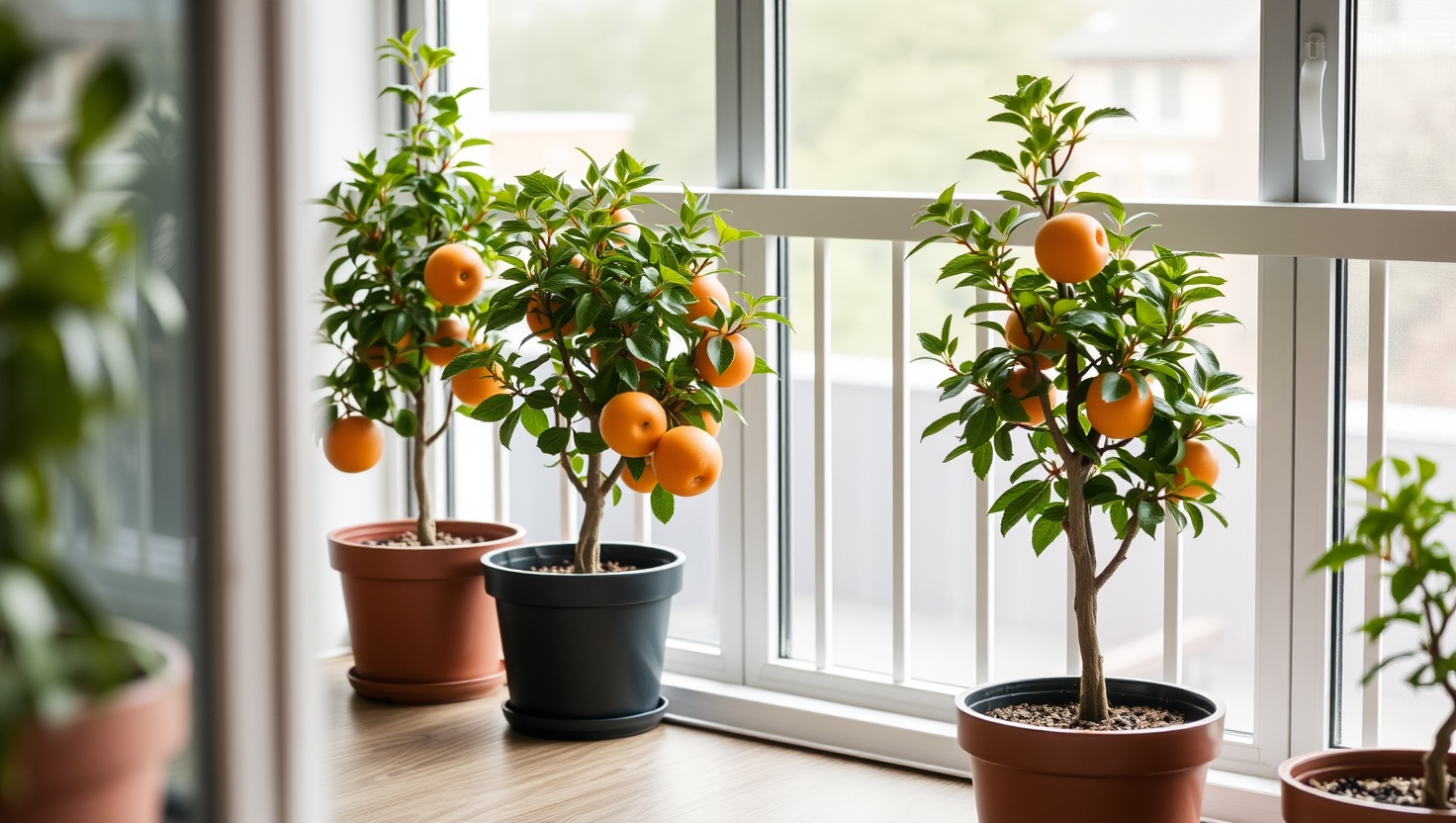
You don't need an acre of land to grow your own fruit. You need a pot, a sunny spot, and the right tree. The best dwarf fruit trees for containers give you real, edible harvests from a balcony, patio, rooftop, or even a bright apartment window — and they are easier to grow than most people think.
The food-growing movement is no longer just for people with backyards. Container fruit trees are one of the most satisfying upgrades you can make to your living situation, whether you are in a city apartment or a small house with a paved backyard. Pick the right variety and you will be pulling fruit off your own tree within a season or two.
Here are the five best dwarf fruit trees for containers in 2026, chosen for their track record in pots, their actual fruit production, and how well they handle real-world apartment and patio conditions.
Key Takeaways
- Dwarf fruit trees produce real, full-size fruit — not just ornamental foliage
- Most top picks are self-pollinating, so one tree is all you need
- Container size matters: most trees need 10-25 gallons depending on species
- Meyer lemon is the easiest starter tree and produces year-round indoors
- Cold-climate gardeners should prioritize the Northpole columnar apple (zones 4-8)
- 6+ hours of direct sunlight is the single biggest factor in fruit production
Why Dwarf Fruit Trees Are the Best-Kept Secret of Container Gardening
Most container gardeners start with tomatoes and herbs. That's great — but then they plateau. You harvest tomatoes for one summer, run out of ideas, and wonder what else is possible. Dwarf fruit trees are the answer most people never consider, and that is a missed opportunity.
A well-chosen container fruit tree gives you something no vegetable garden can: a living, productive plant that grows with you year after year. You are not restarting from seed every spring. You are building something — a Meyer lemon you can bring indoors in November and set back out in April, a Bonanza peach that blooms every March and drops ripe fruit in July, a columnar apple that looks like a garden sculpture until it surprises you with a full harvest in September.
The "dwarf" in dwarf fruit tree doesn't mean weak or decorative. It means the tree has been grafted or bred to stay compact — typically 4-8 feet tall — while keeping all its fruiting capability. You get the same genetics as a full-size tree in a fraction of the footprint.
Container growing also gives you one major advantage over in-ground planting: you control everything. Soil quality, drainage, sun exposure (by moving the pot), and protection from frost. That flexibility makes fruit growing viable in places where it would otherwise be impossible.
How to Choose the Right Fruit Tree for Your Climate and Space
Before you buy, match the tree to your reality. Three things determine success:
Your USDA Hardiness Zone
Citrus and banana trees are cold-sensitive (zone 9-11 outdoors). In colder climates they need to come indoors for winter — which is totally doable, just requires planning. Apple and peach trees are cold-hardy and can handle zones 4-9. Know your zone before you buy.
Your Sunlight
Every fruit tree on this list needs a minimum of 6 hours of direct sun per day. South-facing balconies are ideal. East or west-facing works if you get unobstructed sun for a solid half-day. North-facing patios with shade are not suitable for fruit production — no exceptions.
Your Container Budget and Space
A 10-gallon pot works for a dwarf peach. A Meyer lemon needs 15 gallons minimum. A banana wants 25 gallons. Bigger containers are heavier and harder to move indoors, so factor that in if you are on an upper floor. Fabric grow bags are a good compromise — they drain well and are lighter than ceramic pots.
1. Improved Dwarf Meyer Lemon Tree — Best Overall
The Meyer lemon is the gold standard of container fruit trees, and for good reason. It produces fragrant white blooms and sweet-tart lemons year-round when kept indoors, or seasonally on a sunny patio. It is self-pollinating, beginner-friendly, and thrives in a 15-gallon pot. If you only ever grow one container fruit tree, make it this one.
- Produces fruit year-round indoors
- Fragrant blooms fill a room with scent
- Self-pollinating — no partner needed
- Thrives in containers from 15 gallons up
- Cold-hardy to zone 9, bring indoors in colder climates
- Beginner-friendly and widely available
- Needs 6+ hours of direct sunlight daily
- Small starts take 1-2 years to fruit
- Susceptible to scale insects
- Needs winter protection below zone 9
2. Dwarf Cavendish Banana Plant — Most Tropical
This is the one that gets people talking on your patio. The Dwarf Cavendish stays at a manageable 5-6 feet tall and actually produces real, full-size bananas. Beyond the fruit, the tropical foliage is dramatic and beautiful — this is a statement plant that also happens to be edible. It needs warmth, water, and a big pot, but rewards you generously.
- Compact 5-6 feet — manageable indoors
- Produces full-size edible bananas
- Dramatic tropical foliage, looks incredible
- Self-pollinating
- Fast grower once established
- Great conversation piece on any patio
- Needs zone 9-11 outdoors or heated indoor space
- Heavy water needs — daily in summer
- Takes 12-18 months to first fruit
- Needs a 25-gallon container
3. Dwarf Bonanza Peach Tree — Best for Small Spaces
The Bonanza is a genetic dwarf peach — not just grafted small, but naturally compact by breeding. It tops out at 4-6 feet and produces full-size, genuinely delicious peaches from a 10-gallon container. It also blooms spectacularly in spring with pink flowers, making it one of the most beautiful patio plants when it is not covered in fruit. Zones 5-9.
- Only 4-6 feet tall — fits any balcony
- Full-size, sweet peaches in summer
- Self-pollinating
- Starts in a 10-gallon pot
- Beautiful pink spring blossoms
- Hardy zones 5-9 — wide range
- Needs winter chill hours — not for tropics
- One harvest per summer only
- Needs annual pruning after harvest
- Susceptible to peach leaf curl
4. Dwarf Washington Navel Orange Tree — Best for Beginners
The Washington Navel is the orange you know from every grocery store — sweet, seedless, and perfect. In dwarf form it stays at a compact 4-8 feet and does surprisingly well as a container plant when given enough light. The evergreen foliage looks great year-round. In colder climates, bring it indoors from October to April and you will have a productive orange tree for decades.
- Sweet, seedless oranges — familiar and useful
- Self-pollinating, no partner needed
- Evergreen — looks great all year
- Compact 4-8 feet, suits containers well
- Proven track record in container culture
- Long-lived tree — yours for decades with care
- Needs 6+ hours direct sunlight
- Zone 9-11 outdoors, must bring inside in cold
- Slow to establish in first year
- Needs acidic, well-draining citrus soil mix
5. Northpole Columnar Apple Tree — Best Cold-Climate Pick
The Northpole is an architectural marvel. This columnar apple tree grows straight up like a living column — only about 2 feet wide — while reaching 8-10 feet tall. That means you can grow a full apple tree in a container taking up no more floor space than a lamp. It produces full-size, crisp Macintosh-type apples in fall and is completely hardy down to zone 4. Perfect for northern balconies with limited horizontal space.
- Only 2 feet wide — extreme space efficiency
- Hardy to zone 4 — thrives in cold climates
- Full-size apples on a pencil-thin tree
- Perfect for patios with vertical space only
- Hardy and disease-resistant variety
- Stunning architectural look even when not fruiting
- Benefits from a pollinator partner for best yields
- May need staking in exposed, windy locations
- Limited variety — produces one type of apple
- Bears only in fall — one annual harvest
Container Fruit Tree Care: The Essentials
Growing fruit trees in containers is not complicated, but there are a few non-negotiables that separate trees that thrive from trees that sulk.
Use the Right Potting Mix
Never use garden soil in a container. It compacts, drains poorly, and suffocates roots. Use a quality potting mix formulated for containers. For citrus (lemon, orange), use a citrus-specific mix or add extra perlite to standard potting soil for improved drainage. For peach and apple, a standard premium potting mix works well.
Water Deeply, Not Frequently
The most common mistake is shallow, daily watering that only wets the top inch of soil. Water until it runs freely out the drainage holes, then let the top 2 inches dry before watering again. In summer this might mean every 2-3 days. In winter, much less. Stick your finger in the soil — that is your best irrigation tool.
Feed Through the Growing Season
Container plants run out of nutrients faster than in-ground trees. Use a balanced slow-release fertilizer at the start of spring, then supplement with a liquid citrus or fruit tree fertilizer every 2-4 weeks from spring through late summer. Stop feeding in fall so the tree can harden off for winter.
Repot Every 2-3 Years
Roots eventually fill the container and the tree becomes root-bound. When you see roots circling the bottom of the pot or poking out of drainage holes, it is time to size up. Go up one pot size at a time — too large a jump leads to overwatering problems. Spring is the best time to repot.
Sunlight Is Non-Negotiable
Six hours of direct sun is the floor, not the target. Eight to ten hours is ideal for fruit production. If your balcony gets less than six hours, fruit trees will survive but not produce well. In that case, focus on herbs and leafy greens, and save fruit trees for when you find a sunnier spot.
Common Mistakes That Kill Container Fruit Trees
Choosing the wrong zone. A banana plant left outside through a zone 7 winter will die. A peach tree that never gets chill hours in a zone 10 climate will fail to fruit. Check your zone before buying and read the tag.
Too-small containers. A lemon tree stuffed into a 5-gallon pot looks fine for one season, then stalls. Root space directly affects fruit production. Match the container to the species and size up proactively.
Pots without drainage holes. Standing water at the root zone causes root rot, which kills fruit trees within months. Every container needs drainage holes and a saucer that you empty after rain.
Forgetting to feed. Container trees are completely dependent on you for nutrition. A tree that has not been fertilized since you bought it two years ago is running on empty. A single season of consistent feeding can transform a struggling tree into a productive one.
Expecting instant fruit. Small starter plants take 1-2 years to begin fruiting reliably. If you want fruit faster, buy larger, more established specimens. A 3-4 foot tree from a reputable nursery will fruit much sooner than a 6-inch seedling.