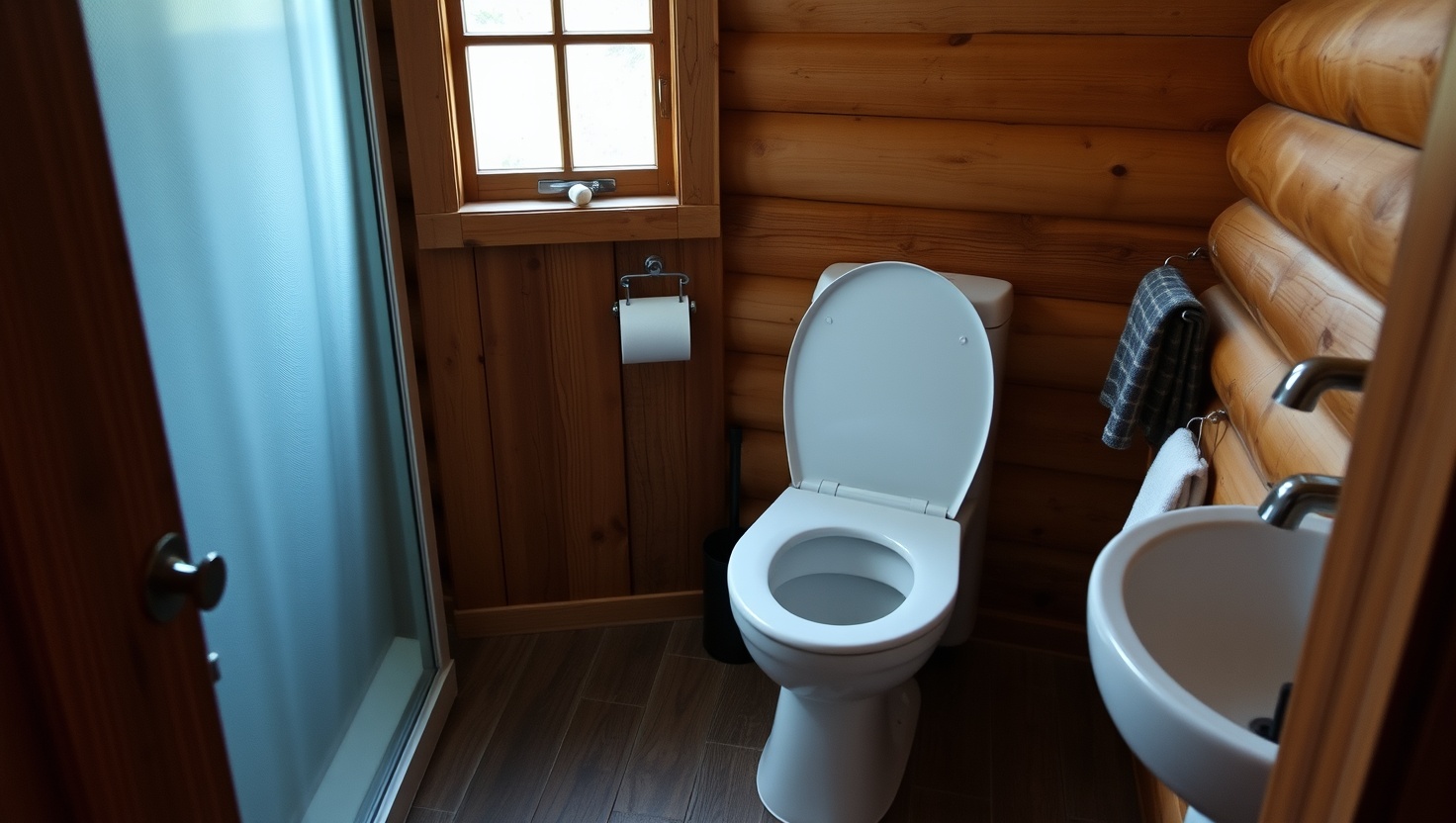
Here is a reality most people never think about until they need to: your toilet depends entirely on municipal water and a functioning sewer system. Cut either one, and you have a serious problem. Whether you are building an off-grid cabin, converting a van, prepping for extended emergencies, or simply tired of paying for infrastructure you do not control, a composting toilet is one of the most practical steps toward true self-sufficiency. Zero water per flush. Zero plumbing. Zero connection to anything you do not own.
Modern composting toilets have come a long way from the rough outhouse setups your grandparents knew. The best ones are odorless, compact, and genuinely comfortable to use daily. Some are designed for permanent off-grid cabins. Others fit inside a van or a camping kit. One option on this list does not even require composting at all. This guide covers the five best composting toilets for off-grid living in 2026 — tested across price, portability, capacity, and real-world ease of use. If you are also setting up off-grid solar or a water filtration system, sanitation is the third pillar of independence that most people overlook.
Key Takeaways
- Nature's Head (~$960) is the best overall — marine-grade build, urine-diverting, 60-80 uses between emptying, the gold standard for full-time off-grid living
- Trelino Evo S (~$500) is the best portable option — German-engineered separating design, compact enough for van life and tiny homes
- Boxio (~$150) is the best budget pick — lightweight eurobox format, perfect for camping trips and emergency prep kits
- Laveo Dry Flush (~$200) is the zero-maintenance option — cartridge-based, seals waste in mylar, absolutely zero odor, no composting needed
- Sun-Mar Excel (~$1,500) is the best for permanent installation — self-contained, handles full family use, NSF certified, no water or electricity required
- Every toilet on this list works without water, plumbing, or a sewer connection — true independence starts with sanitation
Why Go Waterless
The average flush toilet uses 1.6 gallons per flush. For a household of four, that adds up to roughly 9,000 gallons per year just on toilet flushing — water that has to come from somewhere, go somewhere, and be treated by someone. Off the grid, that water does not exist. Even if you have a well or rainwater collection, every gallon flushed is a gallon you cannot drink, cook with, or use for growing food.
Composting toilets eliminate that dependency entirely. They use no water, connect to no pipes, and produce no sewage. The biological process is simple: solid waste is mixed with a carbon-rich cover material (coconut coir, peat moss, or sawdust), which creates the right conditions for aerobic decomposition. A small vent fan — most run on 12V, easily powered by a portable power station or a small solar panel — pulls air through the system and removes moisture. The result, after weeks of composting, is a dry, soil-like material with no odor.
The practical benefits go beyond water savings. No septic tank to install, maintain, or pump. No frozen pipes in winter. No dependency on a functioning sewer system during emergencies. No digging a pit every time you camp for more than a day. For van lifers and boaters, a composting toilet means no holding tank to find a dump station for. For cabin builders, it means dramatically simpler and cheaper construction — skipping the septic system alone can save $5,000 to $15,000 depending on your soil and local codes.
Quick Comparison: All 5 Composting Toilets
| Product | Price | Best For | Capacity | Power Needed |
|---|---|---|---|---|
| Nature's Head | ~$960 | Best overall | 60-80 uses | 12V fan |
| Trelino Evo S | ~$500 | Best portable | ~8L solids bin | None |
| Boxio | ~$150 | Best budget | ~5L solids bin | None |
| Laveo Dry Flush | ~$200 | Best no-maintenance | ~15 flushes per cartridge | Battery (built-in) |
| Sun-Mar Excel | ~$1,500 | Best permanent install | Full family capacity | None |
The 5 Best Composting Toilets for Off-Grid Living (2026)
1. Nature's Head Composting Toilet — Best Overall
Nature's Head Composting Toilet
The Nature's Head is the composting toilet that most full-time off-gridders, van lifers, and boat owners eventually land on — and for good reason. It is built from marine-grade stainless steel hardware and UV-stabilized plastic that handles temperature extremes, humidity, and years of daily use without degrading. The urine-diverting design is the core of why it works so well: liquids and solids are separated at the bowl, which prevents the anaerobic conditions that cause odor. The solids bin mixes waste with coconut coir via a hand-crank agitator on the side, maintaining the aerobic environment needed for composting.
Capacity is where Nature's Head really earns its reputation. Two adults using it full-time can go 60 to 80 uses before the solids bin needs emptying — roughly three to four weeks. The urine bottle holds about two gallons and needs emptying every two to three days for a two-person household. A small 12V computer fan runs continuously to vent moisture and any trace gases through a hose to the outside, drawing about 0.1 amps — negligible even for a modest solar setup. The fan is the only powered component, and it is whisper-quiet.
At $960, this is not the cheapest option on this list. But for anyone planning full-time off-grid living — a cabin, a boat, a converted bus — the Nature's Head pays for itself quickly when you consider the cost of a septic system, holding tank, or years of water bills. It is the most proven, most trusted composting toilet on the market, and the one with the largest community of users sharing tips and modifications.
- Construction: Marine-grade stainless hardware, UV-stabilized molded plastic
- Separation: Urine-diverting design — liquids and solids never mix
- Capacity: 60-80 uses (solids), ~2 gallon urine bottle
- Ventilation: 12V DC fan (0.1A draw), vents via 1" hose
- Weight: ~28 lbs empty
- Industry standard for full-time off-grid use
- Marine-grade build quality — lasts for years
- 60-80 uses between emptying — longest on this list
- Virtually odorless with proper venting
- Huge user community for tips and troubleshooting
- Highest price point at ~$960
- Requires 12V power for the vent fan
- Not portable — designed for fixed installation
Best for: Full-time off-grid cabins, boats, converted vans/buses, and tiny homes. If you are living with a composting toilet daily, the Nature's Head is the one that will not let you down.
Check Price →2. Trelino Evo S Composting Toilet — Best Portable
Trelino Evo S Composting Toilet
Trelino is a German brand that has quietly become a favorite among European van lifers and tiny home builders, and their Evo S model is the reason why. It is a compact, well-engineered separating toilet that fits into spaces where a Nature's Head simply would not — think camper vans, micro cabins, and small boats. The build quality is excellent: clean lines, solid plastic construction, and a thoughtful design where every component clicks together without tools.
Like the Nature's Head, the Trelino Evo S uses a urine-diverting system to keep liquids and solids separated. The difference is size and portability. The Evo S weighs about 11 pounds empty and has a compact footprint that fits into most van conversions without custom modifications. The solids container uses compostable bags, making emptying clean and simple — pull the bag, tie it off, dispose of it. No scraping, no mess. The urine canister is easy to remove, pour, and rinse.
The trade-off for compactness is capacity. The Evo S's 8-liter solids bin fills faster than the Nature's Head, so for two people using it daily, you are looking at emptying roughly once a week. For weekend trips, occasional use, or a single person living in a van, the capacity is more than enough. At $500, it sits in the middle of this list on price but delivers premium build quality and design that justifies the cost for anyone who values portability and clean aesthetics in a tight space.
- Construction: High-quality molded plastic, German-engineered
- Separation: Urine-diverting design with removable canister
- Capacity: ~8L solids bin, ~5L urine canister
- Ventilation: Passive — no fan required (optional fan adapter available)
- Weight: ~11 lbs empty
- Compact and lightweight — fits in vans and micro cabins
- Premium German build quality and design
- Compostable bag system makes emptying clean and easy
- No power required — fully passive operation
- Attractive, modern design that does not look like an emergency product
- Smaller capacity than Nature's Head — more frequent emptying
- $500 is significant for a portable toilet
- Compostable bags are an ongoing supply cost
Best for: Van lifers, tiny home dwellers, and anyone who needs a compact, portable composting toilet with premium build quality. The Evo S is the best-looking and best-engineered portable option on the market.
Check Price →3. Boxio Portable Composting Toilet — Best Budget
Boxio Portable Composting Toilet
The Boxio takes a radically simple approach to portable sanitation: it is a composting toilet built into a standard eurobox format — the same stackable container size used across European logistics. That means it is lightweight (about 8 pounds), genuinely portable, and stores or stacks with other gear when not in use. For $150, it is the most accessible entry point into waterless sanitation on this list.
The design uses a basic separating system: a urine canister in the front and a solids compartment in the back, divided by a molded separator seat. You add coconut coir or sawdust to the solids side as a cover material after each use. There is no fan, no moving parts, and no power requirement. It is as mechanical as a toilet can get, which is actually an advantage for emergency preparedness — nothing to break, nothing that needs batteries or sunlight to function.
The Boxio is not meant for full-time daily use by a family. The 5-liter solids capacity means you will be emptying it frequently if used by multiple people. But for camping trips, weekend cabin getaways, emergency preparedness kits, and as a backup sanitation option in your emergency gear setup, it is hard to beat at this price. It also makes an excellent first composting toilet if you want to try the concept before investing in a Nature's Head or Sun-Mar.
- Construction: Durable plastic eurobox format
- Separation: Basic urine-diverting separator
- Capacity: ~5L solids bin, separate urine canister
- Ventilation: Passive — no fan, no power needed
- Weight: ~8 lbs empty
- Lowest price on this list at ~$150
- Extremely lightweight and portable
- Zero power requirement — nothing to break
- Stackable eurobox format for neat storage
- Great emergency prep addition to any kit
- Smallest capacity — frequent emptying needed for regular use
- Basic comfort compared to full-size models
- Not ideal for permanent or daily family use
Best for: Campers, emergency preppers, weekend cabin users, and anyone who wants an affordable entry point into waterless sanitation. The Boxio does one thing well: it gives you a functional, portable composting toilet at a price that removes all excuses.
Check Price →4. Laveo Dry Flush Portable Toilet — Best No-Maintenance Option
Laveo Dry Flush Portable Toilet
The Laveo Dry Flush is not technically a composting toilet — nothing composts. Instead, it uses a cartridge system that seals each deposit in a layer of mylar film, twists it closed, and drops it into a self-contained cartridge below the seat. Press the flush button, the bowl liner rotates, and your waste is sealed away with absolutely zero odor, zero contact, and zero biological process to manage. It is the closest thing to a regular flush toilet experience without water or plumbing.
Each cartridge handles approximately 15 flushes. When it is full, you pull it out, seal it, and dispose of it in regular trash — the mylar wrapping contains everything. New cartridges cost about $20 each, which makes the per-flush cost around $1.30. That is more expensive per use than a traditional composting toilet (where the only consumable is coconut coir at a few cents per use), but the convenience factor is enormous. No cover material to add, no composting process to monitor, no smell at any point, no emptying of anything besides a sealed cartridge.
The Laveo is built-in battery powered and lightweight enough to move anywhere. It is ideal for situations where you want sanitation without any learning curve: guest cabins, elderly family members, emergency situations, or anyone who is not comfortable with the hands-on nature of traditional composting. The trade-off is ongoing cartridge costs and the fact that you are creating waste rather than composting it. For some people, that trade-off is exactly right.
- Construction: Lightweight plastic housing with built-in battery
- System: Mylar cartridge-based — seals waste per flush, no composting
- Capacity: ~15 flushes per cartridge
- Power: Built-in rechargeable battery (~300 flushes per charge)
- Weight: ~16 lbs
- Absolutely zero odor — sealed mylar wrapping
- No composting to manage — zero learning curve
- Closest experience to a regular flush toilet
- Portable and easy to set up anywhere
- Built-in battery lasts ~300 flushes per charge
- Ongoing cartridge cost (~$20 per 15 flushes)
- Creates sealed waste rather than compost
- Dependent on cartridge supply — need to stock up
Best for: Guest cabins, emergency prep, elderly users, and anyone who wants the simplest possible waterless toilet with zero odor and zero maintenance. Stock extra cartridges and you have completely self-contained sanitation with no learning curve.
Check Price →5. Sun-Mar Excel Non-Electric — Best for Permanent Installation
Sun-Mar Excel Non-Electric Composting Toilet
The Sun-Mar Excel is the composting toilet you install once and use for decades. It is a full-size, self-contained unit designed for permanent residential installation — cabins, off-grid homes, cottages, and anywhere you need a toilet that handles full family use without water, electricity, or a septic system. Unlike the Nature's Head, which is compact enough for boats and vans, the Sun-Mar Excel is built like bathroom furniture and performs like an engineered waste processing system.
The Excel uses a three-chamber bio-drum design. Waste enters the drum, where it is mixed with bulking material using a hand-crank handle on the outside. Over time, the composting material moves through the chambers — fresh waste in the top, actively composting in the middle, finished compost in the bottom tray for removal. This multi-stage design means you are never handling fresh waste during emptying; what comes out of the finishing drawer looks and smells like garden soil. The entire unit vents passively through a chimney-style vent stack — no fan, no electricity required.
The Sun-Mar Excel is NSF/ANSI 41 certified, which matters if your local building code requires certified composting toilet systems. It handles a residential load of up to three adults (or a family with children) and is designed for year-round use in insulated spaces. At $1,500, it is the most expensive option here, but it replaces a septic system that would cost five to ten times more to install. For anyone building a permanent off-grid home, the Sun-Mar Excel is the professional-grade solution. Pair it with a solid off-grid water filtration system and solar power setup, and your home operates entirely independent of municipal infrastructure.
- Construction: Full-size residential unit, marine-grade materials
- System: Three-chamber bio-drum with hand-crank agitation
- Capacity: Full residential — up to 3 adults or a family with children
- Power: None — fully passive ventilation via vent stack
- Certification: NSF/ANSI 41 certified
- Full residential capacity — handles a family
- NSF certified — meets building code requirements
- Three-chamber design — never handle fresh waste
- Zero electricity required — fully passive operation
- Replaces a septic system at a fraction of the cost
- Most expensive option at ~$1,500
- Large footprint — not portable
- Requires vent stack installation through roof or wall
Best for: Permanent off-grid cabins and homes where you need a toilet that handles full family use, meets building codes, and will last for years. The Sun-Mar Excel is the composting toilet that lets you skip the septic system entirely.
Check Price →How to Choose the Right Composting Toilet
The right composting toilet depends on three things: how you plan to use it, where you plan to put it, and how many people will be using it. Here is a straightforward framework:
- Full-time off-grid living (1-2 people): Nature's Head. The capacity, build quality, and proven track record make it the default for anyone living daily with a composting toilet in a cabin, boat, or converted vehicle.
- Full-time off-grid living (family): Sun-Mar Excel. The residential capacity and NSF certification make it the right choice for a permanent home with multiple users.
- Van life and tiny homes: Trelino Evo S. The compact size, light weight, and clean design fit tight spaces without compromising on quality.
- Camping and emergency prep: Boxio. The price, portability, and zero-power simplicity make it the obvious choice for intermittent use and emergency kits.
- Guest cabins and zero-maintenance needs: Laveo Dry Flush. No composting process to manage, no odor, no learning curve — just stock cartridges and forget about it.
Also consider your climate. Composting slows below 55 degrees Fahrenheit, so if your toilet will be in an unheated space through winter, plan for more frequent emptying. All five of these toilets function in cold weather — they just compost slower. In insulated, heated spaces, they perform year-round without issue.
If you are setting up a complete off-grid system, your composting toilet is part of a larger picture. Pair it with a reliable water filter for drinking water independence and a Meshtastic device for communication when cell service is not available. Sanitation, water, power, communication — those are the four legs of genuine self-sufficiency.
Ready to Go Waterless?
The Nature's Head is the gold standard for off-grid composting toilets — built to last, proven by thousands of full-time users, and backed by the largest community of off-gridders sharing real-world experience.
Get Nature's Head Toilet →Off-Grid Water Filters →
What to Read Next
- Best Water Filters for Off-Grid Living — clean drinking water is the other half of off-grid sanitation independence
- Off-Grid Solar Kit for Beginners — power your vent fan, lights, and devices without the grid
- Best Portable Power Stations for Camping and Emergency (2026) — backup power for everything from toilet fans to communication gear
- Best Meshtastic Devices for Off-Grid Communication (2026) — stay connected when cell towers go down
Frequently Asked Questions
No — a properly set up composting toilet should not smell. The key is urine diversion. Most composting toilets separate liquids from solids, and it is the combination of the two that creates odor. When separated, the solids are mixed with a carbon-rich cover material like coconut coir or peat moss, which absorbs moisture and supports aerobic decomposition. A small fan vents any residual gases outside. Users of Nature's Head and Trelino consistently report less smell than a standard flush toilet. The Laveo Dry Flush eliminates odor entirely by sealing each use in a mylar cartridge.
It depends on the model and how many people use it. The Nature's Head handles 60 to 80 uses before the solids bin needs emptying — roughly 3 to 4 weeks for two adults using it full-time. The urine bottle fills faster and needs emptying every 2 to 3 days. Smaller portable models like the Boxio and Trelino Evo S fill sooner, typically every 1 to 2 weeks for regular use. The Sun-Mar Excel, designed for full-family use, has a larger capacity and can go several weeks between emptying. The composted material looks and smells like soil when ready.
In most US states, yes — but regulations vary by county and municipality. Many states, including Oregon, Washington, Colorado, and Vermont, have clear provisions for composting toilets in residential buildings, especially in rural areas without sewer access. Some jurisdictions require NSF/ANSI 41 certification — the Sun-Mar Excel meets this standard. Before installing, check your local building and health department for specific requirements. For mobile applications like vans, RVs, and boats, composting toilets are widely accepted because they replace holding tanks and do not discharge anything into waterways.
After the composting process, the solid waste breaks down into a dry, soil-like material that looks and smells like humus. Most off-grid users bury it in a designated area away from food gardens or add it to ornamental plant beds and fruit trees — not directly to vegetable gardens as a precaution. The urine, which is sterile when fresh, can be diluted 10:1 with water and used as a nitrogen-rich fertilizer for non-food plants, or simply disposed of in a designated area. For the Laveo Dry Flush, the sealed mylar cartridges go directly into regular trash — no composting involved.
Yes, but the composting process slows significantly below 55 degrees Fahrenheit and essentially stops below freezing. The toilet itself still functions — you can still use it — but the biological breakdown pauses until temperatures rise again. For year-round off-grid use in cold climates, install the toilet in an insulated space. The Nature's Head and Sun-Mar Excel both work well in insulated interiors through winter. For unheated outbuildings in cold climates, plan to empty the bin more frequently since material accumulates without breaking down.