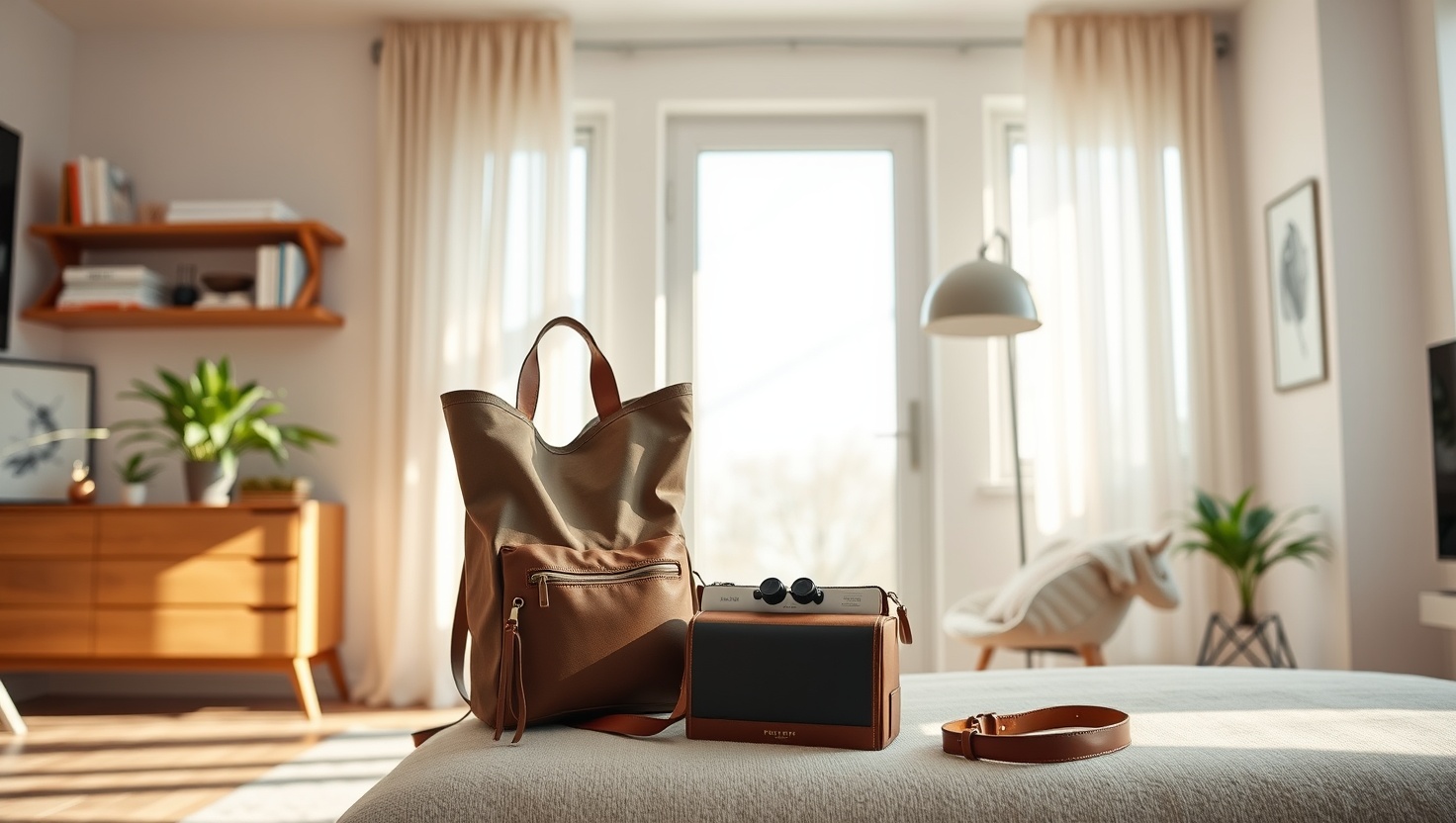
The analog bag trend Gen Z started on TikTok might be the most refreshing thing to come out of that app in years. The concept is almost laughably simple: pack a bag with offline activities — a journal, a sketch pad, a book, maybe some knitting needles — and go somewhere without touching your phone. That is it. No app required. No subscription. No willpower hack. Just a bag full of things that are more interesting than your notifications.
Canvas Tote Bag — Our Top Recommendation
Every analog bag starts with, well, the bag. A sturdy canvas tote is the move here — not a backpack, not a purse, but a simple open-top tote that you can throw your supplies into and grab on the way…
In a hurry? That’s our pick. Want the reasoning and the full comparison? Keep reading.
And it is exploding. The #analogbag hashtag has been growing 75% week-over-week on TikTok. Videos of people showing their packed bags — canvas totes stuffed with Moleskine notebooks, colored pencils, instant cameras, and paperback novels — are racking up millions of views. The comments are not ironic. They are genuine. "I need this." "Why does this feel revolutionary?" "I literally forgot I used to draw."
Here is why it works: the analog bag reframes digital detox from something you give up to something you pick up. You are not "quitting your phone." You are going to a park with a sketch pad. You are not "doing a detox." You are learning to knit. The phone stays in your pocket not because you are fighting the urge to scroll, but because your hands are already busy doing something better. That is the genius of it. And building your own analog bag takes about ten minutes and costs less than a month of streaming subscriptions.
Key Takeaways
- The analog bag trend is Gen Z's answer to doomscrolling — pack a bag with offline activities and leave the phone behind
- You can build a starter kit for $30-50 with a canvas tote and a journal or sketch pad
- The most popular items: notebooks, sketch pads, knitting kits, physical books, instant cameras, and Kindle Paperwhites
- It works because it replaces phone time with something better — no willpower or restriction needed
- This is not just a Gen Z thing — parents, remote workers, and anyone tired of scrolling can benefit
- The key is choosing activities you genuinely enjoy, not activities you think you should enjoy
Why the Analog Bag Trend Took Off
Gen Z gets a lot of grief for being "chronically online," and most of that criticism misses the point entirely. This is the first generation that grew up with smartphones in their hands from childhood. They did not choose to be addicted to their phones — the phones were designed to be addictive, and they were handed to kids before their brains could defend against it. So when the same generation that grew up on Instagram starts packing tote bags with journals and heading to parks, pay attention. They are not doing it because a parenting blog told them to. They are doing it because they feel the damage and they want out.
The analog bag trend works psychologically for a reason most digital detox advice misses. Traditional advice says "put your phone down." That creates a vacuum — you are sitting there with nothing to do, fighting the urge to pick up the one thing that instantly fills boredom. The analog bag fills that vacuum before it even forms. Your hands are holding a pencil, not hovering over a screen. Your eyes are on a sketchbook, not a feed. You have replaced the behavior, not just removed it. Behavioral psychologists call this habit substitution, and it is dramatically more effective than willpower alone.
There is also something deeply social about it. Unlike most digital detox methods, the analog bag is inherently shareable (ironically, on the platforms people are trying to use less). The "pack my bag with me" videos create a community around going offline. You see other people doing it, it looks appealing, and suddenly the offline life has better marketing than the apps competing for your attention. That is new. And it is working.
The 6 Best Items for Your Analog Bag
You do not need all of these. The best analog bag has two or three items that genuinely excite you. But here is the complete toolkit, ranked by popularity and versatility, so you can pick what fits your vibe.
1. Canvas Tote Bag — The Foundation
Canvas Tote Bag
Every analog bag starts with, well, the bag. A sturdy canvas tote is the move here — not a backpack, not a purse, but a simple open-top tote that you can throw your supplies into and grab on the way out the door. The canvas tote has become the unofficial uniform of the analog bag trend for good reason: it is cheap, durable, lightweight, and looks good slung over a shoulder at a coffee shop or park bench. Look for one with an interior pocket (for your phone — yes, it still comes with you, it just stays buried) and reinforced handles. Some people customize theirs with patches or pins, which honestly makes it even harder to leave at home.
Best for: Everyone. This is the foundation piece. If you do not have a canvas tote already (unlikely), grab one and start building from here.
Check Price on Amazon →2. Moleskine Classic Notebook — For Writing and Journaling
Moleskine Classic Notebook
If the analog bag has a hero item, it is the journal. A Moleskine Classic is the go-to for a reason — the paper quality is excellent, the elastic closure keeps it shut in your bag, and the built-in bookmark ribbon means you never lose your page. Use it however you want: morning pages, gratitude lists, brain dumps, bad poetry, grocery lists, letters you will never send. The point is not to write something profound. The point is to give your brain an output channel that is not a screen. There is something almost meditative about putting pen to paper. Your thoughts slow down. You process instead of consume. Twenty minutes of journaling at a coffee shop will leave you calmer than twenty minutes of scrolling ever could.
Best for: Anyone who thinks too much and processes too little. Writers, overthinkers, people who lie awake at 2 AM composing arguments they will never have. If your brain never shuts up, a journal gives it somewhere to go that is not Twitter.
Check Price on Amazon →3. Sketch Pad + Colored Pencils Set — For Drawing and Doodling
Sketch Pad + Colored Pencils Set
You do not need to be an artist. That is the first thing everyone says, and it is the thing that stops most people from picking up a pencil. But here is the truth: the analog bag trend is not about producing gallery-worthy art. It is about keeping your hands busy and your eyes off a screen. Doodle. Draw the tree in front of you. Badly. Color in shapes. Sketch your coffee cup. The bar is on the floor, and that is exactly where it should be. A decent sketch pad (look for mixed-media paper, around 60-70 sheets) paired with a set of 24-36 colored pencils gives you everything you need to sit somewhere beautiful and create something that exists only in the physical world. No likes. No algorithm. No one ever has to see it.
Best for: Visual thinkers. People who fidget. Anyone who used to draw as a kid and forgot they enjoyed it. If you find journaling too word-heavy, sketching is the perfect alternative — same meditative benefits, zero writing required.
Check Price on Amazon →4. Beginner Knitting Kit — The Trending Analog Hobby
Beginner Knitting Kit
Knitting is having a moment, and the analog bag trend is accelerating it. A beginner kit typically includes needles, a few skeins of yarn, a stitch counter, and a basic pattern guide — everything you need to start learning without a YouTube tutorial (though watching one beforehand is fine, we are not purists here). The reason knitting appears in so many analog bag videos is simple: it is the ultimate anti-phone activity. Both hands are occupied. There is a rhythm to it that is genuinely calming. You produce something physical — a scarf, a beanie, a hilariously wonky first attempt — and the repetitive motion activates the same relaxation pathways that people chase through mindless scrolling, except knitting actually delivers on the promise.
Best for: People who need their hands busy to stay off their phone. Fidgeters. Anyone who finds journaling and drawing too "sit and think." Knitting is active and rhythmic — your brain relaxes while your hands stay engaged.
Check Price on Amazon →5. Kindle Paperwhite — For Distraction-Free Reading
Kindle Paperwhite
Yes, a Kindle is technically a device. No, it does not break the analog bag rules. The Kindle Paperwhite is the one piece of technology that belongs in an offline kit because it does exactly one thing: lets you read books. No social media. No notifications. No browser worth using. No blue light. The e-ink display looks and feels like paper, and the battery lasts for weeks — not hours. You can carry an entire library in something thinner than a single paperback. For the analog bag, it is the practical choice for anyone who reads more than one book at a time or does not want to add the weight of physical books to their tote. Load it up, turn on airplane mode, and you have the world's best distraction-free reading device.
Best for: Avid readers who do not want to carry multiple physical books. Travelers. Anyone who has tried reading on their phone and ended up on Instagram twenty minutes later. The Kindle removes the temptation because there is literally nothing else to do on it.
Check Price on Amazon →6. Fujifilm Instax Mini — Analog Photography
Fujifilm Instax Mini
The instant camera is the most fun item in any analog bag, and it perfectly captures the spirit of the trend. With an Instax Mini, you get one shot. No filters. No retakes. No spending twenty minutes choosing the best angle for Instagram. You point, shoot, and a physical photo slides out that you can hold in your hand thirty seconds later. There is a deliberateness to analog photography that phone cameras completely lack — when each shot costs about $0.50 in film, you actually think about what is worth capturing. The photos are imperfect and that is the entire point. They look like memories, not content. Tuck them into your journal, pin them to your wall, or give them to the person you took them with. Try doing that with a JPEG.
Best for: People who want to capture moments without falling into the phone camera trap. Date nights. Park hangs with friends. Anyone who misses the days when photos were physical objects you could hold, not files trapped in a cloud.
Check Price on Amazon →Full Comparison: All 6 Items at a Glance
Here is everything side by side so you can pick the right items for your budget and interests.
| Item | Price | Activity | Best For |
|---|---|---|---|
| Canvas Tote Bag | $15-25 | Carrying everything | Everyone (the base) |
| Moleskine Notebook | $15-20 | Journaling / writing | Overthinkers / writers |
| Sketch Pad + Pencils | $20-30 | Drawing / doodling | Visual thinkers / fidgeters |
| Beginner Knitting Kit | $25-35 | Knitting / creating | Hands-on people |
| Kindle Paperwhite | $140-150 | Distraction-free reading | Avid readers |
| Fujifilm Instax Mini | $70-80 | Analog photography | Memory makers / social outings |
How to Build Your Analog Bag: 3 Budget Tiers
You do not need to spend $300 to go offline. Here are three ways to build your kit based on what you are willing to invest.
1 The Starter Kit — Under $50
Grab a canvas tote ($15-25) and a Moleskine notebook ($15-20). Total: $30-45. This is the minimum viable analog bag, and honestly, it is enough. A journal and a pen in a bag you like carrying. Head to a park bench or coffee shop, leave your phone in the bag, and write for thirty minutes. You will be shocked at how different your brain feels afterward. If you already own a tote and a notebook, your analog bag costs zero dollars. No excuses.
2 The Explorer Kit — $60-100
Start with the Starter Kit, then add a sketch pad with colored pencils ($20-30) or a beginner knitting kit ($25-35). Now you have variety — writing days and drawing days, or journaling while your knitting project sits beside you for when your hands need something to do. This tier gives you enough rotation that the analog bag stays fresh for weeks. Swap items based on your mood. The key is having options so you never think "I have nothing to do" and reach for your phone.
3 The Full Experience — $200-280
Everything from the Explorer Kit plus a Kindle Paperwhite ($140-150) and a Fujifilm Instax Mini ($70-80). This is the full analog bag experience — you can write, draw, knit, read, and take physical photos, all without touching your phone. It is overkill for a daily carry, but perfect for weekend trips, beach days, or long park sessions where you want to be completely offline for hours. The Kindle alone pays for itself if it replaces even one hour of daily scrolling with reading.
Tips for Actually Using Your Analog Bag
Building the bag is the easy part. Actually leaving your phone alone while you have it is where most people stumble. Here are the strategies that actually work.
Put your phone on airplane mode and bury it at the bottom of the bag. Not on vibrate in your pocket. Not face-down on the table. At the bottom of the bag, under your journal and sketch pad. Out of sight, out of reach, out of mind. The physical barrier matters more than you think. If you want to go further, consider a phone lock box or pouch to make it completely inaccessible.
Start with 30 minutes. You do not need to go phone-free for an entire afternoon on your first try. Set a timer for 30 minutes, put the phone away, and do one activity from your bag. Most people find that once they start drawing, writing, or knitting, the 30 minutes fly by and they do not want to stop. Build from there. The habit grows itself.
Go somewhere you enjoy. The analog bag works best when you pair it with a location that makes you happy. A park, a coffee shop, a beach, a library, your backyard. The change of scenery reinforces the behavior change. You are not just "not using your phone" — you are doing something you enjoy in a place you like. That is a fundamentally different experience than sitting on your couch trying not to scroll.
Make it social. Bring a friend. Pack two totes. Sit across from each other at a cafe and draw, write, or knit in companionable silence. Or talk — actual conversation, not the kind where both people are half-looking at their phones. The analog bag is even better shared. Some cities are starting to organize analog bag meetups, and the Flip Phone Summer movement overlaps heavily with this community.
Why This Matters More Than You Think
The analog bag trend is not really about tote bags and journals. It is about a generation recognizing that something fundamental has been taken from them — the ability to be bored, to be present, to sit with their own thoughts — and taking it back in the most practical way possible. Not with a lecture. Not with an app. With a bag full of things that are genuinely more interesting than a screen.
That is the shift happening right now. For the first time, going offline is not framed as a sacrifice. It is framed as an upgrade. The analog bag does not ask you to be less connected. It asks you to be more alive. And whether you are 19 or 49, that invitation is worth accepting.
Grab a tote. Throw in a notebook. Go outside. Your phone will be there when you get back — and you might find you are in no rush to pick it up.
Ready to Build Your Analog Bag?
Start simple: a canvas tote and a Moleskine notebook. That is all you need to try the trend that is helping thousands of people rediscover what their hands and brains can do without a screen.
Start with a Moleskine Notebook →Grab a Canvas Tote ($15) Add a Kindle Paperwhite ($140)
Frequently Asked Questions
The analog bag trend is a Gen Z movement where people pack a tote bag or backpack with offline activities — books, journals, sketch pads, knitting supplies, instant cameras — and head to a park, cafe, or anywhere outside their home to spend intentional phone-free time. It started gaining traction on TikTok in early 2026, with the hashtag #analogbag growing 75% week-over-week. The idea is simple: if your bag is full of things to do, you do not need your phone. It turns digital detox from a restrictive experience into something fun and aesthetic.
You can build a solid analog bag for as little as $30-50 if you start with a canvas tote and a journal or sketch pad. A mid-range kit with a good notebook, colored pencils, and a book runs about $60-80. If you want the full experience with a Kindle Paperwhite and an instant camera, expect to spend $200-250 total. But the beauty of the analog bag is that you do not need everything at once. Start with one or two items that genuinely excite you and build from there. Many people already own half the items — a paperback, a pen, some old colored pencils — so the real cost is often much lower than it looks.
Not at all. While Gen Z popularized the hashtag, the concept works for anyone at any age. Parents are packing analog bags for family outings to model phone-free behavior. Remote workers are bringing them to coffee shops for focus sessions. Retirees are rediscovering hobbies they abandoned when smartphones took over. The trend resonates because the problem is universal — we all scroll too much, and we all know it. Gen Z just gave it a name and made it aesthetic enough to go viral.
The best analog bag is personal — it should contain activities you genuinely enjoy, not items you think you should enjoy. That said, the most popular items are: a quality journal or notebook for writing and reflecting, a sketch pad with colored pencils for drawing, a physical book or Kindle Paperwhite for reading without notifications, a beginner knitting or crochet kit for a tactile creative outlet, and an instant camera like the Fujifilm Instax Mini for capturing moments without a screen. Start with two or three items that excite you and rotate them based on your mood.
This is one of the most debated questions in the analog bag community, and the answer is yes — a Kindle Paperwhite absolutely counts. The goal of the analog bag is not to reject all technology. It is to reject distraction technology. A Kindle Paperwhite has no social media, no notifications, no infinite scroll, and no blue light. It does one thing — lets you read books — and it does it with an e-ink screen that feels like paper. That is fundamentally different from reading on your phone, where every notification is a trapdoor back into the scroll. Purists prefer physical books, and that is valid too. But a Kindle loaded with good books is a perfectly legitimate analog bag item.