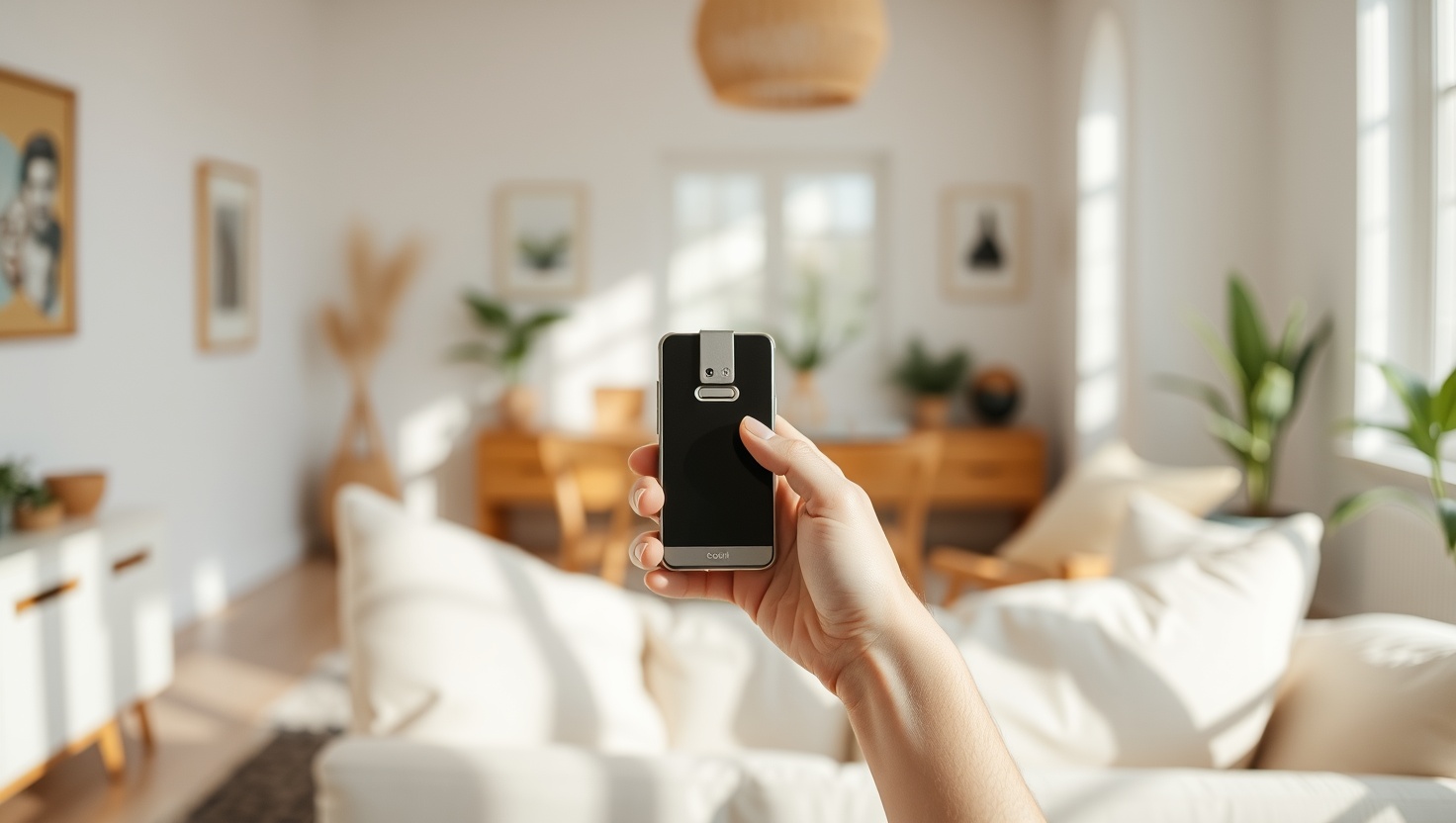
Forty-seven percent of people under 30 are actively reducing their screen time. Not planning to, not wanting to — actively doing it. And the method they're choosing isn't a wellness app or a meditation retreat. It's a flip phone. A physical object that calls, texts, and does basically nothing else. "Flip Phone Summer" started as an inside joke on TikTok and became one of the most concrete behavioral shifts of 2026. This isn't a trend. It's a rebellion. And Gen Z is leading it.
Here's what makes this interesting: the generation that grew up most immersed in social media is also the generation pulling away from it hardest. Not because some wellness influencer told them to — but because they lived inside the algorithm long enough to recognize exactly what it was doing to them. One week off social media reduces depression symptoms by 24% and anxiety by 16%, according to research published in the journal Cyberpsychology, Behavior, and Social Networking. Gen Z found this out the hard way, and now they're doing something about it. With a flip phone. In summer 2026.
Key Takeaways
- Flip Phone Summer is a real, data-backed cultural shift — not a passing aesthetic trend
- 86% of Gen Z in the US and Europe are actively trying to reduce smartphone use
- You have four practical options: full flip phone, Nokia feature phone, dumbphone mode, or phone-free time blocks
- The $5B analog economy — vinyl, film cameras, physical books, cash — is being engineered by Gen Z on purpose
- Phone-free spaces like Hush Harbor restaurant in DC are spreading fast, with community backing
- A one-week detox produces measurable mental health improvements — the science is solid
What Is Flip Phone Summer, Exactly?
The name started on TikTok — which is mildly ironic and also completely on-brand for this generation. Videos of Gen Zers unboxing flip phones, showing their minimalist lock screens, documenting "day 30 without Instagram" started racking up millions of views. But the movement had been building underground for longer than the TikTok moment suggested.
At its core, Flip Phone Summer is a collective decision to use technology on your own terms instead of on the algorithm's terms. Some people go all the way — buying a Nokia 2780 Flip or a Light Phone 3 and leaving their iPhone at home. Others take the "dumbphone mode" approach, stripping their smartphone down to calls, texts, and maps while deleting every social app. Some just implement rigid phone-free time blocks and commit to them publicly, with accountability from friends.
What unites all of it is the same realization: the way most people use their phones right now is not a choice they consciously made. It's a default that was set for them — by app designers, by social pressure, by the sheer omnipresence of the devices from childhood. Flip Phone Summer is about re-making that choice deliberately.
The physical infrastructure is growing too. Hush Harbor, a restaurant in Washington D.C., locks your phone in a Yondr pouch when you arrive and returns it when you leave. The experience — eating a meal, having a conversation, existing in a room full of people all fully present — has a months-long waitlist. Phone-free concerts, phone-free yoga studios, and phone-free social clubs are popping up in cities across the US and Europe. Groups like #HalfTheStory, a nonprofit fighting social media's harm to young people, and The Offline Club, a Dutch collective that organizes phone-free weekends across European cities, have seen membership grow by triple digits in 2026. The movement has structural support. It's not going away.
Why It's Happening Right Now
The timing of Flip Phone Summer isn't random. Several forces hit a tipping point around 2025-2026 that made the movement inevitable.
1 Algorithm Fatigue: The Dopamine Stopped Working
The core promise of social media was always connection and entertainment. The delivery mechanism was dopamine — small hits from likes, new content, notifications. But dopamine tolerance builds. After years of overstimulation, the feed that used to feel exciting now just feels... exhausting. Gen Z lived through the full arc of TikTok from novelty to nausea faster than any generation experienced a medium before. The content kept coming. The good feelings stopped. What remained was a compulsive checking behavior that produced nothing but a mild anxiety when stopped. Algorithm fatigue is the feeling that the feed never ends and the reward never arrives. Flip Phone Summer is the decision to stop waiting for that reward.
2 The "Grandma Hobbies" Revival: Rebellion Through Boredom
Painting. Crocheting. Baking sourdough. Pressing flowers. Learning to sew. These activities — dismissed by previous generations as uncool or too slow — have become a deliberate cultural statement for Gen Z. They're "grandma hobbies" and that's exactly the point. They require hands, attention, and time. They can't be done while scrolling. They produce something physical at the end — an object, a skill, a meal — rather than an engagement metric. The hashtag #cottagecore has 8 billion TikTok views. #SlowLiving has crossed 2 billion. These aren't aesthetic choices. They're behavior choices dressed up as aesthetics. The camera roll looks vintage because the life being documented is deliberately slower. A flip phone fits perfectly into that visual grammar.
3 Dumbphone Mode: The Hacker's Path
Not everyone wants to fully abandon their smartphone — and they don't have to. "Dumbphone mode" is the practice of transforming a modern smartphone into something functionally equivalent to a pre-internet phone, without buying new hardware. Delete all social apps. Lock the browser behind a passcode. Turn the screen to grayscale (making it instantly less appealing). Disable notifications except calls and texts. Set strict app time limits. Use parental controls on yourself. Done right, dumbphone mode keeps your camera, your music, your maps, and your payment app while removing the infinite-scroll trap entirely. It's the option that requires the most discipline (the temptation to re-download Instagram is always one App Store visit away), but it costs nothing and preserves the practical features people genuinely need. We wrote a full guide on how to do it: How to Dumb Down Your Smartphone.
4 The $5B Analog Economy: Gen Z Is Engineering an Analog Future
Fortune magazine reported in early 2026 that the analog goods market — physical books, vinyl records, film cameras, board games, paper planners, cassette tapes — has crossed $5 billion in annual sales, with Gen Z as the primary growth driver. This is not nostalgia. Gen Z doesn't have nostalgia for vinyl — they were born into the streaming era. What they have is a deliberate preference for objects that can't send them notifications. A vinyl record plays both sides and then stops. A film camera gives you 24 exposures and makes you think before shooting. A paper planner doesn't know what you clicked last Tuesday. The analog economy is thriving because a generation that grew up surrounded by endlessly optimizing technology is choosing, consciously, to own some things that stay exactly what they are. A flip phone is the most pointed version of that choice.
How to Join Flip Phone Summer: Your 4 Options
There's no single right way to do this. The point is to reclaim your attention, and you can do that at different levels of commitment. Here are your four options, ordered from most drastic to most accessible.
Nokia 2780 Flip — Our Top Recommendation
The practical choice for the flip phone switch. It runs KaiOS and includes WhatsApp, Google Maps, and a basic browser — enough to stay functional without enabling the infinite scroll ecosystem. The…
In a hurry? That’s our pick. Want the reasoning and the full comparison? Keep reading.
📵 Make the Switch Today (on Amazon)
Flip phone summer only works if you actually buy the phone. These four ship from Amazon — pick your level of "off the grid" and order it before you talk yourself out of it.
As an Amazon Associate, Brainstamped earns from qualifying purchases — at no extra cost to you.
Option 1: Go Full Flip Phone
The hardest and the most effective. Buy a dedicated flip phone and use it as your primary device. Leave your smartphone at home (or in a drawer on airplane mode) during the day. The physical barrier makes the behavioral change automatic — you can't doom-scroll when the device isn't designed to let you. The two most popular choices in 2026 are the (affiliate link) classic flip phone design for maximum simplicity, and the (affiliate link) Nokia 2780 Flip, which adds WhatsApp and Google Maps for people who need minimal connectivity.
The adjustment period is real. Expect three to five days of low-level anxiety — your brain is used to the stimulation and will ask for it. After a week, that anxiety drops sharply. After two weeks, most people report that they don't miss the smartphone. What they do miss is the camera, which is the most common complaint. Solution: carry a separate point-and-shoot camera. They're cheap, the photos are often better, and the act of deliberately choosing to take a photo (rather than reflexively recording everything) changes your relationship with the moment.
Nokia 2780 Flip
The practical choice for the flip phone switch. It runs KaiOS and includes WhatsApp, Google Maps, and a basic browser — enough to stay functional without enabling the infinite scroll ecosystem. The battery lasts 3-4 days on a charge, which alone changes your relationship with your device. The clamshell design is satisfying to open and close, the call quality is excellent, and it fits in a front pocket in a way that a 6.7-inch iPhone never will.
- Best for: People who need WhatsApp and navigation but want out of social media
- Battery life: 3-4 days standby
- What you give up: Instagram, TikTok, Twitter, infinite scroll of any kind
- Our take: The best entry point into the flip phone world for most people
Option 2: Dumbphone Mode on Your Existing Smartphone
You keep your iPhone or Android. You just gut it. Delete every social app. Turn on grayscale display mode (Settings → Accessibility → Display → Color Filters). Remove Safari from your home screen. Set Screen Time (iPhone) or Digital Wellbeing (Android) to block everything except what you explicitly allow. Set a passcode you don't know — have a trusted person set it. The goal is to make the phone feel boring. Gray screen, no apps, no browser. Calls, texts, maps, music, camera. Done. This is the option we walk through in full detail in our complete dumbphone mode guide. It works best when combined with a (affiliate link) dedicated app-blocking tool that adds a second layer of friction.
Option 3: The Light Phone Route
The Light Phone 3 is the premium version of the flip phone concept — a beautifully designed, purpose-built minimal phone that does calls, texts, podcasts, music, navigation, and a limited set of tools. No browser. No social media. No app store. It's designed to feel like a real product, not a compromise — the screen is excellent, the build quality is premium, and the UI is intentional rather than stripped-down. At around $300, it's not cheap, but it has a cult following for a reason. For people who want to make the switch but don't want to feel like they're using a burner phone, it's the right answer.
Light Phone 3
The minimalist phone built for this exact cultural moment. The Light Phone 3 has a crisp, non-backlit e-ink display, great call quality, music streaming, podcast support, turn-by-turn navigation, and an alarm/timer. That's it. The company's entire design philosophy is "fewer features done well" — and they've executed it. The phone is genuinely beautiful to look at, which matters when you're carrying something all day. It signals intent without looking like you're using emergency backup hardware.
- Best for: People who want a premium minimal phone experience
- Battery life: 2-3 days typical use
- What you get: Calls, texts, music, podcasts, maps, alarm, calculator
- What you give up: The entire attention economy. Intentionally.
- Our take: Worth every dollar if you're serious about the long-term switch
Option 4: Phone-Free Zones and Time Blocks
You don't change your phone at all. You change your relationship with it by building deliberate phone-free structure into your days. Specific zones (bedroom, dinner table, car) where the phone never goes. Specific time blocks (morning before 9am, evenings after 8pm) where it lives in a drawer. Combine this with a timed lock box — a physical container with a timer that physically prevents access for the duration you set — and you remove the willpower requirement entirely.
This is the most accessible option and the best starting point if the others feel too extreme. The research on phone-free bedrooms alone is compelling: people who charge their phones outside their bedroom fall asleep an average of 27 minutes faster and report significantly better sleep quality within two weeks. That's one change, zero new hardware, and a measurable improvement in your daily baseline. Start there. See how you feel after two weeks. Then decide if you want to go further.
Head-to-Head: Which Option Is Right for You?
Here's the honest comparison. There's no wrong answer — the right option is the one you'll actually stick to.
| Option | Cost | Ease of Start | Social Difficulty | Effectiveness |
|---|---|---|---|---|
| Light Phone 3 | ~$299 | Medium — learning curve | High — no group chat | Very High |
| Nokia 2780 Flip | ~$90 | Easy — familiar interface | Medium — has WhatsApp | High |
| Dumbphone Mode | Free | Very Easy — existing phone | Low — all contacts intact | Medium-High (requires discipline) |
| Phone-Free Zones | Free (or ~$30 lock box) | Easiest — start tonight | Very Low | Medium (building block) |
What People Actually Do With the Time
The most common question about Flip Phone Summer isn't "how do I do it" — it's "but what do I do instead?" The assumption is that the phone was filling time that would otherwise be empty and uncomfortable. In reality, most flip phone converts report the opposite: the time was already full of things they wanted to do. The phone was just louder than those things.
The "grandma hobbies" trend is real and it's not ironic. Here's what people report doing with recovered screen time:
- Reading physical books — the most common response, and the most direct rebuilder of the attention span that social media eroded. People rediscover that finishing a novel produces a sustained satisfaction that no amount of content consumption replicates.
- Cooking properly — not meal prepping for the week, but actually cooking a meal with attention and care. It turns out making food you eat slowly is more satisfying than eating food quickly in front of a screen.
- Movement that isn't documented — running, hiking, cycling, swimming without a tracking app, without earbuds, without posting. Just the body and the environment. People consistently say this version of exercise produces more calm than the optimized, quantified version.
- Creative work — drawing, writing, painting, playing music, knitting. All of these require sustained attention, produce something tangible, and provide the kind of deep absorption that psychologists call flow state. You can read more about these in our guide to analog hobbies for Gen Z quitting social media.
- Actual conversations — not texting, not voice notes, but sitting with someone and talking for a prolonged period without anyone checking their phone. People who do this report feeling more connected to their existing relationships than at any point in recent memory.
- Nothing — sitting in a park, watching people walk by, being bored. It sounds like a hardship and feels briefly uncomfortable. Then something shifts and it starts to feel like rest. Real rest. Not the passive over-stimulation that passes for rest in the smartphone era.
The Mental Health Case Is Airtight
This isn't about aesthetics or identity or being the kind of person who uses a flip phone. The mental health case for reducing smartphone use is as well-evidenced as it gets in behavioral science. Beyond the 24% depression reduction and 16% anxiety reduction after one week of social media abstinence, the research literature shows:
- Sleep quality improves measurably within 7-10 days of removing screens from the hour before bed, as blue light suppression of melatonin reverses
- Social comparison decreases sharply when the curated highlight reels of Instagram and TikTok are removed from daily input, and self-reported body image and self-esteem scores rise correspondingly
- Attention span rebuilds within 2-3 weeks of reduced social media use, as the brain's dopamine system recalibrates to normal novelty levels — for the full story on this, read our guide to rebuilding your attention span
- Real-world social confidence increases, as the constant availability of text as a communication backup gets removed and people are forced to navigate social situations with full presence
The flip phone is, in this sense, a delivery mechanism for all of these benefits. It's not the phone itself that improves mental health. It's the removal of infinite algorithmic content from your daily sensory input. The flip phone is just the most robust physical way to enforce that removal.
The Flip Phone Summer Community
One of the reasons this movement has stuck when previous "digital wellness" pushes faded is that it has genuine community infrastructure. You don't have to do this alone, and you don't have to explain yourself to people who think it's weird.
#HalfTheStory — founded by Larissa May, a Gen Z advocate who developed anxiety from social media use at age 17 — now has chapters on hundreds of college campuses across the US. They run phone-free events, digital detox challenges, and educational programs about algorithmic design. Their community is one of the fastest-growing youth mental health communities in the country.
The Offline Club started in Amsterdam in 2023 and now operates in 14 European cities. They organize phone-free brunches, study sessions, hikes, and social gatherings. The attendance waitlists tell you everything about the demand: people are hungry for structured permission to not be reachable. The club provides that permission, and it turns out the events are actually more fun than phone-present versions of the same activities.
r/nosurf on Reddit has grown to over 250,000 members, with daily posts from people documenting their detox progress, asking for advice, and sharing what surprised them about life with less screen time. It's an active, supportive community that spans demographics — from teenagers to retirees, with heavy Gen Z representation.
Local versions are forming organically too. Groups of friends buying flip phones together and doing summer challenges. School groups doing phone-free weeks. Families setting collective house rules around device use. The social permission to reduce screen time is, if anything, growing — which removes one of the biggest barriers people cite: the fear of being seen as the weird one who doesn't have their phone.
Ready to Join Flip Phone Summer?
You don't have to go cold turkey. Pick your entry point — a flip phone, dumbphone mode, or just phone-free mornings — and start this week. Your attention is one of the most valuable things you own. Take it back.
Explore Flip Phones →See the Light Phone 3 Try Dumbphone Mode First
Frequently Asked Questions
Flip Phone Summer is a cultural movement — primarily driven by Gen Z — where people deliberately swap their smartphones for basic phones (flip phones, dumb phones) or severely restrict their smartphone to only core functions, during the summer months and beyond. It grew out of a broader rejection of algorithmic feeds, notification overload, and the mental health toll of always-on social media. The movement isn't about being anti-technology. It's about choosing when and how technology gets your attention, rather than letting apps make that choice for you. Think of it as the analog equivalent of a clean eating phase — but for your brain.
It depends on the flip phone. Basic feature phones like the Nokia 2780 Flip have Google Maps built in, so you can navigate without a smartphone. The Light Phone 3 also includes a maps and navigation tool — it just doesn't have a social media browser or app ecosystem. If you go with a very stripped-down option (like an old Alcatel or similar), you may lose GPS, in which case the standard workaround is to download offline maps to a cheap secondary device before you head out, or use a dedicated GPS unit. Most people who make the switch say GPS is the only feature they genuinely miss from their smartphone, and once they plan around it, they stop noticing.
Research suggests that one week of social media abstinence is enough to produce measurable reductions in depression (24%) and anxiety (16%). But most people who do a full detox and feel the difference choose to continue — not because they have to, but because the clarity feels too good to give up. For a first detox, a weekend is enough to notice the difference. A week is enough to feel genuinely different. A month is enough to reset your baseline so that returning to heavy use feels obviously uncomfortable. The ideal is not a temporary detox but a permanent redesign: reducing your baseline screen time so that your default state is clear, present, and in control. Flip Phone Summer lasts all summer for a reason — three months is long enough to make the new habits stick.
You'll get all calls and texts — which is how truly important messages actually arrive. What you'll miss is group chats, social media notifications, and app alerts. The honest question is: how many of those are actually important versus just habitual noise? Most flip phone converts report that their real relationships got stronger because they were more present when actually with people, and when they did communicate, it was more deliberate. The FOMO you feel is real — but it fades within a week or two as your brain recalibrates. For anything genuinely urgent (work Slack, medical apps, family group chats), a dumbphone mode setup on your existing smartphone gives you selective access without the algorithmic scroll traps.
Dumbphone mode — where you strip your smartphone down to only calls, texts, maps, and one or two essential apps — is significantly better than doing nothing. It removes the biggest dopamine hooks (social feeds, infinite scroll, YouTube autoplay) while keeping the practical utilities. However, it requires more willpower than an actual flip phone, because the temptation is always one unlock away. If you have the discipline to maintain dumbphone mode consistently, it works nearly as well. If you find yourself repeatedly slipping back into Instagram or TikTok despite the restrictions, a physical flip phone removes the option entirely and makes the behavior change automatic rather than willpower-dependent. Start with dumbphone mode. If it's not holding, escalate to a real flip phone. Both beat doing nothing by a wide margin.