
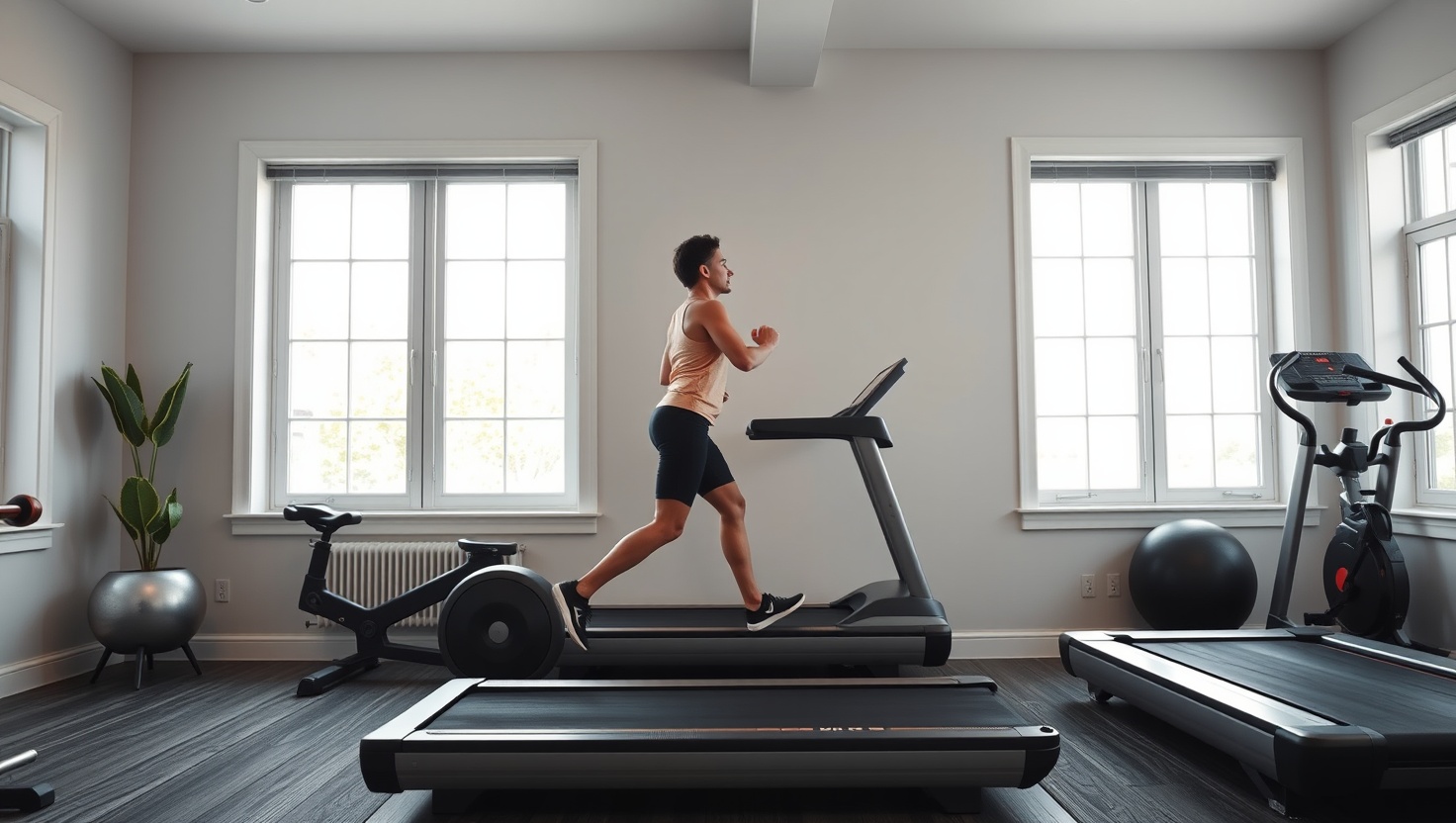
You want to run at home, skip the crowded gym, and still get a real workout. The trick is buying the right machine once so you never regret it.
NordicTrack Commercial 1750 — Top Pick
The Commercial 1750 blends a strong 3.5 CHP motor, a bright 14-inch touchscreen, and iFIT that auto-adjusts your incline. It is the best all-round home treadmill for 2026.
In a hurry? That's our pick. Want the reasoning and the full comparison? Keep reading.
A treadmill is one of the few pieces of gear that quietly earns its keep. It waits by the window on rainy mornings, it lets you walk while you take calls, and it turns ten free minutes into a real session. But the market is loud, the price tags swing wildly, and every brand swears its screen changes your life.
You do not need the loudest brand. You need enough motor, a deck that fits your stride, and an honest answer on whether you want guided classes or just a quiet machine that runs. This guide walks you through the four home treadmills worth your money in 2026, who each one is for, and where to save.
Key Takeaways
- Motor power matters most: aim for 3.0 CHP for walking and light jogging, 3.5 CHP if you run often or run heavy.
- Deck size decides comfort. Taller runners want a 60-inch belt so your stride never runs out of room.
- Incline builds intensity without pounding your knees, and it burns more calories at any speed.
- Decide on classes first: iFIT is brilliant if you want guided runs, useless if you just want to press start.
- The NordicTrack Commercial 1750 is our top pick, and the Horizon 7.0 AT is the smart no-subscription value buy.
How to Choose a Home Treadmill Without Overpaying
Start with the motor, because everything else rides on it. Treadmill motors are rated in CHP, or continuous horsepower, which measures the power the motor can sustain, not just the peak it hits for a second. A 3.0 CHP motor handles daily walking and steady jogging with ease. If you run several times a week, weigh more, or want the motor to stay cool and quiet for years, step up to 3.5 CHP. A stronger motor works less hard at the same speed, so it runs cooler and lasts longer.
Next comes the deck. Belt length decides whether your stride feels natural or cramped. Walkers get by with a shorter belt, but if you run and you are on the taller side, look for a 60-inch belt so your foot never chases the edge. Belt width of 20 inches gives your arms room to swing without clipping the rails. Pair that with good cushioning, which softens each footfall and takes strain off your knees and hips over long sessions.
Incline is the quiet upgrade most buyers underrate. Raising the deck a few percent turns an easy walk into a real calorie burn without asking your joints to absorb faster pounding. The machines here reach 15%, and two of them drop to -3% to simulate downhill, which trains different muscles. Finally, decide on folding. A folding deck buys back floor space in a spare room, so check that the frame folds cleanly and locks.
iFIT vs No Subscription: Which Camp Are You In?
This one choice splits the whole market, so answer it before you compare prices. Machines like the NordicTrack Commercial 1750 and ProForm Pro 9000 lean into iFIT, a subscription that streams guided runs and studio classes to a big touchscreen. A trainer sets your pace and, on these decks, adjusts your incline automatically so you just follow along. If you like being coached and you know a subscription keeps you moving, this is worth every penny.
But guided classes are not free forever, and plenty of people never touch them. If you already know your workout, prefer a podcast to a trainer, or simply do not want another monthly bill, the Sole F80 and Horizon 7.0 AT are built for you. They run beautifully with zero subscription, and you can still stream anything you like on your own phone or tablet propped on the console.
Here is the honest test: will you actually use the classes? If the answer is a confident yes, buy the tech and use it. If you hesitate even slightly, save your money and pick a no-subscription machine. There is no wrong answer here, only the wrong machine for how you really train.
Quick Comparison
| Product | Motor (CHP) | Incline | Subscription | Best For |
|---|---|---|---|---|
| NordicTrack Commercial 1750 | 3.5 CHP | -3% to 15% | iFIT (optional) | Premium tech and guided runs |
| Sole F80 | 3.5 CHP | 0% to 15% | None needed | Rock-solid durability |
| Horizon 7.0 AT | 3.0 CHP | 0% to 15% | None needed | Best value on a budget |
| ProForm Pro 9000 | 3.6 CHP | -3% to 15% | iFIT (optional) | Top-tier home setup |
1. Commercial 1750 — Best Premium Treadmill
NordicTrack Commercial 1750
The Commercial 1750 is the machine most home runners land on, and for good reason. The 3.5 CHP motor stays smooth and quiet whether you are walking a hill or pushing a tempo run, and the deck cushioning takes the sting out of longer sessions. The 14-inch HD touchscreen is the centerpiece: bright, responsive, and built around iFIT, where trainers guide your run and adjust incline and speed for you so you can stop fiddling and just move.
That automatic control is the trick that makes the tech worth it. When a coach raises the incline mid-session, the deck follows without you touching a button, so a guided run feels less like a workout you manage and more like one you take. It folds up to reclaim floor space, and the -3% decline adds downhill training most rivals skip. If you want the best blend of build quality and guided coaching, this is the one to beat.
Pros
- Strong, quiet 3.5 CHP motor handles daily running
- Bright 14-inch HD touchscreen is a joy to use
- iFIT auto-adjusts incline and speed during guided runs
- -3% to 15% incline range trains uphill and down
- Folds up to save space in a spare room
Cons
- You get the most value only if you use iFIT
- Big screen and frame need real floor space
- Premium price sits above budget picks
2. Sole F80 — Best for Durability
Sole F80
The Sole F80 is the machine you buy when you want it to just work for years without a subscription hanging over it. Sole built its reputation on solid frames and strong motors, and the F80 carries that forward with a 3.5 CHP motor and cushioning that soaks up impact. It feels planted underfoot, the kind of stable that gives you confidence to open up your stride and run hard.
There is no monthly fee to unlock its best features, because its best feature is simply running well. You get a clean console, Bluetooth to pipe in your own audio, and a deck that folds when you need the room back. If screens and classes leave you cold and you would rather pay once for a machine that lasts, the F80 is the honest, dependable pick.
Pros
- 3.5 CHP motor delivers smooth, quiet running
- Sturdy frame feels rock-solid at speed
- No subscription required to get full value
- Generous cushioning is easy on the joints
- Folds away to reclaim floor space
Cons
- Console is plainer than screen-first rivals
- No guided classes if you want coaching
- Incline tops out flat, with no decline
3. Horizon 7.0 AT — Best Value Treadmill
Horizon 7.0 AT
The Horizon 7.0 AT is the value champion of this lineup, and it is the one we point budget-minded buyers toward first. The 3.0 CHP motor comfortably covers walking, jogging, and interval work, and there is no subscription standing between you and a full workout. Quick-dial controls on the handrails let you change speed and incline fast, which is a gift during intervals when reaching for a screen breaks your rhythm.
This is the no-subscription value pick, plain and simple. You bring your own app or playlist, stream it over the built-in Bluetooth speakers, and get moving. It will not dazzle you with a giant screen, but it nails the fundamentals at a price that leaves room in your budget. If you want a capable, honest machine without recurring costs, start here.
Pros
- Excellent value for a capable home treadmill
- No subscription needed to use every feature
- 3.0 CHP motor handles walking and jogging well
- Quick-dial controls make intervals painless
- Bluetooth speakers stream your own audio
Cons
- 3.0 CHP is fine, but heavy runners may want more
- Small console instead of an immersive screen
- No decline setting for downhill training
4. Pro 9000 — Best High-End Treadmill
ProForm Pro 9000
The ProForm Pro 9000 is for the buyer who wants the fullest home setup and does not want to compromise. Its 3.6 CHP motor is the strongest here, so it stays cool and quiet even under hard, frequent running. The large HD touchscreen turns your spare room into a small studio, and like the NordicTrack, it runs iFIT with automatic incline and speed adjustments during guided sessions.
It also mirrors the -3% to 15% incline range, giving you both climbing and descending work on one deck. This is the top-tier option, and it carries a top-tier price to match. If you are building a serious home gym and you want a machine that keeps up with heavy use and immersive classes, the Pro 9000 delivers without asking you to cut corners.
Pros
- Powerful 3.6 CHP motor for frequent, hard running
- Large HD touchscreen for an immersive experience
- iFIT auto-adjusts incline and speed on guided runs
- -3% to 15% incline covers uphill and downhill
- Built to handle a serious home training load
Cons
- Highest price in this lineup
- Best value comes only with iFIT classes
- Large footprint needs a dedicated space
Which Should You Choose?
If you want guided classes and the best all-round machine
Get the NordicTrack Commercial 1750. The 3.5 CHP motor, bright 14-inch screen, and automatic iFIT incline control give you a coached run that feels effortless to manage. It is the sweet spot of build quality and technology, which is why it is our top pick.
If you want to skip the subscription and save money
Get the Horizon 7.0 AT. It runs everything you need with no monthly fee, quick-dial controls keep intervals smooth, and it leaves budget in your pocket. Want extra durability with no subscription? Step up to the Sole F80 and its stronger 3.5 CHP motor.
If you are building a no-compromise home gym
Get the ProForm Pro 9000. The strongest motor here, a big immersive screen, and full incline and decline range make it the top-tier choice for serious, frequent runners who want the fullest setup.
Ready to Run at Home on Your Terms?
Pick the motor and deck that match how you train, decide on classes honestly, and buy once. Check the current price on our top pick and start your first session this week.
Explore Brainstamped's Free ToolsFrequently Asked Questions
For walking and light jogging, 3.0 CHP is plenty. If you run several times a week, run at speed, or weigh more, choose 3.5 CHP or higher so the motor runs cooler and lasts longer. A stronger motor works less hard at any given pace.
No. iFIT adds guided runs and automatic incline control, which is great if you like being coached. But the Sole F80 and Horizon 7.0 AT run fully without any subscription, and you can stream your own content on your phone or tablet instead.
A 20-inch wide belt gives your arms room to swing. For length, walkers are fine with a shorter deck, but runners, especially taller ones, want a 60-inch belt so your stride never runs out of room at the front.
Incline raises intensity and calorie burn without forcing you to run faster, so it is easier on your joints than pure speed. A few machines here also offer a -3% decline, which simulates running downhill and trains different muscles.
Yes. All four fold up to reclaim floor space, which is handy in a spare room or shared area. Check that the frame folds cleanly and locks in place, and remember that screen-first models still need room for the console when in use.