
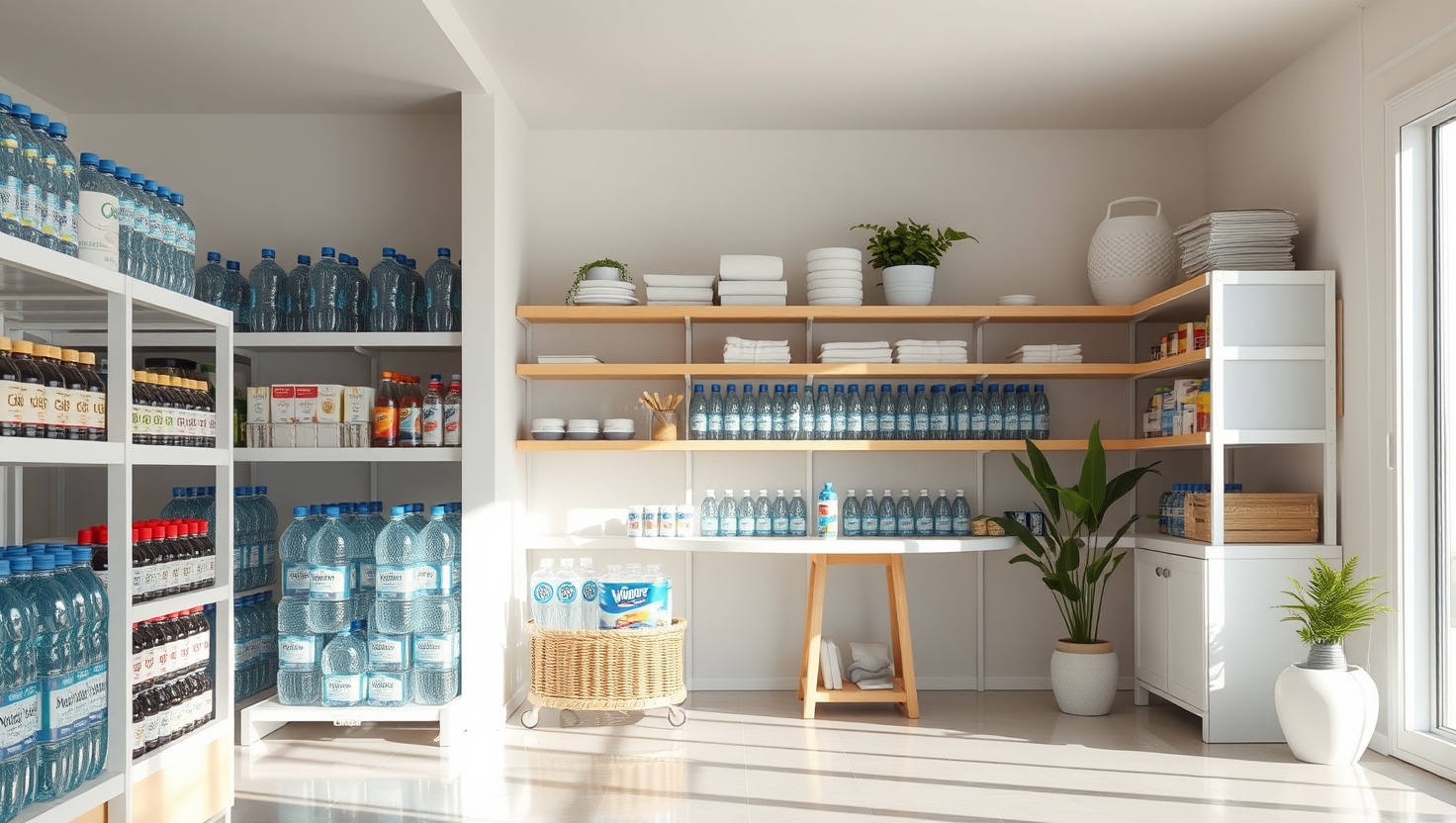
You can go weeks without food but only days without water — which makes a water supply the most useful, least glamorous prep there is. The good news: it's cheap, simple, and doesn't require a bunker. Here's exactly how much to store, what to keep it in, how long it lasts, and how to make sure it's still safe when you need it.
Key Takeaways
- Store ~4 litres per person per day — half for drinking, half for cooking and hygiene.
- Aim for 2 weeks to start (that's ~56 litres per person); build up from there.
- Use food-grade containers and keep them cool, dark and off concrete floors.
- Rotate every 6–12 months, or store commercially sealed water for longer.
- A good filter turns questionable water into drinkable water — your backup plan.
How much water should you store?
The standard planning figure is about 4 litres (1 gallon) per person, per day — roughly 2 litres for drinking and 2 for cooking and basic hygiene. Don't forget pets. Start with a two-week supply (about 56 litres per person) as a solid, achievable goal, then extend to a month as space allows.
The right containers
- Food-grade water containers (BPA-free, marked for water) — from 5-litre jugs to stackable 20-litre carriers.
- Commercially bottled water — easiest to start with and sealed for years.
- Avoid reusing old milk or juice jugs — sugars and proteins are hard to fully clean and invite bacteria.
Where and how to store it
Keep water somewhere cool, dark and dry. Heat and sunlight degrade plastic and encourage algae over time. Keep containers off bare concrete (put a board or pallet underneath), since chemicals and temperature can leach through. Spread your supply across a couple of locations if you can, so a single leak doesn't wipe it out.
How long does stored water last?
Tap water stored properly in clean, food-grade containers is generally good for 6–12 months before you should rotate it (drink it, water plants, refill). Commercially sealed bottled water lasts much longer — check the best-before date, but it's typically safe well beyond it if the seal is intact and it's been stored cool and dark.
Make it drinkable: filters and treatment
Storage is plan A. Plan B is being able to treat water you find — rain, a stream, a tank. A quality gravity or pump filter removes bacteria and protozoa, and boiling (a rolling boil for one minute) is the reliable fallback. Between stored water and a good filter, you're covered for most situations.
Want a reliable backup?
A good gravity filter turns almost any water source into drinking water. See our honest review of the classic.
Read the Berkey water filter review →Frequently Asked Questions
Plan for about 4 litres (1 gallon) per person per day — roughly half for drinking and half for cooking and hygiene. A two-week supply is about 56 litres per person. Remember to include pets.
Tap water in clean, food-grade containers is generally good for 6–12 months before rotating. Commercially sealed bottled water lasts far longer — check the date, but it is usually fine well beyond it if the seal is intact and it has been kept cool and dark.
Use food-grade, BPA-free containers marked for water, or commercially bottled water. Avoid reusing old milk or juice jugs, since leftover sugars and proteins are hard to clean and encourage bacteria.
It is a smart backup. Stored water is plan A; a quality gravity or pump filter (plus boiling as a fallback) lets you make found water drinkable if your stored supply runs low.
Related: Berkey water filter review · Best countertop water distillers · All emergency readiness guides