
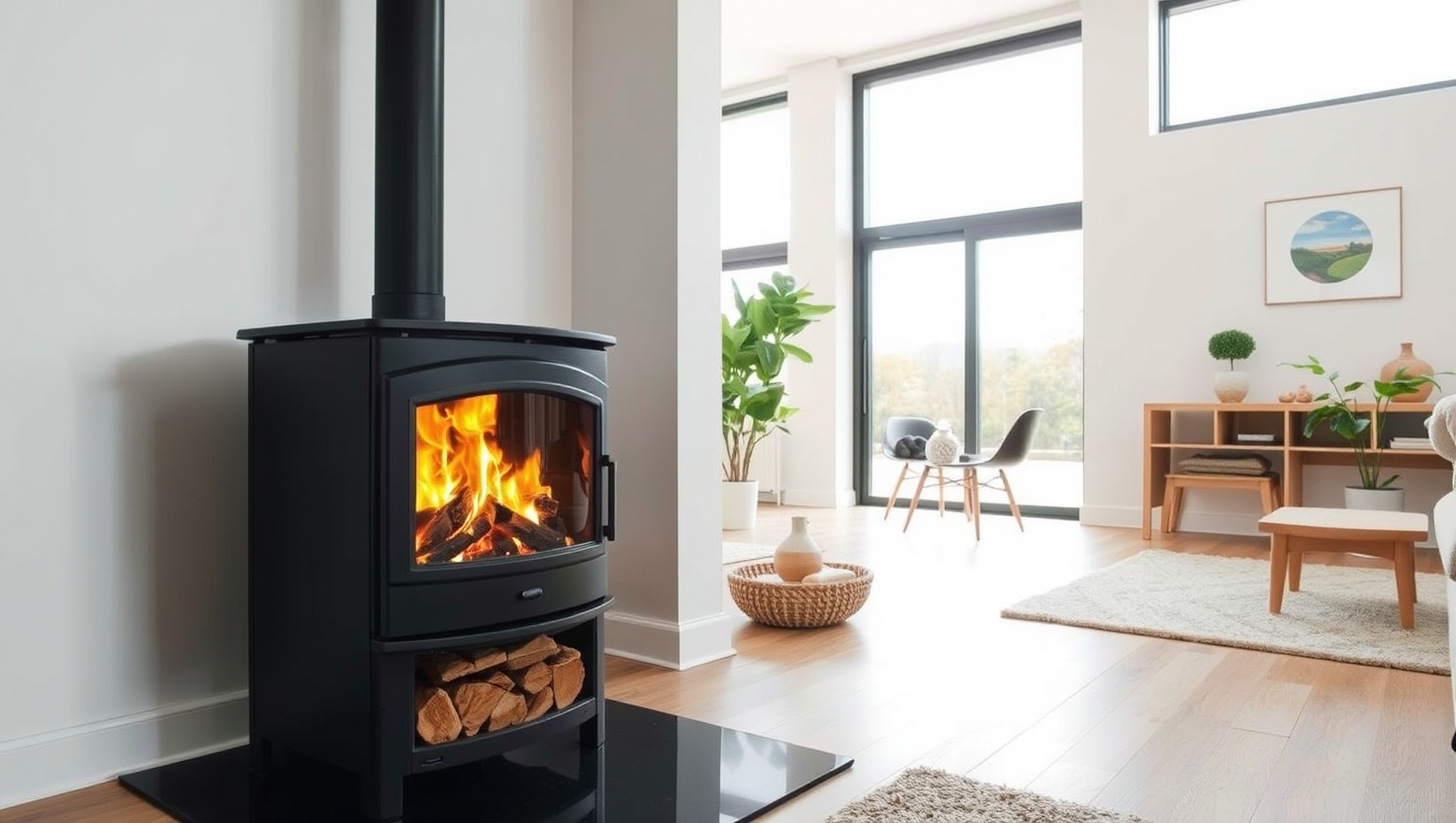
The grid goes down, the temperature drops, and a wood stove keeps you warm anyway. In 2026, a good one heats your home cleanly and cuts your dependence on the power company.
Drolet Wood Stove — Top Pick
With a large firebox, long overnight burns, strong EPA 2020-certified efficiency, and a durable steel build, the Drolet is the best all-around wood stove for heating your home or cabin, and a dependable backup when the grid goes down in 2026.
In a hurry? That's our pick. Want the reasoning and the full comparison? Keep reading.
There is a quiet confidence that comes from knowing you can heat your own home no matter what happens outside your walls. A wood stove gives you that. When the power fails in a winter storm, when heating bills climb, or when you simply want to lean less on the grid, a well-chosen stove turns a stack of firewood into steady, controllable warmth. Modern EPA-certified stoves burn cleaner and far more efficiently than the smoky units your grandparents ran, so you get more heat from every log and less smoke up the chimney.
The tricky part is that spec sheets can mislead. A stove rated to heat a huge square footage on paper might struggle in a drafty, poorly insulated house, and firebox size, burn time, and steel-versus-cast-iron construction all change how a stove actually performs. So you need to know what to look for. Below you get the four wood stoves worth your money right now, plus a plain-English breakdown of coverage, firebox capacity, burn time, and construction, so you buy the right one the first time and install it safely.
Key Takeaways
- Every modern wood stove worth buying is EPA-certified to the 2020 clean-air standard, which means cleaner burns and more heat from each load of wood.
- For most homes and cabins, the Drolet is our top pick: a large firebox, long burn times, and strong efficiency in a durable steel body.
- Want serious heat without overspending? The US Stove delivers the best value per dollar.
- Heating a big, open space? The Ashley Hearth covers the most square footage on this list.
- Tight cabin, small room, or supplemental heat? The Pleasant Hearth compact model fits where the bigger stoves won't.
How to Read a Wood Stove Spec Sheet (Without Getting Fooled)
Start with EPA certification, because in 2026 it is non-negotiable. Every stove worth buying meets the EPA 2020 standard, which caps how much smoke a stove can emit and forces cleaner, more complete combustion. The practical payoff for you is real: a certified stove wrings far more heat out of each log, produces less creosote in your chimney, and puts less smoke into the air. If a stove is not EPA-certified, skip it. Beyond the sticker, look at the efficiency rating, because a higher percentage means more of your firewood becomes heat in the room instead of waste up the flue.
Next, look at coverage and firebox size together, not separately. Manufacturers publish a square-footage rating, but treat it as a ceiling reached under ideal conditions in a well-insulated home. A drafty farmhouse or an open-plan cabin with high ceilings will get less. The firebox size, measured in cubic feet, tells you how much wood you can load at once, and that directly drives burn time. A bigger firebox means longer burns and fewer trips to reload, which matters a lot on a cold night or when you want the stove to hold coals until morning. Look for burn-time claims and read them honestly: an 8-hour overnight burn is a genuine convenience.
Then consider construction and features. Steel stoves heat up fast and are typically tougher to crack, while cast iron holds heat longer and radiates it more gently after the fire dies down; many modern stoves pair a steel body with a firebrick-lined firebox to get the best of both. A blower option pushes warm air out into the room faster and extends your heated area, which is worth having if you are trying to warm a larger or oddly shaped space. And if you plan to lean on the stove off-grid, a flat cooktop surface on top lets you boil water, simmer a pot, or cook a meal when the power is out, turning your heat source into a backup kitchen.
Clearances, Chimney, and Safe Installation: The Part You Cannot Skip
A wood stove is only as good as its installation, and this is where you protect your home and the people in it. Every stove has published clearance-to-combustibles distances, the minimum space required between the stove and any wall, furniture, or other flammable material. Respect those numbers exactly, and use a code-approved floor protector, or hearth pad, underneath to shield your floor from radiant heat and stray embers. Getting clearances wrong is one of the most common and most dangerous mistakes, so measure carefully and build in a margin.
The chimney and flue are just as critical. Your stove needs a properly sized flue and a chimney that provides good draft, correct height, and the right liner for wood burning; an undersized or poorly drafting chimney will make the stove smoke, burn inefficiently, and build creosote faster. Because these details vary by home and by local building code, this is a job to do right rather than fast. We strongly recommend a professional installation, or at minimum a professional inspection, and a permit where your area requires one. Finally, install a carbon monoxide detector near the stove and keep a working smoke alarm nearby, sweep and inspect your chimney regularly, and burn only seasoned, dry wood. Done properly, a wood stove is one of the safest, most reliable ways to heat your home for decades.
Quick Comparison
| Product | Best For | Coverage | Strength | Construction |
|---|---|---|---|---|
| Drolet Wood Stove | Overall pick | Large firebox, long burns | Efficiency + build | Heavy-gauge steel |
| US Stove Wood Stove | Best value | Solid mid-size coverage | Heat per dollar | Steel body |
| Ashley Hearth Wood Stove | Large open areas | Highest square footage | Big-space heating | Steel with firebrick |
| Pleasant Hearth Wood Stove | Compact spaces | Small rooms, cabins | Fits tight spots | Steel body |
1. Drolet — Best Overall
Drolet Wood Stove
The Drolet is the stove we hand to almost anyone who asks. It threads the needle better than anything else in 2026: a large firebox that swallows big loads of wood, long, steady burn times that can hold coals overnight, and strong EPA-certified efficiency that turns your firewood into more usable heat. The heavy-gauge steel body is built to last, and many models come with a firebrick-lined firebox and an optional blower to push warmth further into the room. It looks purposeful and heats like a workhorse, which is exactly the point.
That combination of efficiency and capacity is what makes it our top pick. You load it, you dial in the air control, and you get hours of controllable heat without babysitting the fire. Add the optional blower and it warms a larger footprint faster, and the flat top gives you a genuine cooktop surface for off-grid cooking when the power is out. If you want one stove that reliably heats your home, holds an overnight burn, and doubles as a backup during outages, this is it. Just follow the clearance and chimney requirements to the letter and have it installed properly.
Pros
- Large firebox delivers long burn times, including overnight loads
- Strong EPA 2020-certified efficiency gets more heat per log
- Durable heavy-gauge steel body built for years of use
- Optional blower spreads warmth faster across a larger area
- Flat cooktop surface works for off-grid cooking during outages
Cons
- Larger size needs adequate clearance and floor space
- Heavy unit that is a two-person job to move and set
- Full performance depends on a correctly sized, well-drafting chimney
2. US Stove — Best Value
US Stove Wood Stove
The US Stove is the smart-money pick. It delivers genuine EPA-certified wood heat and a solid mid-size firebox for noticeably less than the premium units, which makes it the easy recommendation when you want real warmth without maximum spend. US Stove has a long track record of no-nonsense heaters that simply work, and this model keeps the parts that matter, clean combustion, respectable burn times, and a firebrick-lined firebox, while trimming the extras that inflate a price tag.
You give up some of the refinement and the very longest burn times of the flagship stoves, but you keep the core job done well: reliable, controllable heat for a home, cabin, or workshop. If your budget is finite and you would rather put your money into heating power than into premium finishing, the US Stove stretches every dollar further than the competition. It still needs the same careful installation, proper clearances, and a good chimney, so plan for that and it will serve you for years.
Pros
- Outstanding price-to-performance for real wood heat
- EPA 2020 certified for cleaner, more efficient burns
- Solid mid-size firebox handles everyday heating well
- Firebrick-lined firebox protects the body and improves burn quality
- Trusted, long-running brand known for dependable heaters
Cons
- Shorter maximum burn times than the largest stoves
- Fewer premium features and finish than pricier rivals
- Coverage suits mid-size spaces more than large open areas
3. Ashley Hearth — Best Large-Area
Ashley Hearth Wood Stove
When you need to heat a big, open space, the Ashley Hearth makes the case. It carries the highest square-footage rating on this list, built to warm large living areas, open-plan cabins, and roomy shops that smaller stoves would leave chilly in the corners. A large, high-output firebox lets you load plenty of wood and pump out serious heat, and many models include a blower to move that warmth across the whole space instead of letting it pool near the stove.
You trade a bit of flexibility for that muscle: a high-output stove wants a room large enough to absorb its heat, so it can overwhelm a small, tight space. But if your challenge is square footage, this is the tool for it. Give it a properly sized chimney, respect the clearances, and it will keep a large area comfortable through the coldest nights. As always, plan the install carefully and add a blower if you want to push the heated footprint even further.
Pros
- Highest square-footage coverage on this list for big spaces
- Large, high-output firebox for serious heat and long loads
- EPA 2020 certified for efficient, cleaner combustion
- Blower option spreads warmth across large, open rooms
- Firebrick lining supports strong, durable performance
Cons
- Too much output for small, tightly enclosed rooms
- Large footprint needs generous clearance and floor space
- Heavy unit that demands careful, professional installation
4. Pleasant Hearth — Best Compact
Pleasant Hearth Wood Stove
If your space is tight, the Pleasant Hearth compact model is the answer. It delivers clean, EPA-certified wood heat in a smaller body that fits where the bigger stoves simply won't, which makes it ideal for a small cabin, a tiny house, a single room, or supplemental heat in a corner of a larger home. The compact firebox still holds a useful load of wood, and the firebrick lining keeps burns clean and efficient despite the smaller footprint.
You give up the long overnight burns and big-area coverage of the larger stoves, but you gain something they can't offer: it fits, and it heats the space it is meant for without cooking you out of the room. For off-grid cabins, hunting camps, and small footprints where every inch counts, that trade is exactly right. Follow the same safety rules the bigger units need, proper clearances, a good chimney, and a CO detector, and this little stove will keep a small space cozy all winter.
Pros
- Compact size fits small rooms, cabins, and tight spaces
- EPA 2020 certified for clean, efficient burning
- Right-sized output that won't overheat a small room
- Firebrick-lined firebox keeps burns clean and steady
- Great as a primary heater for tiny spaces or as supplemental heat
Cons
- Small firebox means shorter burns and more frequent reloading
- Limited coverage; not for large or open-plan spaces
- Less heat output than the mid-size and large stoves here
Which Should You Choose?
Pick the Drolet if you want one stove that does it all
If you want reliable whole-home or cabin heat, long overnight burns, and a stove that doubles as backup cooking during an outage, the Drolet is the clearest choice. The large firebox and strong EPA-certified efficiency mean more heat from every log and fewer reloads, while the heavy-gauge steel build and optional blower round out the package. It is the best balance of efficiency, capacity, and durability on this list.
Pick the US Stove or Ashley Hearth by the space you need to heat
Watching your budget but still want real, dependable wood heat? The US Stove delivers the best warmth per dollar for mid-size spaces. Heating a big, open living area, cabin, or shop instead? The Ashley Hearth covers the most square footage here and pumps out serious high-output heat. Match the stove to your room size and your wallet, and both reward the choice.
Pick the Pleasant Hearth if space is tight
Some spaces simply can't fit a big stove, and forcing one in would cook you out of the room anyway. The Pleasant Hearth compact model answers that with clean, EPA-certified heat sized for small cabins, tiny houses, single rooms, and supplemental duty. It won't hold an all-night burn like the larger units, but it fits where they can't and heats its space just right.
Ready to Heat Your Home on Your Own Terms?
The Drolet gives you clean, efficient, EPA-certified wood heat with long overnight burns and a body built to last, so you stay warm whether you are cutting your heating bills or riding out an outage. Check current pricing and see why it tops our 2026 list, then install it safely with proper clearances and a good chimney.
Explore Brainstamped's Free ToolsFrequently Asked Questions
For most people, the Drolet is the best wood stove in 2026. It pairs a large firebox and long, efficient EPA-certified burns with a durable steel build, so it reliably heats a home or cabin and can hold coals overnight. If you want the best value, the US Stove is the top alternative, and the Ashley Hearth is the pick for large, open spaces.
EPA certification means the stove meets the federal 2020 clean-air standard, which limits smoke emissions and forces cleaner, more complete combustion. In practice that gives you more heat from each log, less creosote buildup in your chimney, and less smoke in the air. Every stove on this list is EPA-certified, and you should avoid any modern stove that isn't.
Manufacturers publish a square-footage rating, but treat it as a best-case number for a well-insulated home. A drafty house, high ceilings, or an open floor plan will get less. Match the firebox size and rated coverage to your actual space, and add a blower to spread warmth further. When in doubt, size up slightly for a big or leaky space, or choose a compact stove for a small one.
Burn time depends mostly on firebox size and how you set the air control. A large-firebox stove like the Drolet can hold a genuine overnight burn of roughly 8 hours and keep coals until morning, while a compact stove burns shorter and needs more frequent reloading. Using seasoned, dry hardwood and dialing back the air both stretch your burn time considerably.
We strongly recommend it. A wood stove requires exact clearances to combustibles, a code-approved hearth pad, and a properly sized, well-drafting chimney and flue, and these details vary by home and local building code. A professional installation or inspection keeps you safe and legal, often with a required permit. Always add a carbon monoxide detector, keep a smoke alarm nearby, sweep your chimney regularly, and burn only dry, seasoned wood.