
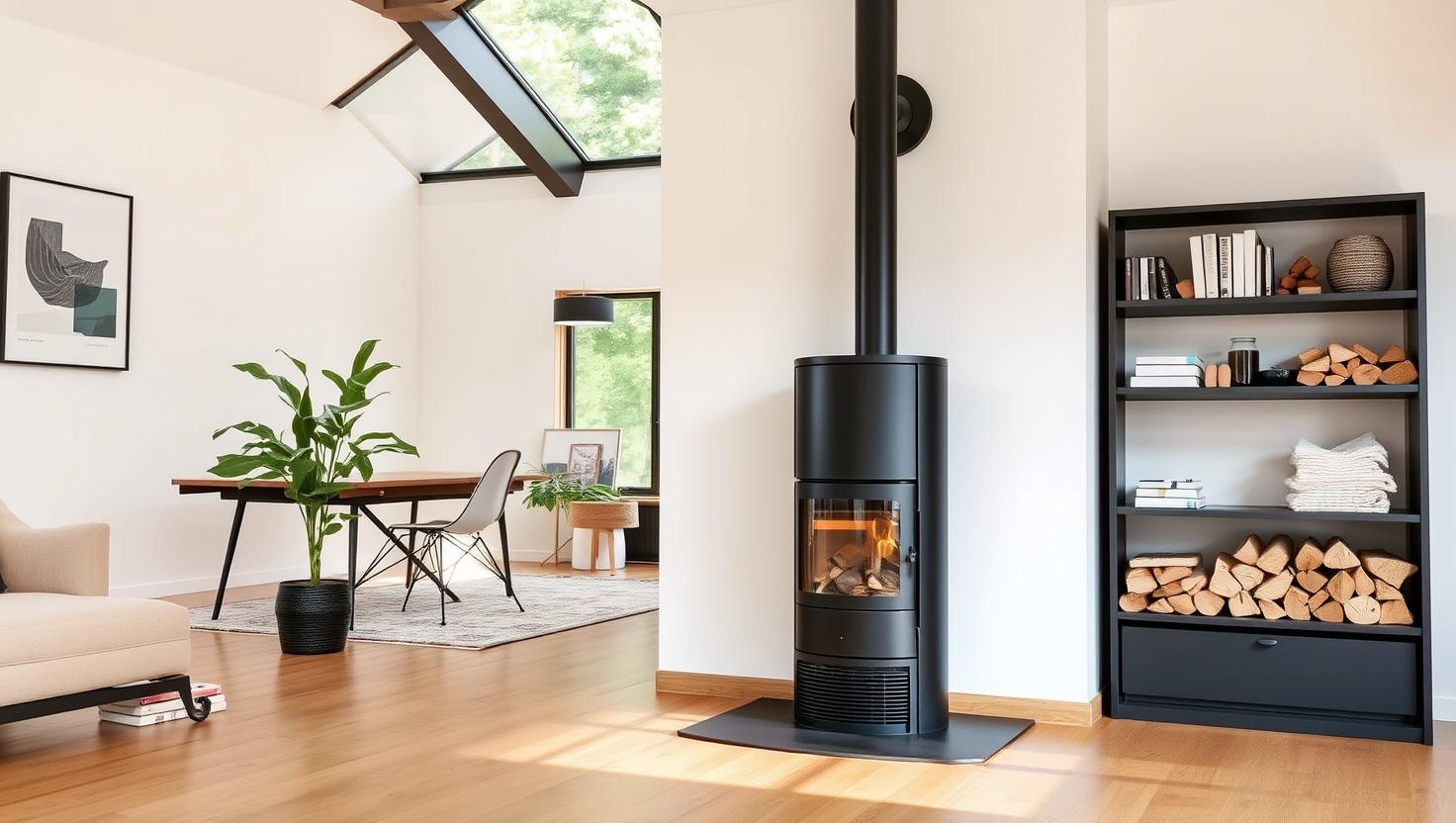
You want real, steady warmth without babysitting a fire or dreading the heating bill. In 2026, a good pellet stove gives you exactly that.
ComfortBilt Pellet Stove — Top Pick
With strong BTU output, a large hopper for long overnight burns, and a programmable thermostat, the ComfortBilt is the best all-around pellet stove for steady, efficient, hands-off heat in 2026.
In a hurry? That's our pick. Want the reasoning and the full comparison? Keep reading.
Heating your home should not feel like a monthly gut-punch or a full-time job. A pellet stove changes the math: you fill the hopper with compressed wood pellets, set a temperature, and the stove feeds itself, lights itself, and holds the room where you want it. No hauling logs, no stoking a fire at 2 a.m., no smoke-filled living room. Just clean, controllable heat that runs for hours on a single load and burns far more efficiently than an open fireplace ever could.
But spec sheets can mislead you. Two stoves with the same 'square footage' rating can heat wildly differently depending on BTU output, hopper size, and how well they hold a set temperature. And there is one honest trade-off you must understand before you buy: a pellet stove needs electricity to run its auger and blower, so a power outage stops it unless you plan for it. Below you get the four pellet stoves worth your money in 2026, plus a plain-English guide to BTUs, burn time, venting, and the battery-backup option that keeps you warm when the grid goes down.
Key Takeaways
- A pellet stove's real reach depends on its BTU output and hopper capacity, not just the square-footage number on the box.
- For most homes, the ComfortBilt Pellet Stove is our top pick: strong heat output, a large hopper for long burns, and a programmable thermostat.
- On a budget but still want reliable, thermostat-driven warmth? The Castle Serenity delivers the best value with a smart controller built in.
- Heating a big, open space? The US Stove model pushes the most BTUs to cover the largest area on this list.
- Pellet stoves run on electricity, so plan a battery-backup or small generator if outage-proof heat is your goal.
How to Read a Pellet Stove Spec Sheet (Without Getting Fooled)
Start with BTU output, because it does most of the heating work. BTUs per hour tell you how much heat the stove can actually produce, and that number, paired with your home's insulation and layout, decides whether a room feels toasty or barely warm. Manufacturers also print a 'heats up to X square feet' rating, but treat that as a best-case figure for a well-insulated, open floor plan. Drafty rooms, high ceilings, and closed doorways all shrink real coverage. A stove rated for 2,000 square feet may comfortably hold 1,200 in a leaky older house. Match the BTU output to your space, then give yourself a little headroom.
Next comes hopper capacity and burn time, which decide how often you reload. The hopper is the bin that stores pellets before the auger feeds them into the burn pot. A larger hopper, measured in pounds, means longer stretches between fills. On a low setting, a big hopper can run overnight and into the next day; crank the heat and it empties faster. Look at hopper size alongside the feed rate to estimate real-world burn time. Then check for auto-ignition, which lights the pellets electronically so you never fuss with a lighter, and a thermostat or programmable controller, which lets the stove modulate its feed to hold a set temperature instead of running full-blast and cooking you out of the room.
Power, Venting, Efficiency, and Cleanout: The Stuff Reviews Skip
Here is the honest trade-off every buyer needs to know: a pellet stove runs on electricity. The auger that feeds pellets, the igniter, and the blower that pushes warm air all draw power from a standard outlet. That makes the stove clean, controllable, and efficient, but it also means a power outage stops it cold, unlike a traditional wood stove that keeps burning off-grid. If you want a pellet stove for emergency readiness, plan for backup power. A battery-backup unit or a small inverter and deep-cycle battery can keep the auger and blower running for hours during an outage, and a modest generator handles longer grid-down stretches. Build that into your budget from day one so a winter blackout never leaves you cold.
The rest is about living with the stove long-term. Venting is simpler than a wood stove: pellet stoves use a small-diameter vent pipe and can often vent horizontally through a wall, which cuts installation cost and complexity, though you still want a certified install. Efficiency is a real selling point, since pellet stoves burn hot and clean, and an EPA-certified model meets modern emissions standards while wringing more heat from every bag of pellets. Factor in pellet cost and availability where you live, because a stove is only as practical as your pellet supply. Finally, plan for maintenance: you will empty the ash pan regularly and clean the burn pot and glass to keep combustion efficient. The payoff for those few minutes is steady, affordable, hands-off warmth all season.
Quick Comparison
| Product | Best For | Heat Output | Strength | Controls |
|---|---|---|---|---|
| ComfortBilt Pellet Stove | Overall pick | High BTU, wide coverage | Big hopper, long burns | Programmable thermostat |
| Castle Serenity Pellet Stove | Best value | Solid for small-mid rooms | Low price, smart controller | Built-in programmable |
| US Stove Pellet Stove | Large areas | Highest BTU output | Heats big open spaces | Manual + thermostat |
| Cleveland Iron Works Pellet Stove | Smart controls | Strong mid-size heat | WiFi + app control | Smart app + thermostat |
1. ComfortBilt — Best Overall
ComfortBilt Pellet Stove
The ComfortBilt is the pellet stove we hand to almost anyone who asks. It nails the fundamentals that actually matter: strong BTU output that heats a real living space, a generously sized hopper that runs for many hours before you refill, and a programmable thermostat that holds your set temperature instead of blasting on high and roasting the room. Auto-ignition means you set it and forget it, and the clean-burning design keeps efficiency high so every bag of pellets goes further.
What makes it our top pick is balance. It heats hard enough for most homes, sips pellets efficiently, and gives you real control over comfort with its programmable controller. The large hopper is the quiet hero here, letting you load up and walk away for the better part of a day. Pair it with a battery-backup unit and it becomes a genuine emergency-heat plan, not just a nice-to-have. If you want one stove that does the whole job well, this is it.
Pros
- Strong BTU output that heats a full living space with headroom
- Large hopper capacity delivers long burn times between refills
- Programmable thermostat holds a steady, comfortable temperature
- Auto-ignition lights the pellets electronically, no lighter needed
- Clean, efficient burn stretches every bag of pellets further
Cons
- Needs electricity to run, so plan battery backup for outages
- Larger unit takes up more floor space than compact rivals
- Regular ash-pan and burn-pot cleaning required to stay efficient
2. Castle Serenity — Best Value
Castle Serenity Pellet Stove
The Castle Serenity is the smart-money pick. It delivers dependable, thermostat-driven heat for a small-to-mid-size room at a price that undercuts the flagships, which makes it the easy recommendation when you want real pellet-stove comfort without maximum spend. Its standout feature is the built-in programmable controller, letting you schedule warmth so the stove is already heating the room before you get up or come home.
You give up some raw output and hopper size compared with bigger units, but you keep the parts that matter most: efficient, auto-igniting, hands-off heat with genuine temperature control. Its compact footprint slots into tighter spaces where a large stove would not fit. If your budget is finite and you would rather put your money into reliable warmth than into extra square-footage coverage you may not need, the Serenity stretches every dollar.
Pros
- Excellent price-to-performance for a programmable pellet stove
- Built-in scheduler warms the room before you even walk in
- Compact footprint fits tighter rooms and smaller homes
- Auto-ignition and clean burn keep operation simple and efficient
- Easy to live with for first-time pellet-stove owners
Cons
- Lower BTU output suits smaller spaces, not large open areas
- Smaller hopper means more frequent refills on high settings
- Runs on electricity, so an outage stops it without backup power
3. US Stove — Best Large-Area
US Stove Pellet Stove
When you need to warm a big, open floor plan, the US Stove makes the case. Its high BTU output is the most powerful here, built to push heat across a large living area, an open-concept great room, or a sizable cabin where smaller stoves simply run out of reach. Pair that muscle with a large hopper and it holds long burns, so you are not constantly refilling to keep a big space comfortable.
You trade a little finesse for that power. The controls lean more manual than the smart-app models, though it still supports thermostat-driven operation to hold a target temperature. If your priority is raw coverage over gadgetry, and your challenge is square footage rather than a tight budget, the US Stove delivers the heat where slimmer units fall short. Add backup power and it anchors a serious cold-weather plan for a large home.
Pros
- Highest BTU output here, built for large open areas
- Large hopper capacity supports long burns between refills
- Thermostat operation holds a target temperature across a big space
- Rugged, straightforward build made to run all season
- Strong choice for cabins and open-concept great rooms
Cons
- Controls are more manual than the smart, app-driven options
- High output is overkill for a small room and can overheat it
- Electricity-dependent, so outage-proof heat needs backup power
4. Cleveland Iron Works — Best Smart Controls
Cleveland Iron Works Pellet Stove
If you want to run your heat from your phone, the Cleveland Iron Works is the one to beat. Its standout feature is WiFi smart control: adjust the temperature, set schedules, and check the stove from an app, so you can warm the house on your drive home or dial it down from bed without getting up. Behind the tech sits solid mid-size heat output and an ample hopper for long, hands-off burns.
You are paying a little extra for that connectivity, but if you love a smart home, it earns its place. The programmable thermostat holds your comfort automatically, auto-ignition handles lighting, and the app adds a layer of convenience the manual stoves cannot match. For the buyer who wants modern, remote-controlled warmth and steady mid-size coverage, the Cleveland Iron Works is the smart pick, literally.
Pros
- WiFi app control lets you adjust heat and schedules from your phone
- Programmable thermostat holds a steady, comfortable temperature
- Ample hopper capacity supports long burns between refills
- Auto-ignition and clean burn keep daily use simple and efficient
- Great fit for smart-home fans who want remote control
Cons
- Smart features add cost over a basic manual stove
- App and WiFi mean more setup than a plug-and-play unit
- Electricity-dependent, so outages need battery or generator backup
Which Should You Choose?
Pick the ComfortBilt if you want one stove for the whole home
If you need to heat a real living space and want a stove that just works, the ComfortBilt Pellet Stove is the clearest choice. Its strong BTU output, large hopper for long overnight burns, and programmable thermostat give you steady, hands-off warmth with room to spare. It is the best all-around balance of heat, efficiency, and control on this list, and it pairs cleanly with a battery backup for emergencies.
Pick the Castle Serenity or US Stove based on your space
Watching your budget and heating a small-to-mid room? The Castle Serenity delivers reliable, programmable warmth at the best price and slots into tight spaces. Heating a big, open floor plan or a cabin instead? The US Stove pushes the most BTUs to cover the largest area here. Match the stove to your square footage first, and both give you efficient pellet heat where it counts.
Pick the Cleveland Iron Works if smart control matters most
Some buyers want to run their heat from their phone. The Cleveland Iron Works answers that with WiFi app control, schedules, and remote adjustment, layered on top of solid mid-size heat and a programmable thermostat. You pay a bit more for the connectivity, but if you love a smart home and want to warm the house before you walk in, it is worth every cent.
Ready for Steady, Affordable Warmth?
The ComfortBilt Pellet Stove gives you strong, efficient heat you can set and forget, with a big hopper for long burns and a thermostat that holds your comfort. Check current pricing and see why it tops our 2026 list.
Explore Brainstamped's Free ToolsFrequently Asked Questions
For most homes, the ComfortBilt Pellet Stove is the best pellet stove in 2026. It combines strong BTU output, a large hopper for long burns, and a programmable thermostat for steady, hands-off heat. If you are on a budget, the Castle Serenity is the top value alternative, delivering reliable programmable warmth for less.
Not on its own. A pellet stove needs electricity to run its auger and blower, so a standard outage stops it. The fix is backup power: a battery-backup unit or a small inverter and deep-cycle battery keeps it running for hours, and a modest generator covers longer outages. Plan that in if outage-proof heat is your goal.
It depends on hopper size and how hard you run the stove. On a low setting, a large hopper can burn overnight and into the next day; on high, it empties much faster. Check the hopper capacity in pounds alongside the feed rate to estimate real burn time, and expect more frequent refills when you crank the heat.
The square-footage rating on the box is a best case for a well-insulated, open floor plan. Drafty rooms, high ceilings, and closed doors all shrink real coverage, so a stove rated for 2,000 square feet may comfortably hold far less in an older home. Match the BTU output to your space and give yourself some headroom.
Pellet stoves are efficient and often cheaper to run than electric or propane heat, since they burn hot and clean and an EPA-certified model wrings more heat from every bag. Your real cost depends on local pellet prices and availability, so check both before you buy. Regular ash cleanout keeps combustion efficient and costs down.