
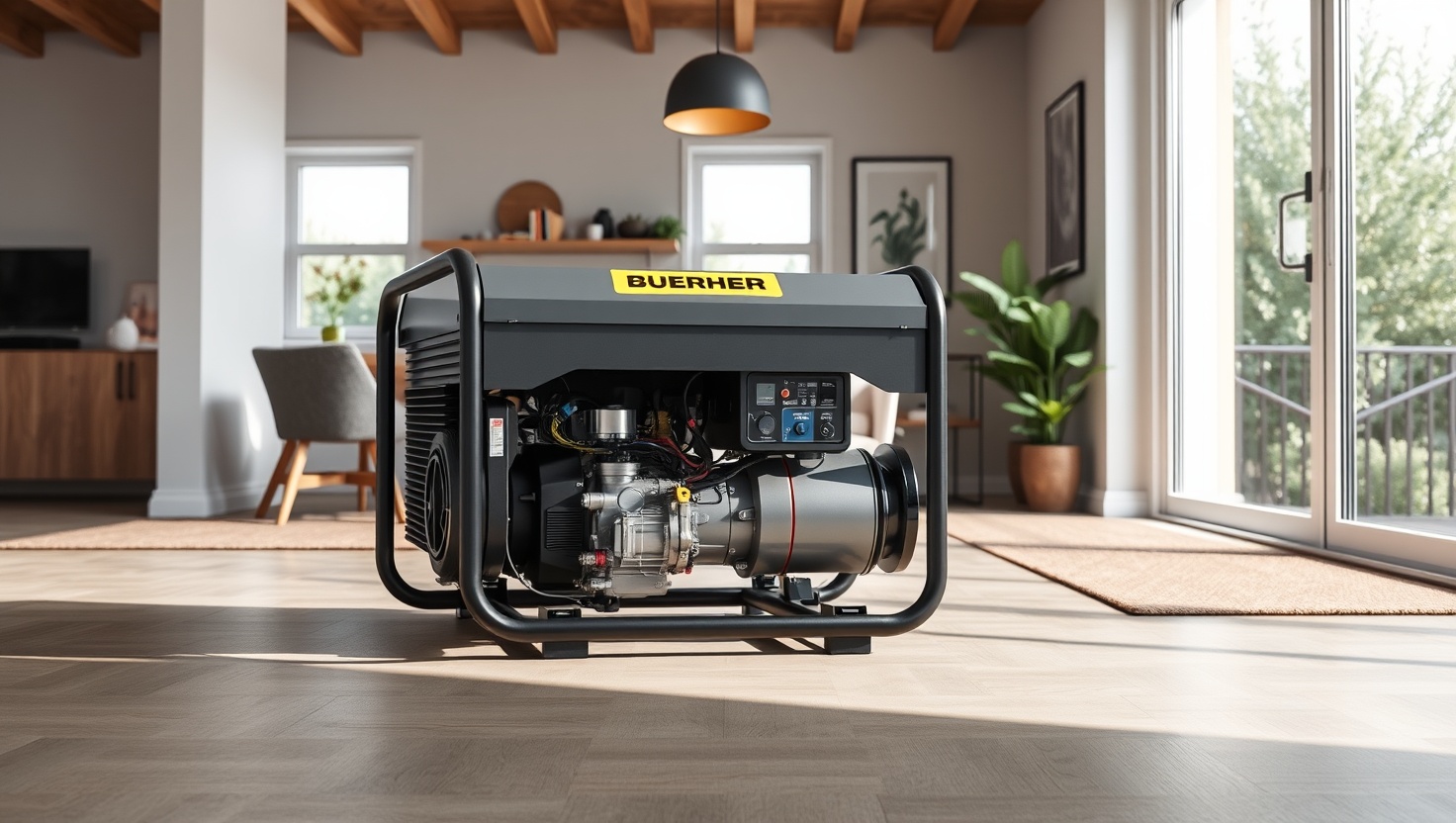
The power drops, the fridge goes quiet, and suddenly you realize how much you took that hum for granted. A dual-fuel generator gives you options gas or propane so you are never stuck without a way to keep the lights on.
Westinghouse WGen9500DF — Top Pick
For true whole-home backup, the WGen9500DF is in a class of its own here. With 9,500 running and 12,500 peak watts, transfer-switch readiness, remote start, and dual-fuel flexibility, it keeps everything that matters running when the grid does not. It is the generator you buy once and rely on for years.
In a hurry? That's our pick. Want the reasoning and the full comparison? Keep reading.
Here is the thing about backup power: the generator you buy on a calm sunny afternoon is the one you will lean on when the grid blinks out. You want flexibility, clean power for your electronics, and enough watts to cover what actually matters. Dual-fuel models let you run on gasoline when it is handy and switch to propane when you want longer storage and cleaner burning. That flexibility is the whole point.
We dug into the four dual-fuel generators worth your money in 2026, from a whole-home workhorse to a quiet inverter you can park next to your RV. You will learn the difference between running and peak watts, why inverter power protects your laptop and phone, and how transfer-switch readiness makes storm season a lot less stressful. Let's get you sorted.
Key Takeaways
- Dual-fuel means you can run on gasoline OR propane whichever you have on hand, whichever burns cleaner for your needs.
- Running watts keep your gear powered; peak (starting) watts handle the surge when a fridge or AC kicks on. Size for both.
- Inverter generators deliver clean, stable power that is safe for phones, laptops, and sensitive electronics.
- Transfer-switch readiness lets you power your home's circuits safely without a tangle of extension cords.
- Never run a generator indoors always outside, away from windows and doors, to avoid carbon monoxide buildup.
Running vs Peak Watts: The Number That Actually Matters
Every generator lists two wattage figures, and mixing them up is the most common buying mistake. Running watts (also called rated watts) is the power your generator delivers continuously the steady load that keeps your fridge, lights, and router humming along. Peak watts (or starting/surge watts) is the short burst of extra power available for a few seconds when a motor spins up. Your refrigerator compressor, well pump, or air conditioner all demand a jolt at startup that can be two or three times their running draw.
So how do you size it? Add up the running watts of everything you want on at once, then make sure your biggest single appliance's starting surge still fits under the peak number. A fridge might run at 700 watts but spike to 2,200 when the compressor kicks in. Get the running watts right for your total load, and give yourself headroom on peak. When in doubt, size up you will thank yourself the first time three appliances cycle on together.
Inverter vs Open-Frame: Clean Power vs Raw Muscle
Inverter generators produce electricity, convert it to DC, then invert it back to clean, stable AC. The result is a smooth sine wave that will not fry your laptop, phone, or the sensitive electronics in a modern RV. They also tend to run quieter and sip fuel more efficiently at partial loads, which is why they are the go-to for campsites, tailgates, and anywhere you want power without a roar. The trade-off is that pure inverter units usually top out at moderate wattage.
Open-frame conventional generators are the workhorses. They deliver more raw watts per dollar, which makes them the smart pick for whole-home backup when you need to run a well pump, HVAC, and your kitchen at the same time. They are louder and their power is a little less refined, but for big loads that muscle is exactly what you want. Many modern open-frame units still handle standard household electronics just fine pair them with a transfer switch and you have serious backup capability.
Transfer-Switch Readiness and Dual-Fuel Flexibility
A transfer switch is the bridge between your generator and your home's electrical panel. Instead of snaking extension cords through a cracked window, a transfer switch lets you safely energize specific circuits your furnace, well pump, fridge with a single connection. Generators labeled transfer-switch ready come with the right outlet (often an L14-30 or similar) so a licensed electrician can wire everything cleanly. If whole-home backup is your goal, this feature moves from nice-to-have to essential.
Dual-fuel is the other piece of the flexibility puzzle. Gasoline is easy to grab and delivers slightly more peak power, but it degrades in storage and gums up carburetors. Propane stores for years, burns cleaner, and is simple to keep on hand in tanks. With a dual-fuel generator you flip a selector and switch between them so you are never grounded because one fuel ran short. That optionality is worth a lot when you cannot predict how long you will need to run.
Quick Comparison
| Product | Best For | Running / Peak Watts | Type | Standout Feature |
|---|---|---|---|---|
| Westinghouse WGen9500DF | Whole-home backup | 9,500 / 12,500 | Open-frame | Transfer-switch ready, remote start |
| Westinghouse iGen4500DF | Quiet inverter power | 3,700 / 4,500 | Inverter | Clean power, RV-ready, quiet |
| Champion 4500W Dual-Fuel | RV & safety features | 3,500 / 4,500 | Inverter | CO Shield auto-shutoff |
| DuroMax XP4500iH | Budget pick | 3,600 / 4,500 | Inverter | Affordable dual-fuel flexibility |
1. WGen9500DF — Best Overall
Westinghouse WGen9500DF
If you want one generator to back up your whole home, this is it. The WGen9500DF puts out 9,500 running watts and surges to 12,500 peak, which is enough to run a well pump, central AC, refrigerator, and your kitchen all at once. It is transfer-switch ready out of the box, so an electrician can wire it straight to your panel no extension-cord spaghetti when the grid goes down.
The remote start is the feature you will love most on a cold, dark morning: hit the fob from inside and it fires up. Dual-fuel flexibility means you can run gasoline for maximum output or propane for cleaner, longer storage. It is a big, heavy unit and it is not whisper-quiet that is the honest trade for this much power but for serious home backup, nothing here beats it.
Pros
- Massive 9,500 running / 12,500 peak watts for true whole-home backup
- Transfer-switch ready for clean, safe panel connection
- Remote electric start with key fob
- Dual-fuel: run gasoline or propane
- Rugged, proven Westinghouse build
Cons
- Heavy and large needs a dedicated spot
- Louder than inverter models
- Overkill if you only need to power a few essentials
2. iGen4500DF — Best Quiet Inverter
Westinghouse iGen4500DF
When you want clean, quiet power you can live next to, the iGen4500DF shines. As an inverter, it delivers a smooth, stable sine wave that is safe for laptops, phones, and everything inside a modern RV. It runs noticeably quieter than open-frame units, so it will not drown out conversation at the campsite or annoy the neighbors during an outage.
It comes RV-ready with a TT-30R outlet, so you can plug your rig straight in. Dual-fuel gives you the gas-or-propane choice, and the efficient inverter engine stretches your fuel further at partial loads. At 3,700 running watts it will not power a whole house, but for an RV, a work site, or keeping your essentials alive without the racket, it hits a sweet spot.
Pros
- Clean inverter power safe for sensitive electronics
- Quiet operation compared to open-frame generators
- RV-ready with TT-30R outlet
- Dual-fuel gas or propane flexibility
- Fuel-efficient at partial loads
Cons
- Not enough wattage for whole-home backup
- Costs more per watt than open-frame units
- Propane output slightly lower than gasoline
3. Champion 4500W — Best for RV & Safety
Champion 4500W Dual-Fuel Inverter
Champion built real peace of mind into this one. Its CO Shield technology continuously monitors carbon monoxide levels and automatically shuts the generator off if it detects a dangerous buildup a genuinely valuable safeguard, especially around an RV or an enclosed camp setup. That does not replace smart placement outdoors and away from windows, but it is a strong backstop.
Beyond safety, you get a quiet inverter delivering clean power and an RV-ready design so your rig plugs right in. Dual-fuel lets you switch between gasoline and propane depending on what you have stocked. At 3,500 running watts it lands in the same class as the other inverters here, making it a smart pick for RVers and anyone who wants extra safety features baked in.
Pros
- CO Shield auto-shutoff for carbon monoxide protection
- Clean inverter power for electronics
- RV-ready connection
- Dual-fuel gas or propane
- Quiet, portable design
Cons
- Wattage too low for whole-home backup
- Premium price for the safety features
- Heavier than some compact inverters
4. XP4500iH — Best Budget
DuroMax XP4500iH
If you want dual-fuel flexibility and clean inverter power without stretching your budget, the DuroMax XP4500iH makes a lot of sense. It hits 3,600 running watts and 4,500 peak, putting it right alongside the pricier inverters here, and it still gives you the gas-or-propane choice that makes dual-fuel so practical.
You get inverter-grade power suitable for your phones and laptops in a portable package that works for camping, tailgating, or covering the essentials during a short outage. It leans on value over premium extras, so you will not find every bell and whistle but for a first generator or a budget-conscious backup, it delivers the core features that matter at a friendlier price.
Pros
- Wallet-friendly entry into dual-fuel inverters
- Clean inverter power for electronics
- 3,600 running / 4,500 peak watts
- Gas or propane flexibility
- Portable and easy to store
Cons
- Fewer premium features than rivals
- Not sized for whole-home backup
- Fewer convenience extras like remote start
Which Should You Choose?
Powering a whole house?
Go with the Westinghouse WGen9500DF. Its 9,500 running watts, transfer-switch readiness, and remote start make it the clear choice when you need to keep the whole home running an inverter simply will not deliver those watts.
Living the RV life or need quiet power?
The Westinghouse iGen4500DF or Champion 4500W are your friends. Both are RV-ready inverters with clean, quiet power. Choose the Champion if the CO Shield auto-shutoff safety feature seals the deal for you.
Watching your budget?
The DuroMax XP4500iH gives you dual-fuel inverter power at the most accessible price. It covers the essentials without the premium extras a smart first generator or a value-focused backup.
Ready to Never Be Left in the Dark?
Backup power is one of those things you set up once and stop worrying about. Pick the generator that fits your needs, get it wired up right, and keep some fuel on hand. Then take our free scan to spot the other gaps in your emergency readiness before you need it.
Take the Free Emergency Readiness ScanFrequently Asked Questions
Dual-fuel means the generator can run on either gasoline or propane. You flip a selector to switch between them. Gasoline is easy to grab and gives slightly more peak power, while propane stores for years and burns cleaner so you are never stuck if one fuel runs short.
Running (rated) watts is the continuous power the generator delivers to keep appliances going. Peak (starting/surge) watts is a short burst of extra power for a few seconds when a motor like a fridge or pump spins up. Size your total load to the running watts and leave headroom on peak.
If you plan to power phones, laptops, or the sensitive electronics in an RV, yes an inverter delivers clean, stable power that protects them. For big whole-home loads where raw wattage matters most, an open-frame generator gives you more watts per dollar.
A transfer switch safely connects your generator to your home's electrical panel so you can power specific circuits without running extension cords through windows. If whole-home backup is your goal, it is essential and a licensed electrician should install it.
Always run your generator outdoors, well away from windows, doors, and vents, so carbon monoxide cannot drift inside. Never run it in a garage or enclosed space, even with the door open. A generator with CO auto-shutoff adds protection, but smart placement outside is the real safeguard.