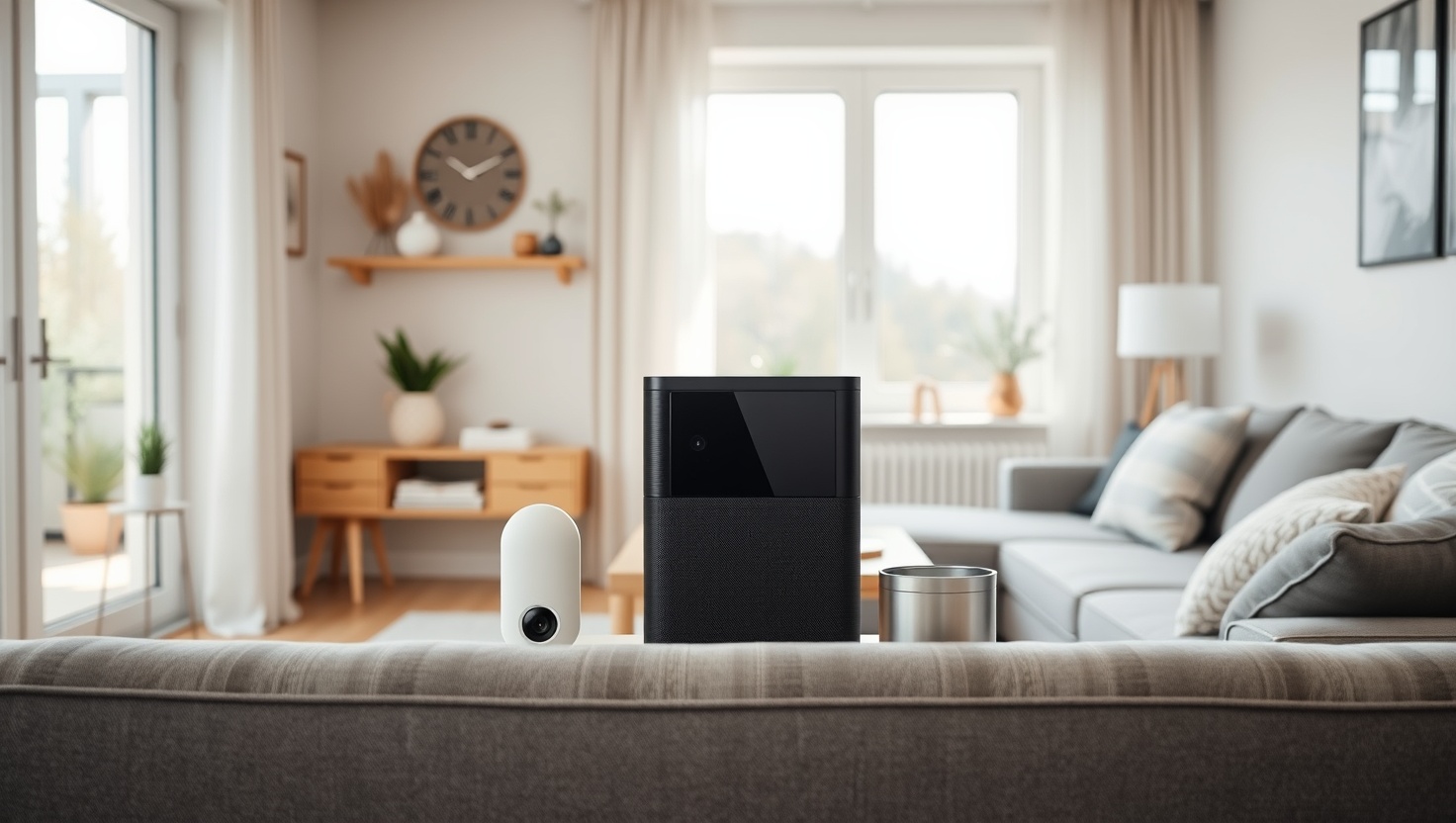
There are roughly 2.5 million burglaries per year in the United States. FBI data shows that 83% of convicted burglars said they would check for an alarm system before targeting a home — and most would move on to an easier target if they found one. A visible security system is not just peace of mind. It is a statistically proven deterrent. The problem used to be that real security cost thousands of dollars in professional installation, long-term contracts, and monthly fees that quietly drain your bank account for years.
SimpliSafe 8-Piece Home Security System — Our Top Recommendation
SimpliSafe built its entire reputation on one idea: real home security without the nonsense. No contracts. No hidden fees. No technician required. The 8-piece kit includes a base station, keypad…
In a hurry? That’s our pick. Want the reasoning and the full comparison? Keep reading.
That era is over. SimpliSafe, Ring Alarm, and Eufy Security have turned home security into a genuine DIY project. Peel-and-stick sensors, wireless cameras, app control from anywhere, and setup times measured in minutes instead of days. No drilling. No technician visits. No contracts locking you in. But these three systems take very different approaches to monitoring, storage, privacy, and monthly costs — and picking the wrong one means either overpaying or underprotecting. Here is the honest breakdown.
Key Takeaways
- SimpliSafe is the best overall DIY system — reliable monitoring at $19.99/mo with no contract and a 30-minute install
- Ring Alarm is the most affordable entry point at $199.99, and the obvious choice if your home already runs on Alexa
- Eufy Security is the only system with zero monthly fees — local storage, on-device AI, and no cloud subscription ever
- Over 3 years, Eufy costs $300-500 total while SimpliSafe and Ring each run $920-970 with monitoring
- All three are renter-friendly: peel-and-stick sensors, wireless cameras, no drilling, no permanent modifications
- Your choice comes down to one question: do you want someone watching your back 24/7, or do you want to keep your data and your money?
This article contains affiliate links. If you buy through our links, we may earn a small commission at no extra cost to you. We only recommend products we have researched thoroughly.
Quick Verdict: Who Should Buy Which
The 30-Second Decision
- Choose SimpliSafe if: You want the most balanced DIY system with professional monitoring, easy setup, and zero commitment. Best for families and homeowners who want someone to call the police when they cannot.
- Choose Ring Alarm if: You already own Alexa devices, want the lowest upfront cost, and like the idea of a connected smart home ecosystem. Best for budget-conscious buyers in the Amazon ecosystem.
- Choose Eufy Security if: You refuse to pay monthly fees, care deeply about privacy, and prefer to handle your own security alerts. Best for tech-savvy owners who want full local control with zero recurring costs.
SimpliSafe: Best Overall DIY Security System
SimpliSafe 8-Piece Home Security System
SimpliSafe built its entire reputation on one idea: real home security without the nonsense. No contracts. No hidden fees. No technician required. The 8-piece kit includes a base station, keypad, four entry sensors, a motion sensor, and a yard sign — everything you need for a standard home. Peel the adhesive backing off each sensor, stick it to your door or window frame, and connect the base station to Wi-Fi. The whole process takes about 30 minutes, and that includes the time you spend reading the instructions you probably do not need.
The real strength of SimpliSafe is its monitoring. The $19.99/month Interactive plan gets you 24/7 professional monitoring, cellular backup (so your system works even when Wi-Fi goes down), and verified video alerts that let dispatchers see what triggered your alarm. The $27.99/month plan adds camera recording. Cancel anytime — no early termination fee, no penalty. That flexibility is rare in the security industry and it is the reason SimpliSafe consistently ranks as the top DIY security pick.
Pros
- 30-minute peel-and-stick installation
- Professional monitoring from $19.99/mo
- No contract — cancel anytime
- Cellular backup keeps system live without Wi-Fi
- Verified video dispatch for faster response
- Clean, intuitive app and keypad
Cons
- Camera ecosystem is smaller than Ring's
- No native smart home ecosystem (works via Alexa/Google)
- Monthly fee required for full functionality
- Hardware design is functional, not flashy
We earn a commission on purchases — at no extra cost to you.
Ring Alarm: Most Affordable Entry Point
Ring Alarm Security Kit
Ring's biggest advantage is not the alarm system itself — it is the ecosystem. If you already have a Ring doorbell, Ring cameras, or Echo devices scattered around your home, the Ring Alarm slots in like a missing puzzle piece. Alexa becomes your security hub. "Alexa, arm my system" as you walk out the door. Automatic arming when your phone leaves the geofence. Camera feeds on your Echo Show. It is the most seamlessly integrated security experience you can get, and the 5-piece starter kit at $199.99 is the lowest entry price of these three systems.
Ring Protect Plus at $20/month covers your entire household — unlimited cameras, 24/7 professional monitoring, cellular backup, and 180 days of cloud video storage. That per-household pricing is genuinely good value if you have multiple cameras. The trade-off is Amazon. Your video goes to Amazon's cloud. Your data lives in Amazon's ecosystem. Ring has faced scrutiny over police partnerships and data sharing practices. If that concerns you, keep reading — Eufy takes a radically different approach. For everyone else, Ring delivers strong protection at the best price. It is also worth pairing with a smart doorbell for complete front-door coverage.
Pros
- $199.99 — lowest starting price
- Best-in-class Alexa integration
- $20/mo covers unlimited cameras
- Massive camera and accessory ecosystem
- 180-day cloud video history
- Geofencing auto-arms when you leave
Cons
- All video stored on Amazon cloud
- Privacy concerns around data sharing
- Basic system feels less premium than SimpliSafe
- Most features locked behind subscription
We earn a commission on purchases — at no extra cost to you.
Eufy Security: Best for Zero Monthly Fees
Eufy Security System with HomeBase 3
Eufy's pitch is simple and powerful: buy the hardware, own your security, never pay another dime. No subscription. No cloud storage fees. No monitoring charges. Every video clip stays on the HomeBase 3 hub sitting in your home — not on a server in some data center you have no control over. The on-device BionicMind AI processes face recognition, person detection, and package detection locally. Your footage never leaves your property unless you explicitly choose to access it remotely through the encrypted app.
The eufyCam S4 shoots in 4K — the sharpest residential security camera resolution available today. Combined with the BionicMind AI for face recognition, the system can tell you exactly who is at your door, not just that "motion was detected." The HomeBase 3 includes 16GB of expandable local storage, and you can add a hard drive for months of continuous recording. For anyone who has read our guide to home security with no monthly fees, Eufy is the system we keep coming back to. The upfront cost is higher, but the long-term savings are enormous. Zero dollars per month means zero dollars per month — not "free for 30 days then $20."
Pros
- No monthly fees — ever
- Local storage keeps your data at home
- 4K camera resolution (eufyCam S4)
- BionicMind AI for face recognition
- On-device processing — no cloud dependency
- Expandable storage with external drive
Cons
- No professional monitoring available
- Higher upfront cost ($300-500)
- Smaller accessory ecosystem than Ring
- Self-monitoring only — you handle all alerts
We earn a commission on purchases — at no extra cost to you.
Head-to-Head Comparison Table
Here is every major spec side by side. Bookmark this — it answers 90% of the "but which one does X?" questions.
| Feature | SimpliSafe | Ring Alarm | Eufy Security |
|---|---|---|---|
| Starting Price | ~$250 (8-piece) | $199.99 (5-piece) | ~$300-500 (full kit) |
| Monthly Fee | $19.99-$27.99 | $20 (Protect Plus) | $0 — none |
| Professional Monitoring | Yes, 24/7 | Yes, 24/7 | No — self-monitoring |
| Camera Resolution | 1080p | 1080p-2K | Up to 4K |
| Video Storage | Cloud (with plan) | Cloud (180 days) | Local on HomeBase 3 |
| AI Features | Person detection | Person/package detection | BionicMind face recognition |
| Smart Home | Alexa, Google | Alexa (deep), Google | Alexa, Google, HomeKit |
| Contract Required | No | No | No |
| Cellular Backup | Yes (with plan) | Yes (with plan) | No |
| Renter Friendly | Yes — peel-and-stick | Yes — adhesive mount | Yes — wireless/magnetic |
| Privacy Model | Cloud-based | Amazon cloud | 100% local storage |
Installation and Ease of Use
All three systems install in under an hour. None require drilling, hardwiring, or any tools more sophisticated than your own two hands. But the experience differs in ways that matter.
SimpliSafe is the smoothest install of the three. Open the box, peel the adhesive backing off each sensor, press it against the door frame, and pair it with the base station. The keypad walks you through setup with clear prompts. From opening the box to armed system: about 30 minutes. If you have ever hung a picture frame, you can install SimpliSafe.
Ring Alarm is nearly as simple, but the app-guided setup adds a few extra steps — especially if you are integrating with existing Ring devices. The sensors themselves are peel-and-stick, identical in simplicity to SimpliSafe. Where Ring gets slightly more complex is the ecosystem management: linking cameras, configuring Alexa routines, setting up geofencing. That is also where Ring gets more powerful, but the initial setup takes 30-45 minutes depending on how many devices you are connecting.
Eufy has the steepest learning curve of the three, which is still not steep by any normal standard. The HomeBase 3 needs to be connected via Ethernet for best performance (Wi-Fi works but is less reliable for a security hub). Camera placement matters more with Eufy because you are relying on local AI processing rather than cloud intelligence. Getting the face recognition trained requires a few days of use. Total setup: 45-60 minutes for the full kit, plus a few days for the AI to learn your household.
Camera Quality and Smart Features
The alarm sensors across these three systems are broadly similar — they detect when doors and windows open, and they sense motion. The real differentiation is in the cameras and the intelligence behind them.
SimpliSafe cameras record at 1080p with a 140-degree field of view. Functional and clear, but not cutting-edge. The person detection works well, and the verified video alerts mean a monitoring agent can actually see what is happening before dispatching emergency services. That reduces false alarms dramatically — a problem that plagues the industry.
Ring cameras range from 1080p to 2K depending on the model, and the ecosystem is massive. Indoor cameras, outdoor cameras, floodlight cameras, the Ring Doorbell — you can cover every angle of your property. Package detection alerts you when deliveries arrive. The Neighbors app shares local safety alerts. If you want the widest variety of camera form factors and the biggest community, Ring wins.
Eufy cameras are the technical leaders. The eufyCam S4 shoots in 4K — four times the resolution of SimpliSafe's cameras. The BionicMind AI does not just detect people; it recognizes faces. Your app can tell you "Your partner arrived home at 6:14 PM" instead of "Motion detected at front door." All of this processing happens on-device, on the HomeBase 3, without sending a single frame to the cloud. For camera quality and AI sophistication, Eufy is in a different league. Check our outdoor security camera guide for more on Eufy's camera lineup.
Monthly Costs: The Real Price Over 3 Years
This is where the decision gets real. Hardware prices look similar at first glance. The monthly fees are where these systems diverge dramatically — and where most people underestimate the true cost of home security.
| Cost Breakdown | SimpliSafe | Ring Alarm | Eufy Security |
|---|---|---|---|
| Hardware (upfront) | $250 | $200 | $400 |
| Monthly fee | $19.99 | $20.00 | $0 |
| Year 1 total | $490 | $440 | $400 |
| Year 2 total | $730 | $680 | $400 |
| Year 3 total | $970 | $920 | $400 |
| 5-year total | $1,450 | $1,400 | $400 |
Read those numbers again. By year three, SimpliSafe and Ring have each cost you roughly $920-970. Eufy is still sitting at $400 — the same price you paid on day one. By year five, the gap is over $1,000. That is the subscription trap. The hardware is the bait. The monthly fee is the hook.
Now, to be fair: SimpliSafe and Ring give you something Eufy does not — professional monitoring. Someone watching your sensors 24/7, calling the police on your behalf, providing cellular backup when your internet goes down. That service has real value, especially if you travel frequently or want the peace of mind that comes from knowing a human being is watching your home when you cannot. Whether that is worth $720 over three years is a deeply personal calculation.
Privacy and Data Storage Comparison
In 2026, where your security footage lives matters more than most people realize. These three companies take fundamentally different approaches to your data.
SimpliSafe stores camera recordings in the cloud when you subscribe to a plan. The company has a reasonable privacy track record and does not have a history of sharing footage with third parties. But cloud storage means your video exists on servers you do not control. SimpliSafe has positioned itself as the privacy-conscious alternative to Ring, and to their credit, they do not participate in law enforcement video-sharing programs.
Ring has the most complicated privacy story. Amazon owns Ring. Ring footage is stored on Amazon Web Services. Ring has historically partnered with police departments through its Neighbors program, allowing law enforcement to request video from Ring owners. Amazon updated these policies in 2024, requiring law enforcement to use legal process (warrants or subpoenas) to request footage. But your video still lives on Amazon's cloud, and Amazon's broader data collection practices remain a concern for privacy-focused users.
Eufy is the clear privacy winner. All footage stays on the HomeBase 3 in your home. The AI processing happens on-device. Nothing goes to a server unless you explicitly choose to view footage remotely through the encrypted app — and even then, Eufy uses end-to-end encryption. There is no cloud server holding months of your family's front-door footage. The data is yours, physically sitting in your house, under your control. For anyone who has already moved toward a no-subscription, privacy-first security setup, Eufy aligns perfectly with that philosophy.
Ready to secure your home on your terms?
Pick the system that matches your priorities. Professional monitoring for peace of mind, Alexa integration for smart home convenience, or zero fees with full local control.
Check SimpliSafe Check Ring Alarm Check Eufy SecurityFrequently Asked Questions
Smart home guides that actually help you decide
Honest comparisons, real cost breakdowns, and zero sponsored fluff. One email when it matters.