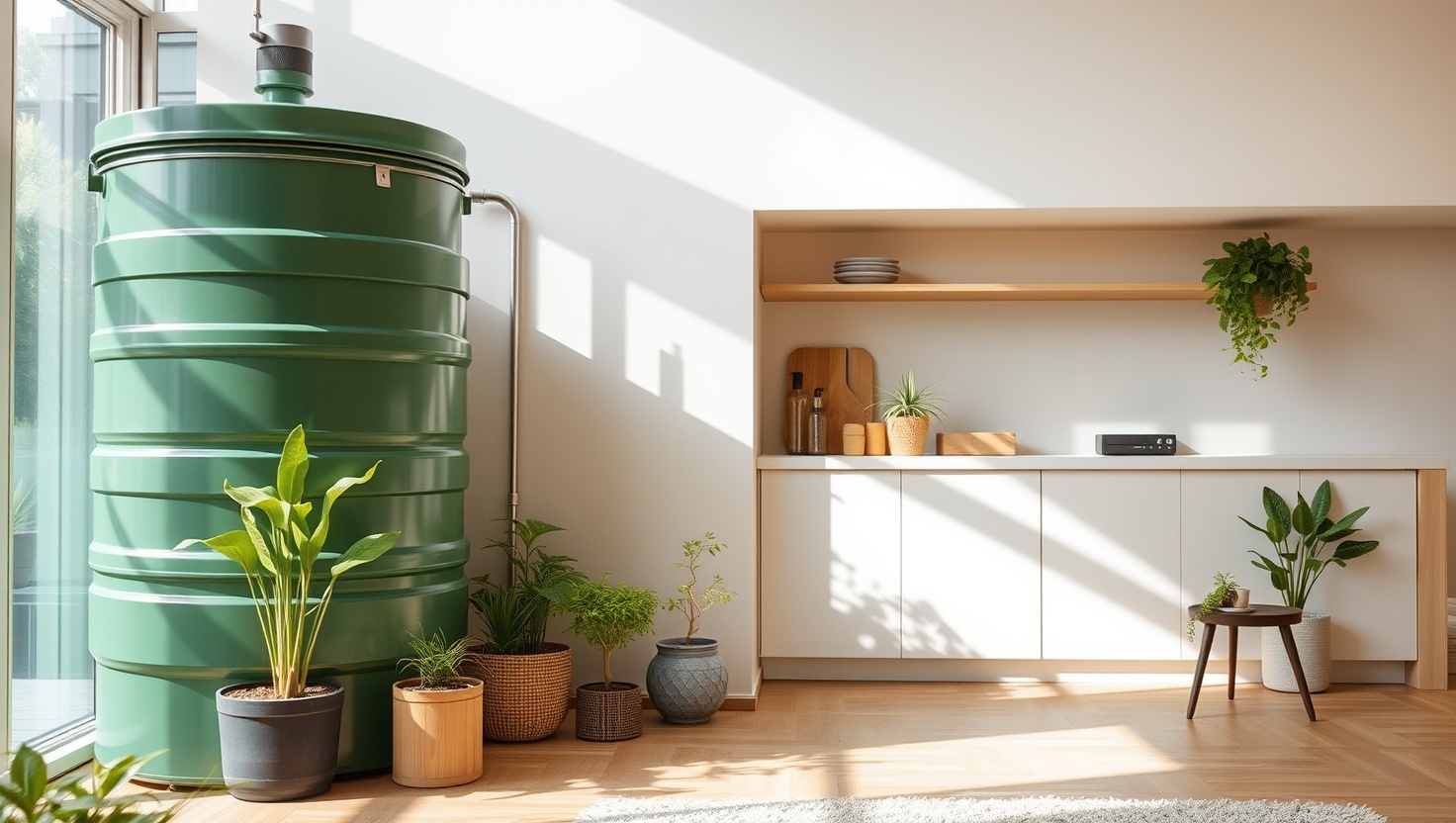
Water falls from the sky for free. And yet the average American household spends $1,000+ per year on water bills, much of it going straight onto the lawn and garden. Rainwater harvesting for beginners in 2026 is not some fringe homesteader practice. It is legal in all 50 states, requires as little as $40 to start, and a single inch of rain on a modest roof can fill more than ten barrels. That is 600 gallons of free water from one storm.
Basic 55-Gallon Rain Barrel — Our Top Recommendation
$40-60 | Best for: first-time setup, small gardens
In a hurry? That’s our pick. Want the reasoning and the full comparison? Keep reading.
Whether you want to slash your water bill, water your vegetable garden without guilt, or build a more self-sufficient household, collecting rainwater is one of the simplest first steps you can take. No special skills. No permits in most states. Just gravity, a roof, and a barrel.
This guide covers everything you need to know: the legality state by state, exactly how to set up your first system this weekend, the best equipment at every budget, and how to scale up when you are ready. By the end, you will have a clear plan to start collecting free water today.
Key Takeaways
- Rainwater harvesting is legal in all 50 US states, and Texas, Virginia, and Rhode Island even offer tax credits for it
- A basic 55-gallon rain barrel costs $40-60 and can be set up in under an hour with no special tools
- One inch of rain on a 1,000-square-foot roof produces roughly 600 gallons of collectible water
- Collected rainwater is ideal for gardens, lawns, car washing, and emergency water storage (filter before drinking)
- A downspout diverter and first flush system keep your water clean and your setup low-maintenance
- Scaling up to an IBC tote (275 gallons) or linked barrels gives you serious water independence for under $200
Why Collect Rainwater? The Case for Free Water
The idea of collecting rain is so obvious it feels almost silly to explain. Water literally falls on your property for free. Your roof is already collecting it. Right now, all that water rushes down your gutters, into the storm drain, and disappears. You are paying your utility company for water while dumping hundreds of gallons every time it rains.
Your garden will thank you
Rainwater is naturally soft and slightly acidic (pH around 5.6), which most plants prefer over treated municipal water that contains chlorine, fluoride, and dissolved minerals. Gardeners who switch to rainwater consistently report healthier plants and better yields. If you are already growing food at home, free irrigation water is a game-changer.
You build real water security
Municipal water systems are not invulnerable. Droughts, infrastructure failures, contamination events, and natural disasters can all disrupt your tap water. Having even 55 gallons of stored rainwater gives you a meaningful buffer. Pair it with a quality emergency water storage strategy and you are covered when others are scrambling.
It saves real money
Outdoor water use accounts for roughly 30% of residential water consumption. If your water bill is $80 per month, that is $24 per month you could offset with collected rainwater. Over a year, a single rain barrel pays for itself multiple times over. Scale up to a few linked barrels or an IBC tote and you could eliminate your outdoor water costs entirely.
Is Rainwater Harvesting Legal in Your State?
This is the question everyone asks first, and the answer is good news: rainwater collection is legal in all 50 US states as of 2026. The old myth that it is illegal comes from outdated water rights laws in a few western states, most of which have been amended or repealed.
That said, a couple of states have specific limits:
- Colorado: Residential collection is limited to 110 gallons (two 55-gallon barrels). This covers most beginner setups perfectly.
- Utah: Collection is capped at 2,500 gallons, and you need to register your system online (it is free and takes five minutes).
- Most other states: No limits, no permits, no registration. Just set up your barrel and start collecting.
Several states actively encourage rainwater harvesting. Texas offers a sales tax exemption on rainwater harvesting equipment. Virginia provides tax credits. Rhode Island offers property tax credits for installed systems. Your state might literally pay you to collect free water.
How Much Rainwater Can You Actually Collect?
The math is surprisingly generous. Here is the formula:
Roof area (sq ft) x rainfall (inches) x 0.623 = gallons collected
For a typical 1,500-square-foot home with one inch of rainfall, that is roughly 935 gallons. Even a small 800-square-foot cottage would yield about 500 gallons from a single storm. If your area gets 30 inches of rain per year, a 1,500 sq ft roof could theoretically collect over 28,000 gallons annually.
Of course, you will not capture all of it. You lose some to evaporation, splash, and the first flush (the initial dirty runoff you want to divert away). A realistic capture rate is about 75-80% of the theoretical maximum. That still leaves you with an enormous amount of free water.
A simple rain gauge in your yard helps you track exactly how much rain you are getting and plan your storage capacity accordingly.
Set Up Your Rain Barrel in 5 Steps
You do not need a plumber, contractor, or any special tools. A basic rain barrel setup takes 30-60 minutes and costs under $100. Here is exactly how to do it.
Check your local regulations
Search "[your state] rainwater harvesting laws" to confirm any limits or registration requirements. In most states, there is nothing to check. Colorado residents: stick with two barrels (110 gallons). Utah residents: register online at the Division of Water Rights website. Everyone else: you are good to go.
Pick your barrel location
Place your barrel directly beneath a downspout from your gutter system. Choose the downspout that drains the largest section of roof for maximum collection. The ground must be level and firm. A full 55-gallon barrel weighs over 450 pounds, so set it on concrete, pavers, or a sturdy platform. Elevating the barrel 12-18 inches on cinder blocks gives you better water pressure at the spigot.
Install a downspout diverter
A downspout diverter connects your existing gutter downspout to your barrel without cutting or permanently modifying anything. Most diverters snap or clamp on in minutes. When the barrel is full, the diverter automatically redirects water back down the downspout. No overflow, no flooding, no babysitting required.
Add overflow protection
Even with a diverter, install an overflow hose or valve near the top of your barrel. Direct the overflow away from your home's foundation (at least 4-6 feet). This is your safety net for heavy storms. Most quality rain barrels come with an overflow port built in. If yours does not, drill a hole near the top and fit a standard garden hose connector.
Connect to garden hose or drip irrigation
Attach a garden hose to the spigot at the bottom of the barrel. If your barrel came with a basic plastic spigot, consider upgrading to a brass spigot for better flow and durability. For hands-free watering, connect a soaker hose or drip irrigation line directly to the barrel. Gravity does the work. No pump needed for garden-level watering.
Best Rainwater Harvesting Equipment for Beginners
You do not need to spend a fortune to start collecting rainwater. Here are the best options at every budget level, with honest pros and cons for each.
Basic 55-Gallon Rain Barrel
The classic entry point. A simple 55-gallon barrel with a spigot and overflow valve is everything most beginners need. One barrel handles daily garden watering for a modest vegetable patch and fills up from a single moderate rainstorm. If you have never collected rainwater before, start here.
Pros
- Cheapest way to start ($40-60)
- Fits in tight spaces
- Setup takes under 30 minutes
- Compliant in all states including CO
Cons
- Fills up fast in heavy rain
- Basic spigot may need upgrading
- Limited storage for large gardens
Rain Barrel Kit with Diverter
This all-in-one kit includes a barrel, downspout diverter, overflow hose, and mesh screen. No separate shopping, no compatibility headaches. If you want to order one box and be collecting water the same afternoon, this is your move. The included diverter means clean installation without cutting your downspout permanently.
Pros
- Everything included in one package
- Diverter included (saves $15-25)
- Mesh screen keeps debris out
- Easiest setup for total beginners
Cons
- Slightly higher upfront cost
- Still limited to 55 gallons
- Diverter may not fit all downspout sizes
IBC Tote (275-Gallon)
When a 55-gallon barrel is not enough, the IBC tote is the next level. These industrial containers hold 275 gallons each and are widely available used for $75-150. They stack, they link together, and they give you serious water storage capacity at a fraction of what a custom cistern would cost. One IBC tote holds as much water as five standard rain barrels.
Pros
- 5x the capacity of a standard barrel
- Very affordable used ($75-150)
- Built-in valve for easy drainage
- Can link multiple totes together
Cons
- Large footprint (48" x 40")
- Not aesthetic (may need screening)
- Weighs 2,300+ lbs when full
- May not suit HOA neighborhoods
Essential Accessories That Make the Difference
The barrel is the star, but these supporting players make your system actually work well long-term. None of them are expensive, and each one solves a real problem.
Downspout Diverter ($15-25)
The bridge between your gutter and your barrel. A good diverter automatically stops sending water to your barrel once it is full, preventing overflow. It attaches without permanent modifications to your downspout, so renters can use them too. This is the single most important accessory.
See downspout diverters on Amazon
First Flush Diverter ($25-40)
The first rain that hits your roof washes off bird droppings, dust, pollen, and debris. A first flush diverter captures this dirty initial runoff and diverts it away from your barrel. The result: significantly cleaner water that keeps your barrel cleaner and your plants happier. If you use rainwater for anything beyond lawn watering, this is worth the $25-40 investment.
See first flush diverters on Amazon
Brass Spigot Upgrade ($8-15)
Most barrels ship with cheap plastic spigots that drip, crack, or seize up after a season. A brass replacement spigot gives you better flow, better durability, and a reliable seal for years. It threads into the same opening as the stock spigot. Two-minute swap that saves frustration.
Rain Gauge ($10-15)
You cannot manage what you do not measure. A rain gauge tells you exactly how much precipitation your property received, so you can predict barrel fill levels and plan your watering schedule. It also helps you decide when to scale up. If your gauge shows you are getting more rain than one barrel can handle, you know it is time for a second barrel or an IBC tote.
Rain Collection Systems Compared
Not sure which system fits your situation? Here is a side-by-side breakdown of the four most common rainwater collection approaches, from beginner-friendly to advanced.
| System | Capacity | Price | Setup Time | Best For |
|---|---|---|---|---|
| Single Barrel | 55 gal | $40-60 | 30 min | Beginners, small gardens |
| Dual Barrel (linked) | 110 gal | $80-120 | 1 hour | Medium gardens, CO limit |
| IBC Tote | 275 gal | $75-150 | 1-2 hours | Large gardens, homesteads |
| Underground Cistern | 500-5,000 gal | $500-3,000+ | 1-3 days | Whole-house use, off-grid |
Our recommendation for most beginners: start with a rain barrel kit with diverter. It gives you everything in one box. Once you see how fast it fills up (and how much water you use), you will know exactly whether to add a second barrel or upgrade to an IBC tote.
What Can You Actually Do With Collected Rainwater?
A full barrel is useless if you do not use it. Here are the best uses for collected rainwater, ranked by volume and impact.
Garden and vegetable irrigation
This is the number one use. Rainwater is naturally better for plants than tap water because it lacks chlorine and has a slightly acidic pH that most vegetables prefer. Connect your barrel to a drip irrigation system or soaker hose for hands-free watering. If you are growing food in containers or on your kitchen counter, a watering can filled from the barrel works perfectly.
Lawn watering
A 55-gallon barrel will not water an entire lawn, but it can keep targeted areas green during dry spells. Focus on new plantings, flower beds, or trouble spots that dry out first. Scale up to an IBC tote if you want more lawn coverage.
Car and equipment washing
Soft rainwater actually washes better than hard tap water because it does not leave mineral spots. Fill a bucket from the barrel for car washing, power washing the deck, or cleaning garden tools.
Emergency water supply
A full rain barrel is a meaningful emergency water reserve. While you should not drink unfiltered rainwater, it can be used for flushing toilets, washing, and cooking (after boiling) during a water disruption. For emergency drinking water, pair your rain barrel with a quality water filter from our hurricane preparedness guide.
Keeping Your Rain Barrel Clean and Working
Rainwater systems are low-maintenance by nature, but they are not no-maintenance. A few minutes per season keeps everything running smoothly and prevents the two biggest problems: algae and mosquitoes.
Prevent mosquitoes
Mosquitoes need standing, open water to breed. A tight-fitting lid and fine mesh screen on all openings is your complete defense. Make sure the overflow port is also screened. If you want extra protection, drop a mosquito dunk (Bti bacteria tablet) into the barrel every 30 days. Bti kills mosquito larvae but is completely safe for plants, pets, and humans.
Prevent algae
Algae grows when water is exposed to sunlight. Use an opaque barrel (dark colors work best), and make sure the lid fits tightly with no gaps where light can enter. If you notice green water, drain the barrel, scrub it with a 1:10 white vinegar solution, and check for light leaks.
Seasonal maintenance
Once or twice a year, drain the barrel completely and give it a good scrub. Check the mesh screen for tears. Inspect the spigot and overflow connections for leaks. In cold climates, drain your barrel completely before the first freeze, disconnect it from the downspout, and store it upside down or in a garage. A frozen barrel can crack, and frozen water in the downspout connection can damage your gutters.
Ready to Scale Up? Next-Level Collection
Once you have been running a single barrel for a season, you will likely want more capacity. Here are three ways to scale, from simple to serious.
Link two barrels together
The easiest upgrade. Connect a second barrel to the overflow port of your first barrel using a short hose. When barrel one fills up, water automatically flows into barrel two. This doubles your capacity to 110 gallons for about $40-60 more. This also maxes out the Colorado limit perfectly.
Upgrade to an IBC tote
An IBC tote holds 275 gallons in a single container, and used ones cost $75-150 from farm supply stores or online. They have a built-in valve at the bottom and can be connected to standard garden hoses. The main trade-off is aesthetics. These are industrial containers, not decorative planters. But if you have a side yard, back fence, or area that is not visible from the street, they are the best value in large-volume water storage.
Multiple downspout collection
Your house has multiple downspouts, and each one drains a different section of your roof. Adding a barrel or tote to a second or third downspout can dramatically increase your total collection without any complex plumbing. Each downspout is its own independent mini-system.
What Can You Grow With Free Water?
You have got the water. Now find out exactly what will thrive in your space. Our free Edible Space Scan tells you which vegetables and herbs match your specific setup, and how far your rainwater will go.
Take the Edible Space ScanOr read: Grow Food on Your Kitchen Counter
Frequently Asked Questions
No. Rainwater harvesting is legal in all 50 US states as of 2026. Colorado limits residential collection to 110 gallons (two standard barrels). Utah caps collection at 2,500 gallons and requires free online registration. Every other state has no limits at all. Texas, Virginia, and Rhode Island actually incentivize rainwater collection through tax credits and exemptions. Always double-check your local municipality for any additional regulations, but the vast majority of homeowners can set up a rain barrel with zero permits or paperwork.
The formula is: roof area (square feet) x rainfall (inches) x 0.623 = gallons. One inch of rain on a 1,000-square-foot roof produces about 600 gallons. A typical 1,500-square-foot home generates roughly 935 gallons per inch of rain. Multiply by your average annual rainfall to see your total potential. With realistic capture rates around 75-80%, even modest homes in moderate rainfall areas can collect thousands of gallons per year. Use a rain gauge to track your actual rainfall and plan your storage accordingly.
Rainwater itself is relatively clean, but it picks up contaminants from your roof surface: bird droppings, dust, pollen, and chemicals from roofing materials. For drinking, you need proper filtration and disinfection at minimum. Most beginners use collected rainwater exclusively for garden irrigation, lawn watering, car washing, and toilet flushing. For emergency drinking water, filter it through a quality water purifier and boil it. If you want to drink rainwater regularly, invest in a first flush diverter, sediment filter, and UV purifier to make it safe.
Only if you leave water exposed. Mosquitoes need open, still water to lay eggs. A barrel with a tight-fitting lid and fine mesh screen on all openings (including the overflow port) completely prevents mosquito access. For extra protection, add a mosquito dunk (Bti bacteria tablet) to the water every 30 days. Bti kills mosquito larvae but is safe for plants, animals, and humans. You can also prevent problems by using your collected water regularly so it does not sit stagnant for weeks at a time.
Maintenance is minimal. Install a first flush diverter to keep dirty initial runoff out of your barrel. Use a fine mesh screen on the inlet to block leaves and debris. Once or twice a year, drain the barrel completely and scrub the inside with a 1:10 white vinegar and water solution, then rinse thoroughly. Keep the barrel opaque and tightly sealed to prevent algae growth. Before winter in cold climates, drain completely, disconnect from the downspout, and store upside down or in a garage to prevent freeze damage.