Foodscaping: How to Replace Your Lawn with a Food Garden (Complete 2026 Guide)
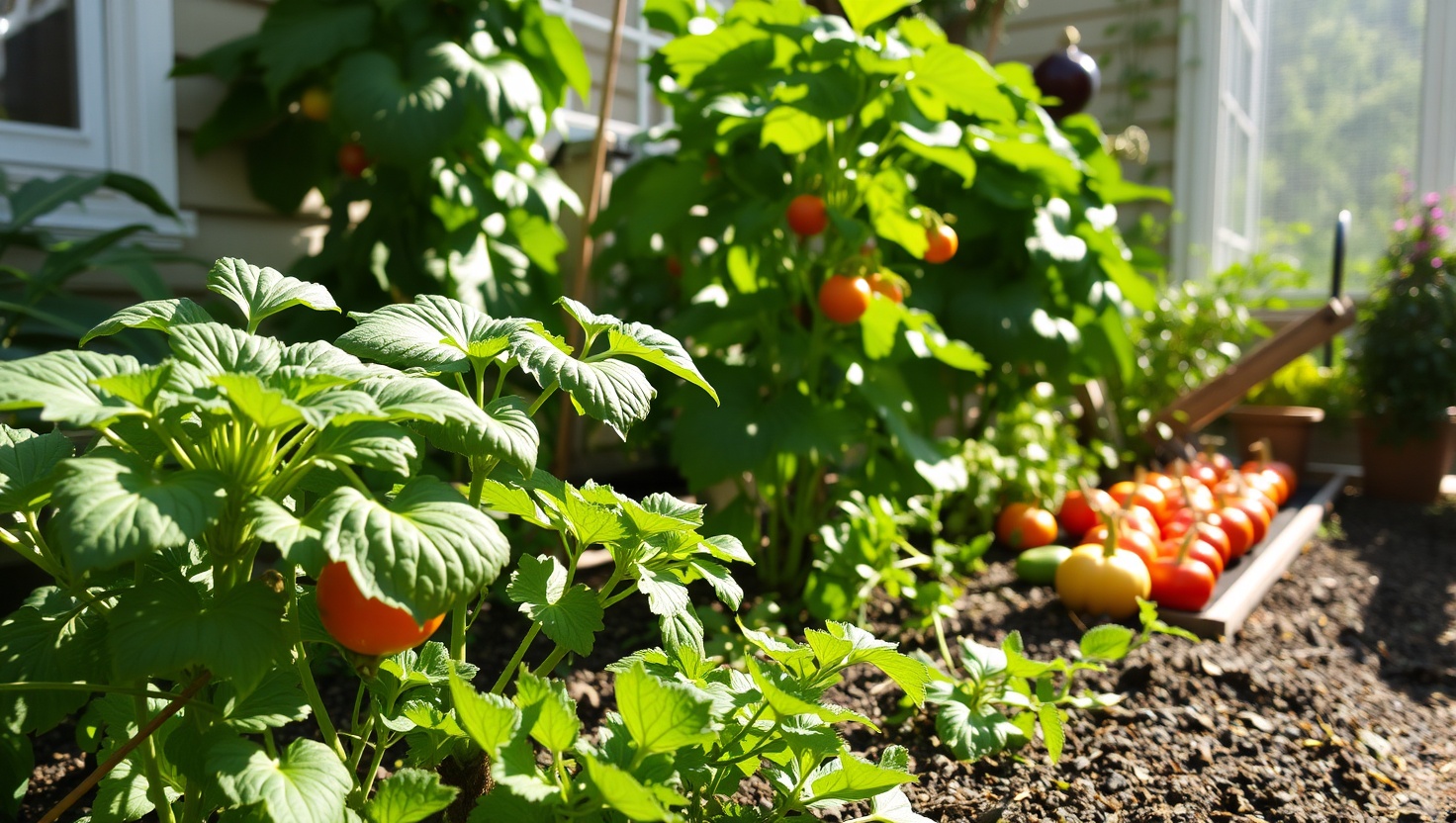
Your lawn costs you over $1,000 a year to maintain — in water, fertilizer, mowing, and weekends you'll never get back — and gives you exactly nothing in return. Foodscaping is the idea that your outdoor space should feed you, not drain you. Replace that empty green carpet with an edible landscape and you'll cut grocery bills, build food independence, and honestly? Your yard will look better than it ever did.
Key Takeaways
- Foodscaping means replacing ornamental lawns with edible plants — vegetables, herbs, fruit trees, and berries — without sacrificing curb appeal
- The average lawn costs $1,000–$1,500/year to maintain while producing zero food; a foodscape can produce $600–$2,000 worth of produce
- You don't need to rip everything out at once — start with one raised bed and expand each season
- Beginners do best with leafy greens, herbs, cherry tomatoes, zucchini, and strawberries
- The right tools (raised beds, quality soil, drip irrigation) dramatically cut your learning curve and failure rate
- Foodscaping is part of a bigger shift: taking back control of your food supply, your budget, and your time
What Is Foodscaping (And Why Is Everyone Suddenly Doing It)?
Foodscaping — sometimes called edible landscaping — is the practice of designing your yard, garden, or outdoor space around plants that produce food. Instead of purely ornamental shrubs and grass that exist to look nice and do nothing else, you plant things you can actually eat. Kale alongside your roses. A dwarf apple tree where the ornamental cherry used to be. Strawberry borders instead of decorative groundcover.
The concept isn't new — people grew food in their front gardens for centuries before the postwar suburban lawn culture took over. What's new is the urgency. Grocery prices have climbed every year. Supply chain conversations are no longer conspiracy territory — they're dinner table reality. And more people are waking up to the fact that depending entirely on a system you don't control for something as basic as food is a pretty fragile way to live.
Foodscaping doesn't mean your yard has to look like a farm. Done right, it looks intentional, lush, and curated — better than the default lawn, honestly. The difference is that when you walk outside in the morning, you're picking tomatoes instead of wondering when to schedule the lawn guy.
The Numbers That Should Make You Uncomfortable
The average American household spends $503 on lawn care services annually, plus another $400–$600 in water, equipment maintenance, fertilizer, and seed. That's easily $1,000–$1,500 per year going into a patch of grass that produces zero calories, zero vitamins, and zero return on investment.
Meanwhile, a well-managed 200 sq ft raised-bed garden — about two standard 4x8 beds — can produce conservatively $600 to $1,000 worth of vegetables in a single growing season. Expand that to 400–600 sq ft with perennial fruit and berry plants, and you're looking at $1,500–$2,500 in food value per year, compounding upward as perennial plants mature.
The financial math alone makes this a no-brainer. But it goes deeper than money.
The Real Benefits of Replacing Your Lawn with Food
Food Security on Your Own Terms
Every tomato you grow is one you didn't have to buy, and one that wasn't shipped 1,500 miles from a monoculture farm dependent on diesel fuel and migrant labor. When you grow even 20% of your own vegetables, you create a meaningful buffer against supply disruptions, price spikes, and whatever the next logistical crisis looks like.
This isn't prepper paranoia — it's just practical intelligence. Diversifying where your food comes from is the same instinct as not keeping all your money in one bank.
Better Food Quality
A tomato picked ripe from your garden and eaten that afternoon has a completely different nutritional profile and taste compared to one picked green in Mexico and ripened in a truck. Homegrown food is fresher, denser in nutrients, and — there's no polite way to say this — it just tastes incomparably better. Once you grow your own herbs, the dried stuff in the spice aisle will never feel the same.
Actual Curb Appeal
A flat, monotone lawn is boring. An edible landscape with raised beds, berry bushes, climbing beans on trellises, and fruiting trees has texture, height variation, color through the seasons, and a story. Your neighbors will ask questions. Some will want to copy it.
Less Work Than You Think
Grass is high-maintenance theater — you work constantly to maintain something that grows back identical to how it started. A food garden, once established, is a different kind of work: purposeful, seasonal, and increasingly self-sustaining as perennial plants fill in. You're not working to maintain stasis. You're working toward something.
Planning Your Edible Landscape
Start with a Sun Audit
Before you plant a single seed, walk your yard at three points in the day — morning, noon, and late afternoon — and note where sunlight hits and where shade falls. Most vegetables need 6–8 hours of direct sun per day. Leafy greens can handle 4–5 hours. Fruit trees need full sun. This sun audit determines everything about what you can grow where.
Map Your Space
Sketch your yard (rough is fine) and label the sunny spots, shady areas, and zones with partial sun. Then think in layers:
- Canopy layer — dwarf fruit trees (apple, pear, cherry, fig)
- Shrub layer — berry bushes (blueberry, raspberry, gooseberry, currant)
- Ground layer — vegetables, herbs, strawberries, groundcover edibles
- Vertical layer — climbing beans, cucumbers, squash on trellises
Stacking these layers gives you maximum production per square foot and creates that lush, intentional look that makes edible landscapes so visually appealing.
Choose Your Conversion Method
You have a few options for removing or suppressing existing lawn grass:
- Sheet mulching (laziest, best for beginners) — Lay thick cardboard directly over the grass, wet it thoroughly, then add 4–6 inches of compost and soil on top. The cardboard smothers grass and breaks down into organic matter over the season. No digging required.
- Solarization — Cover grass with clear plastic in summer. Heat builds up underneath and kills the grass in 4–6 weeks. Works well in hot climates.
- Physical removal — Cut out sod with a sharp spade. Labor-intensive but instant results. Good for smaller areas.
- Raised beds directly on grass — Fill raised bed kits with fresh soil and plant directly. The beds create a contained growing environment separate from whatever's underneath.
For most beginners, raised beds on sheet-mulched ground is the fastest path to success with the lowest frustration rate.
If you're starting your foodscape from scratch, a good raised bed is the single best investment you can make. The Greenes Fence Cedar Kit gives you a rot-resistant, natural-looking bed that looks intentional in any yard.
- Made from rot-resistant natural cedar — no chemicals leaching into your food
- No tools required — slots together in under 20 minutes
- Stackable design lets you add height for root vegetables
- Cedar weathers to a grey tone over time (some people love this, some don't)
- You'll want at least two beds once you see how fast they fill up
What to Actually Grow: Best Plants for Beginner Foodscapers
The biggest beginner mistake is overcomplicating the plant list. Pick a few things, grow them well, and expand. Here's what actually works for new growers.
High-Value Vegetables (Grow These First)
Tomatoes — Cherry tomato varieties (Sungold, Black Cherry, Sweet 100) are nearly impossible to fail with. They produce prolifically from July through frost, taste nothing like the grocery store version, and cost $5–8 per plant versus $4–6 per pound at the store. High value, high return.
Leafy Greens — Kale, lettuce, spinach, chard, and arugula grow fast, can be harvested repeatedly (cut-and-come-again), and produce in spring and fall when nothing else is growing. Kale especially is practically maintenance-free and produces from seed in about 6 weeks.
Zucchini and Summer Squash — Famous for over-producing. One or two plants per household is usually plenty. They're fast-growing, satisfying for beginners, and high-volume producers.
Beans — Bush beans and climbing beans grow fast, fix nitrogen in your soil (improving it for next year), and produce heavily. Grow on a simple trellis to save horizontal space.
Cucumbers — Another vertical grower. Train them up a trellis, harvest regularly, and they'll produce all summer. High water content means they need consistent watering — more on that in a moment.
Herbs: The Fastest ROI in Your Garden
Fresh herbs are where foodscaping pays off fastest in the kitchen. One basil plant gives you more basil than you'll ever buy in those tiny grocery store packages. Same with parsley, chives, cilantro, and mint. Plant herbs in the edges of your raised beds or along pathways — they look great, smell incredible, and attract pollinators that benefit everything else.
Perennial herbs like rosemary, thyme, sage, and mint come back every year with zero effort. Plant them once and forget about them (well, harvest them frequently).
Perennials: The Long Game
This is where foodscaping gets really exciting. Perennial food plants come back every year, require minimal maintenance once established, and increase in production as they mature.
- Strawberries — Perfect for borders. Spread naturally, come back every year, produce beautiful white flowers. Kids lose their minds over them.
- Blueberry bushes — Beautiful ornamental shrubs that happen to produce blueberries. Need acid soil and come in pairs for cross-pollination. Year 3+ is when production really kicks in.
- Raspberry and blackberry canes — Produce heavily, spread aggressively (contain them with a border). High-value fruit that's expensive at the grocery store.
- Dwarf fruit trees — Apple, pear, cherry, peach, or fig in a dwarf variety fits in a surprisingly small space. May take 3–5 years to produce meaningfully, but then you have free fruit for decades.
- Asparagus — Needs 2–3 years to establish, then produces for 20+ years. The ultimate long-game plant.
Starting your own plants from seed is how serious foodscapers cut costs dramatically. A $4 seed packet replaces $60 of starts from the garden center. This kit gives you the right light spectrum and heat to germinate seeds successfully indoors before the season starts.
- Full-spectrum LED grows sturdy, non-leggy seedlings without etiolation
- Adjustable height accommodates seedlings as they grow
- Pays for itself in one season vs. buying starts from a nursery
- Requires indoor space for 4–8 weeks before transplanting
- Needs a consistent schedule — seeds don't care about your calendar
Soil: The Foundation Everyone Underestimates
Here's the truth that separates successful food gardeners from frustrated ones: your results are almost entirely determined by your soil quality. Poor soil = poor plants. Great soil = plants that practically grow themselves.
Lawn grass is remarkably tolerant of poor soil conditions. Food plants are not. Vegetables want loose, well-draining, nutrient-rich, biologically active soil with a slightly acidic pH. The default soil in most yards is compacted clay or sandy hardpan that vegetable roots cannot penetrate effectively.
For raised beds, don't use plain garden soil — it compacts badly in containers. Instead, fill with a mix of:
- High-quality potting mix (like FoxFarm Ocean Forest) — 60% of your volume
- Compost — 30%
- Perlite or coarse sand — 10% for drainage
FoxFarm Ocean Forest is the cult-favourite growing medium for a reason. It's a premium blend of earthworm castings, bat guano, sea-going fish and crab meal, and forest humus — pre-loaded with the kind of biological activity that makes plants explode with growth.
- Pre-fertilized with organic nutrients — no additional feeding needed for the first 6–8 weeks
- Perfect pH (6.3–6.8) right out of the bag for most vegetables
- Loose texture promotes strong root development and excellent drainage
- More expensive per bag than generic potting soil — worth it, but budget accordingly
- Can be too hot (nitrogen-rich) for sensitive seedlings — dilute slightly for germination
Feeding Your Edible Garden Organically
Once your plants are growing, they need ongoing nutrition. Vegetables are heavy feeders — they're producing food, after all, and that takes energy and minerals. But here's the thing: chemical fertilizers are a crutch. They feed the plant while starving the soil biology. Over time, chemically-fertilized soil becomes dead and dependent. Organic feeding does the opposite: it builds soil life, which in turn makes nutrients more available and your garden more self-sustaining each year.
The practical difference: an organic garden gets better every year. A chemically-managed garden gets needier every year.
Espoma has been making organic fertilizer for over 90 years, and Garden-Tone is their all-purpose formula for vegetables and herbs. It's a slow-release granular that feeds plants steadily over 8 weeks rather than the boom-bust cycle of synthetic fertilizers.
- Slow-release formula prevents burning and feeds plants consistently over weeks
- Contains Bio-tone microorganisms that actively build soil health over time
- OMRI listed — certified organic, safe around children and pets immediately after application
- Slower to show results than synthetic fertilizers — patience required
- Mild smell when first applied — water it in immediately
Watering: The System That Makes or Breaks Your Garden
Inconsistent watering is the number one reason vegetable gardens fail. Plants don't respond well to feast-and-famine cycles — they crack, bolt, develop blossom end rot, and become bitter. Consistent moisture is more important than perfect soil, perfect fertilizer, or perfect sun.
The good news: this is completely solvable with the right tools. Automated drip irrigation or self-watering systems remove the daily watering burden entirely — which is especially important in summer when a few hot days can stress or kill plants between manual waterings.
The Claber Oasis is a timer-controlled drip system designed for raised beds, containers, and small garden plots. Set it once, connect to your hose, and it handles watering automatically — including when you're at work, on vacation, or just don't want to think about it.
- Programmable timer handles watering fully automatically — set and forget
- Drip delivery puts water directly at root zones, reducing waste by 30–50% vs. sprinklers
- Battery-operated — no electrical wiring, connects directly to outdoor tap
- Batteries need replacement each season
- Initial setup takes 30–45 minutes to route drip lines correctly
Seasonal Planning: What Grows When
One of the most common beginner mistakes is treating the garden as a summer-only project. A well-planned foodscape produces from early spring through late autumn — and in mild climates, even through winter with the right plant selection.
Spring (March – May)
Start cool-season crops as soon as soil can be worked: lettuce, spinach, kale, arugula, peas, radishes, and carrots. These plants actually prefer cooler temperatures and will bolt (go to seed and turn bitter) in summer heat. Start tomatoes, peppers, and cucumbers indoors under grow lights 6–8 weeks before your last frost date.
Summer (June – August)
This is when warm-season crops take over: tomatoes, peppers, cucumbers, zucchini, beans, basil, eggplant, and corn. Keep plants consistently watered (use that Claber system), harvest regularly to encourage more production, and mulch beds deeply to retain moisture and suppress weeds.
Fall (September – November)
As tomato season winds down, plant a second round of cool-season crops: kale, spinach, chard, and arugula will grow vigorously in the cool autumn air. In many climates, you can harvest these through November and even into December under row cover.
Winter (December – February)
Use the quiet months to plan, amend soil, and get beds ready. If you have a cold frame or hoop house, you can grow hearty greens like kale and spinach well past the first frost. Order seeds early — popular varieties sell out by February.
Making Your Foodscape Look Good: Design Tips
The most common objection to front-yard food gardens is "but will it look weird?" Only if you let it. Here are practical design choices that make edible landscapes genuinely beautiful:
- Use raised beds with clean lines — Cedar or wood framing looks intentional and contained, not chaotic
- Add structure with trellises and cages — Vertical growing elements add height and visual interest
- Mix in edible flowers — Nasturtiums, borage, calendula, and marigolds are gorgeous, attract pollinators, and are entirely edible
- Use strawberries and herbs as borders — They look like ornamental groundcover until you eat them
- Keep paths clear — Mulched pathways between beds make the garden feel organized and navigable
- Plant in drifts — Groups of the same plant look more intentional than mixed-up individual plants scattered around
The honest truth: a foodscape with raised beds, climbing plants on trellises, and strawberry borders is far more visually interesting than a flat lawn. Your neighbors won't complain. They'll be curious.
Your First 90 Days: A Simple Action Plan
Don't overthink the start. Here's a simple roadmap:
Week 1–2: Do your sun audit. Pick the sunniest spot in your yard — minimum 6 hours direct sun. Order or buy one 4x8 raised bed kit. Order seeds for your first crops.
Week 3–4: Lay cardboard over grass in your chosen area. Assemble your raised bed. Fill with quality potting mix and compost. Start warm-season seeds indoors under a grow light if it's still cool outside.
Week 5–8: Plant cool-season crops directly in your bed. Set up drip irrigation. Apply fertilizer at planting. Watch things grow — this part is genuinely addictive.
Month 3: Harvest your first greens. Transplant indoor-started seedlings outside after your last frost. Plan where your second bed will go. Look at berry bushes and perennials for permanent planting zones.
That's it. One bed. One season. Your relationship with food — and with your outdoor space — will never be quite the same.
For more ways to build food independence at home, check out our guide on building an emergency food supply on a budget and our overview of the best indoor growing systems for year-round food production.
Frequently Asked Questions
Is foodscaping legal in residential areas?
In most US cities and states, foodscaping is perfectly legal. Some HOAs or municipalities have rules about "tidy" front yards, but the trend is shifting fast — many cities have updated their codes to explicitly allow edible landscapes. Check your local ordinances and HOA rules before planting a front-yard food garden. In the vast majority of cases, you're fine as long as your garden looks maintained and intentional. The key word is "maintained" — a tidy raised-bed garden is treated very differently than an overgrown patch.
How much money can you save by replacing your lawn with food?
The average American spends $1,000–$1,500 per year on lawn care. A well-managed edible garden of 200–400 square feet can produce $600–$2,000 worth of produce annually depending on what you grow and how efficiently you use the space. High-value crops like tomatoes, herbs, salad greens, and berries have the best return per square foot. The swing from lawn-cost to food-value can be $1,600–$3,500 per year — and it compounds upward as perennial plants mature and your skills improve.
What is the easiest food to grow as a beginner foodscaper?
Start with leafy greens (lettuce, kale, spinach), herbs (basil, mint, chives, parsley), cherry tomatoes, and zucchini. These all grow fast, reward beginners quickly, and produce heavily per square foot. Kale especially is nearly indestructible — it grows through cold, bounces back from pests, and can be harvested for months. Strawberries are excellent for borders because they spread naturally and return every year. Beans are great for beginners too — they're quick, productive, and actually improve your soil.
Do I have to remove all my grass to start foodscaping?
Not at all. You can start small — convert one 4x8 ft section at a time. The easiest method is sheet mulching: lay thick cardboard over grass, wet it thoroughly, then add compost and soil on top. The cardboard smothers the grass below without digging. Over a few months it breaks down into the soil. Alternatively, raised bed kits can be placed directly on lawn — the contained environment is separate from the grass underneath. Expand your growing space each season as your confidence and appetite for it grows.
How much time does a foodscape take to maintain each week?
A beginner foodscape of 200–400 sq ft typically needs 1–3 hours per week during the growing season. The biggest time costs are watering (solved with drip irrigation), weeding (solved with deep mulch), and harvesting (actually the fun part). With smart tools and good systems, you can manage a productive garden in as little as 30–45 minutes per week. Perennial plants like fruit trees, berry bushes, and herbs require much less maintenance than annual vegetables once they're established — they do their own thing year after year.
Your Lawn Can Feed You. Start This Weekend.
One raised bed. A bag of good soil. A handful of seeds. That's all it takes to begin taking back control of your food supply. The system isn't going to do it for you — but your backyard can.
Get Your First Raised Bed →