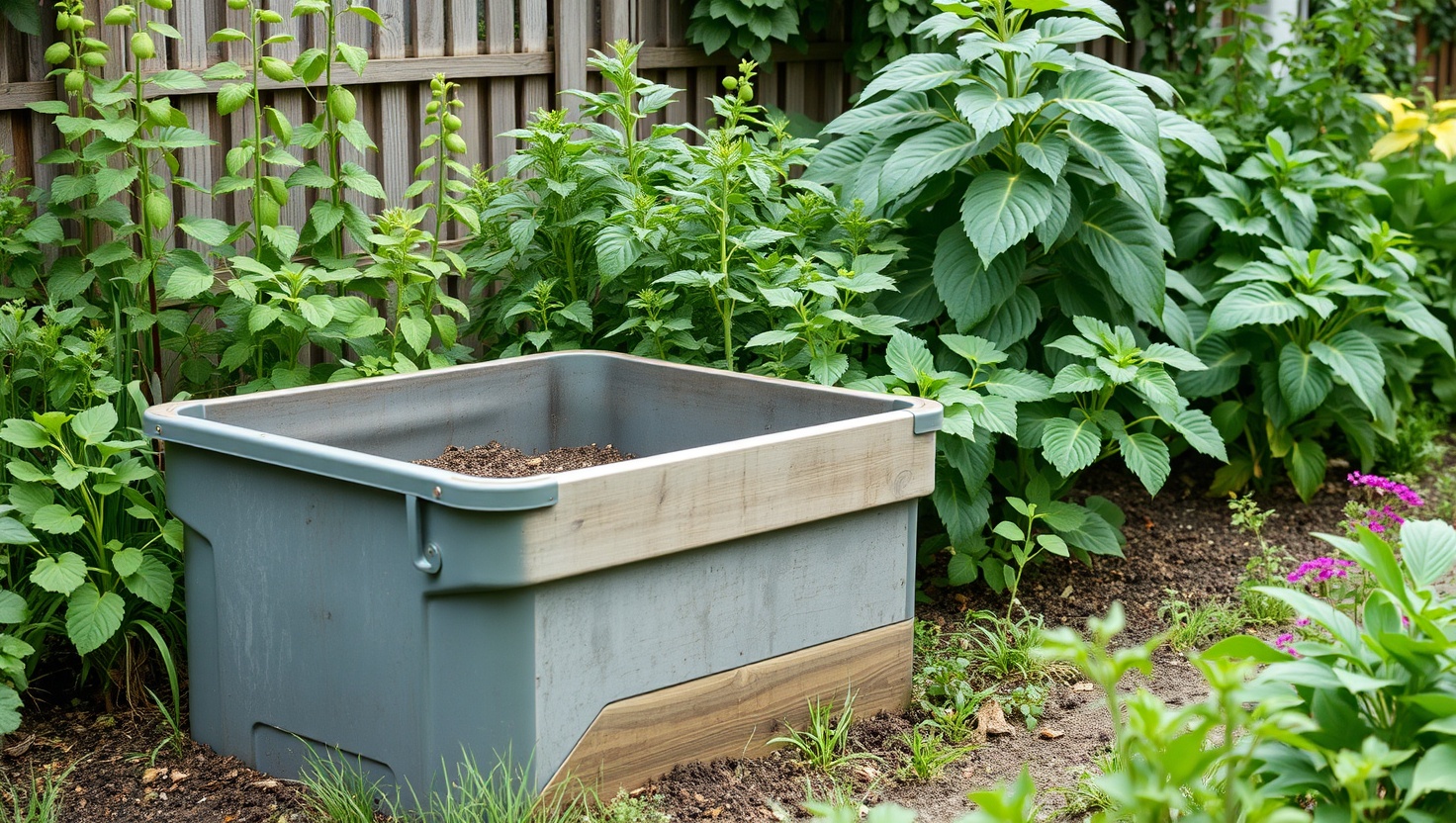
Every week you throw away pounds of kitchen scraps — vegetable peels, coffee grounds, fruit cores, eggshells — and they end up in a landfill producing methane. Meanwhile, your garden beds or container plants are starving for the kind of rich, biologically active soil amendment that no store-bought fertilizer can replicate. A worm composting bin solves both problems at once, takes up less space than a recycling bin, and runs itself with about ten minutes of attention per week.
Worm Factory 360 — Our Top Recommendation
The Worm Factory 360 has been the default recommendation for beginner vermicomposters for over a decade — and it still earns that status. The design is straightforward: four stackable trays with a…
In a hurry? That’s our pick. Want the reasoning and the full comparison? Keep reading.
Worm castings — the polite term for worm manure — are the most nutrient-dense organic soil amendment available. Not a close second. The biology packed into a tablespoon of finished castings contains more beneficial microorganisms than a cubic foot of typical garden compost. Plants grow faster, roots develop better, and soil structure improves in ways that store-bought fertilizers simply cannot achieve. This guide covers the five best worm composting bins for beginners in 2026, from a complete $80 starter kit to a commercial-grade continuous-flow system for serious growers.
Key Takeaways
- Worm composting turns kitchen scraps into the richest soil amendment available — better than any store-bought fertilizer
- A healthy worm bin produces zero odor — if it smells, something is wrong and fixable
- The Worm Factory 360 at $130 is the best all-around pick: proven design, expandable, great starter kit
- Red wigglers (Eisenia fetida) are the composting species — don't use earthworms from your garden
- A 1,000-worm starter colony processes about 1/2 pound of food scraps per day
- Worm castings sell for $1-3 per pound — your bin can literally pay for itself
Why Worm Composting Is the Best Thing You Can Do for Your Garden
Conventional fertilizers give plants three things: nitrogen, phosphorus, and potassium — the NPK numbers on every bag at the garden center. That is a useful shortcut, but it misses most of what actually makes soil productive. Worm castings contain balanced NPK, but they also deliver calcium, magnesium, iron, and a full spectrum of trace minerals in forms that plants can absorb immediately. More importantly, they contain billions of beneficial microorganisms — bacteria, fungi, protozoa, and nematodes — that colonize the root zone and dramatically improve nutrient uptake, disease resistance, and drought tolerance.
The science is consistent: studies comparing castings-amended soil to conventional fertilizer show plants grown with castings germinate faster, produce stronger root systems, and yield more over the course of a growing season. A 20% addition of castings to potting mix has been shown in multiple trials to outperform premium synthetic fertilizers on nearly every measure.
Beyond the castings themselves, vermicomposting produces worm tea — the liquid leachate that drains from the bottom of the bin. Diluted 10:1 with water and applied as a drench or foliar spray, worm tea delivers a fast-acting dose of microbial life and soluble nutrients directly to plants. Many growers report visible improvement in plant color and vigor within days of application. This is not marketing language — it is the result of flooding the root zone with the exact organisms that healthy soil needs to function.
Water retention is another underrated benefit. Soil amended with castings holds significantly more moisture than unamended soil, which means less frequent watering, less runoff, and more resilience during dry spells. For container gardeners and raised bed growers working with limited soil volume, this matters enormously.
How Vermicomposting Actually Works
Red wigglers (Eisenia fetida) are surface-feeding worms, not the deep-burrowing earthworms you find in garden soil. They evolved to live in decaying organic matter — leaf litter, manure piles, compost heaps — and they are extraordinarily efficient at it. A healthy colony eats roughly half its body weight in food scraps per day. One pound of worms (about 1,000 individuals) processes around half a pound of scraps daily.
The process works in layers. You start with bedding — shredded newspaper, cardboard, or coconut coir — which gives the worms a moist, carbon-rich environment to live in. Food scraps go on top or are buried in the bedding. The worms eat the food, digest it, and pass it as castings. As the lower layers fill with castings and the upper layers receive fresh food, the worms naturally migrate upward, leaving behind finished compost in the bottom. After 3-6 months, you harvest the bottom material as finished castings and start the cycle again.
The liquid that drains from the system is leachate — often called worm tea, though technically worm tea is made by arating castings in water. Both are useful. The leachate from a healthy bin is a nutrient-rich liquid you can use directly in the garden. A bin with a spigot lets you drain and use this liquid weekly without disturbing the worms.
Tray Systems vs Flow-Through: Which Design Is Right for You?
The two main categories of home vermicomposting bins each have genuine advantages. Understanding the difference saves you from buying the wrong setup for your situation.
Tray-Based Systems
Tray systems stack multiple perforated trays vertically. You start in the bottom tray, adding food and bedding as the worms work through it. When the bottom tray is nearly full, you add a new tray on top with fresh bedding. The worms migrate upward toward fresh food, leaving finished castings below. When the bottom tray is fully processed, you remove it, harvest the castings, and move the empty tray to the top of the stack. Most tray systems start with 3-4 trays and can expand to 6-8.
Pros: Lower upfront cost, more widely available, expandable, works well for most household food scrap volumes. Cons: Requires occasional tray rotation and some hands-on management at harvest time. Best for households generating up to 1-2 lbs of scraps per day.
Flow-Through Systems
Flow-through bins use a tapered or open-bottomed design where material continuously moves downward as worms eat and cast. New food goes in at the top; finished castings accumulate at the bottom and can be harvested at any time by pulling material from a collection tray or scraping the bottom with a breaker bar. There are no trays to rotate and no major harvest disruption — the system runs continuously.
Pros: Less hands-on maintenance, continuous harvest, better for larger households or serious growers. Cons: Higher upfront cost, larger footprint, overkill for casual use. Best for households generating 2-4+ lbs of scraps per day or anyone who wants a near-zero-maintenance system.
The 5 Best Worm Composting Bins for 2026
Worm Factory 360 — Best Overall
The Worm Factory 360 has been the default recommendation for beginner vermicomposters for over a decade — and it still earns that status. The design is straightforward: four stackable trays with a base reservoir that catches leachate, a spigot for draining worm tea, and a lid with a plastic tray that doubles as a surface for spreading harvested castings to dry. The included starter kit is genuinely useful — you get a coco coir block, worm castings to seed the bedding, a worm ladder to help escapees find their way back, a temperature gauge, and a detailed instruction booklet that is actually worth reading.
The 360 name refers to the square footage of working surface area across four trays — significantly more than many competitor tray systems. That surface area matters because worms work horizontally as much as vertically, and more surface means more worms can actively feed at once. The system handles about 1 pound of scraps per day at full capacity, can expand to 8 trays, and has a 15+ year lifespan if you take basic care of the trays. For an apartment dweller or a household just getting started, this is the bin to buy.
- Complete starter kit included — everything you need out of the box
- Expandable to 8 trays as your colony grows
- Spigot for easy worm tea collection — no tipping the bin
- Proven 15+ year track record — replacement parts widely available
- Compact footprint fits in most kitchens or utility rooms
- Tray rotation at harvest takes a bit of practice the first time
- Maximum 1 lb/day capacity — not enough for large households
- Worms occasionally escape during system changes (worm ladder helps)
- Plastic construction — not as durable as metal or fabric alternatives
Best for: Beginners, apartment dwellers, and households generating up to 1 lb of scraps per day who want a proven, expandable system with everything included.
Check Price on Amazon →Hungry Bin — Best Premium
The Hungry Bin is what vermicomposting looks like when someone designs a system from scratch with zero compromise. The tapered, wedge-shaped body keeps the worm zone compressed toward the top while allowing castings to fall freely to the bottom without compacting — which is the main failure mode of poorly designed flow-through systems. A breaker bar runs across the bottom to loosen castings before they drop into the collection tray, keeping the whole system free-flowing. Wheels make it genuinely portable — you can roll it to a different spot in the garden or indoors without lifting it.
At 4+ pounds of scraps per day, this is a commercial-grade processing capacity in a home-friendly package. The Hungry Bin is built for serious gardeners who generate a lot of kitchen and garden waste and want continuous castings production without managing trays. New Zealand-designed and built to last decades. The price reflects that. If you are running a large vegetable garden, a small homestead, or supplying castings to other gardeners, the Hungry Bin pays for itself quickly.
- Continuous harvest — no tray rotation, no major disruption
- 4+ lbs/day capacity — handles large households and serious gardeners
- Tapered design prevents compaction — the system stays free-flowing
- Wheels for easy relocation indoors or outdoors
- Commercial-grade build quality — designed to last decades
- $380 is a significant investment — overkill for casual use
- Large footprint — needs floor space rather than a shelf or cabinet
- Not ideal for small apartments — designed for patios, garages, sheds
- Lid is not completely escape-proof during worm stress events
Best for: Serious gardeners, homesteaders, and households generating large amounts of food waste who want continuous casting production with minimal hands-on management.
Check Price on Amazon →Urban Worm Bag v2 — Best Flow-Through on a Budget
The Urban Worm Bag v2 brings flow-through convenience at the same price as a tray system — which is why it has become the most popular bin among experienced vermicomposters who want simplicity without the Hungry Bin price tag. The breathable fabric construction is the key differentiator: it provides aeration that rigid plastic systems simply cannot match. Better aeration means healthier worms, faster processing, and consistently aerobic conditions that prevent the anaerobic smells that plague overwatered plastic bins.
Harvesting works via a long zipper across the bottom — open it, and castings fall or can be scooped out without disturbing the active worm zone above. The bag processes 2+ lbs of scraps per day, folds completely flat for storage when not in use, and weighs almost nothing. The frame is a simple metal stand. It is a genuinely clever design that solves the main problems of both tray systems and rigid flow-throughs. The v2 addresses early complaints about zipper durability — it is significantly more robust than the original.
- Breathable fabric = superior aeration — healthier worms, faster processing
- Zipper bottom harvest without disturbing the active worm layer
- 2+ lbs/day capacity at the same price as the Worm Factory 360
- Folds flat for storage — no permanent footprint when not in use
- Most popular bin among experienced vermicomposters for good reason
- No spigot — leachate needs to be collected in a tray placed beneath the bag
- Fabric dries out faster than plastic — requires closer moisture monitoring
- Worms can occasionally escape through the bottom zipper area if bedding is too wet
- Less aesthetically tidy than a hard-sided system for visible locations
Best for: Experienced beginners and anyone who wants flow-through convenience and better aeration without the Hungry Bin price — particularly those who have outgrown a basic tray system.
Check Price on Amazon →New to worm composting? Our full beginner's guide covers bedding setup, feeding schedules, troubleshooting, and your first harvest — step by step.
Blütezeit 5-Tray Worm Composter — Best Starter Kit
If you want to spend as little as possible to get started — with everything actually included — the Blütezeit 5-Tray Worm Composter is the pick. At $80 it comes with five trays, a turning fork, a pH meter, a coconut coir block for bedding, printed instructions, and a base with a liquid collection tray. That is a complete setup for someone who has never composted with worms before. You do not need to source bedding materials separately, figure out what pH your bin should be, or buy tools to move castings around — it is all in the box.
The compact square footprint fits in tight spaces: under a kitchen counter, in a corner of a laundry room, or on an apartment balcony. Five trays give you more expansion capacity out of the box than most tray systems at this price point. The pH meter inclusion is a genuinely thoughtful touch — keeping bin pH between 6.5 and 7.5 is important for worm health, and most beginner kits do not include a way to check it. The trade-off is that capacity tops out around 0.7-0.8 lbs per day, which is enough for most single or two-person households.
- Most complete starter kit at this price — everything included
- pH meter included — rare and genuinely useful for beginners
- 5 trays out of the box — more expansion capacity than competitors at $80
- Compact footprint — fits in very small spaces
- Clear beginner instructions — very low learning curve
- Lower capacity ceiling than the Worm Factory 360 — not easily expandable beyond 5 trays
- Build quality feels lighter than the Worm Factory — trays are thinner plastic
- Lid seal is not the tightest — fruit flies can get in if you are not careful
- No spigot on all versions — check your specific listing for leachate drainage
Best for: Complete beginners who want everything in one box at the lowest possible price — especially those in small apartments or with low food scrap output.
Check Price on Amazon →Hot Frog Living Composter — Best for Small Spaces
The Hot Frog Living Composter was designed specifically for the constraints of apartment living — and it shows. The profile is narrower and taller than most tray systems, which means it fits in places that no other worm bin can: under a kitchen sink, in a narrow utility closet, on a small balcony. The charcoal filter built into the lid handles odor at the source, which is particularly valuable in a small home where even minimal worm bin smell could be a problem. The trays expand just like the Worm Factory system, starting at 2-3 and growing as needed.
At $100, it sits between the Blütezeit and the Worm Factory in price and capability. The charcoal filter is the headline feature and it works — the lid traps and neutralizes odors before they escape, even when you lift it to add food. The expandable tray system means you are not locked into a fixed capacity. The base has a liquid collection area, though drainage is manual rather than via a spigot. For anyone in a small apartment who has been told worm composting will smell or take up too much space, the Hot Frog is the direct answer to both objections.
- Ultra-compact profile — fits under a kitchen sink or in a narrow closet
- Charcoal odor filter in the lid — genuinely effective odor control
- Expandable tray system — grows with your colony
- Purpose-built for apartments — all design decisions reflect small-space reality
- $100 price point — accessible without sacrificing key features
- Charcoal filter needs replacing every 2-3 months — ongoing cost
- Narrower trays mean less surface area per tray than the Worm Factory 360
- No spigot — leachate collection is manual
- Capacity tops out at about 0.5-0.7 lbs/day — not for large households
Best for: Apartment dwellers, urban gardeners, and anyone with very limited space who wants a compact, odor-controlled worm bin that fits where no other bin can.
Check Price on Amazon →Quick Comparison Table
| Product | Price | Type | Capacity | Indoor? | Included Extras | Best For |
|---|---|---|---|---|---|---|
| Worm Factory 360 | ~$130 | Tray (4-8) | 1 lb/day | Yes | Coir, castings, ladder, guide | Best overall |
| Hungry Bin | ~$380 | Flow-through | 4+ lbs/day | Yes/outdoor | Wheels, breaker bar | Serious growers |
| Urban Worm Bag v2 | ~$130 | Flow-through | 2+ lbs/day | Yes | Metal stand frame | Budget flow-through |
| Blütezeit 5-Tray | ~$80 | Tray (5) | 0.7 lbs/day | Yes | pH meter, fork, coir, instructions | Complete beginner kit |
| Hot Frog | ~$100 | Tray (expandable) | 0.5 lbs/day | Yes | Charcoal odor filter | Small spaces / apartments |
Getting Started: What You Need
Whichever bin you choose, the startup process is the same. Get this right and your bin will run itself with minimal intervention.
Bedding
Bedding is the carbon-rich base material that worms live in. Shredded newspaper (black ink only, not glossy), corrugated cardboard torn into small pieces, and coconut coir (coco peat) are the three best options. Coir is the most forgiving for beginners — it holds moisture well and resists both drying out and getting too wet. Aim for 4-6 inches of moist bedding in the first tray before adding worms. Tear newspaper or cardboard into strips 1-2 inches wide — the worms process thin pieces much faster than thick chunks.
Worms
Order red wigglers (Eisenia fetida) from a reputable vermiculture supplier. Start with 1 pound (approximately 1,000 worms). Do not buy from a bait shop — bait worms are not the same species and will not thrive in a compost bin. Do not use earthworms from your garden — they are soil dwellers, not surface feeders, and they will try to escape from a shallow bin. When your worms arrive, add them directly to the moistened bedding and let them settle for 2-3 days before feeding.
What to Feed (and What to Avoid)
Feed freely: vegetable and fruit scraps, coffee grounds and filters, tea bags, crushed eggshells, bread and grains (in small amounts), shredded paper, cardboard, and hair or nail clippings.
Avoid entirely: meat, fish, and dairy (attract pests, cause bad odors), oily and fatty foods, large amounts of citrus (too acidic), onions and garlic in quantity (worms dislike alliums), and anything with artificial preservatives or heavy seasonings.
Common Mistakes and How to Fix Them
Overfeeding
The most common beginner mistake. Worms cannot eat faster than their population allows, and excess food rots, attracts pests, and causes bad smells. Feed only as much as the worms can process in 3-4 days. If food is piling up, stop feeding for a week and let the colony catch up. A simple check: lift the bedding and see if previous additions are mostly gone before adding more.
Too Much Moisture
A soggy bin goes anaerobic — which means it smells like a swamp and worms suffocate. If the bin feels waterlogged, add generous amounts of dry shredded newspaper or cardboard, leave the lid slightly open for a day to allow evaporation, and stop adding wet food scraps until conditions improve. Going forward, balance every wet addition (vegetable scraps, coffee grounds) with a dry addition (shredded paper).
Fruit Flies
Fruit flies lay eggs on fruit skins. If they appear in your bin, the fix is threefold: freeze scraps before adding, bury food under at least 2 inches of bedding rather than leaving it on the surface, and make sure the lid fits snugly. A thin layer of dry newspaper on top of the bedding acts as a barrier that fruit flies will not cross. If you already have an infestation, a small apple cider vinegar trap placed near (but outside) the bin catches adults within a few days.
Worms Escaping
Worms leave a bin when conditions are wrong — too wet, too dry, not enough food, or something toxic was added. Keep a light on near the bin for the first 3 days after setup — worms avoid light and will stay put while they acclimate. Check moisture, check pH (should be 6.5-7.5), and make sure no citrus, garlic, or processed food has been added. A healthy, happy worm will not try to leave.
Bad Smell
A bad smell is always diagnostic, never normal. Sour smell: too acidic — add crushed eggshells or agricultural lime. Sulfur smell: anaerobic conditions — add dry bedding, reduce moisture, and avoid protein foods. Ammonia smell: too much nitrogen-rich food (grass, green scraps) — add more carbon-rich bedding. Identify the smell, match it to the cause, correct it. Your bin will recover within a week.
Not ready for worms? Electric kitchen composters dehydrate and grind scraps in hours — a fast alternative for busy households.
Get the Brainstamped Edible Space Scan
Our free scan identifies the fastest wins for growing and cycling nutrients in your specific living situation — apartment, house, balcony, or backyard.
Ready to Turn Scraps into Garden Gold?
The Worm Factory 360 is our top pick for most beginners — proven design, expandable, and everything you need is included. If you are tight on space, start with the Hot Frog. If you want maximum output from day one, go straight to the Hungry Bin.
Get the Worm Factory 360 on Amazon →Frequently Asked Questions
A healthy, well-maintained worm bin has a pleasant earthy smell — like fresh soil after rain. If your bin smells bad, it is always a sign something is off, not a normal condition you have to live with. The most common causes are overfeeding (food rotting faster than worms can eat it), too much moisture (anaerobic conditions), adding the wrong foods (meat, dairy, oily foods), or insufficient bedding. All of these are fixable. Stop adding food for a week, add dry shredded newspaper to absorb excess moisture, remove any problem food, and the smell resolves quickly. Odor is a diagnostic tool, not an inevitability.
A 1-pound starter colony (roughly 1,000 red wigglers) is the standard starting point for a home bin. At that population, your worms can process about half a pound of food scraps per day. The colony will grow naturally to match its food supply and available space — within 3-6 months, a well-fed colony typically doubles. Do not start with fewer than 500 worms (half a pound) as the colony may struggle to establish. Red wigglers (Eisenia fetida) are the species you want — they are surface-feeding composting worms, not the deep-burrowing earthworms you find in garden soil. Order from a reputable vermiculture supplier for healthy, disease-free stock.
Yes — and for most people, indoors is actually better. Red wigglers thrive between 55°F and 77°F (13-25°C), which is the typical temperature range of most homes. They slow down significantly below 50°F and die above 84°F. Keeping the bin indoors protects them from temperature extremes, which means more consistent processing and casting production. All the bins in this guide are designed for indoor use. A well-managed bin produces no odor and no mess — you can keep it in a kitchen, laundry room, under a sink, or in a closet. The only indoor consideration is fruit flies: keep a snug-fitting lid, bury food under bedding, and avoid overripe fruit to prevent them.
Worms eat most kitchen scraps, but there are clear boundaries. Feed them: fruit and vegetable scraps, coffee grounds and filters, tea bags, crushed eggshells, plain bread and grains in small amounts, paper and cardboard (bedding), and hair or nail clippings. Avoid: meat, fish, and dairy (attract pests and smell terrible), oily and fatty foods, citrus in large quantities (too acidic), onions and garlic in excess (worms dislike strong alliums), and anything with preservatives or artificial additives. Spicy foods are also best avoided. A simple rule: if it grew from the ground and has not been heavily processed, your worms will likely eat it. When in doubt, start with a small amount and see how quickly they process it.
From startup to first harvest is typically 3 to 6 months. The timeline depends on your bin size, worm population, feeding frequency, and temperature. A well-established bin with a healthy colony running at 65-72°F and fed regularly will reach harvestable castings in about 3 months. Signs it is ready: the material is dark, crumbly, and earthy-smelling with little or no recognizable food scraps remaining. For tray-based systems like the Worm Factory 360, you harvest by removing the bottom tray when it is fully processed. For flow-through systems like the Hungry Bin, castings push down continuously and you pull from the bottom at any time. Worm tea (the liquid leachate) is available much earlier — drain it weekly and dilute 10:1 with water for a fast-acting liquid fertilizer.